Artwork
Nuremberg Chronicle
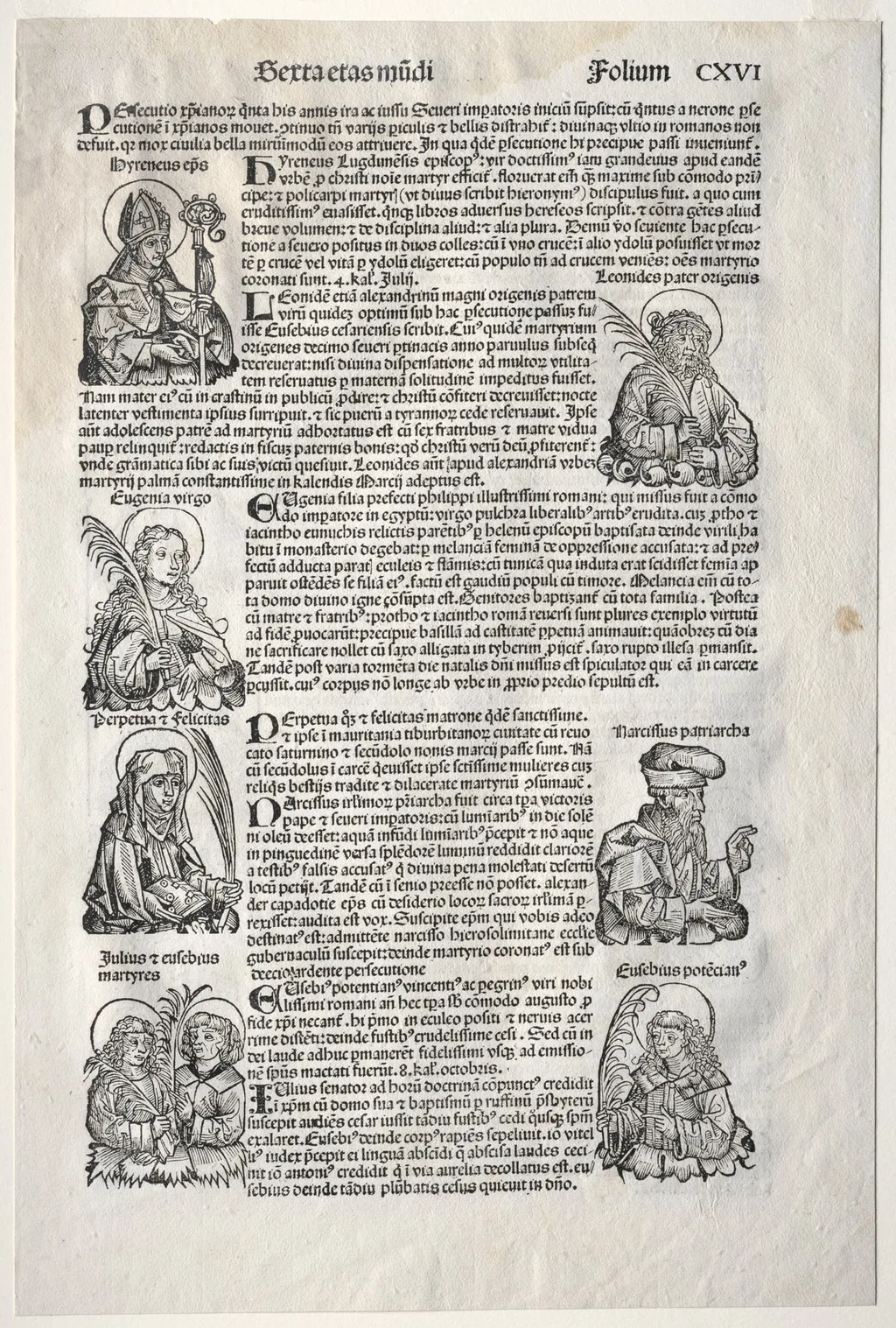
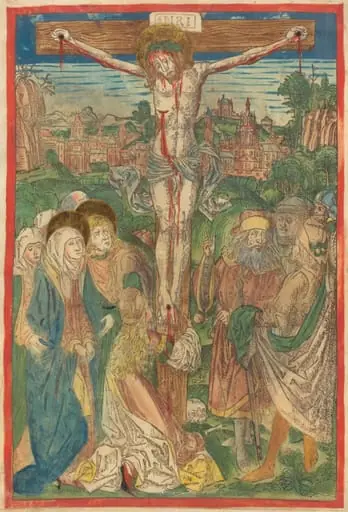
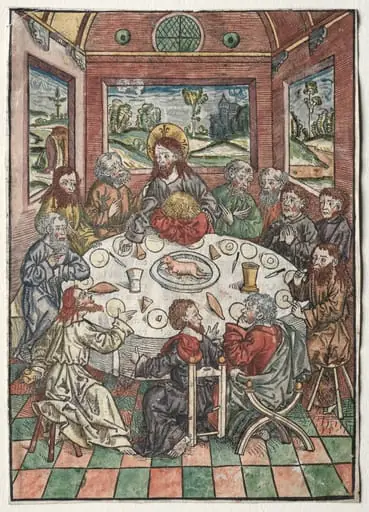
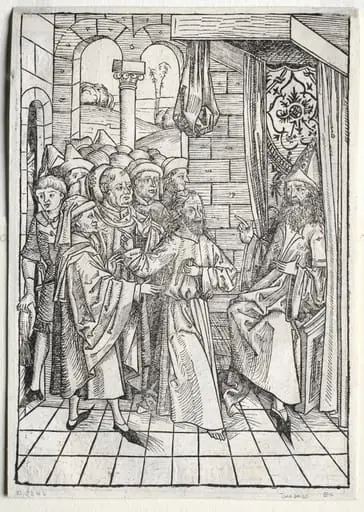
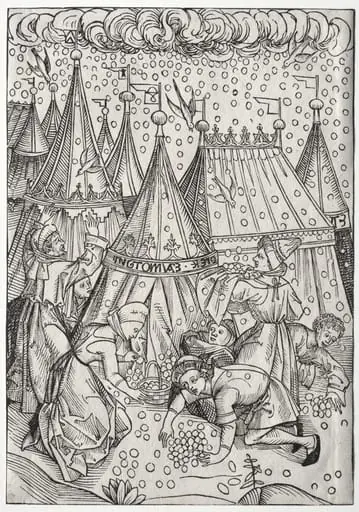
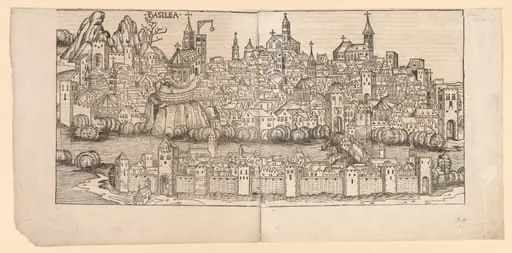
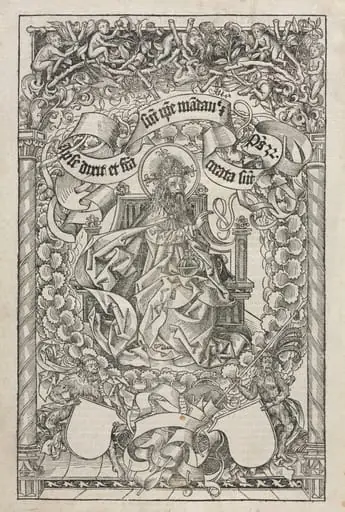
Nuremberg Chronicle is a print by the Renaissance artist Michael Wolgemut. It dates from 1493 and is held in the collection of the Cleveland Museum of Art.
About this work
Overview
Commissioned by wealthy patrons and overseen by the workshop of Michael Wolgemut, it combines extensive historical narrative with hundreds of printed images.
Published in 1493, the Nuremberg Chronicle is a lavishly illustrated incunable produced in Nuremberg using woodcut techniques. Commissioned by wealthy patrons and overseen by the workshop of Michael Wolgemut, it combines extensive historical narrative with hundreds of printed images. Its format reflects the transition from manuscript to print culture, offering a comprehensive chronicle of world history from creation to the late 15th century, structured around biblical and secular timelines.
Subject & Meaning
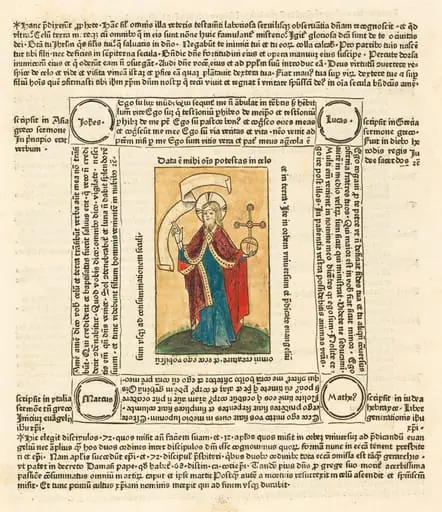
The Chronicle presents a unified history of the world, blending biblical events with classical and medieval records. Each page pairs Latin text with woodcut portraits of emperors, kings, bishops, and scholars, positioning them as links in a divine and temporal lineage. The figures, rendered with solemn expressions and stylized robes, serve as visual anchors for the narrative, reinforcing the idea of history as a divinely ordered sequence of rulers and thinkers.
Technique & Style
The illustrations are executed in crisp, linear woodcuts, with fine, controlled cuts defining facial features and drapery. Faces are simplified but expressive, using minimal lines to convey dignity and individuality. The dense, uniform text columns frame the images, creating a rhythmic visual structure. The black-and-white contrast enhances legibility and emphasizes form, typical of early German printmaking, where clarity and repetition were prioritized over painterly detail.
History & Provenance
Produced by Wolgemut’s workshop, which also trained Albrecht Dürer, the Chronicle was one of the most ambitious printed projects of its time. Over 1,400 woodblocks were carved for its illustrations, a significant undertaking for the period. Copies were distributed across Europe, and surviving volumes are now held in major institutions, including the Cleveland Museum of Art, where it is preserved as a key artifact of early print culture.
Context
Emerging just decades before the Protestant Reformation, the Chronicle reflects late medieval Europe’s fascination with lineage, authority, and sacred history. Its synthesis of biblical, classical, and contemporary figures mirrors the scholarly ideals of humanist circles, while its mass production signals the growing influence of print in shaping public knowledge. It was both a scholarly reference and a status object for wealthy urban patrons.
Legacy
The Nuremberg Chronicle set a precedent for illustrated encyclopedic texts in print, influencing later works in both content and format. Its standardized woodcut portraits became a model for depicting historical figures in printed books. Though its historical accuracy is now questioned, its role in establishing visual conventions for history books and its contribution to the spread of printed imagery remain significant in the evolution of European publishing.
Artist & collection
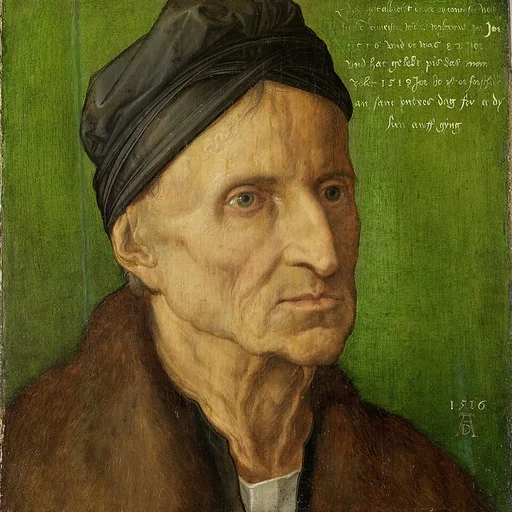
Artist
Michael Wolgemut (formerly spelt Wohlgemuth; 1434 – 30 November 1519) was a German painter and printmaker, who ran a workshop in Nuremberg.

 Christ as Salvator Mundi
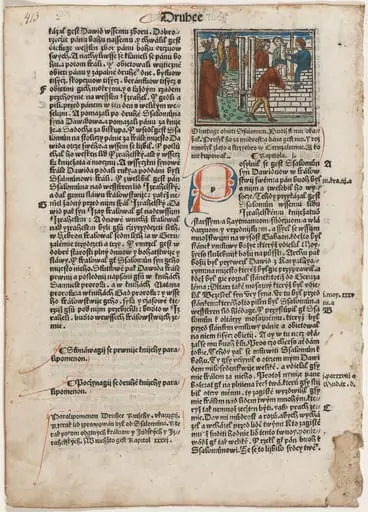 page from the Holy Bible in Bohemian
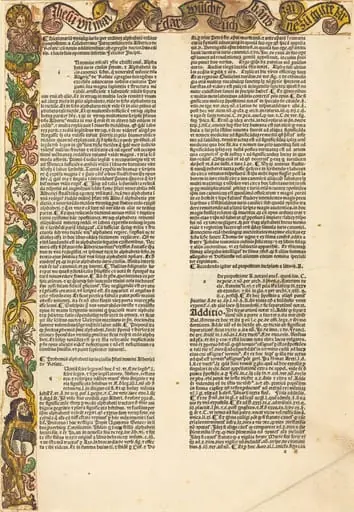 Border from an Almanac
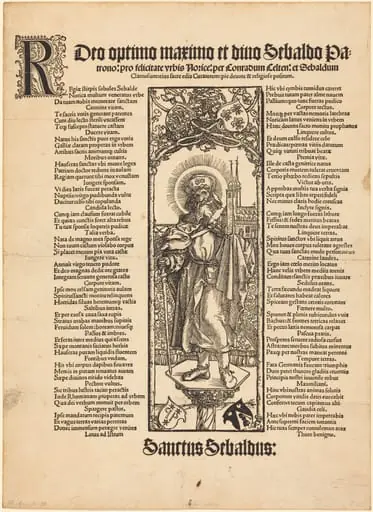 Saint Sebaldus Standing on a Column
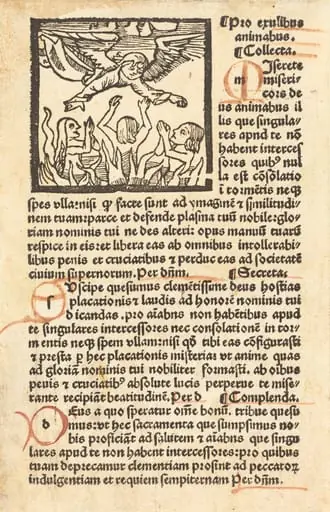 Purgatory
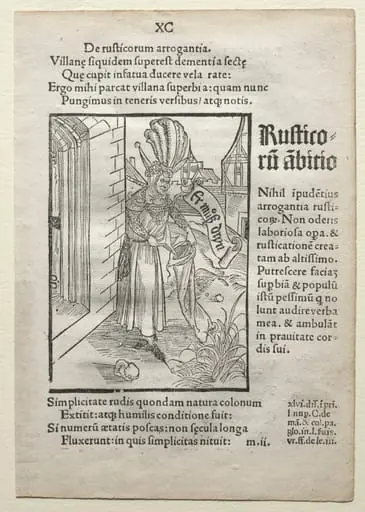 Ship of Fools
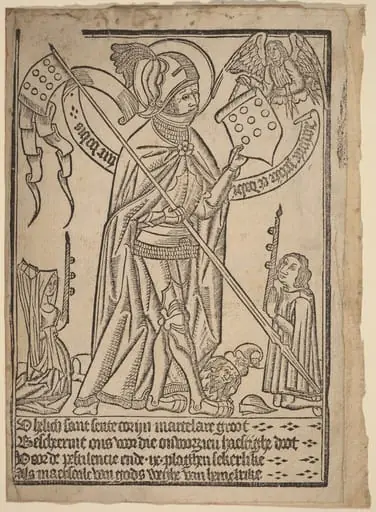 Saint George (?)
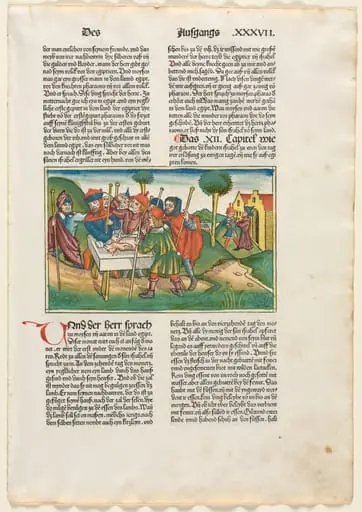 Offering of the Paschal Lamb from the German Bible published by Anton Koberger, Nürnberg
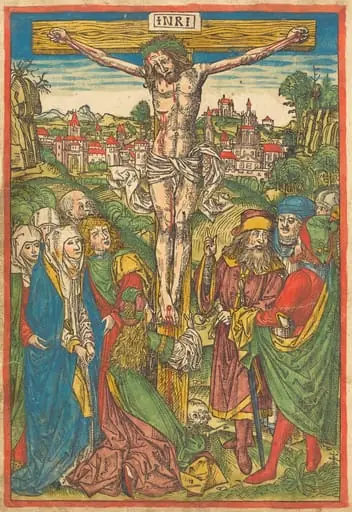
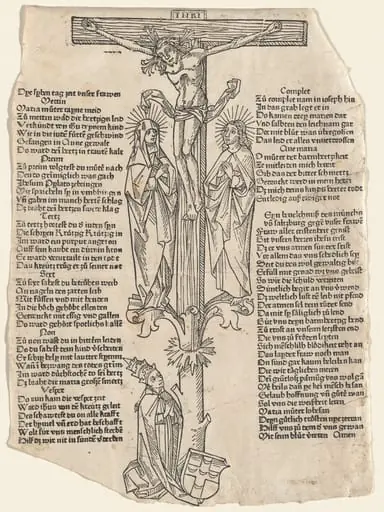 Christ on the Cross with Pope Pius II
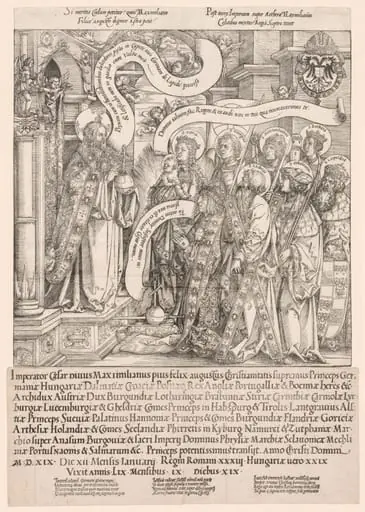 Maximilian Presented by His Patron Saints to the Almighty
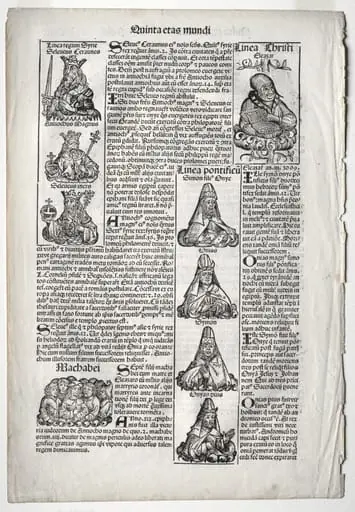 Genealogical Page; published in the Nuremberg Chronicle by Hartmann Schedel