Artwork
Border from an Almanac
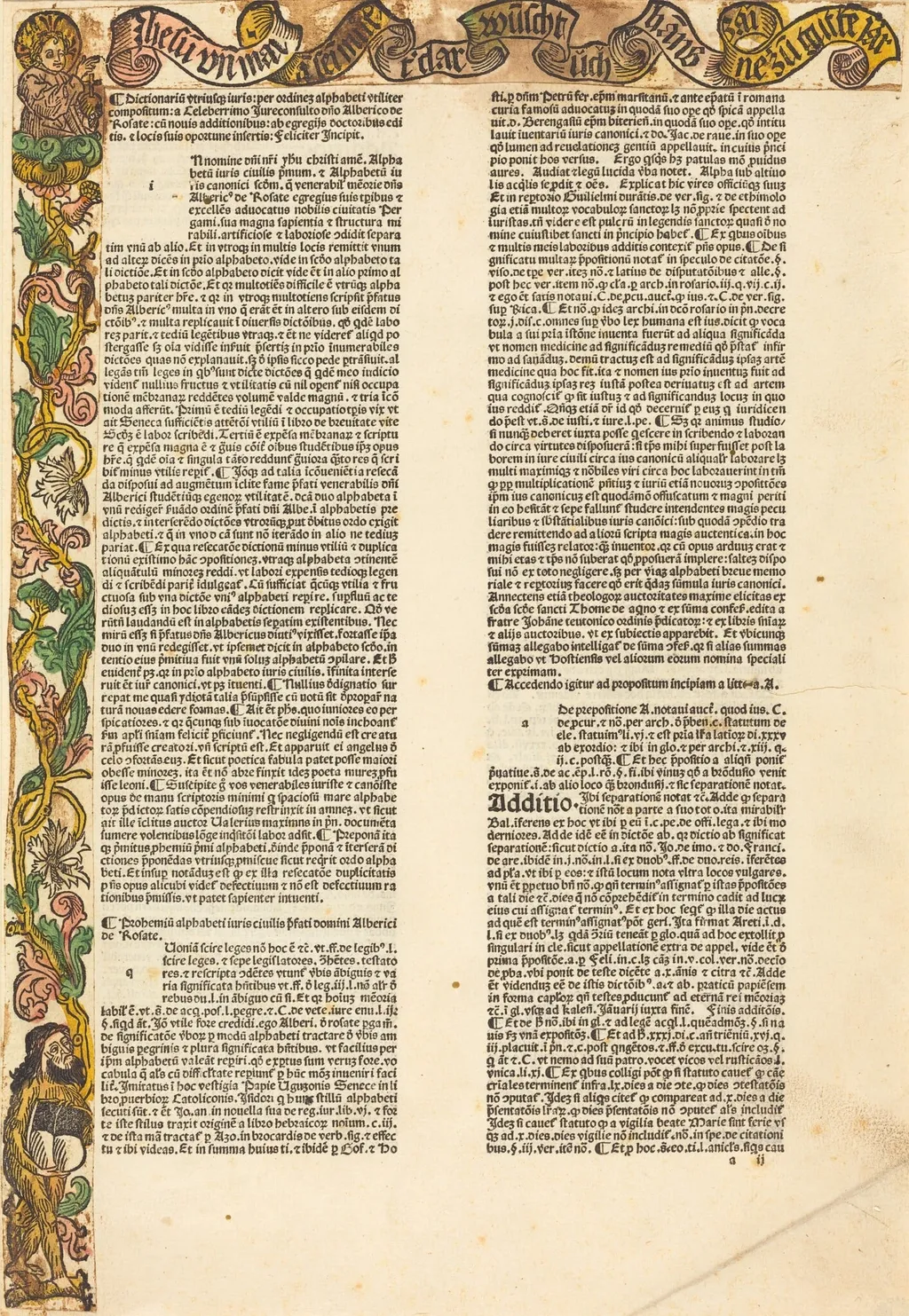
Border from an Almanac is an ink print by the Renaissance artist German 15th Century. It dates from 1489 and is held in the collection of the National Gallery of Art.
About this work
Overview
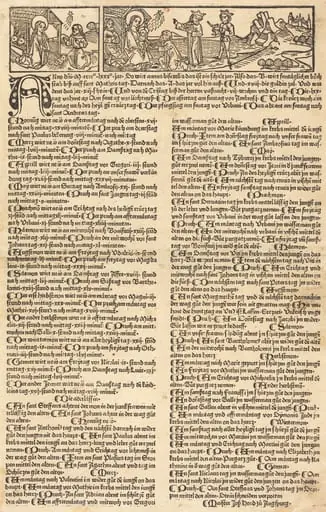
Border from an Almanac is a hand‑colored woodcut print that functions as an ornamental frame filled with miniature narrative scenes. Executed in a limited palette of green, brown, rose and yellow, the design is outlined in black, giving the impression of a carved surface. The composition wraps around the edges, turning a decorative border into a dense tableau of figures, animals and architecture.
Subject & Meaning
The border presents a bustling collection of vignettes: individuals wearing unusual headgear, creatures with elongated tails, and tiered buildings that seem to rise in layers. Some characters appear engaged in labor, others in prayer, and a few combine both activities, suggesting a commentary on the intertwining of daily work and spiritual life within a communal setting.
Technique & Style
Created through woodcut, the image was first carved in relief and then printed, after which the artist applied hand‑coloring in flat washes of green, brown, rose and yellow. The strong black outlines emphasize the graphic quality of the medium, while the limited coloration reinforces a stylized, almost schematic visual language typical of early printed almanac illustrations.
History & Provenance
The work belongs to the tradition of printed almanacs, which combined practical information with decorative borders to attract readers. Though the exact date and creator are not recorded, the piece reflects the 18th‑century European practice of integrating text and image in affordable, mass‑produced publications.
Context
Almanac borders like this one served both aesthetic and functional purposes, framing calendars, astronomical data and agricultural advice. The crowded arrangement of scenes mirrors the multiplicity of information contained within the almanac, while the multilingual lettering hints at the broad audience such publications aimed to reach.
Legacy
Such richly detailed borders illustrate the early modern intersection of print technology, visual culture and everyday life. They provide insight into how ordinary people of the period consumed information, and they continue to inform scholars studying the visual rhetoric of early mass‑media formats.
Artist & collection

Artist
This 15th-century German artist carved vivid religious scenes into metal and wood, then hand-painted them in bright, symbolic colors.

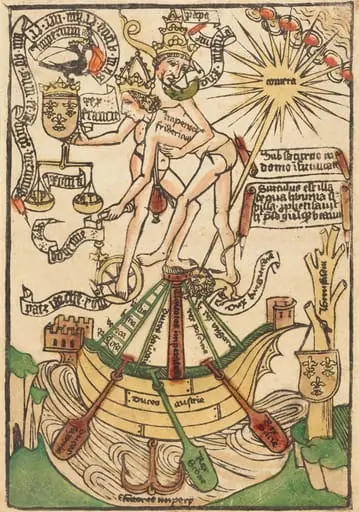 Allegory of the Meeting of Pope Paul II and Emperor Frederick III
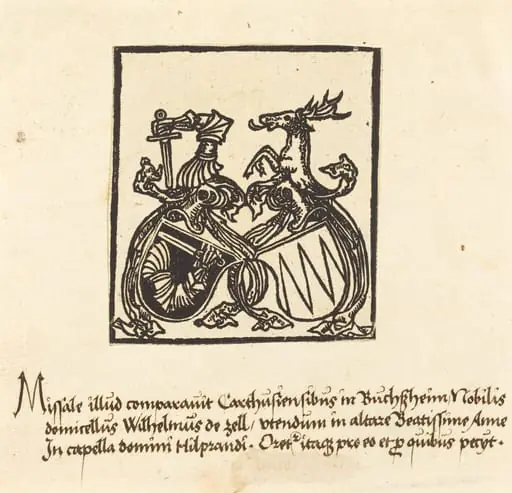 Bookplate of Wilhelm von Zell
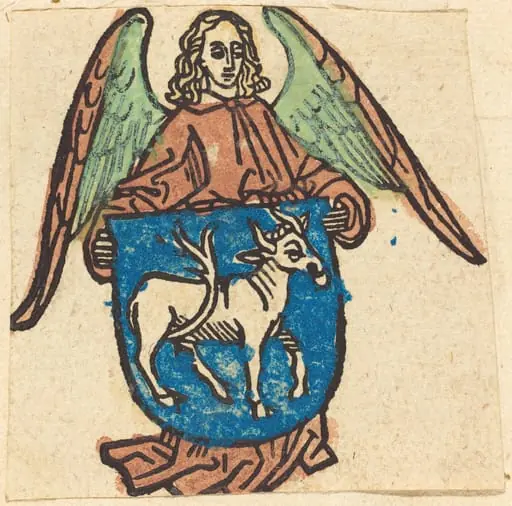 Bookplate of Hilprand Brandenburg of Bibrach
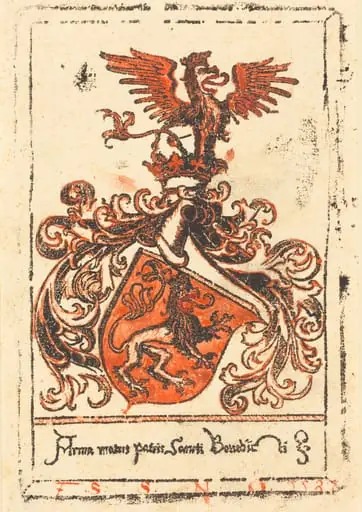 Bookplate of the Abbey of Ottobeuren
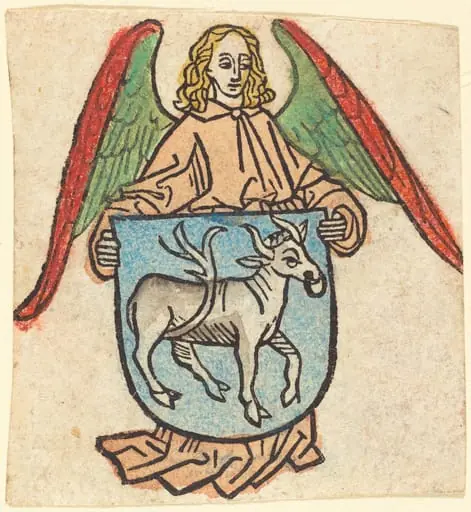 Bookplate of Hilprand Brandenburg of Bibrach
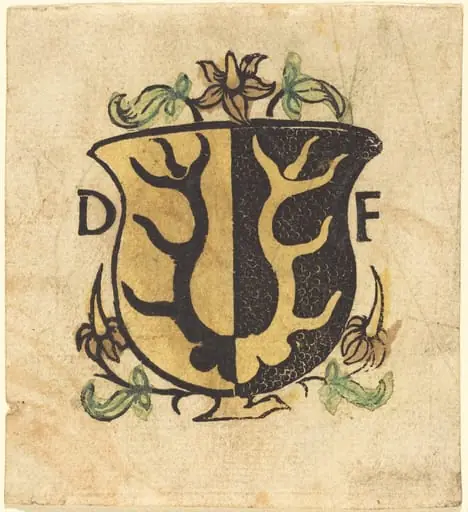 Bookplate of Dominicus Frauenfelder
![Studies for Six Figures (sheet from a model book) [recto], by German 15th Century](https://artifactworldgallery.com/img/german-15th-century--studies-for-six-figures-sheet-from-a-model-book-recto--4837429e0755bc3f-w320.webp) Studies for Six Figures (sheet from a model book) [recto]
Studies for Six Figures (sheet from a model book) [recto]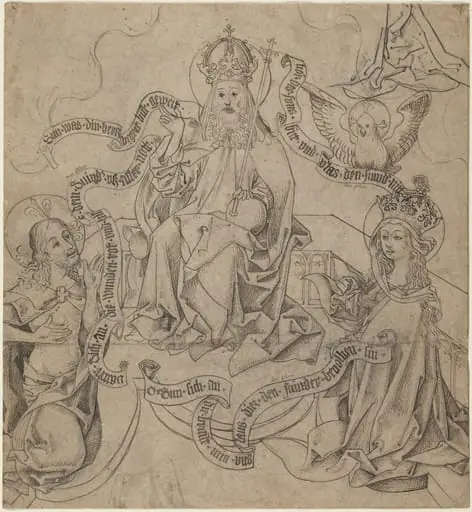 Christ and Mary Interceding with God the Father
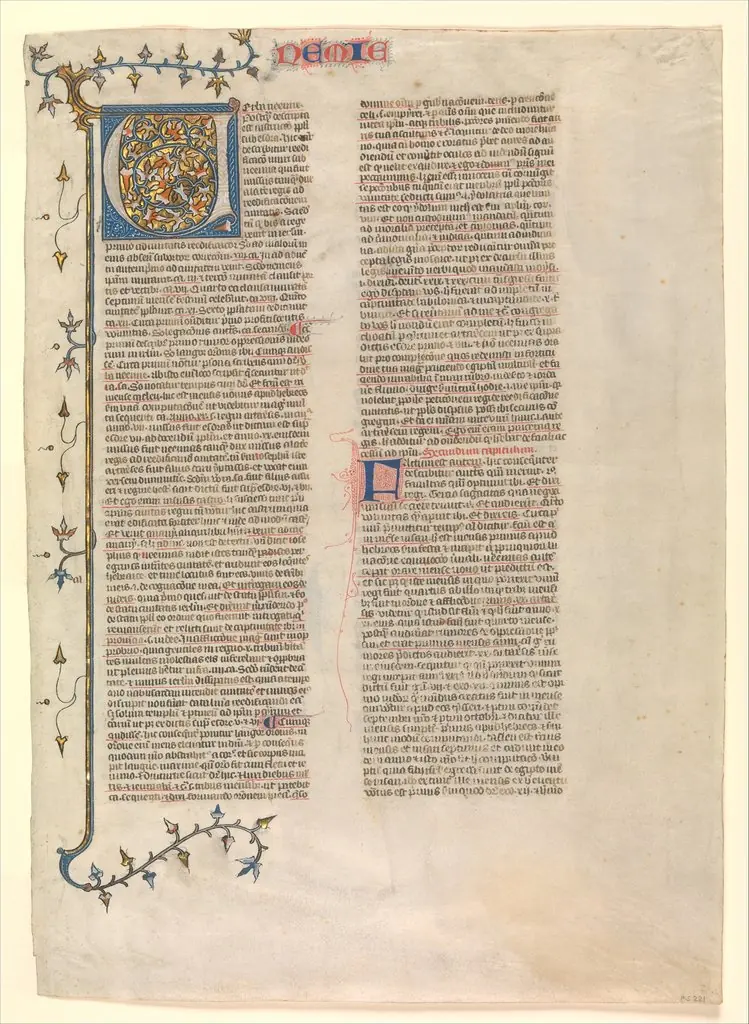 Initial "V" from the commentary of Nehemiah, one of six illustrated leaves from the Postilla Litteralis (Literal Commentary) of Nicholas of Lyra
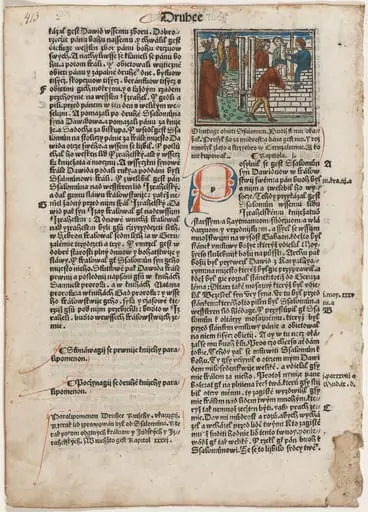 page from the Holy Bible in Bohemian
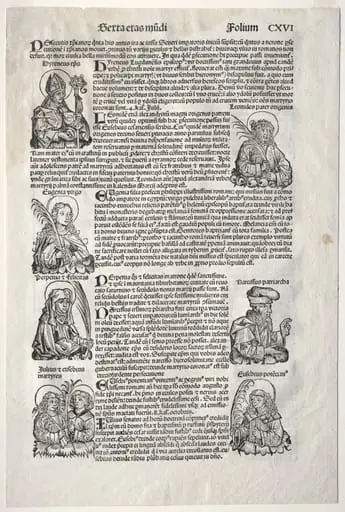 Nuremberg Chronicle
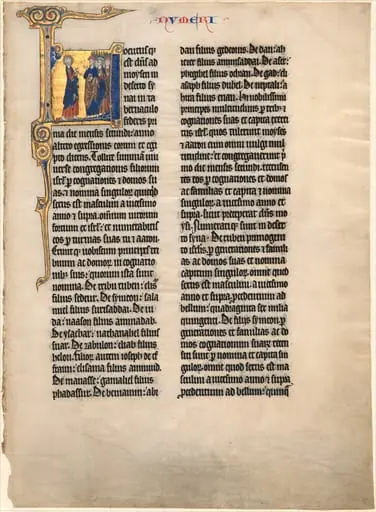 Moses Counting the Children of Israel
 Calendar with the Nativity and Adoration
 Christ as Salvator Mundi
 Joshua before the Lord
 Genealogical Page; published in the Nuremberg Chronicle by Hartmann Schedel
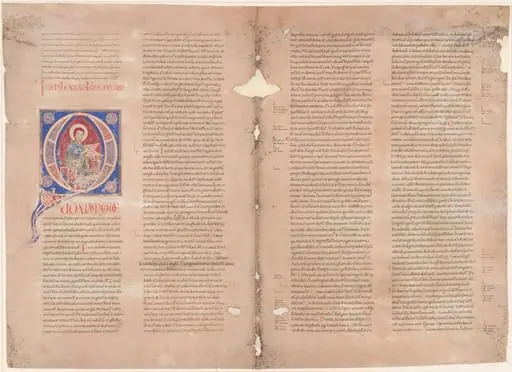 Saint Luke
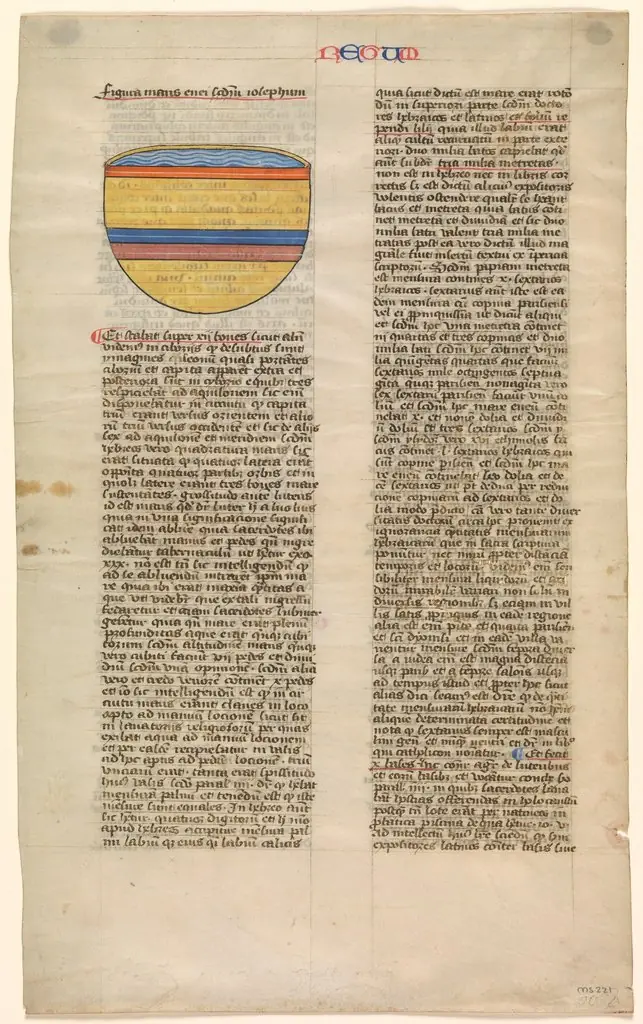 Brazen Sea, one of six illustrated leaves from the Postilla Litteralis (Literal Commentary) of Nicholas of Lyra
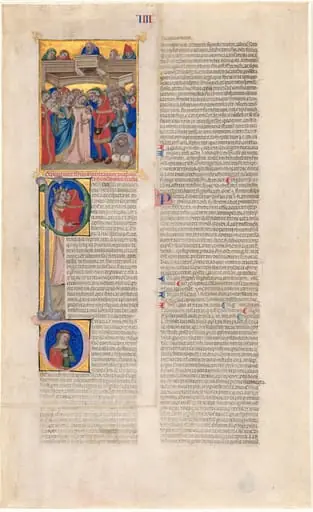 The Marriage; the Kiss of the Bride (initial P); the Bride Abandoned (initial D)
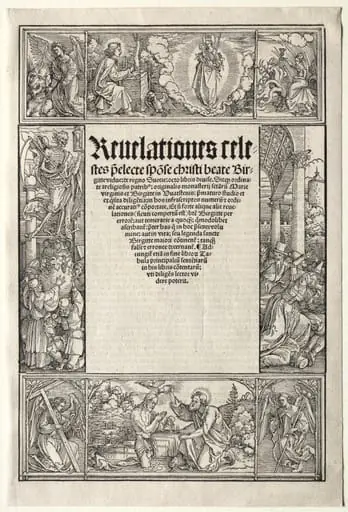 Border - with The Baptism of Christ