Artwork
Iris and Jupiter
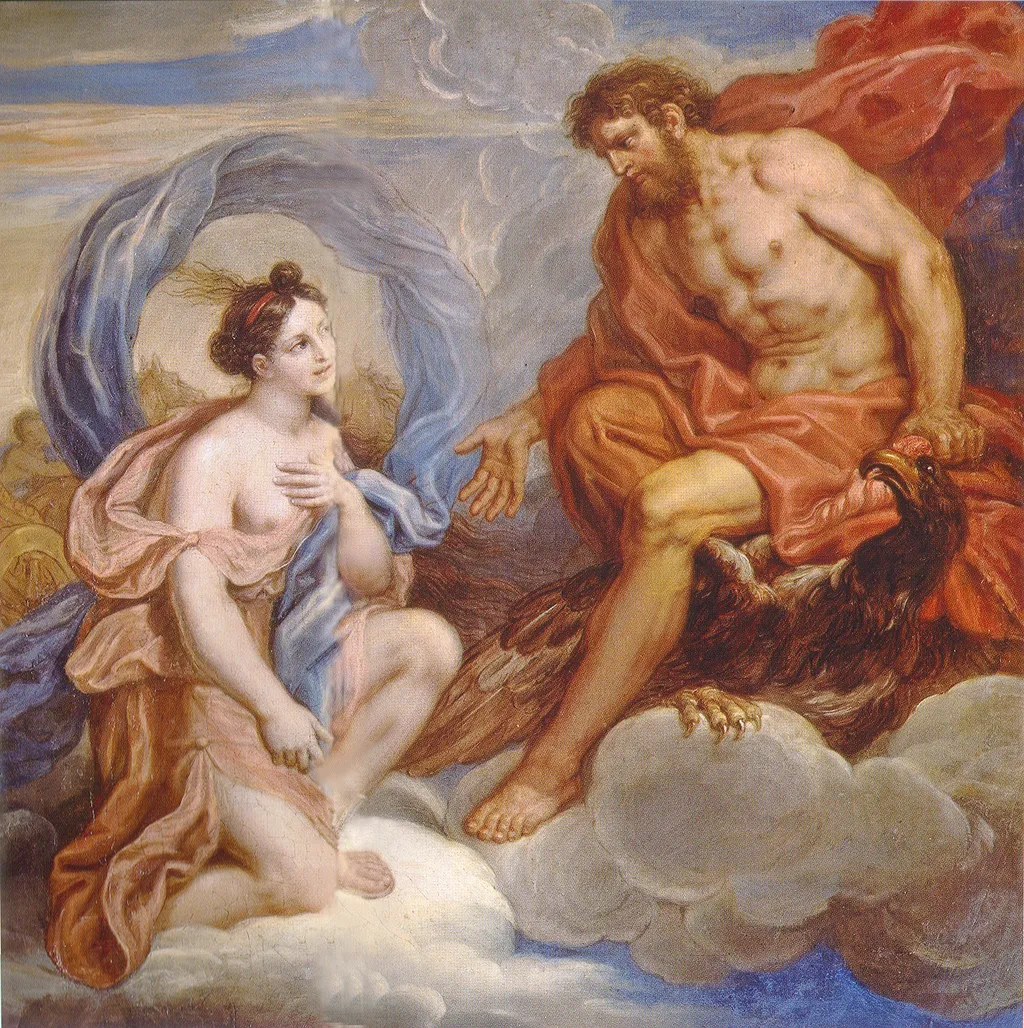
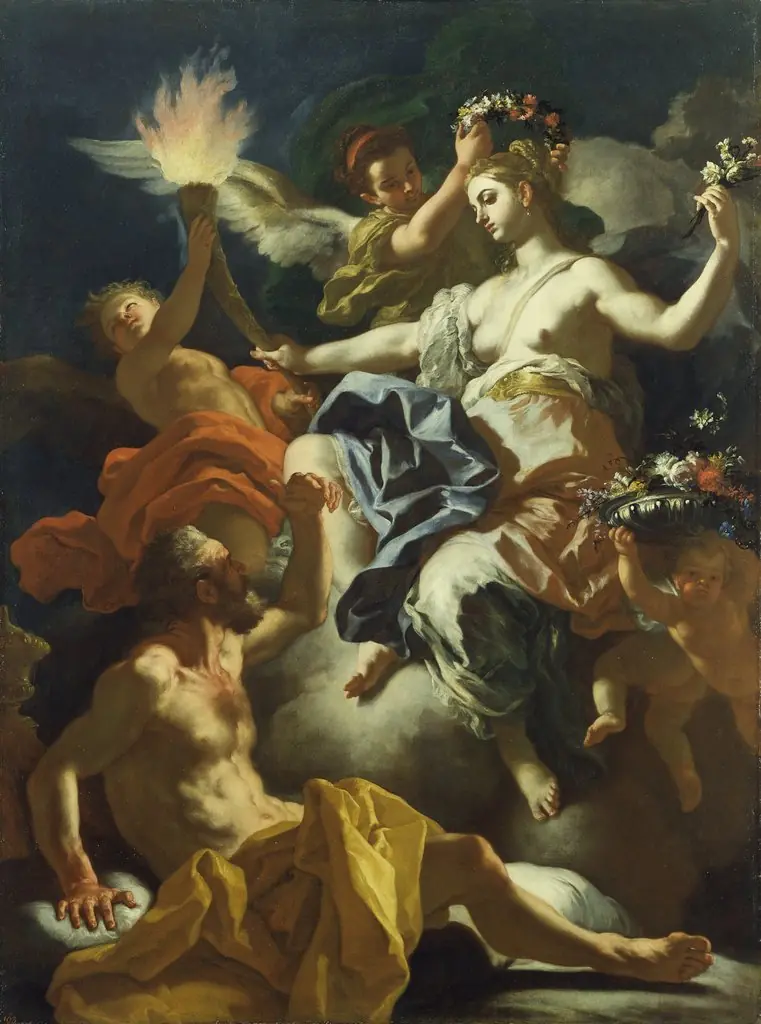
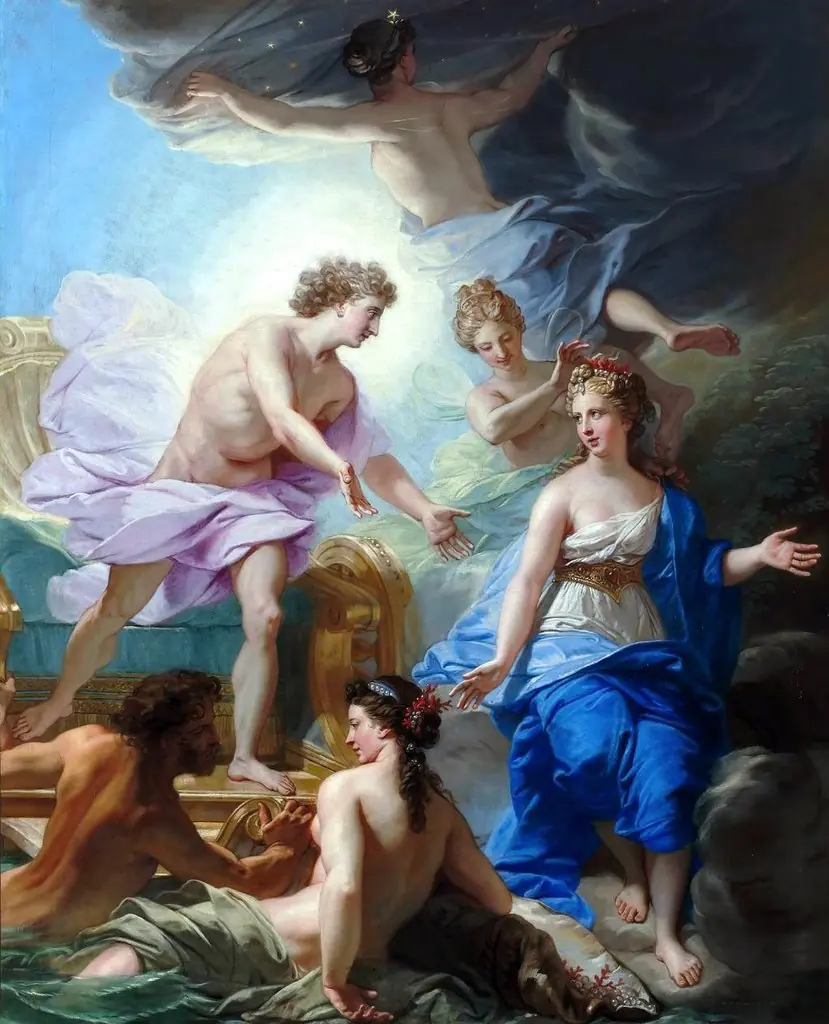
Iris and Jupiter is an oil painting by the Rococo painting artist Michel Corneille the Younger. It dates from 1701 and is held in the collection of the Palace of Versailles.
About this work
Overview
Its composition centers on a moment of divine interaction, rendered with dramatic lighting and fluid forms that convey movement and emotional tension.
Painted in 1701 by Michel Corneille the Younger, this oil work depicts a mythological encounter between the god Jupiter and the goddess Iris. Executed in the French Baroque tradition, the painting is part of the royal collection at the Palace of Versailles. Its composition centers on a moment of divine interaction, rendered with dramatic lighting and fluid forms that convey movement and emotional tension.
Subject & Meaning
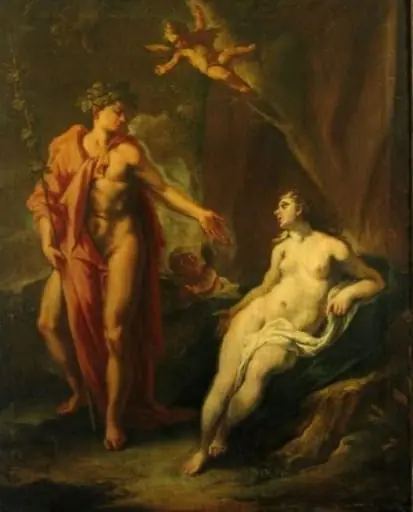
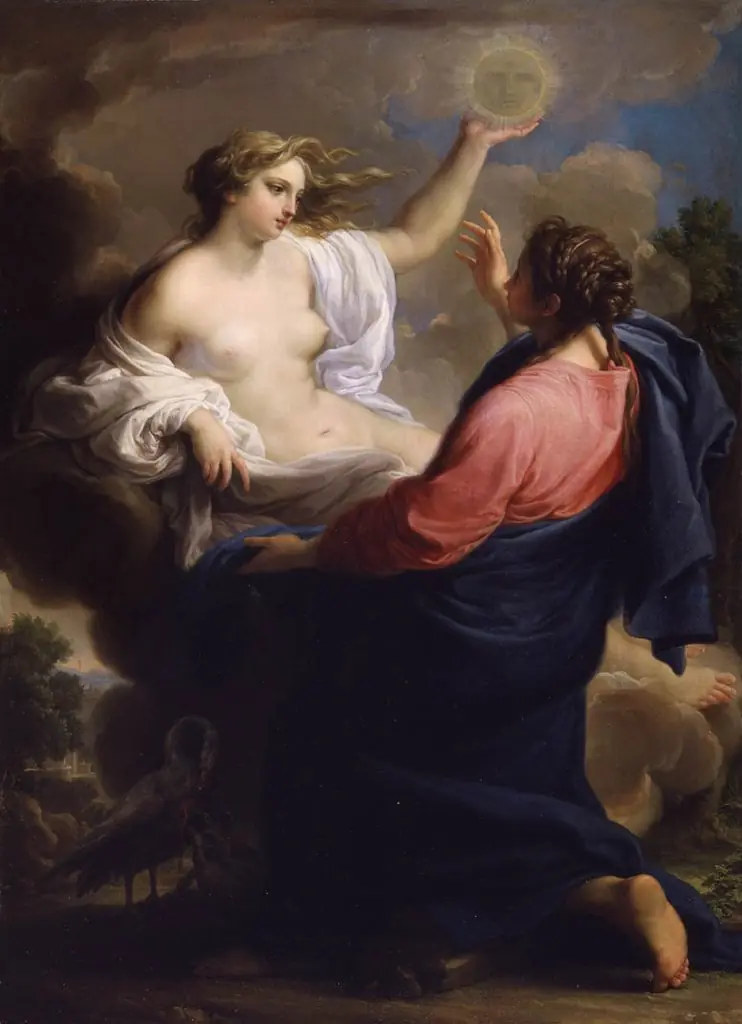
The scene illustrates Jupiter, king of the gods, descending from the heavens to communicate with Iris, the rainbow goddess and divine messenger. Her kneeling posture and hand over her chest suggest reverence, while his outstretched arm implies command or revelation. The pairing reflects classical themes of divine authority and celestial communication, aligning with the courtly fascination with mythological allegory during Louis XIV’s reign.
Technique & Style
Corneille employs chiaroscuro to model the figures with strong contrasts between light and shadow, enhancing their three-dimensionality. The drapery of their garments flows dynamically, suggesting motion against the soft, luminous sky. Brushwork is refined yet expressive, particularly in the rendering of fabric and skin, balancing naturalism with the idealized forms typical of late 17th-century French academic painting.
History & Provenance
Commissioned during the height of Versailles’ artistic expansion, the painting entered the royal collection shortly after its completion. It remained in royal custody through the Ancien Régime and was later cataloged among the palace’s official holdings. Its preservation at Versailles reflects its status as a work of courtly taste, rather than a public commission or religious altarpiece.
Context
Created in the decades following the peak of Louis XIV’s reign, the painting aligns with the French court’s continued investment in mythological narratives as symbols of power and order. While Italian Baroque influences were prevalent, Corneille’s approach reflects a more restrained, French interpretation—emphasizing elegance and narrative clarity over theatrical excess.
Legacy
Though not widely reproduced or studied today, the painting remains a representative example of early 18th-century French mythological painting. It contributes to the understanding of how classical themes were adapted for royal interiors, serving as visual affirmations of monarchy’s divine associations within the structured environment of Versailles.
Own this work as a print
Artist & collection

Artist
Michel Corneille the Younger (1642–1708) was an artist, born in Paris.