Artwork
St. Paul's, Broadway, N.Y.
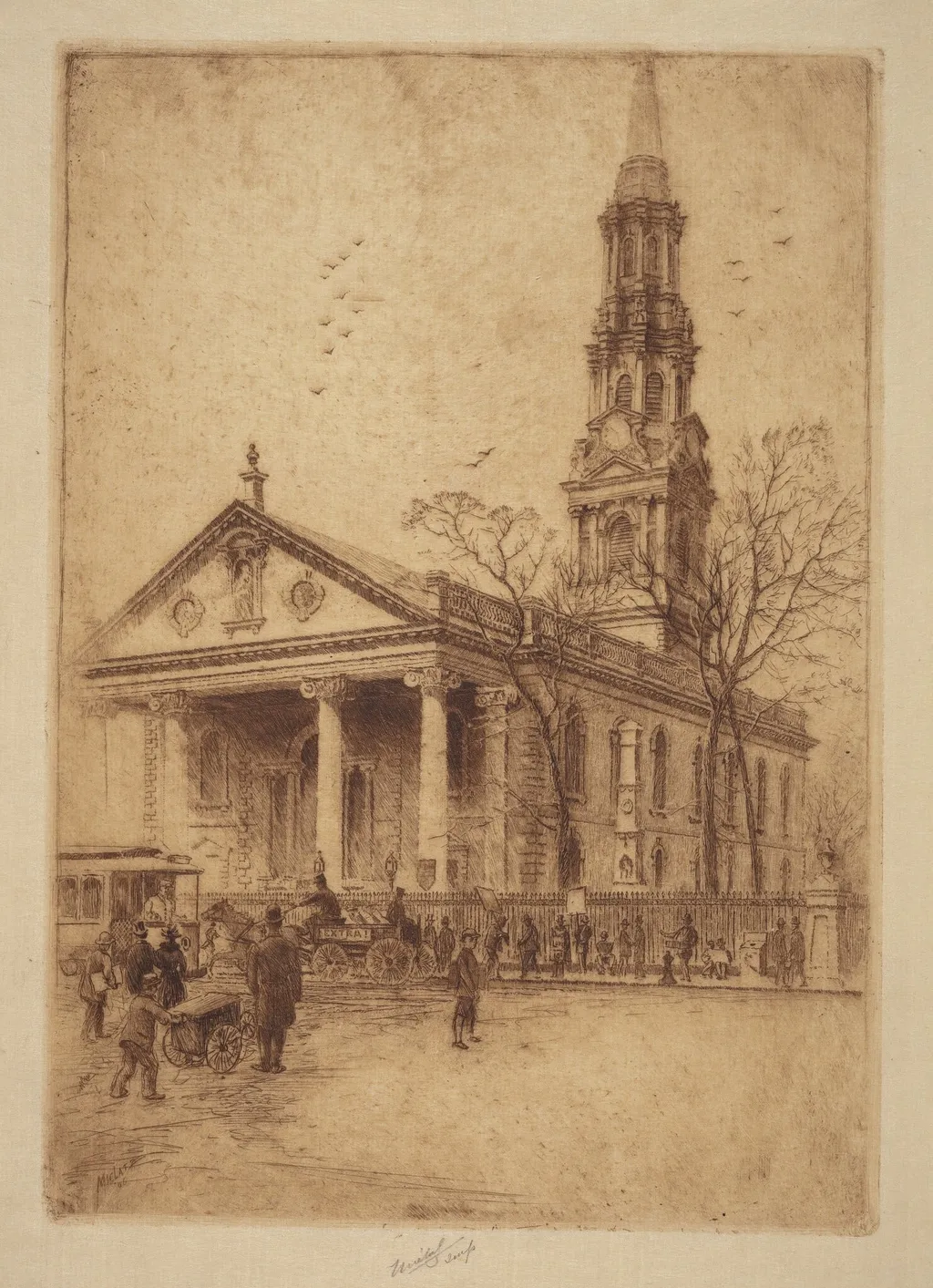
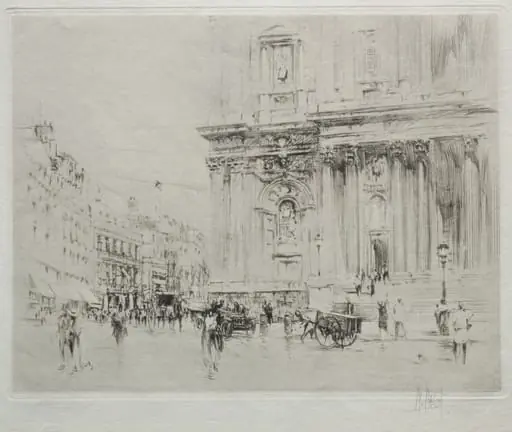
St. Paul's, Broadway, N.Y. is an ink print by Charles Frederick William Mielatz. It dates from 1906 and is held in the collection of the National Gallery of Art.
About this work
The artist used drypoint here, a technique where a needle drags across the plate to raise a burr that holds extra ink for richer lines.
You see a busy New York street corner in 1906. Tall buildings loom over horse-drawn carriages and early cars. A church with a tall steeple stands in the center. The scene is busy but calm.
This is an etching, which means the artist scratched the image onto a metal plate, then filled it with ink. The lines are sharp and delicate, showing every detail of the city. The artist used drypoint here, a technique where a needle drags across the plate to raise a burr that holds extra ink for richer lines.
Look up Mielatz, Charles Frederick William to see more of his city scenes.
Overview
Charles Frederick William Mielatz, born in Prussia and later based in New York, produced this 1906 etching as part of a body of work focused on American urban architecture. The print captures a specific moment in the city’s transformation, documenting the coexistence of old and new infrastructure. Mielatz’s technical precision and attention to architectural detail established him as a significant figure in early 20th-century American printmaking.
Subject & Meaning
The scene centers on St. Paul’s Chapel, a historic structure surrounded by the evolving skyline of Broadway. Horse-drawn vehicles share the street with early automobiles, reflecting a transitional period in urban transportation. The church, though modest in scale compared to its neighbors, anchors the composition, suggesting continuity amid rapid modernization. The quiet rhythm of daily life is rendered without overt drama, emphasizing observation over commentary.
Technique & Style
Mielatz employed etching with drypoint to achieve fine, expressive lines. The metal plate was scratched with a needle, creating a burr that retained ink and produced soft, velvety darks alongside crisp, clean contours. This combination allowed for both architectural clarity and atmospheric depth. The delicate interplay of light and shadow enhances the texture of stone, glass, and fabric, revealing Mielatz’s mastery of tonal gradation within a monochrome medium.
History & Provenance
Created in 1906, the work emerged during Mielatz’s most active period as a printmaker in New York. He was known for documenting landmarks before they were altered or demolished, making his prints valuable records of urban change. While specific ownership history is not widely documented, the piece aligns with collections held by institutions such as the New-York Historical Society and the Metropolitan Museum of Art, which preserve his architectural studies.
Context
In early 20th-century New York, rapid construction and technological change reshaped the cityscape. Mielatz’s etchings responded to this flux by preserving the visual character of buildings and streetscapes at a time when photography was still limited in tonal range and artistic interpretation. His focus on churches and civic structures reflected a cultural interest in heritage amid industrialization, positioning his work as both aesthetic and documentary.
Legacy
Mielatz’s prints remain referenced in studies of American urban history and printmaking technique. His commitment to capturing architectural nuance influenced later generations of topographical artists. Though less widely known today than some contemporaries, his body of work provides a calibrated, intimate view of New York’s architectural evolution, valued for its accuracy and quiet observation rather than dramatic flair.
Artist & collection

Artist
Charles Frederick William Mielatz
Charles Frederick William Mielatz (né Karl Friedrich Wilhelm Mielatz; May 24, 1864 – July 2, 1919) was a Prussian-born American etcher, graphic artist, painter, lithographer, and educator.

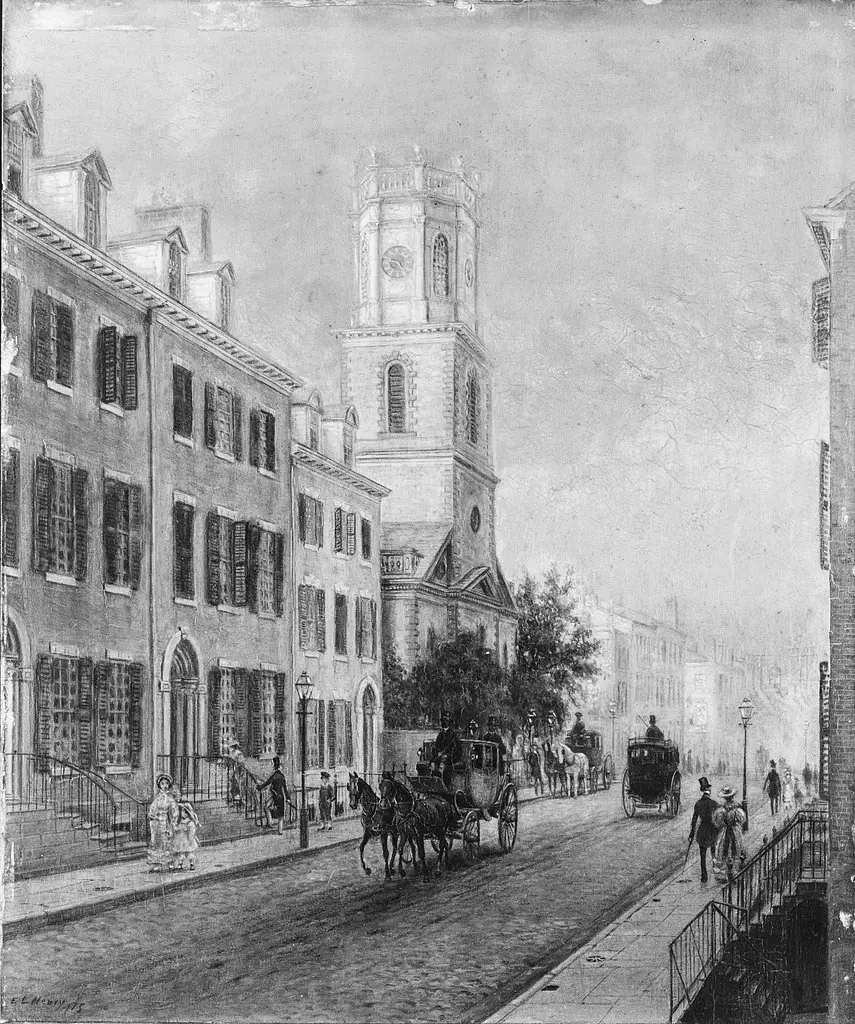 Saint George's Church, New York
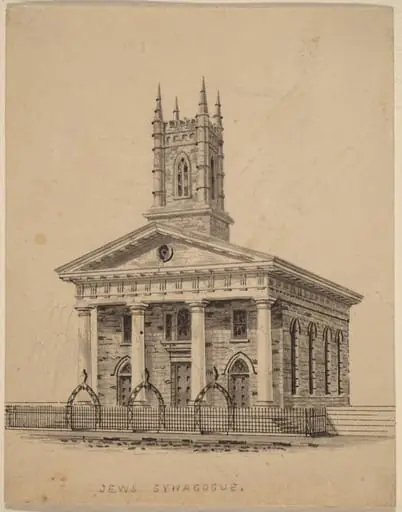 Jewish Synagogue, N.Y.
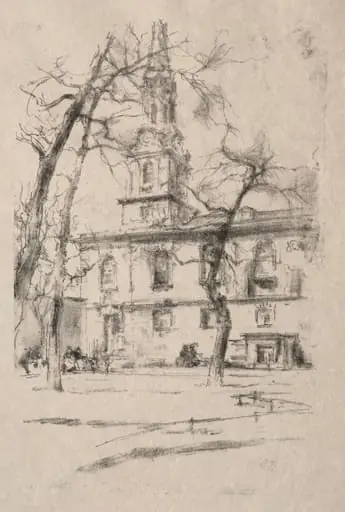 St. Giles-in-the-Fields
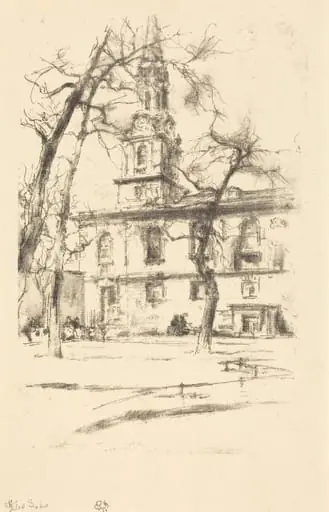 St. Giles-in-the-Fields
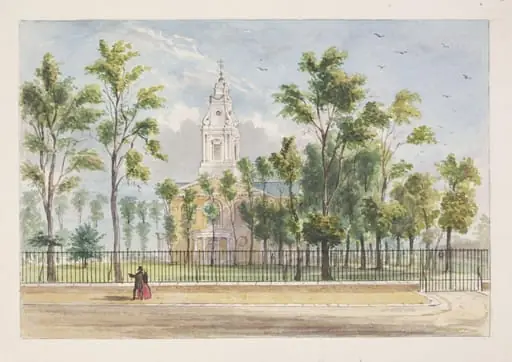 Untitled
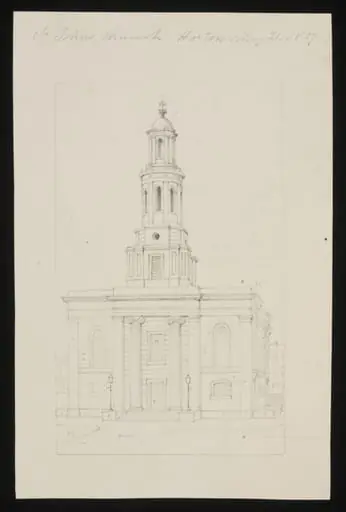 St. John's Church, Hoxton, May 21 1827
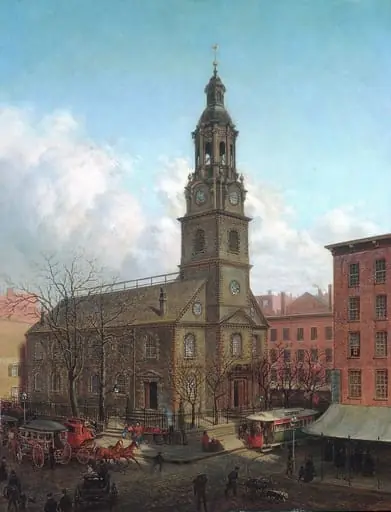 The North Dutch Church, Fulton and William Streets, New York
 Untitled
 Swine Herd near a Chapel
 Saint Anne's, Soho
 Colonial Church, Gloucester
 St. Paul's, London