Artwork
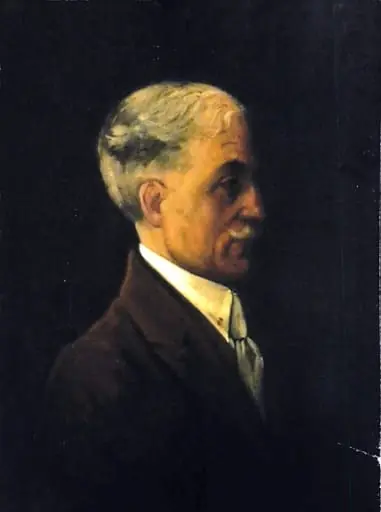
Portretul scriitorului Alexandru Odobescu
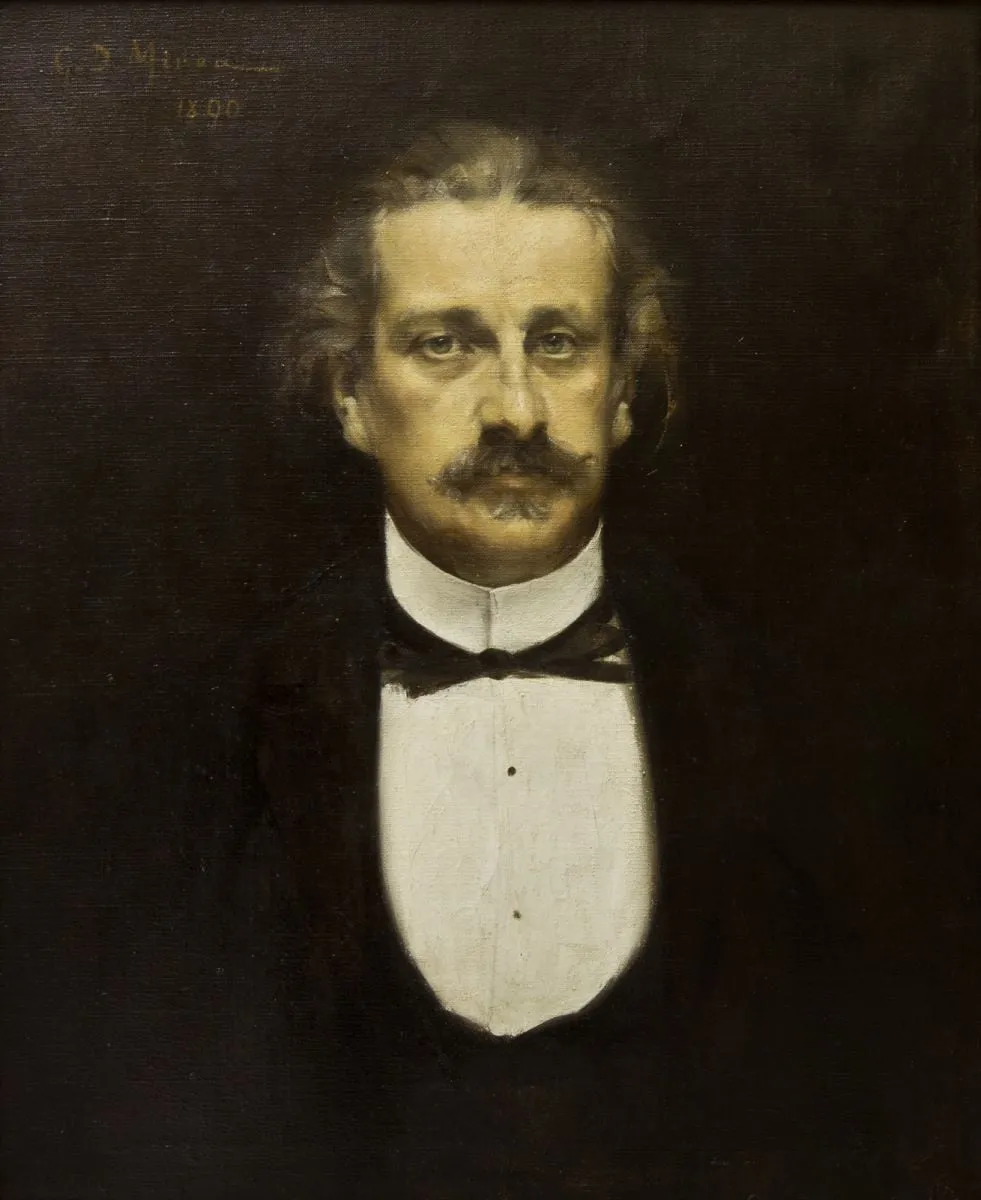
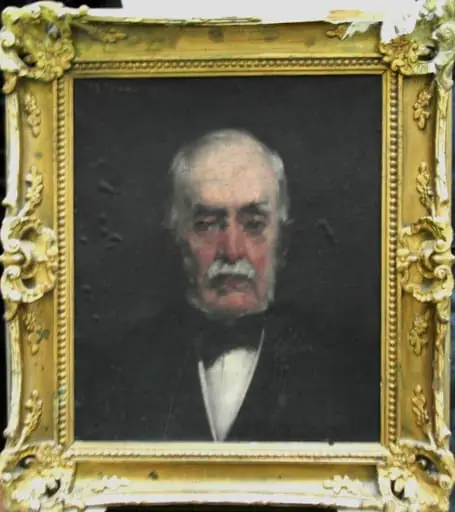
Portretul scriitorului Alexandru Odobescu is a print by the Impressionist artist George Mirea-Demetrescu. It dates from 1890 and is held in the collection of the National Museum of Art of Romania.
About this work
Overview
Executed in oil on canvas, the work presents a close-up view of the subject against a deep, unobtrusive background.
Painted in 1890 by George Mirea-Demetrescu, this portrait depicts the Romanian writer Alexandru Odobescu. Executed in oil on canvas, the work presents a close-up view of the subject against a deep, unobtrusive background. The composition emphasizes the sitter’s presence through focused lighting and restrained color, drawing attention to his facial expression and attire without decorative distraction.
Subject & Meaning
Alexandru Odobescu, a noted literary figure and cultural commentator, is portrayed with a composed, direct gaze that conveys intellectual seriousness. His formal attire—a black jacket, white shirt, and bow tie—reflects his public persona as an educated man of letters. The absence of contextual elements isolates him as a figure of thought, inviting contemplation rather than narrative interpretation.
Technique & Style
The painting employs a restrained realism, with careful rendering of texture in fabric and subtle gradations in skin tone. Brushwork is precise but not overly polished, allowing for a naturalistic impression. While the lighting and detail suggest academic training, the lack of theatricality and the intimate scale align more closely with 19th-century portraiture traditions than with Impressionist techniques.
History & Provenance
Created in 1890, the portrait remained within Romanian cultural circles before entering the collection of the Museum of Ethnography. Its acquisition likely reflects Odobescu’s significance in national intellectual life rather than artistic trends of the time. The work has been consistently attributed to Mirea-Demetrescu, with no documented alterations or significant provenance gaps.
Context
In late 19th-century Romania, portraiture served as a means of honoring public intellectuals. Odobescu, known for his writings on folklore and education, was emblematic of this cultural moment. Artists like Mirea-Demetrescu were often commissioned to capture such figures, blending personal recognition with national identity in a period of emerging cultural institutions.
Legacy
The portrait endures as a visual record of a key literary figure in Romanian history. While not widely reproduced outside national collections, it remains a reference point for understanding how intellectual authority was visually constructed in the era. Its quiet realism continues to inform how Romanian cultural heritage is represented in museum settings.
Artist & collection
Artist
George Mirea-Demetrescu kept a studio above a Bucharest bakery, so the smell of fresh bread often drifted up while he painted.

 Iosif Șterca Șuluțiu
 Portretul lui Christian Miess
 Portrait of Gracjan Rudowski
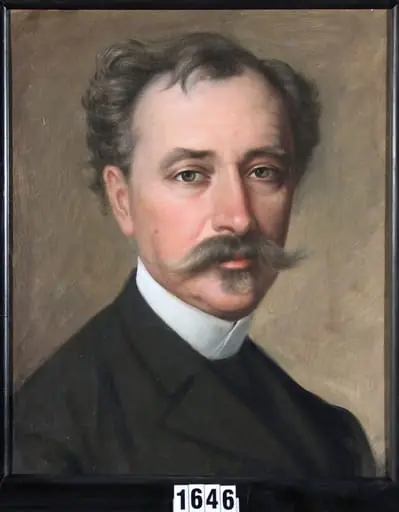 Domnul J.
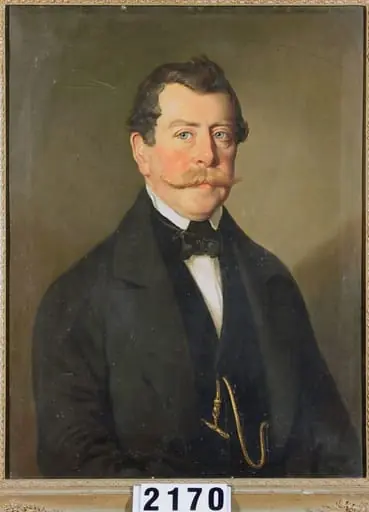 Portretul lui Drotleff
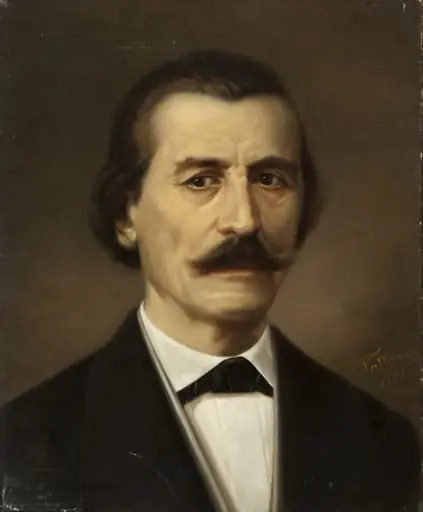 Portretul Generalului Magheru
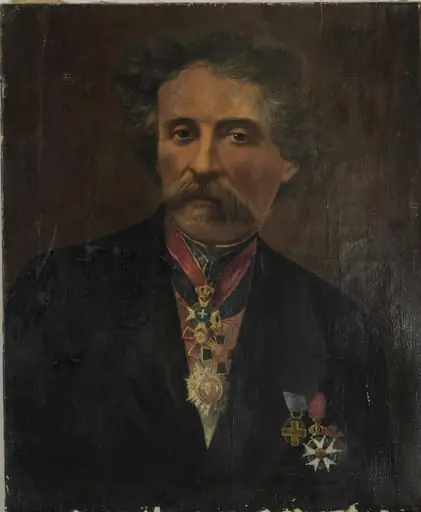 Προσωπογραφία του Γεωργίου Σκούφου
 Deák Ferenc
 Portrait of Ksawery Branicki
 Προσωπογραφία του Χαριλάου Τρικούπη
 Enrique Simonet y Baca, the artist’s father
 Portretul Profesorului Eugen Ciolac