Artwork
Henri de Bourbon, Roi de Navarre
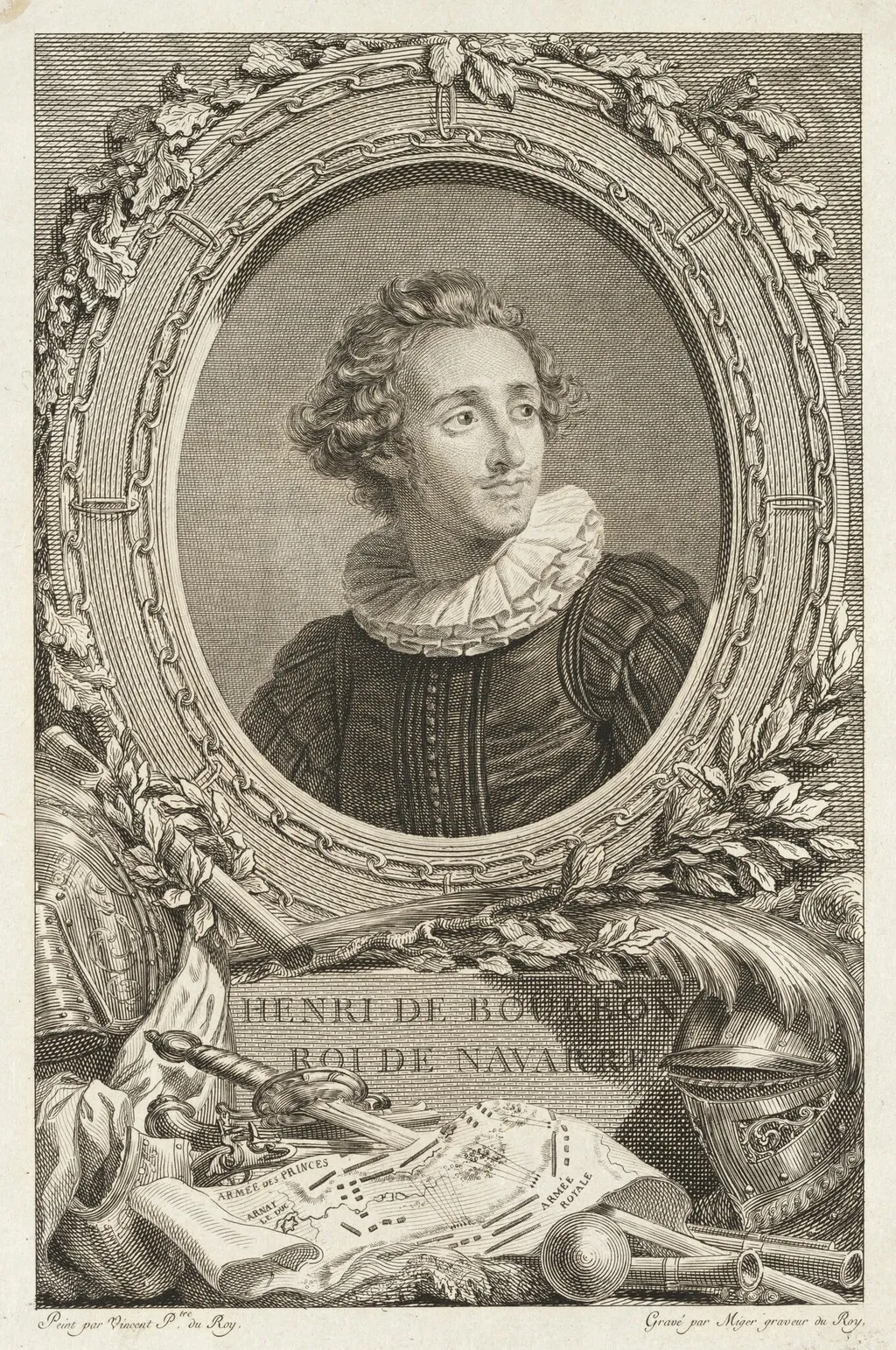
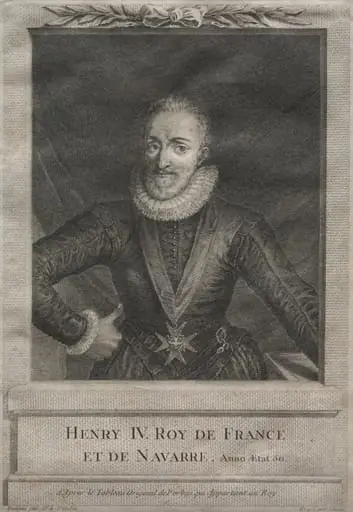
Henri de Bourbon, Roi de Navarre is an ink print by the Romanticist artist Simon Charles Miger. It dates from 1786 and is held in the collection of the National Gallery of Art.
About this work
Overview
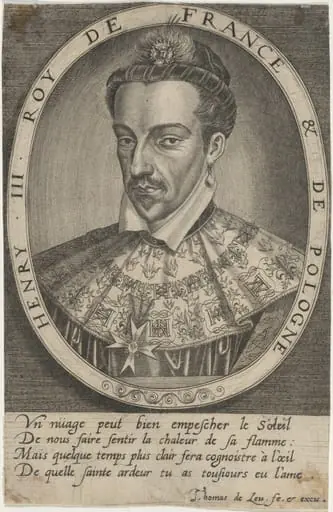
This 1786 print by Simon Charles Miger depicts Henri de Bourbon, King of Navarre, in black-and-white etching and engraving on China paper.
This 1786 print by Simon Charles Miger depicts Henri de Bourbon, King of Navarre, in black-and-white etching and engraving on China paper. The portrait is framed by an ornate border filled with allegorical motifs, including scrolls, foliage, and miniature symbols of authority. The image is rendered in fine linear detail, characteristic of 18th-century reproductive printmaking, and emphasizes the subject’s dignified bearing without overt embellishment.
Subject & Meaning
Henri de Bourbon, later Henry IV of France, is portrayed as a noble figure of military and royal stature. The border’s imagery—tools, scrolls, and inscriptions referencing the 'Armée des Princes'—alludes to his leadership during the French Wars of Religion and his role as a unifying monarch. The direct gaze and restrained expression convey gravitas, aligning the portrait with traditions of sovereign representation rather than personal likeness.
Technique & Style
Miger employed etching and engraving to achieve fine, controlled lines, typical of reproductive prints of the period. The China paper’s thinness allowed for delicate ink transfer, enhancing the subtlety of shading and texture. The frame’s intricate ornamentation contrasts with the portrait’s simplicity, directing focus to the subject while embedding symbolic context through decorative elements rather than narrative scenes.
History & Provenance
Created in 1786, the print emerged during a period of renewed interest in French royal history amid growing political unrest. Miger, known for his portraits of nobility, likely produced this as part of a series documenting historical figures. Its survival suggests it was collected by antiquarians or royalist sympathizers, though its exact early ownership remains undocumented.
Context
In late 18th-century France, images of past monarchs served as cultural anchors during revolutionary upheaval. Henri de Bourbon’s depiction as a unifying king resonated with those nostalgic for pre-revolutionary order. The print’s symbolic border reflects Enlightenment-era tendencies to encode political meaning in decorative arts, blending heraldry with allegory to elevate historical figures.
Legacy
Though not widely reproduced, the print contributes to the visual record of how Bourbon royalty was memorialized in print culture. It exemplifies the role of reproductive engraving in shaping public memory of historical figures, preserving their image through precise craftsmanship rather than dramatic interpretation. Its modest scale and restrained style reflect the era’s preference for scholarly, rather than sensational, portraiture.
Artist & collection