Artwork
La Conquista de México. Tabla XVI
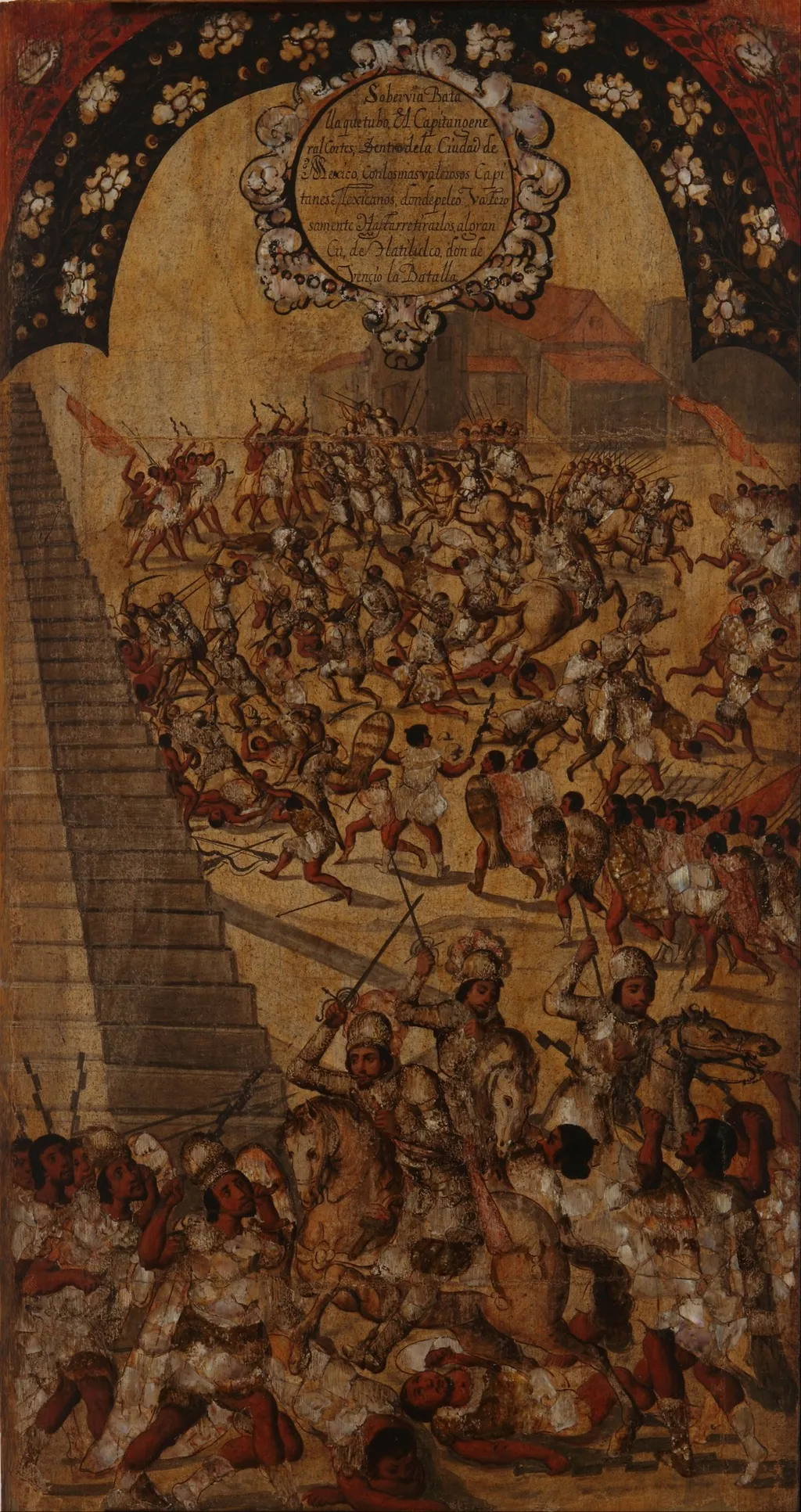
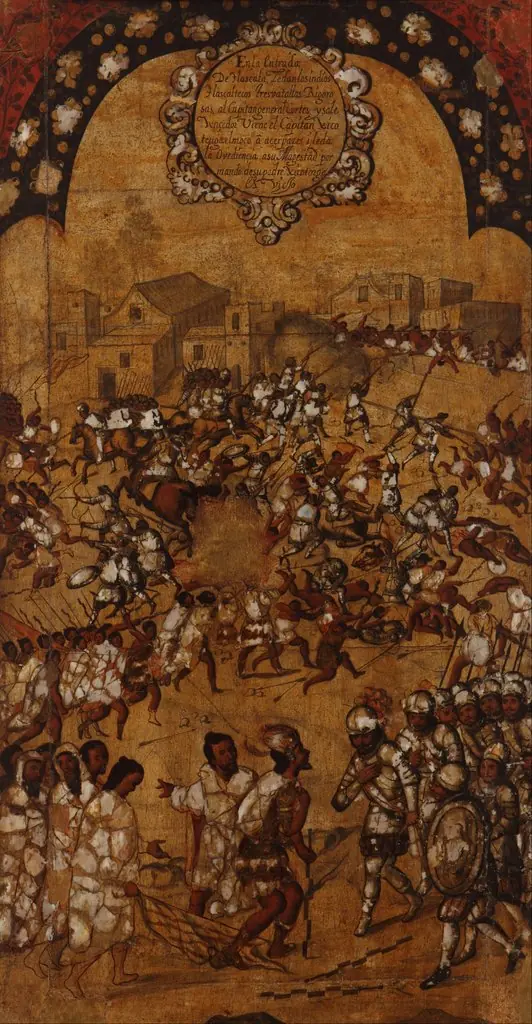
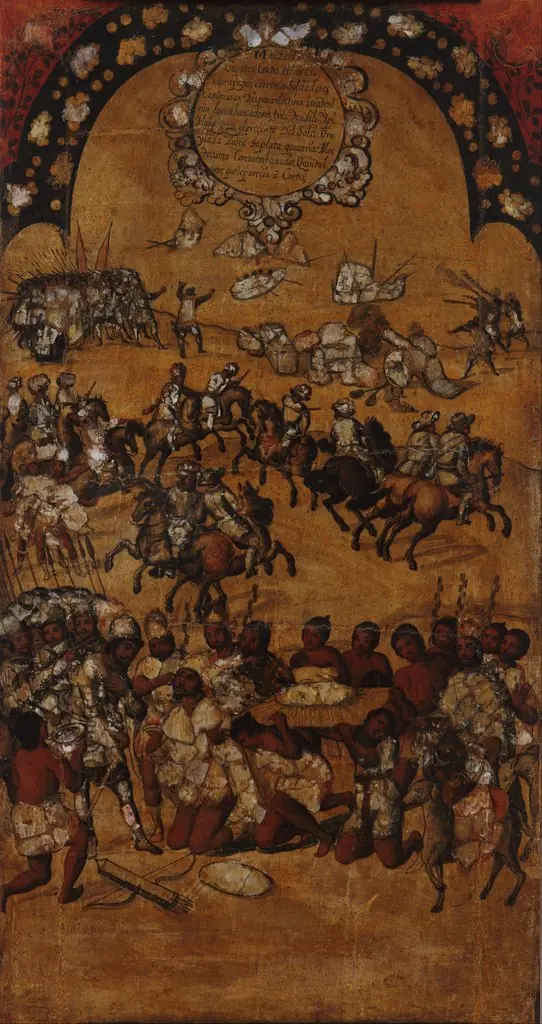
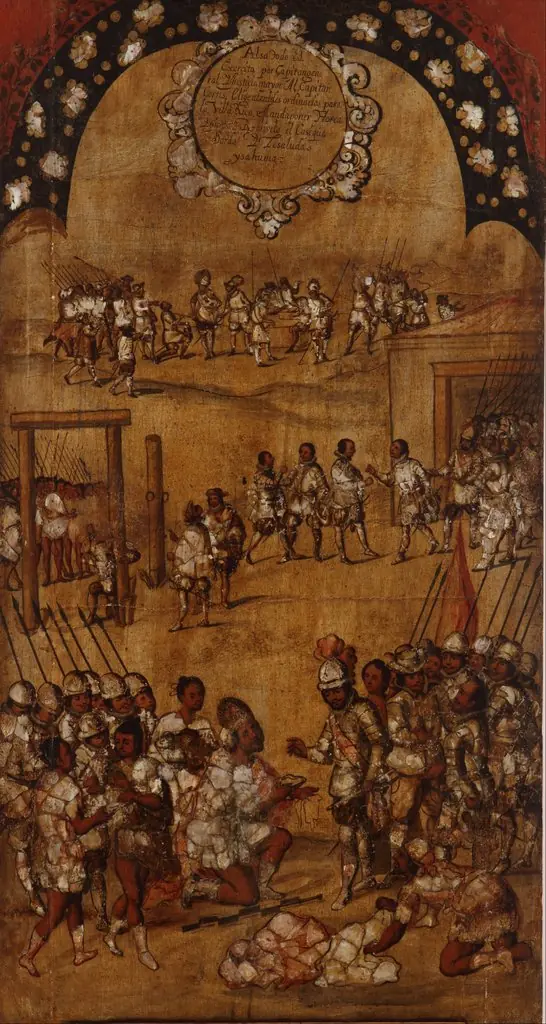
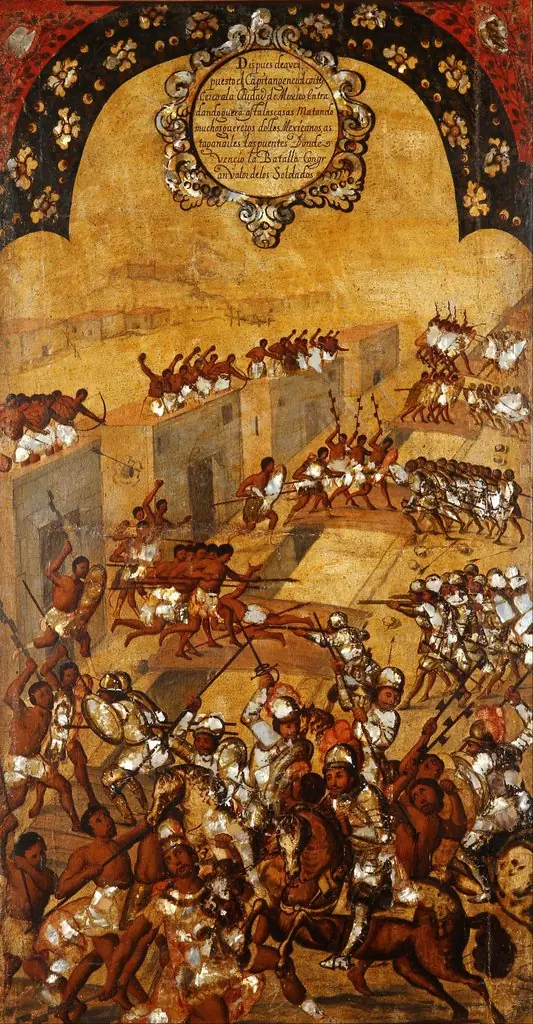
La Conquista de México. Tabla XVI is an unspecified painting by Miguel Gonzales. It dates from 1685 and is held in the collection of the National Museum of Fine Arts, Argentina.
About this work
Overview
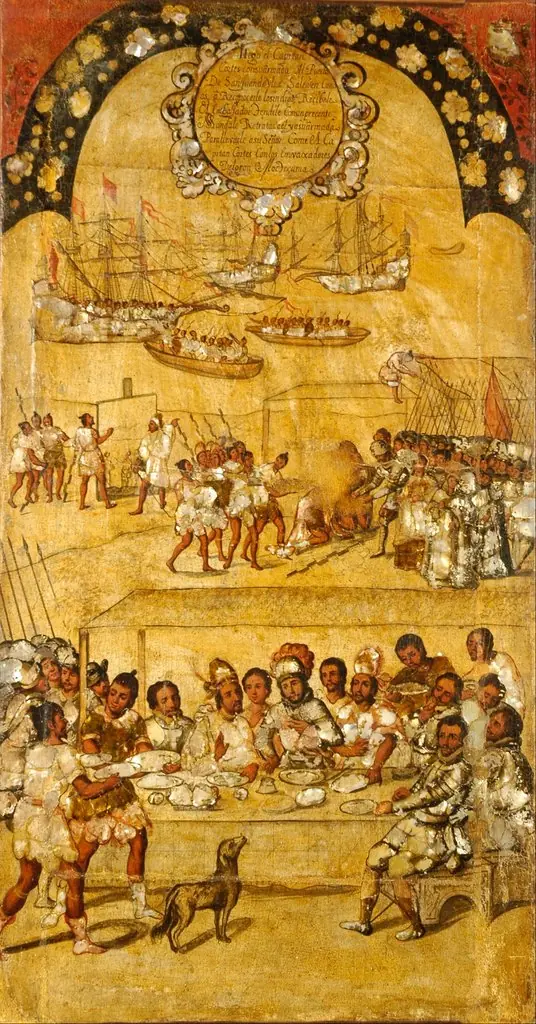
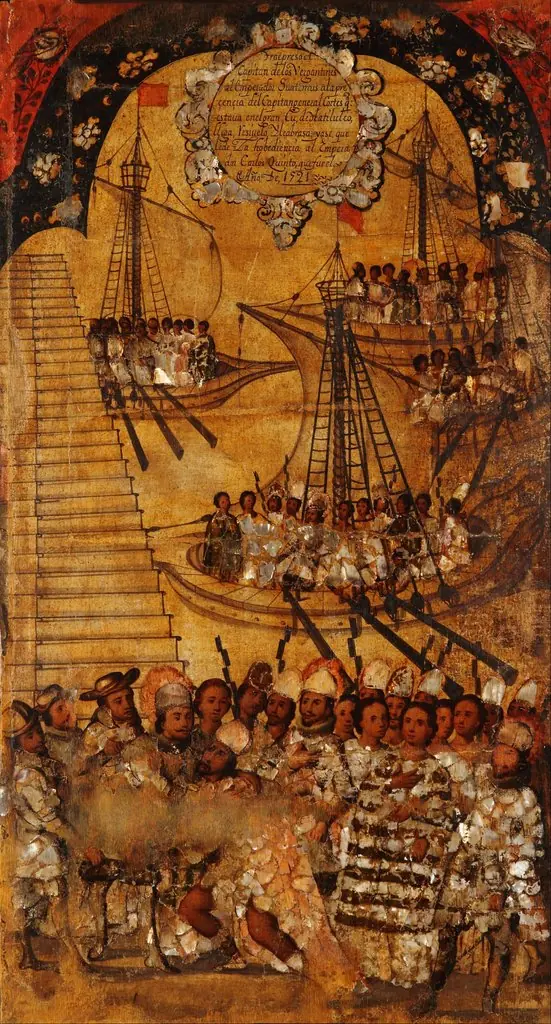
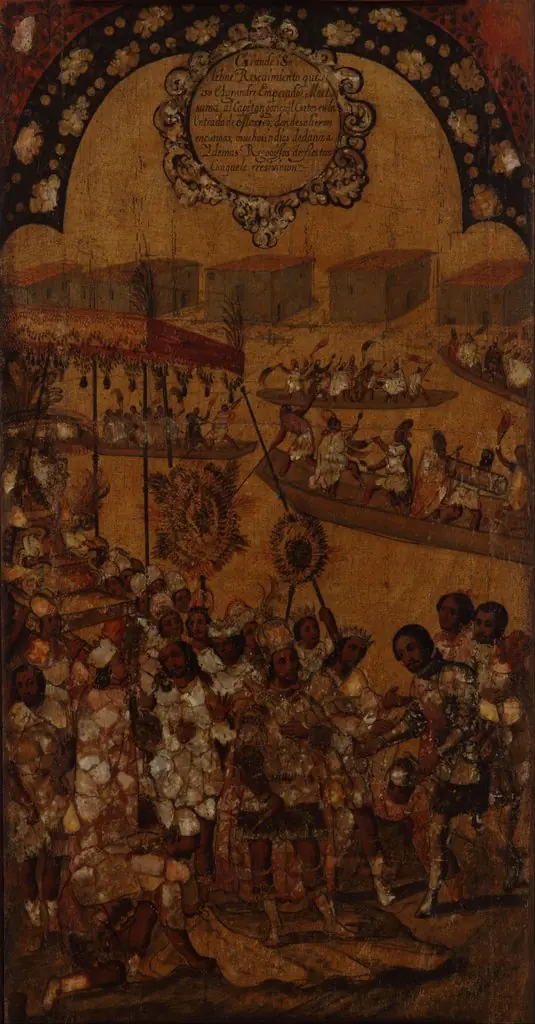
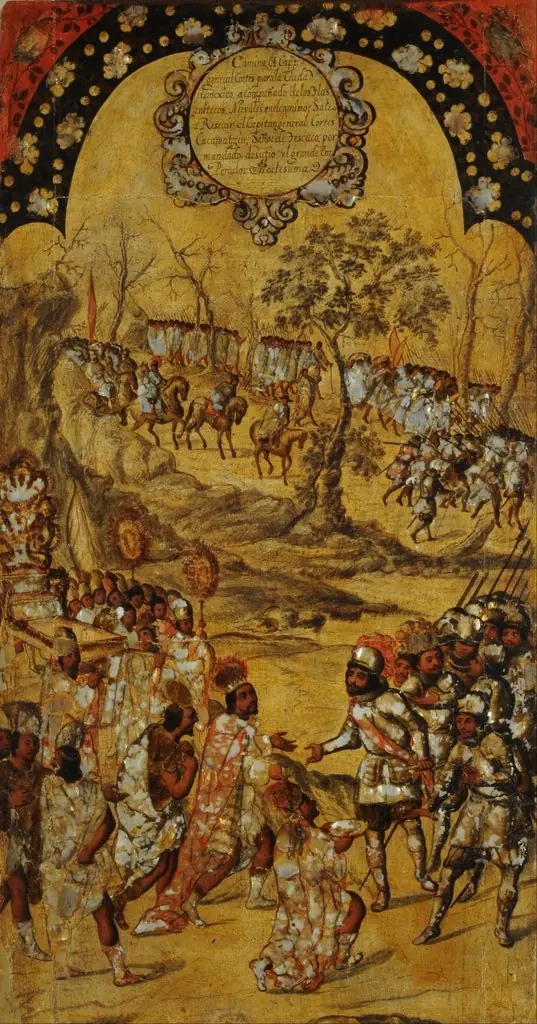
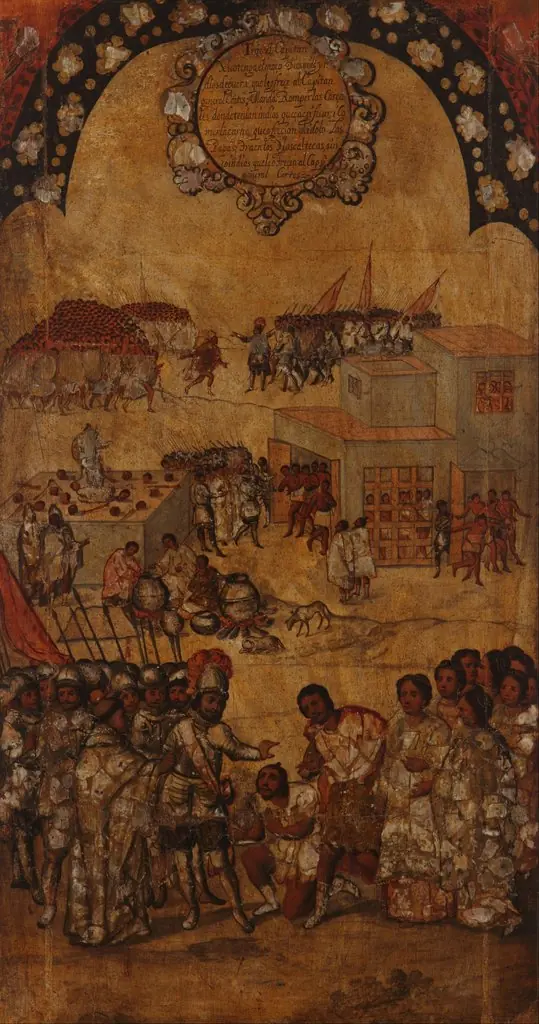
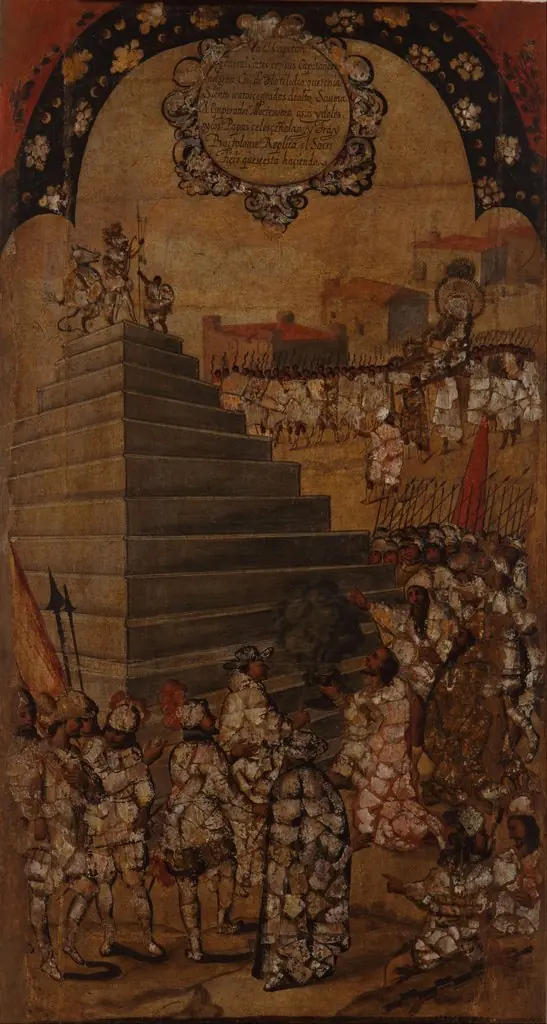
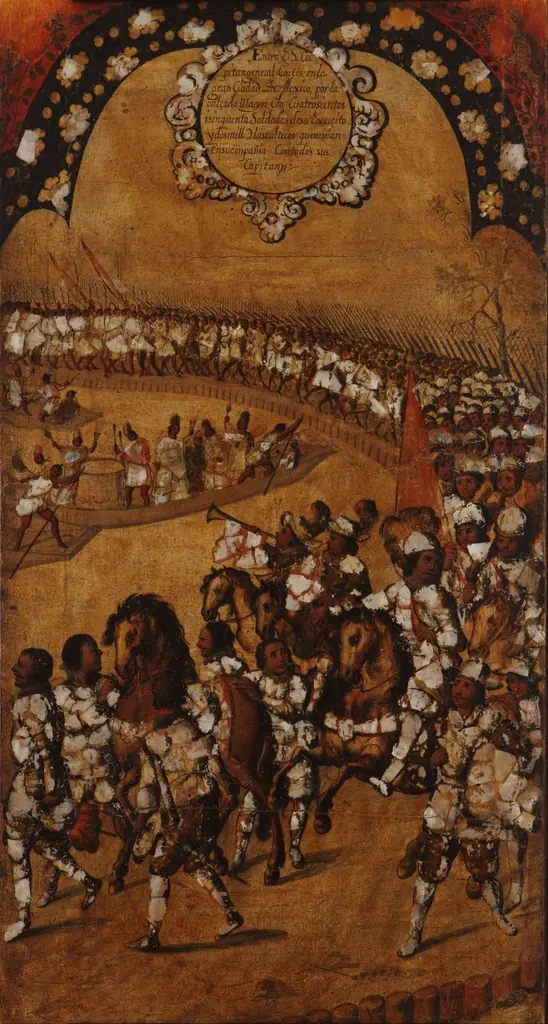
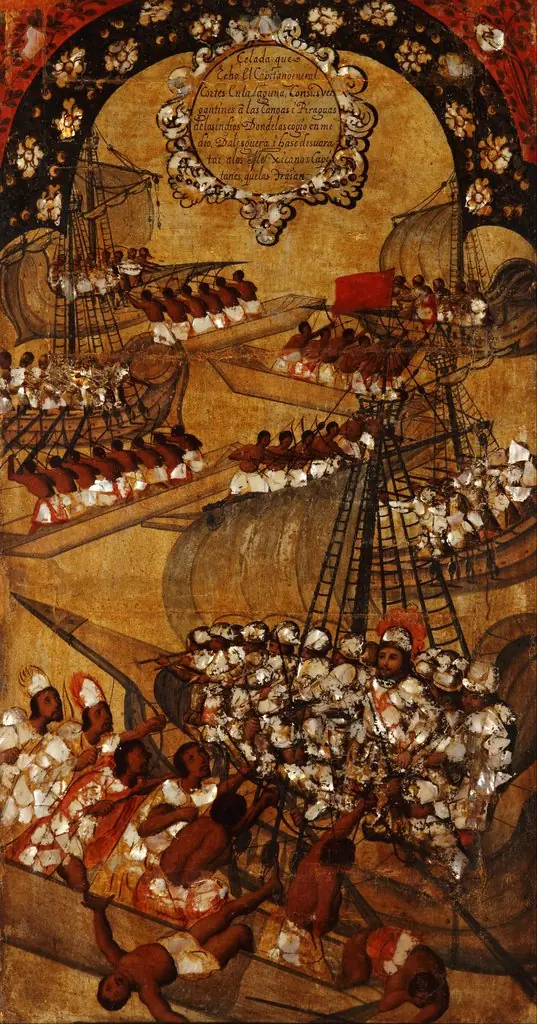
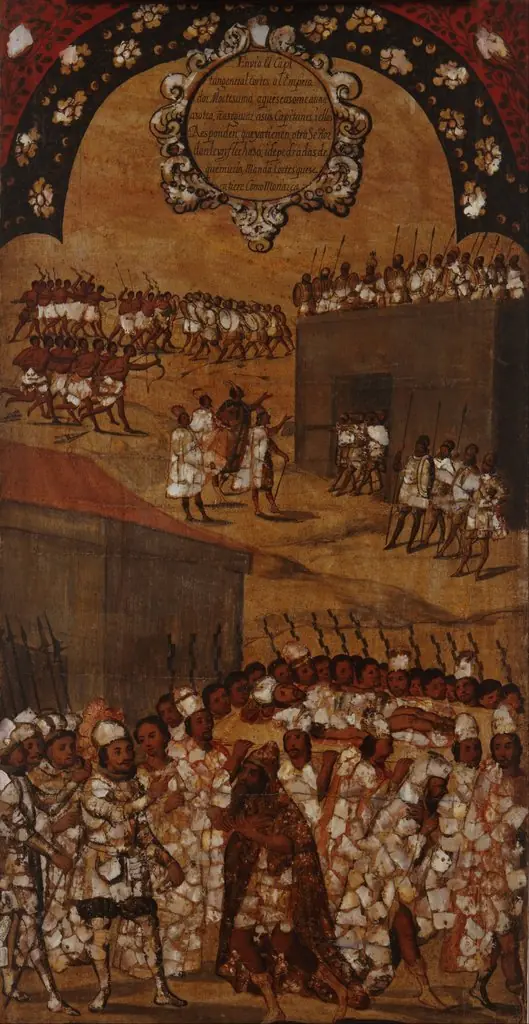
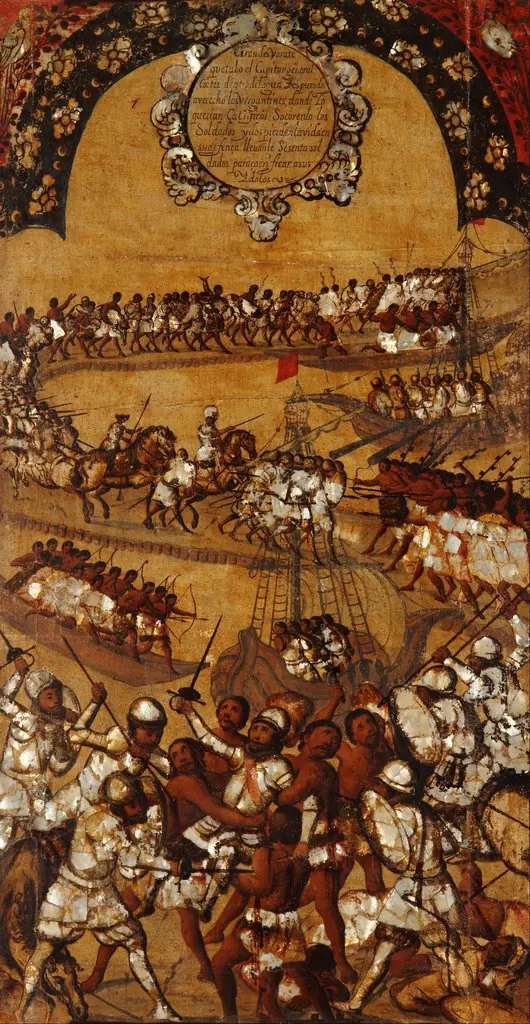
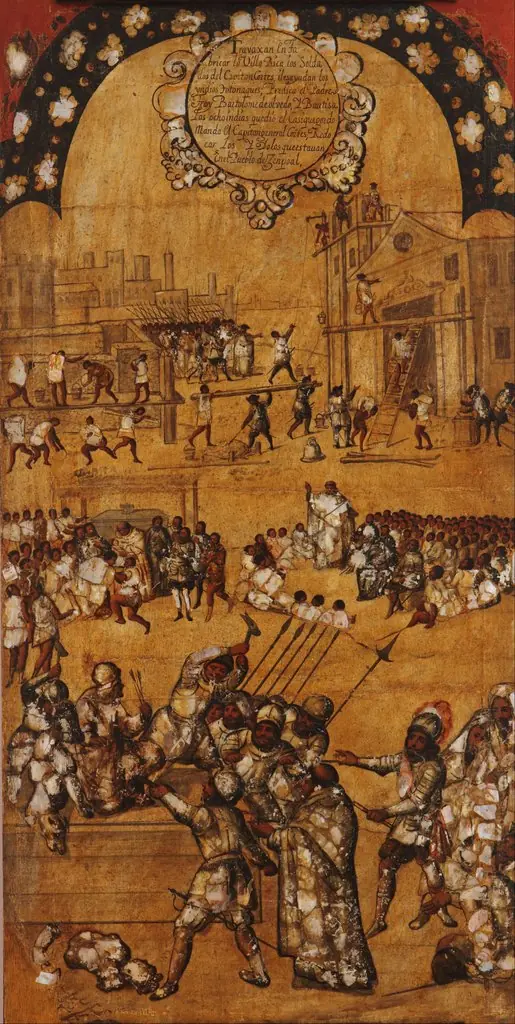
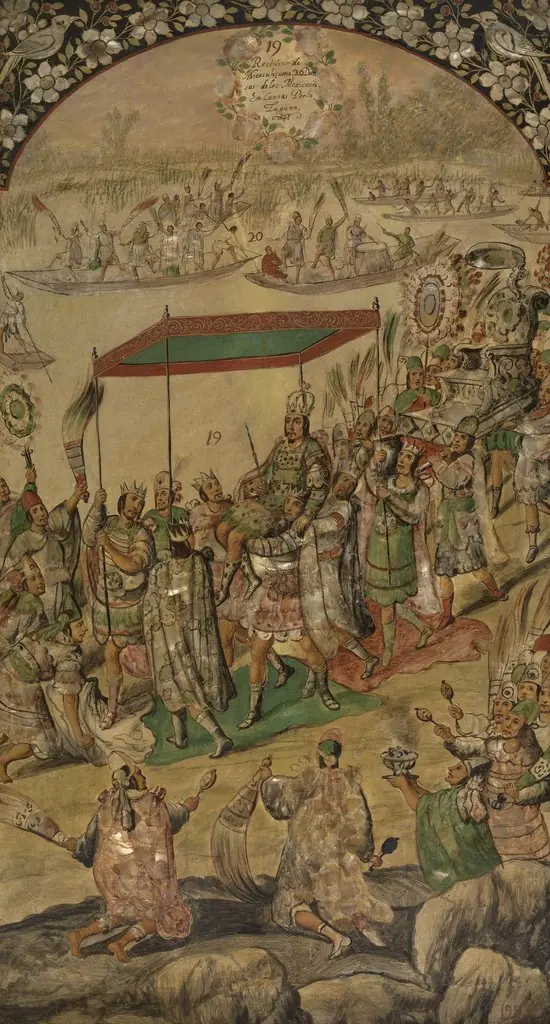
La Conquista de México, Tabla XVI, is an oil painting attributed to Miguel Gonzales and dated to around 1685. The work is part of the collection of the National Museum of Fine Arts in Buenos Aires. It presents a densely populated battlefield where combatants wield swords and spears, some fallen on the ground while others ascend a set of stairs amid a tumultuous scene.
Subject & Meaning
The canvas depicts a moment from the Spanish conquest of Mexico, emphasizing the disorder and violence of the clash between indigenous forces and European invaders. Central figures in helmets and armor confront a mass of opponents, suggesting a narrative of domination and resistance that reflects contemporary colonial perspectives on the encounter.
Technique & Style
Gonzales employs a dramatic chiaroscuro, contrasting deep shadows with illuminated zones to heighten the sense of movement. The composition is crowded, with overlapping bodies and architectural fragments such as arches and ruined structures that frame the action. Brushwork is vigorous, reinforcing the chaotic energy of the melee.
History & Provenance
Created in the late seventeenth century, the painting entered the Argentine national collection during the early twentieth century, though precise acquisition details remain sparse. Its presence in Buenos Aires links the work to broader patterns of Latin American art collecting and the interest in colonial-era subjects.
Context
The piece belongs to a tradition of colonial battle paintings that served both documentary and propagandistic functions. By the 1680s, Spanish artists in the New World often rendered conquest scenes to commemorate victories and legitimize imperial authority, situating Gonzales’s work within this visual discourse.
Artist & collection

Museum
National Museum of Fine Arts, Argentina
Continue through works from the same source collection.