Artwork
Study for the Pawnbroker's Shop
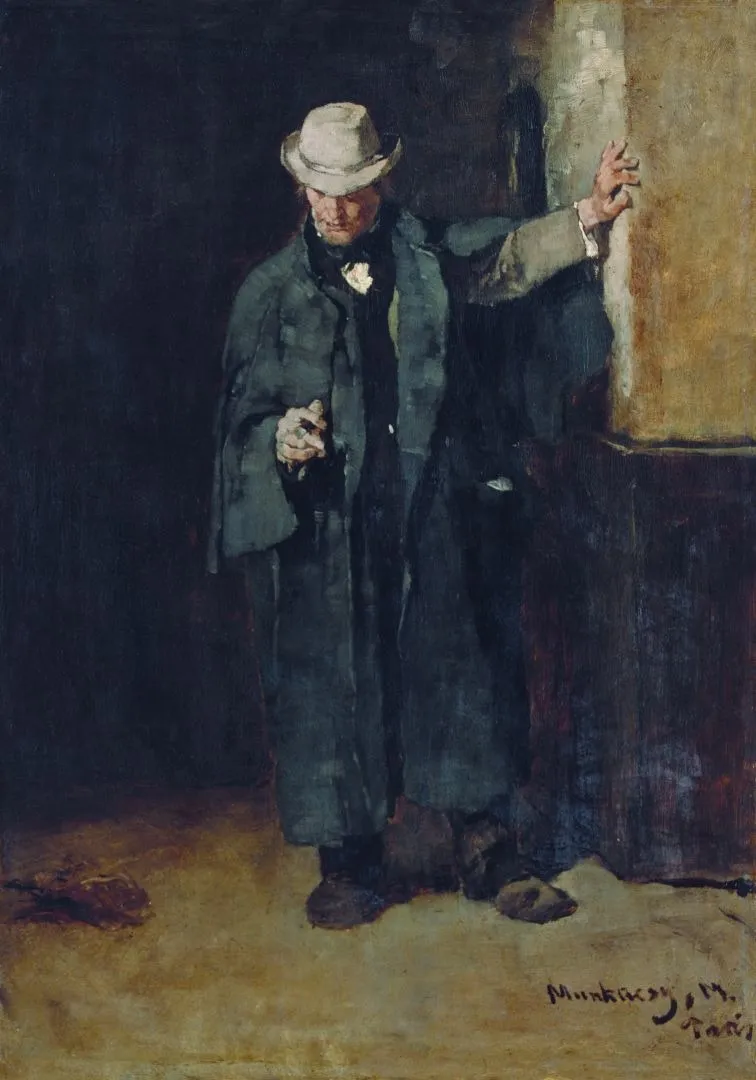
Study for the Pawnbroker's Shop is an oil painting by the Realist artist Mihály Munkácsy. It dates from 1874 and is held in the collection of the Hungarian National Gallery. Mihály Munkácsi’s *Study for the Pawnbroker’s Shop* (1874) is an oil on canvas executed in a realist manner.
About this work
Overview
Mihály Munkácsi’s *Study for the Pawnbroker’s Shop* (1874) is an oil on canvas executed in a realist manner. The work is held by the Hungarian National Gallery and forms part of the artist’s series of genre paintings that explore everyday scenes. Though a preparatory study, it reflects Munkácsi’s interest in portraying ordinary people within modest interiors.
Subject & Meaning
The composition presents a solitary figure, a man in a dark coat and hat, clutching a bottle in his right hand while his left rests on a plain wall. His attire and the subdued setting suggest a lower‑social‑status individual, perhaps a client of a pawnshop, emphasizing the precariousness of daily life in 19th‑century urban Hungary.
Technique & Style
Munkácsi employs a limited, muted palette dominated by deep browns and grays, creating a somber atmosphere that accentuates the texture of the figure’s worn clothing. The brushwork is careful yet economical, capturing the play of light on the wall and the subtle folds of fabric, hallmarks of realist genre painting of the period.
History & Provenance
Painted in 1874, the study was later incorporated into the collection of the Hungarian National Gallery, where it remains on display. It was produced during Munkácsi’s early career, a phase when he was establishing his reputation through small‑scale genre works before turning to larger biblical subjects.
Artist & collection
Artist
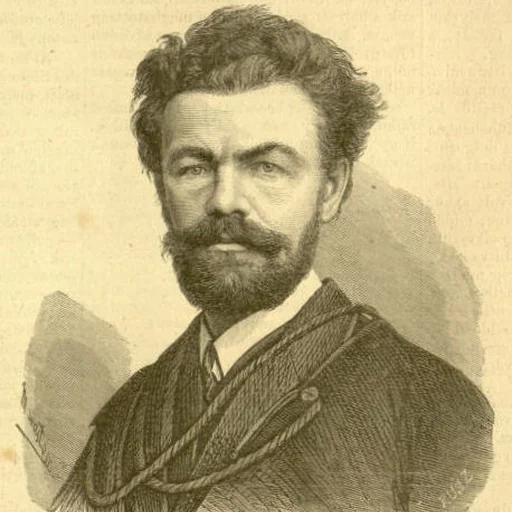
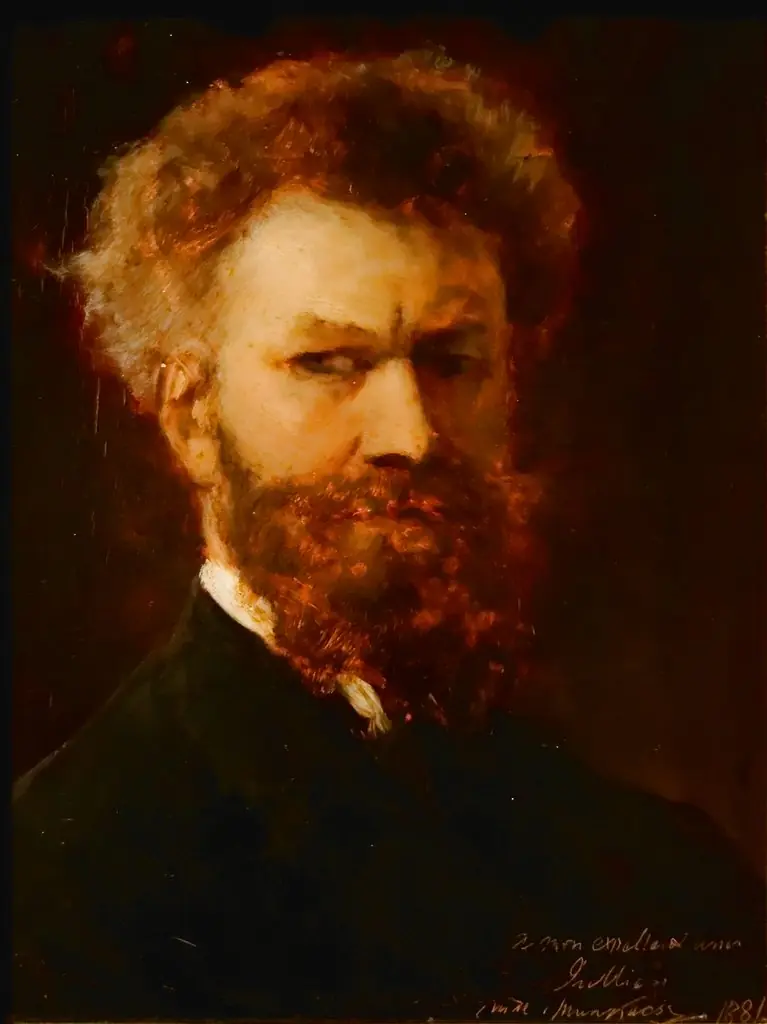
Mihály Munkácsy (Hungarian pronunciation: ; 20 February 1844 – 1 May 1900) was a Hungarian painter. He earned international reputation with his genre pictures and large-scale biblical paintings.

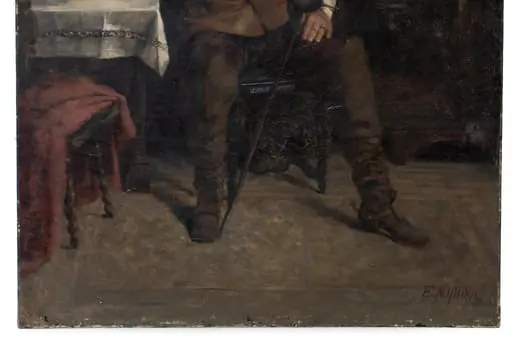 Un cavaler - Porthos
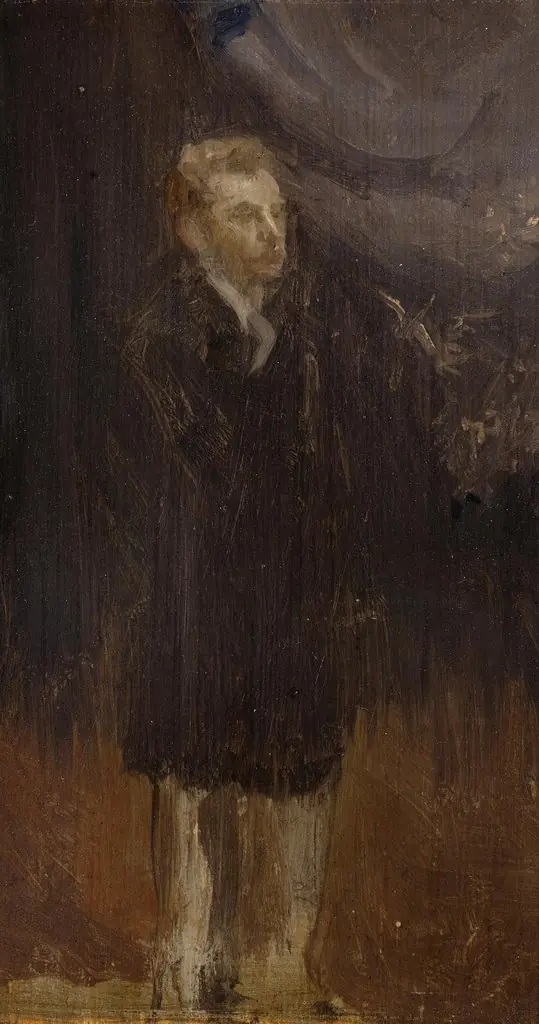 Portrait Study of a Man
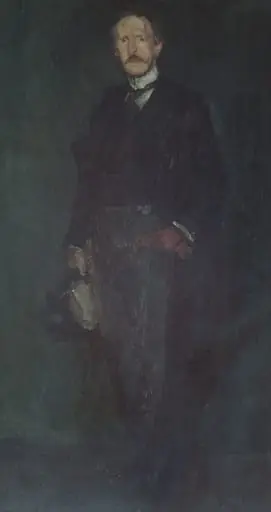 Edward Guthrie Kennedy
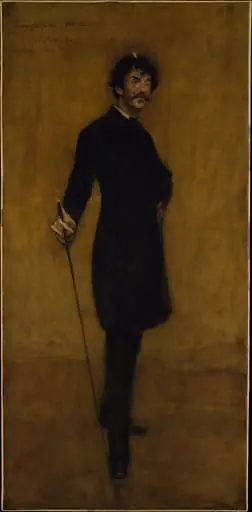 James Abbott McNeill Whistler
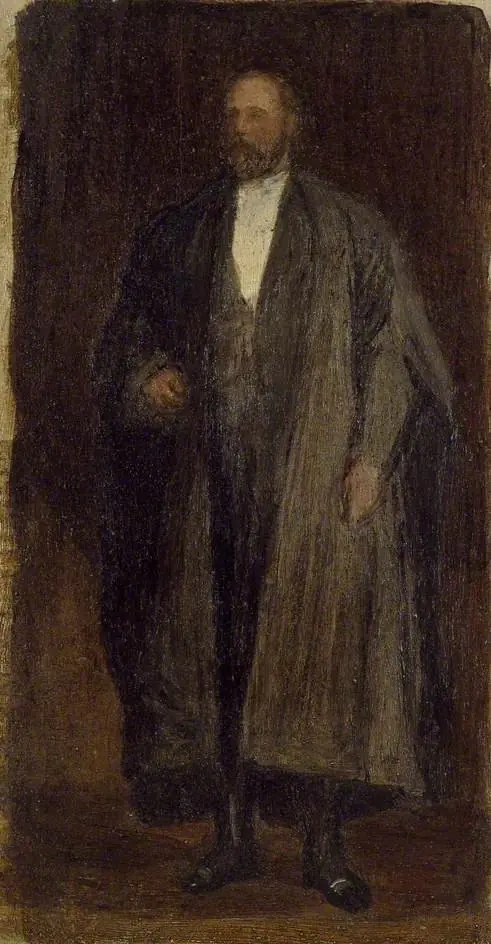 Edward VII as Prince of Wales
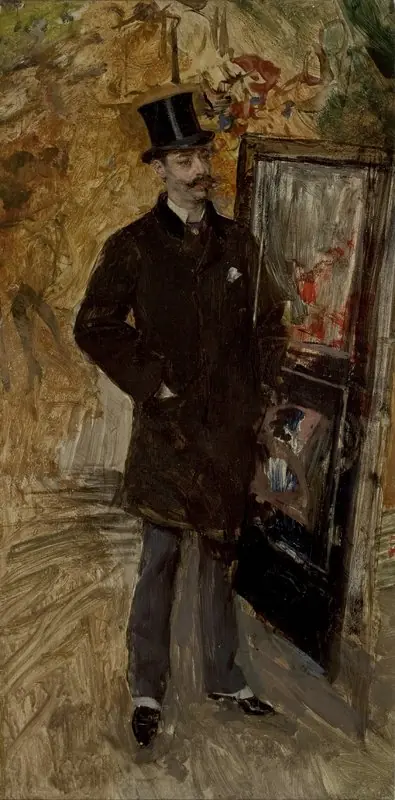 Retrato de homem com cartola: o poeta Hanvin, o homem do fígaro
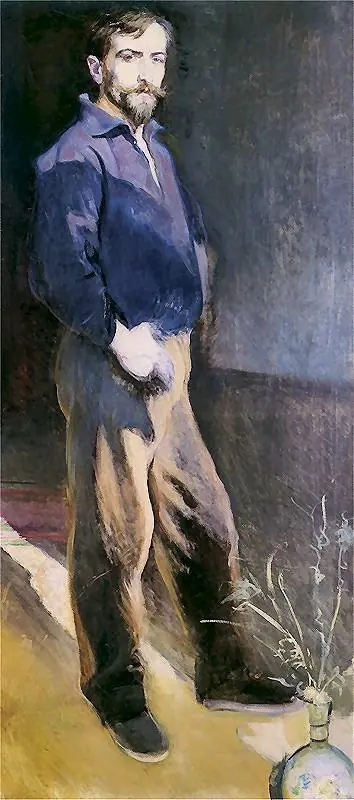 Self-portrait.
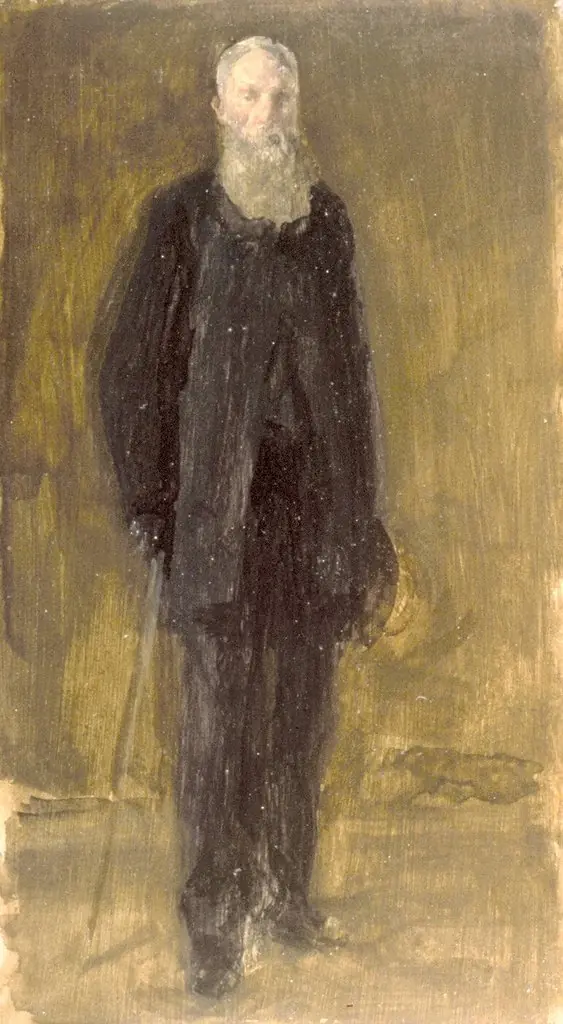 Portrait of George A. Lucas
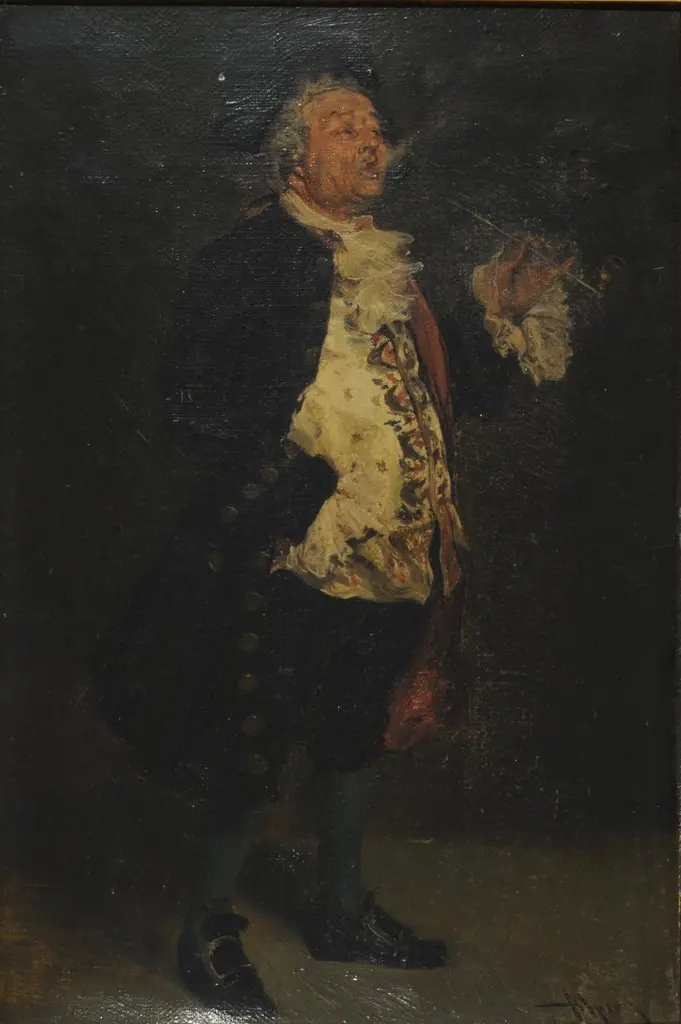 Smoker
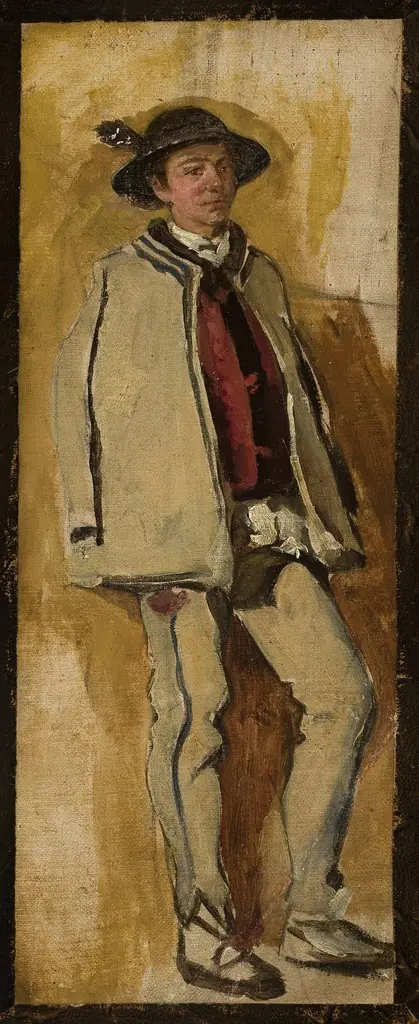 Portrait of a young Highlander
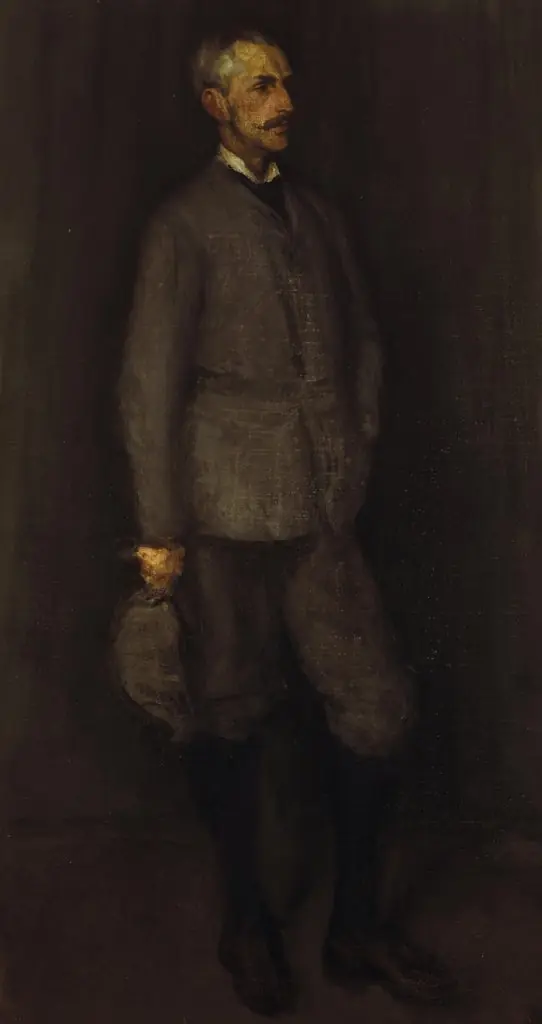 Arrangement in Grey and Green. Portrait of John James Cowan
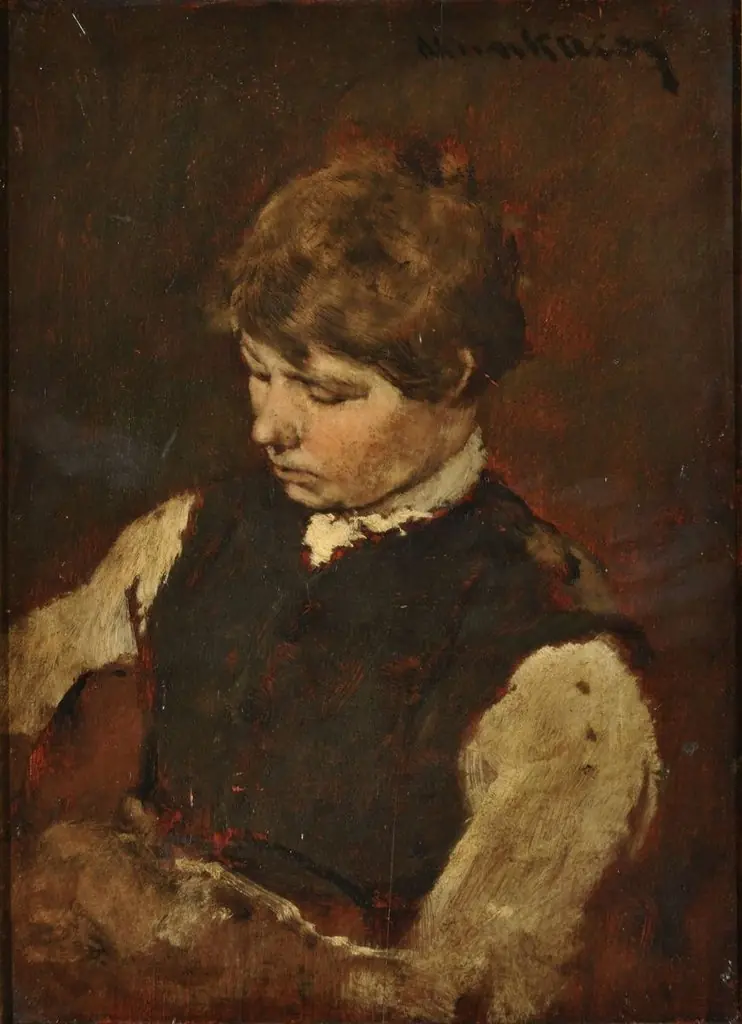 Male Study for the Pawnbroker's Shop