Artwork
Study for the Village Hero
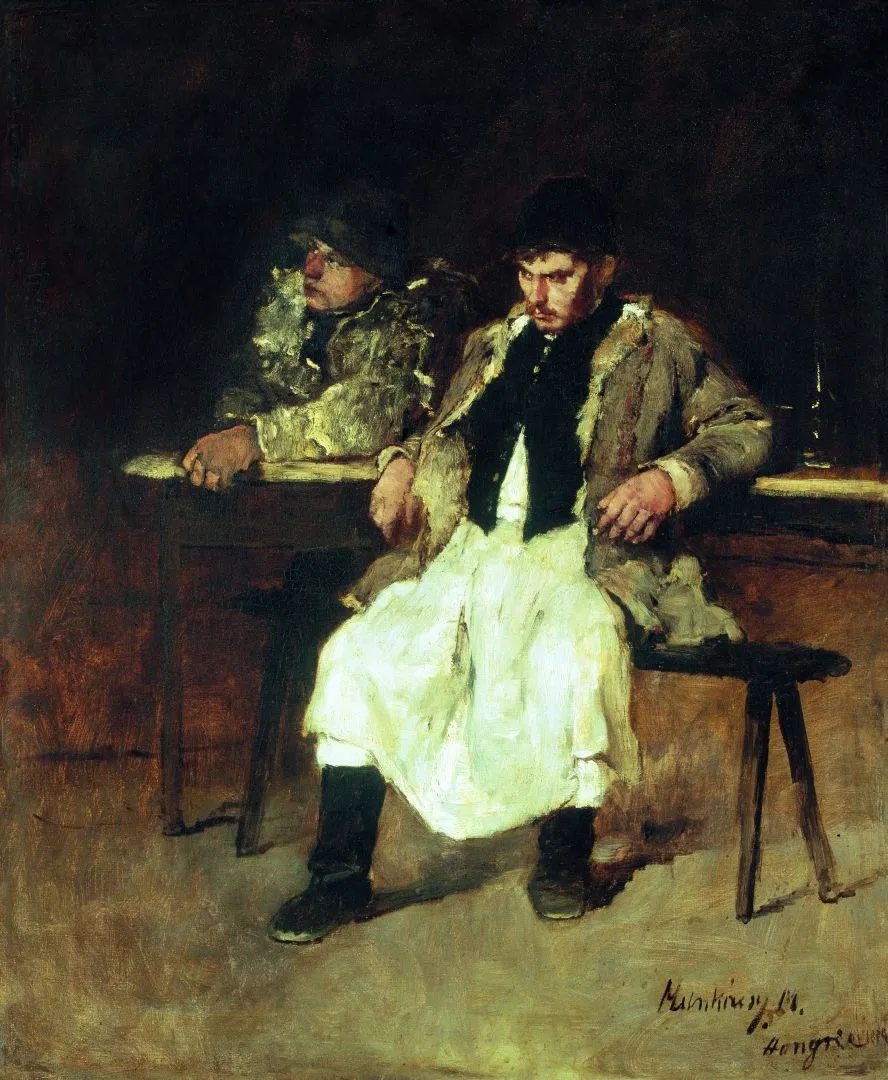
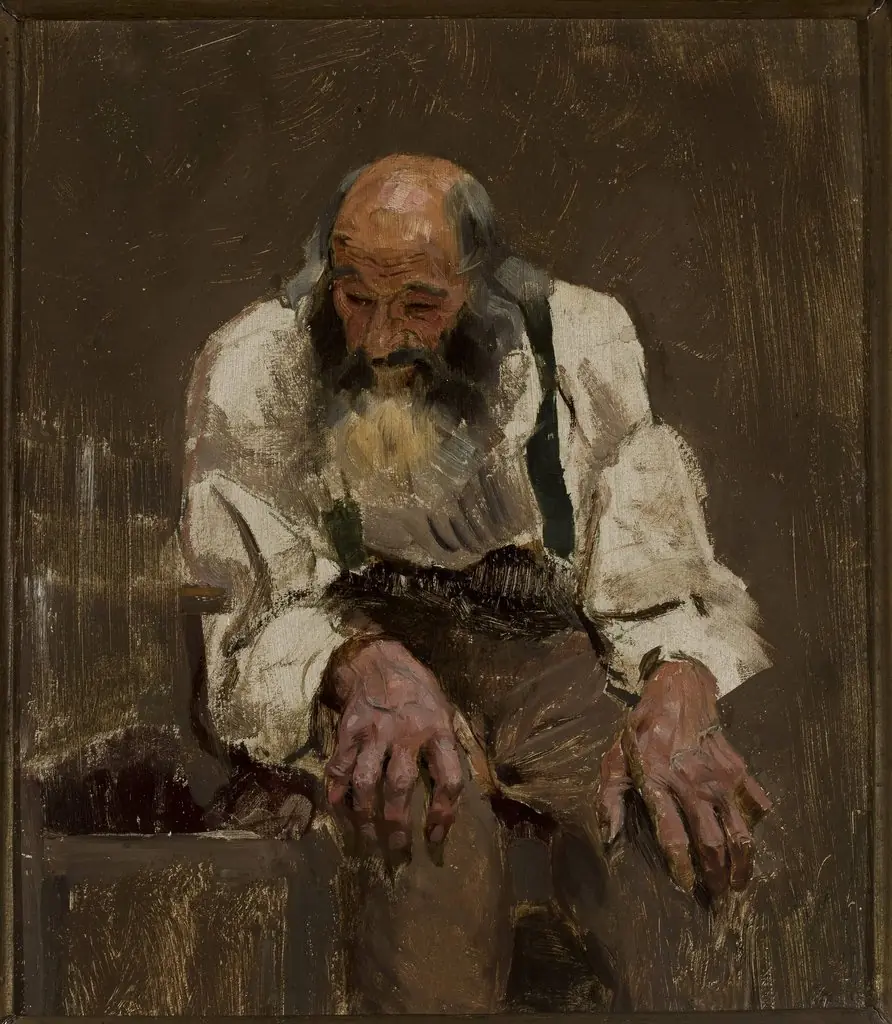
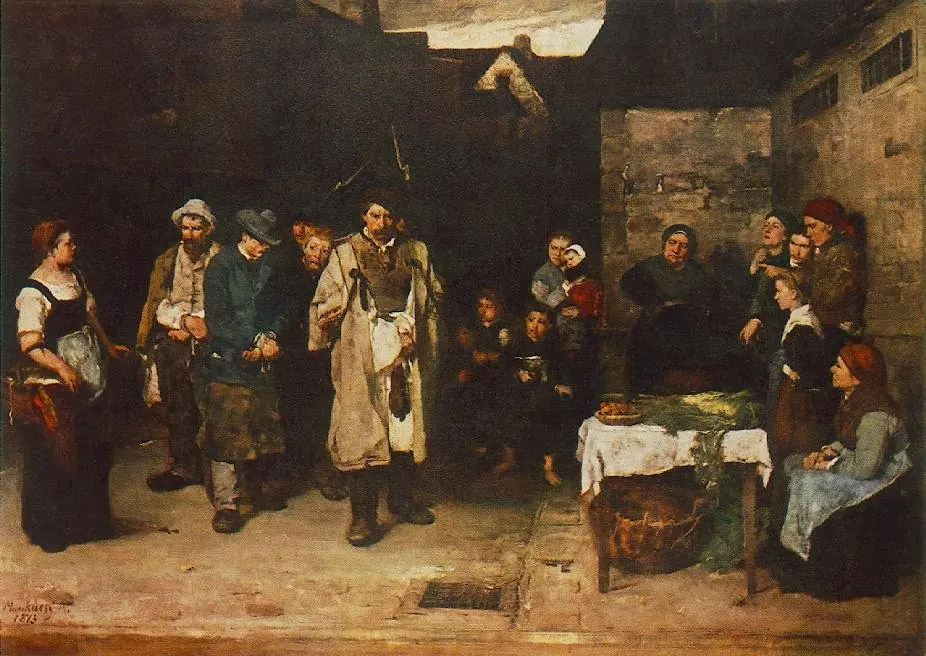
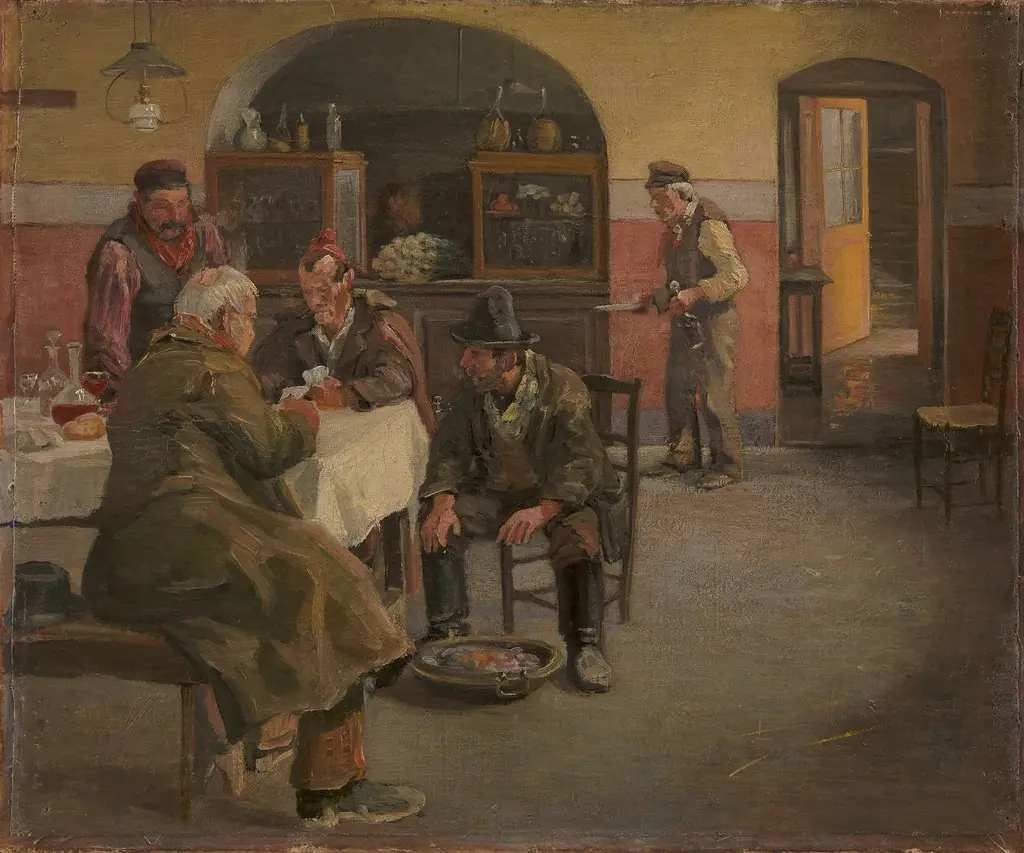
Study for the Village Hero is an oil painting by the Realist artist Mihály Munkácsy. It dates from 1874 and is held in the collection of the Hungarian National Gallery.
About this work
Overview
Painted in 1874, this oil on canvas study by Mihály Munkácsy is a preparatory work for a larger composition. It reflects the artist’s focus on ordinary individuals during a phase of rising international acclaim. Executed with careful attention to form and atmosphere, the piece exemplifies Munkácsy’s commitment to Realism, capturing quiet moments of rural life without idealization.
Subject & Meaning
No narrative is overt; the power lies in the dignity of the unremarkable moment, characteristic of Munkácsy’s humanist approach.
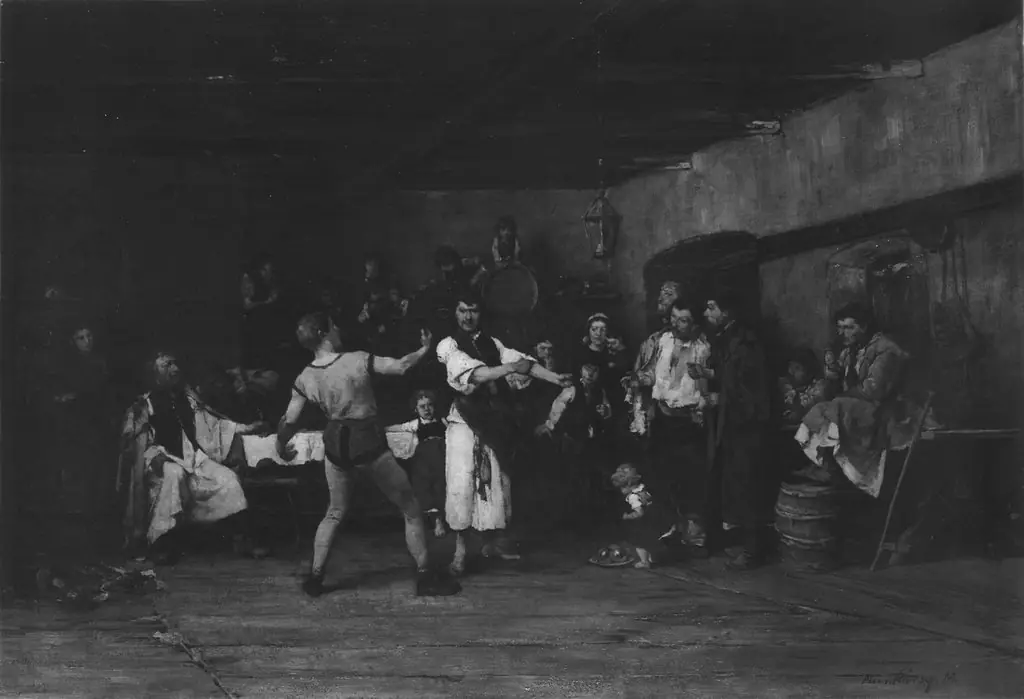
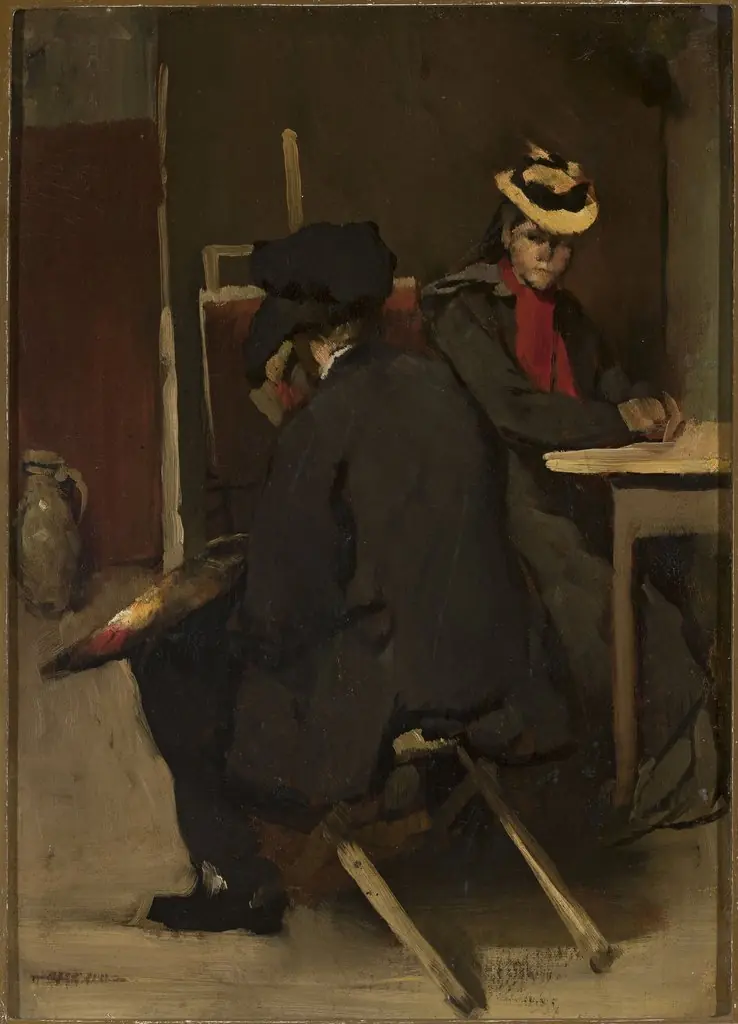
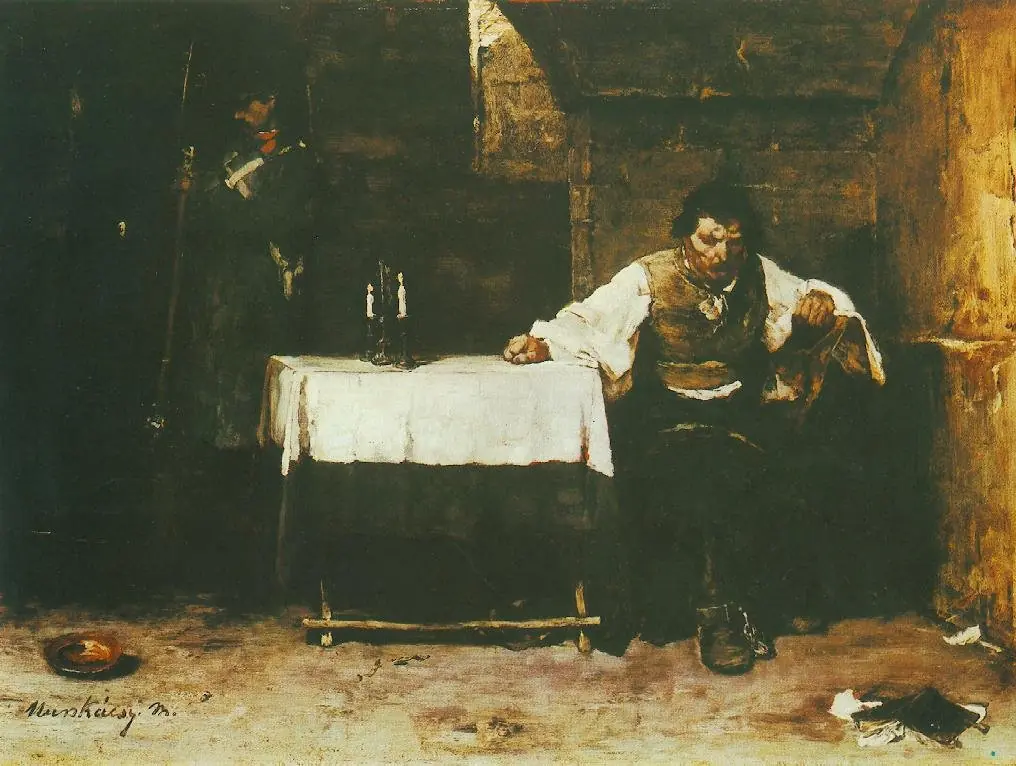
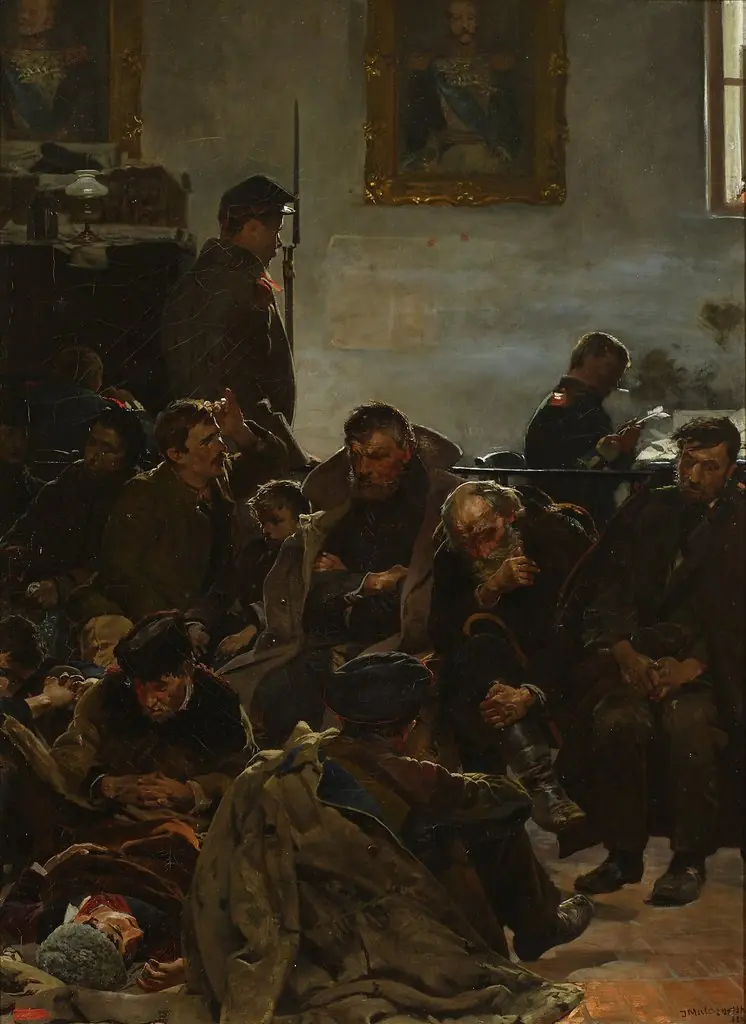
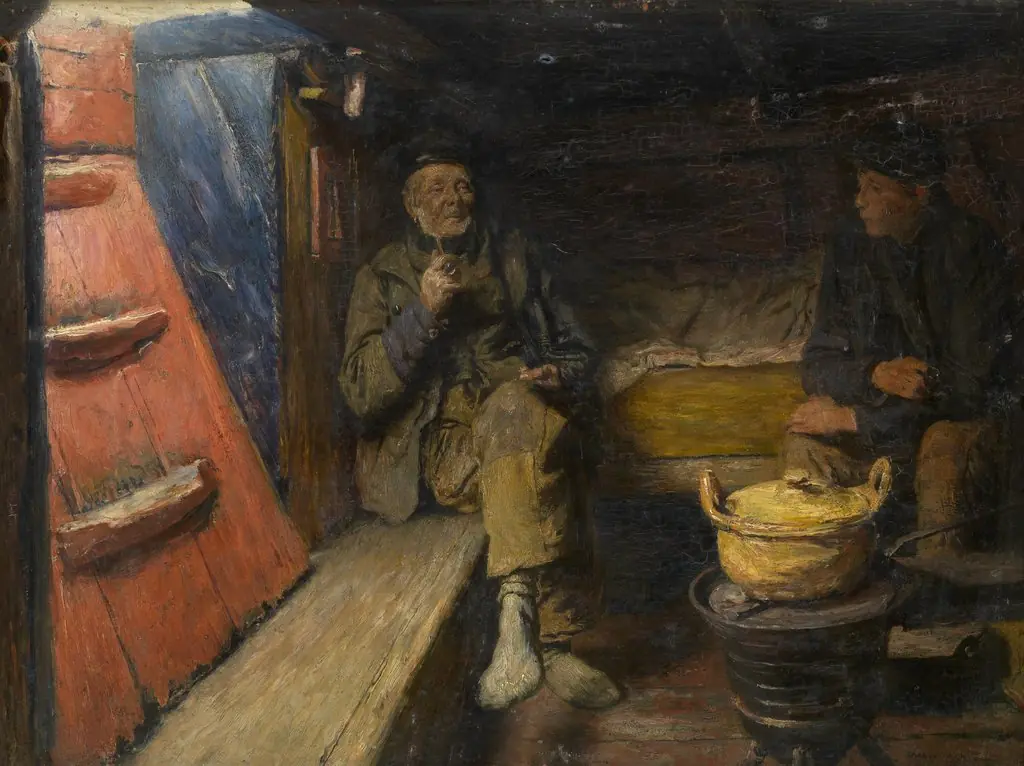
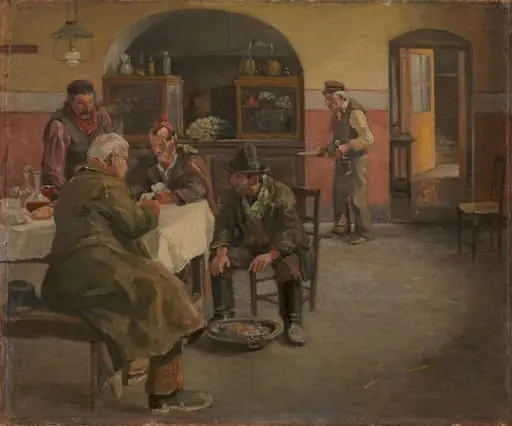
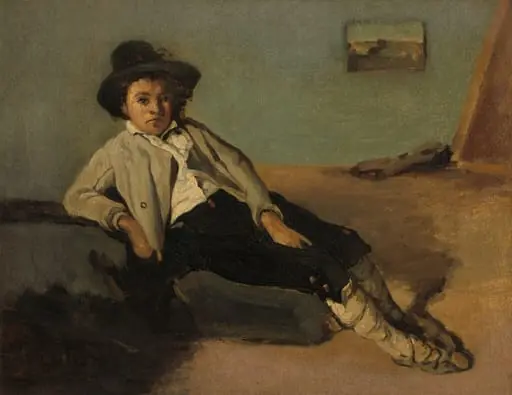
Two men are seated at a table, one turned away, the other facing the viewer. Their attire—simple, worn, and regionally distinct—suggests rural laborers or villagers. The stillness of the scene and the direct gaze of the foreground figure imply introspection or quiet conversation. No narrative is overt; the power lies in the dignity of the unremarkable moment, characteristic of Munkácsy’s humanist approach.
Technique & Style
Munkácsy employs strong chiaroscuro, with light falling from the left to model the figures against a dark, indistinct background. Brushwork is deliberate yet visible, building texture in fabric and skin without smoothing into polish. The palette is restrained—earthy tones dominate, with white and black accents heightening contrast. This technique emphasizes physical presence over decorative detail.
History & Provenance
Created during Munkácsy’s early career, this study predates his major biblical paintings but aligns with his growing reputation for authentic genre scenes. It entered the collection of the Hungarian National Gallery, where it remains as part of a broader effort to preserve national artistic heritage. Its survival as a study suggests its value to the artist’s process, not merely as a sketch but as a resolved work in its own right.
Context
In the 1870s, Hungarian artists were increasingly turning to domestic subjects amid rising national consciousness. Munkácsy, trained in Munich and active across Europe, brought international Realist techniques to Hungarian rural life. This study reflects a broader trend: elevating the common person through careful observation, countering romanticized or historical themes dominant in academic art.
Legacy
Though less known than Munkácsy’s large-scale religious works, this study exemplifies his foundational skill in portraying psychological depth through ordinary subjects. It influenced later Hungarian Realists who sought to document social life with empathy. Its preservation in the national collection underscores its role as a touchstone for 19th-century Hungarian painting’s shift toward authenticity.
Artist & collection
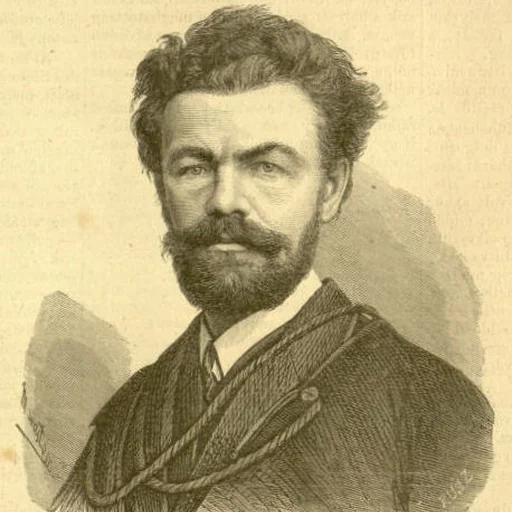
Artist
Mihály Munkácsy (Hungarian pronunciation: ; 20 February 1844 – 1 May 1900) was a Hungarian painter. He earned international reputation with his genre pictures and large-scale biblical paintings.