Artwork
The Convict (Condemned Cell)
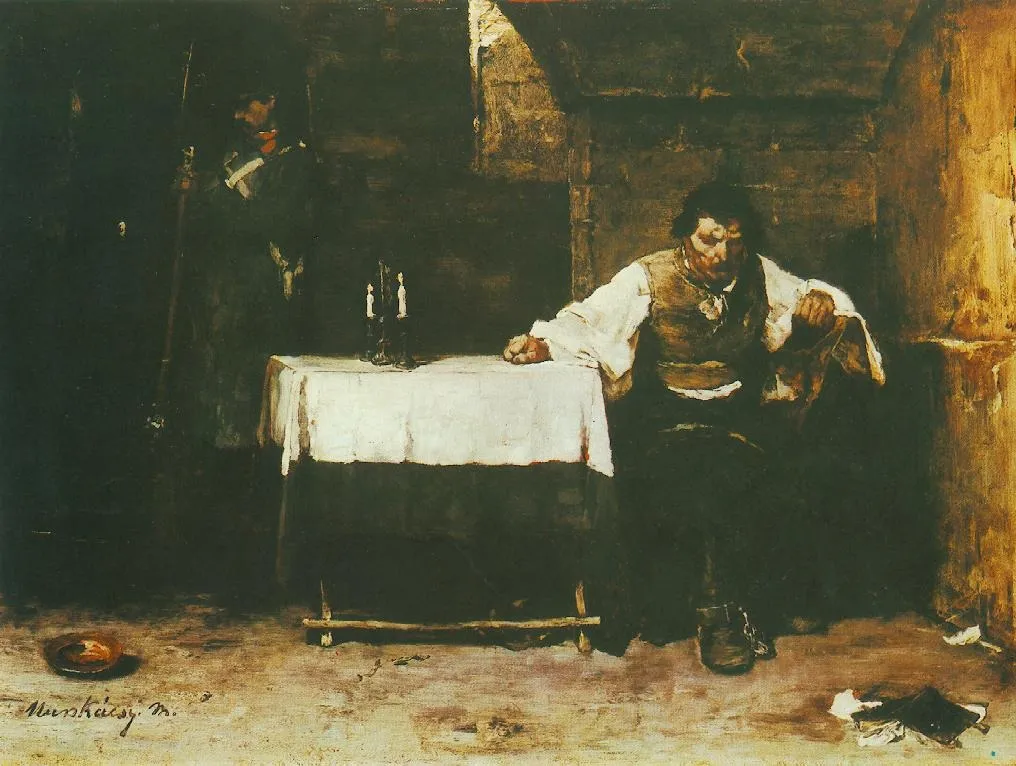
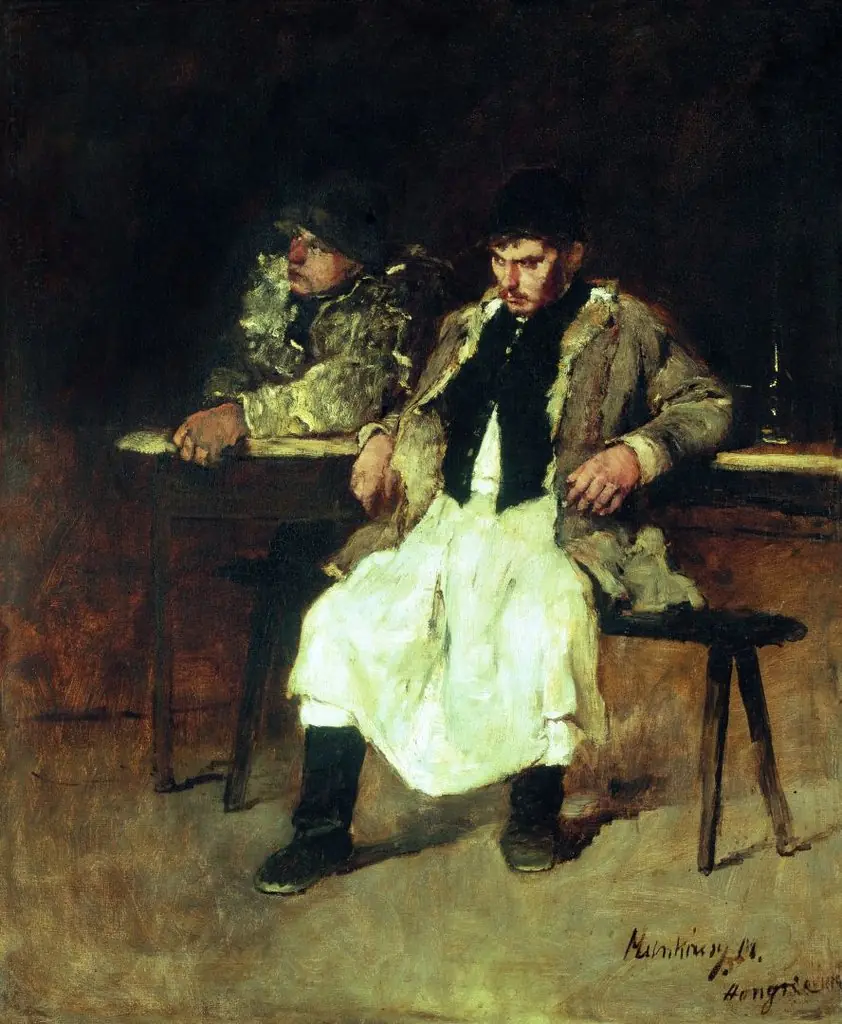
The Convict (Condemned Cell) is an oil painting by the Realist artist Mihály Munkácsy. It dates from 1870 and is held in the collection of the Hungarian National Gallery.
About this work
Overview
Created in 1870 by Hungarian painter Mihály Munkácsy, *The Convict (Condemned Cell)* is an oil painting that resides in the Hungarian National Gallery. Executed during Munkácsy’s realist phase, the work presents a solitary inmate within a dimly lit confinement, emphasizing the physical and psychological weight of imprisonment.
Subject & Meaning
The composition centers on a man seated at a simple table, his head bowed and his right hand clutching a piece of cloth. Dressed in a white shirt beneath a dark vest, he is illuminated by a single candle that throws a warm glow across his face. The muted surroundings and his resigned expression suggest introspection and the quiet sorrow of a condemned life.
Technique & Style
Munkácsy employs chiaroscuro to model the figure, allowing the candlelight to carve out depth and volume against the stone walls and narrow window. The contrast between light and shadow creates a somber atmosphere while directing focus to the inmate’s face, highlighting the painter’s skill in rendering texture and emotional nuance within a restrained, rustic setting.
History & Provenance
The painting was produced as part of Munkácsy’s early realist output, a period when he explored everyday human conditions alongside larger biblical subjects. After its completion, the work entered the collection of the Hungarian National Gallery, where it remains on display as a representative example of the artist’s engagement with social realism in the late nineteenth century.
Artist & collection
Artist
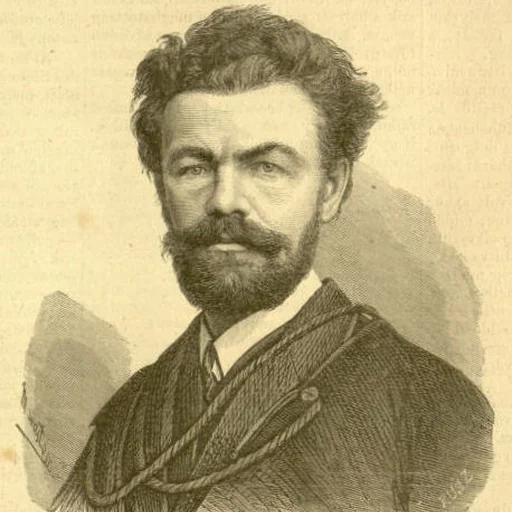
Mihály Munkácsy (Hungarian pronunciation: ; 20 February 1844 – 1 May 1900) was a Hungarian painter. He earned international reputation with his genre pictures and large-scale biblical paintings.