Artwork
In the painter's studio
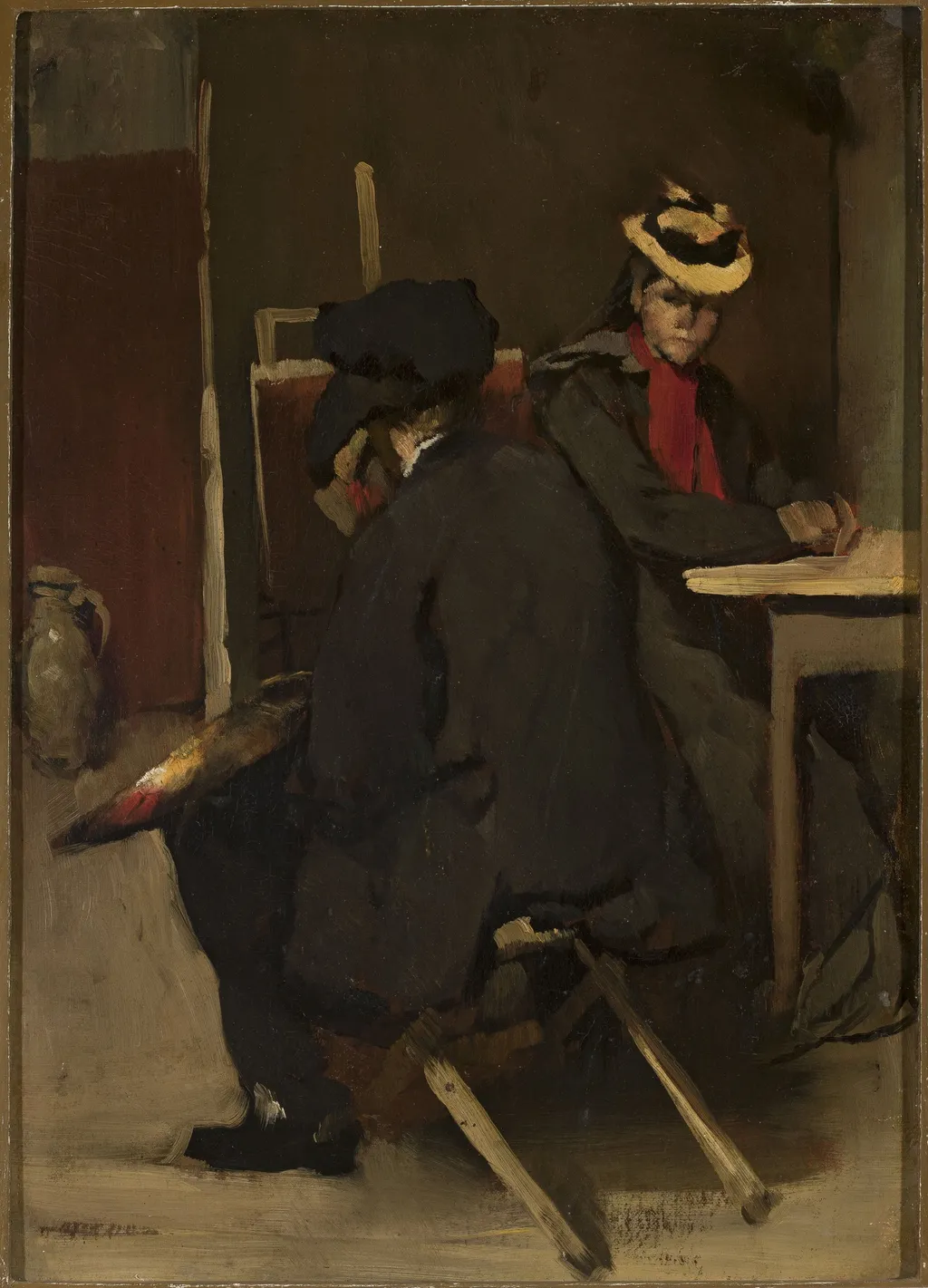
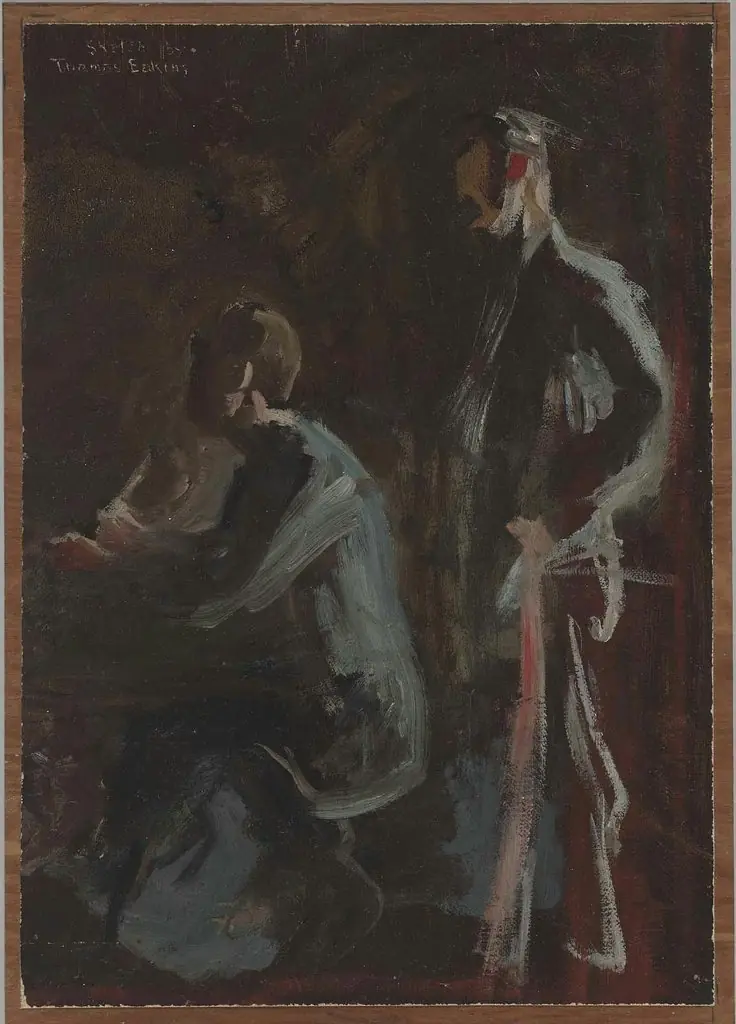
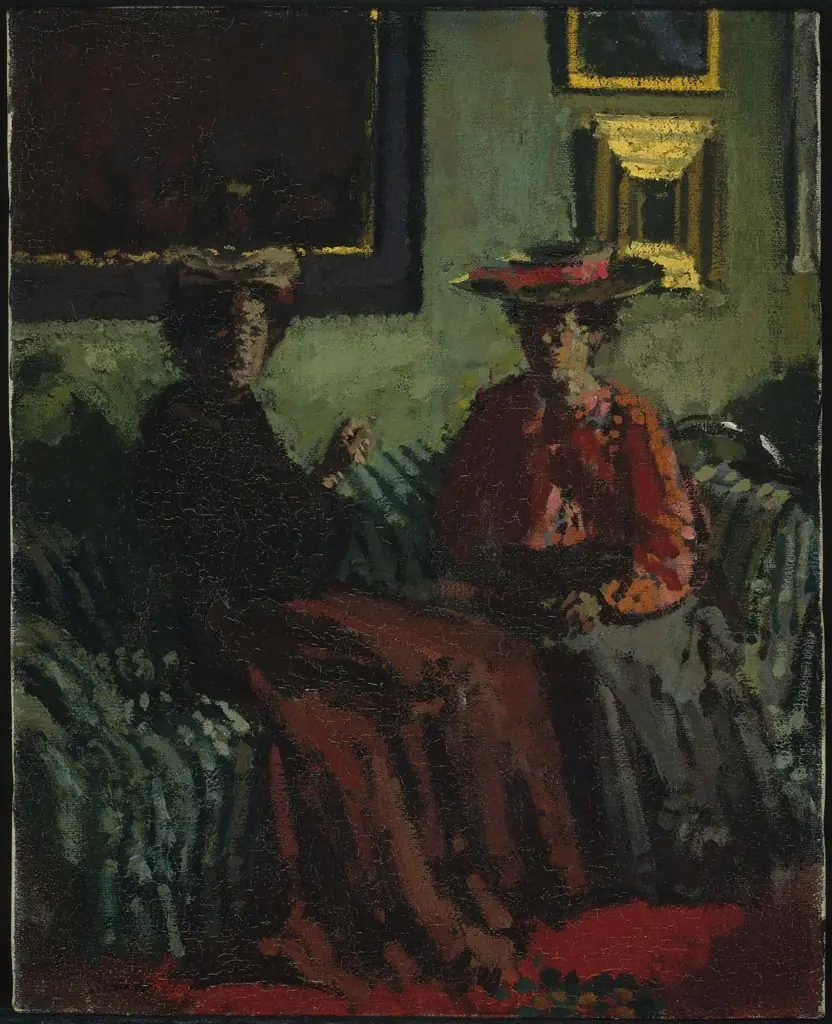
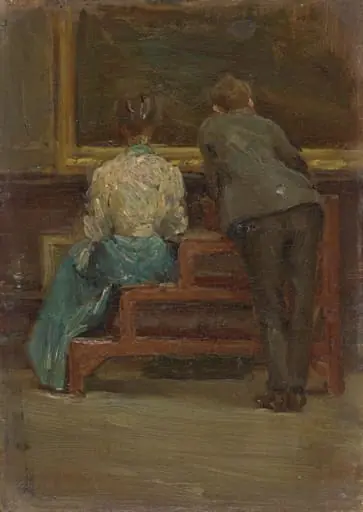
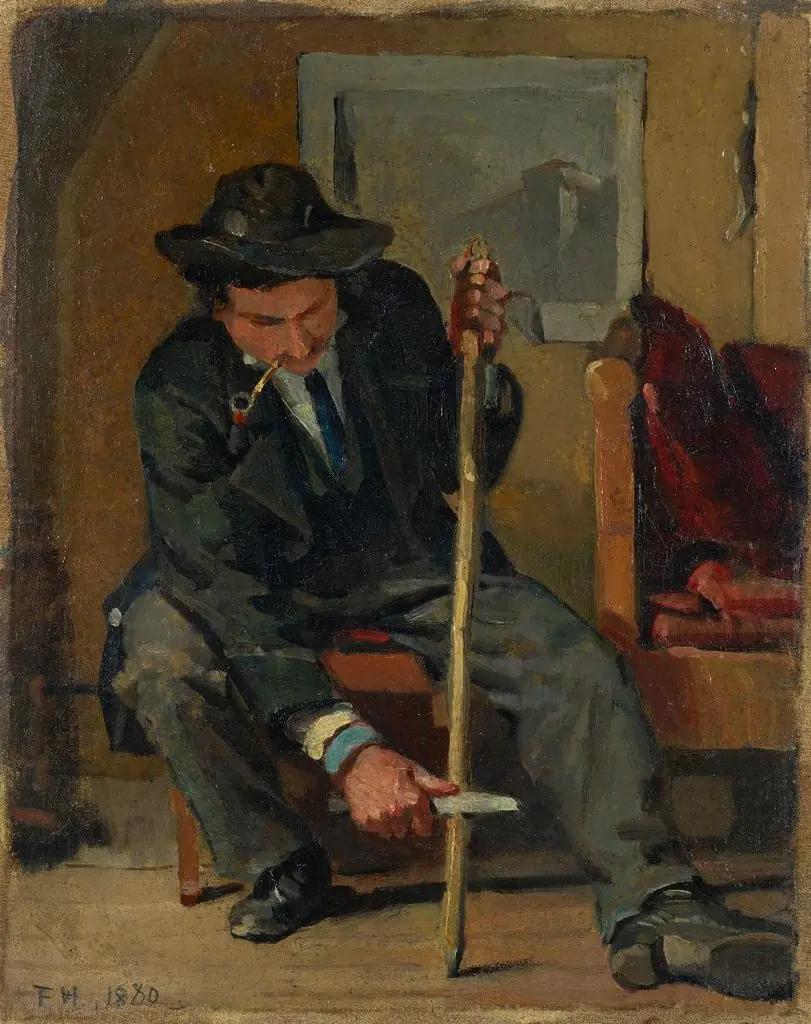
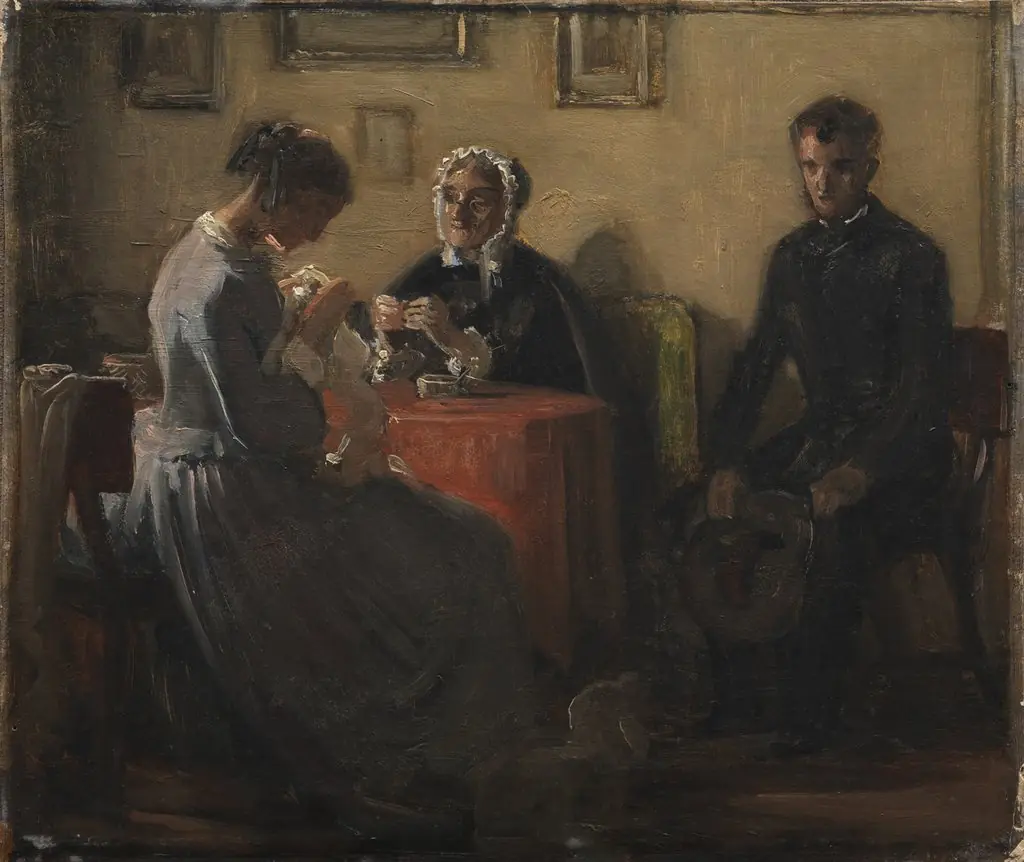
In the painter's studio is an oil painting by Rudolf Hirth du Frênes. It dates from 1891 and is held in the collection of the National Museum in Warsaw.
About this work
Overview
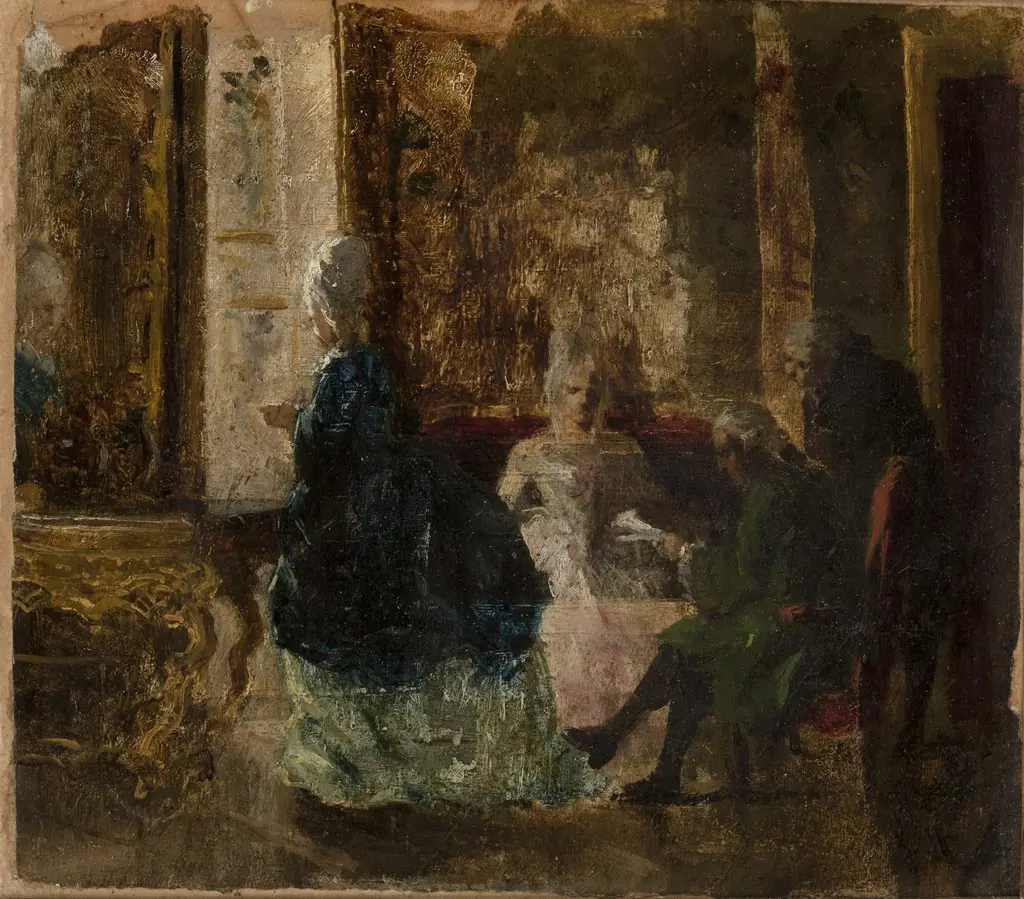
Painted around 1891 by Rudolf Hirth du Frênes, this oil work captures an interior scene within an artist’s workspace. The composition centers on two male figures in a shadowed room, rendered with deliberate contrasts of light and dark. The painting resides in the National Museum in Warsaw, where it is preserved as an example of late 19th-century genre painting with strong tonal modeling.
Subject & Meaning
Two men occupy the space: one seated, wearing a red scarf and hat; the other standing, clad in dark clothing. Their postures suggest a quiet, introspective moment—perhaps a pause between work or conversation. The absence of identifiable tools or artworks implies the focus is not on creation itself, but on the atmosphere of the studio and the presence of its inhabitants.
Technique & Style
The brushwork is restrained, favoring subtle gradations over detail.
The painting employs chiaroscuro to define form and depth, with light entering from the left to illuminate faces and fabric while leaving other areas in deep shadow. The brushwork is restrained, favoring subtle gradations over detail. This approach emphasizes mood over narrative, aligning with traditions of 17th-century Dutch and Flemish interiors, though adapted to a more intimate, modern setting.
History & Provenance
Created in the early 1890s, the painting entered the collection of the National Museum in Warsaw at some point after its completion. Its journey from the artist’s studio to institutional ownership is undocumented in public records, but its preservation suggests recognition of its technical merit within Polish art circles of the early 20th century.
Context
During the late 19th century, many European artists turned to studio interiors as subjects, reflecting on the solitary nature of creative labor. Hirth du Frênes, a German painter active in France and Poland, engaged with this theme while absorbing influences from Realism and the Old Masters. The work reflects a broader interest in quiet, psychologically resonant scenes over dramatic storytelling.
Legacy
Though not widely exhibited beyond Poland, the painting remains a quiet example of how chiaroscuro could be used to evoke contemplation rather than spectacle. It contributes to the understanding of how academic training and northern European traditions persisted in genre painting well into the modern era, even as avant-garde movements gained prominence.
Artist & collection
Artist
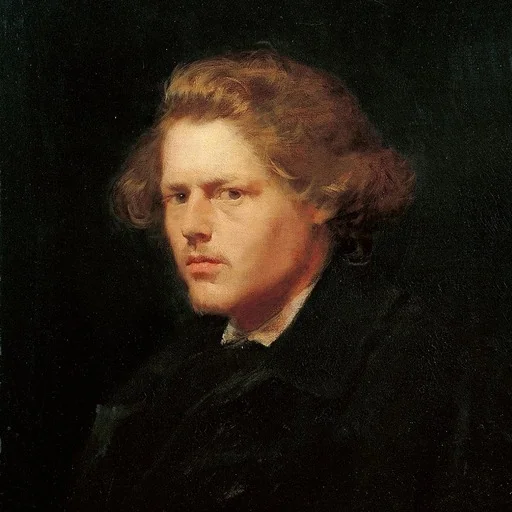
Rudolf Hirth du Frênes (1846–1916) was an artist, born in Gräfentonna.