Artwork
Les prunes
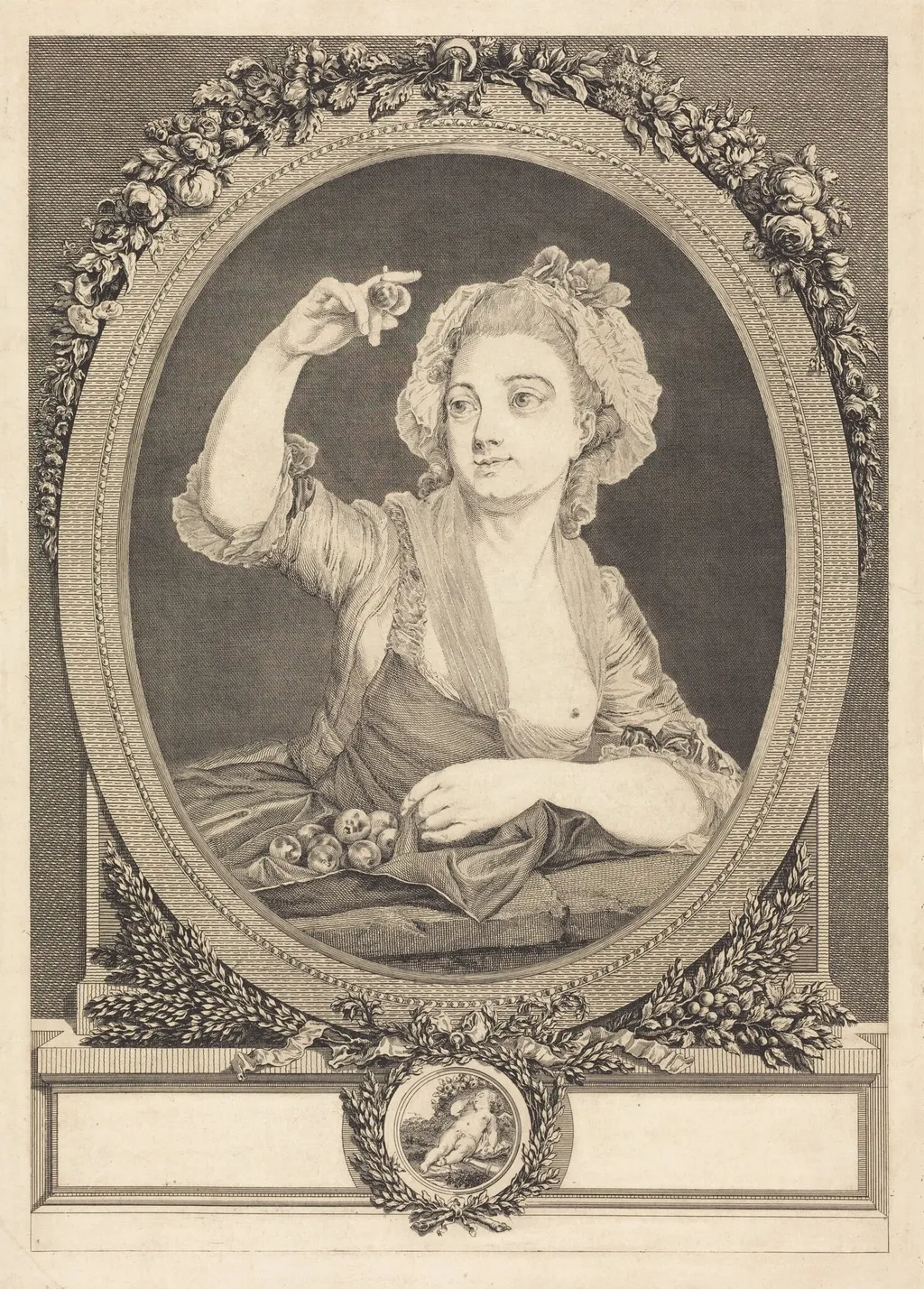
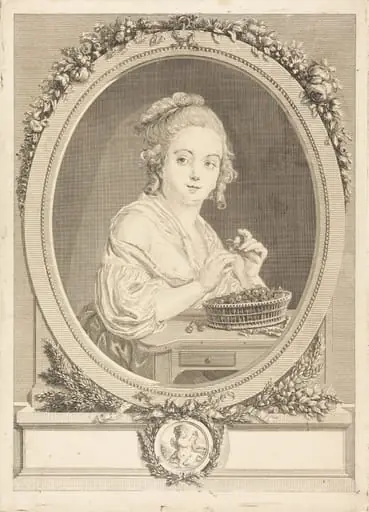
Les prunes is an ink print by the Baroque artist Gérard Vidal. It dates from 1772 and is held in the collection of the National Gallery of Art.
About this work
Overview
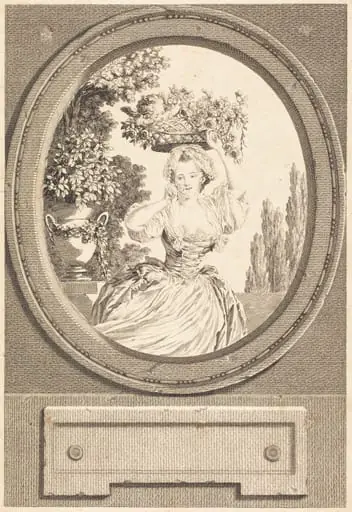
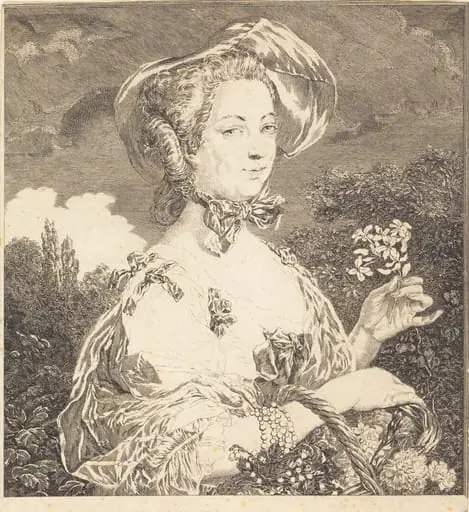
The work depicts a woman holding a basket of plums, framed by ornamental foliage and flowers.
Les prunes is a black-and-white etching produced by Gérard Vidal in 1772. The work depicts a woman holding a basket of plums, framed by ornamental foliage and flowers. Below her, a cherub holds a wreath, introducing a light, symbolic element. As an etching, the image was created by incising lines into a metal plate, then inked and pressed onto paper, characteristic of 18th-century printmaking practices.
Subject & Meaning
The central figure, dressed in elaborate attire with puffed sleeves and ribboned hair, appears to offer the plums with a gesture that blends hospitality and ceremony. The cherub beneath her, holding a wreath, suggests themes of abundance or fleeting beauty. The composition may reflect the cultural association of fruit with domestic virtue or seasonal plenty, softened by playful mythological imagery common in decorative arts of the period.
Technique & Style
Vidal employed etching, a method involving acid-resistant grounds and fine lines scratched into a copper plate. The delicate contours of the woman’s garments and the intricate border of leaves and blossoms reveal precise handwork. The contrast between the detailed figure and the softer, rounded forms of the cherub demonstrates a balance between realism and decorative flourish, typical of Rococo-influenced printmaking.
History & Provenance
Created in 1772, Les prunes emerged during a period when private collectors increasingly sought intimate, decorative prints. While specific early ownership records are limited, the work aligns with the popularity of domestic and allegorical scenes in French print circles. Its survival in institutional collections suggests it was valued for its craftsmanship and charm rather than as a major artistic statement.
Context
In late 18th-century France, etchings like this were often produced for domestic interiors, serving as affordable art for the bourgeoisie. The blend of everyday subject matter—fruit and dress—with mythological whimsy reflects a broader trend in decorative arts, where the mundane was elevated through ornamentation. Vidal’s work fits within this niche, bridging portraiture, still life, and allegory.
Legacy
Les prunes remains a modest but representative example of French printmaking from the Ancien Régime. It offers insight into the aesthetic preferences of its time—elegance, playfulness, and refined detail—without claiming a central place in art history. Its endurance in collections underscores its role as a quiet artifact of everyday visual culture in pre-revolutionary France.
Artist & collection