Artwork
Actualities: Master Courbet Inaugurates the School of Modern Painting
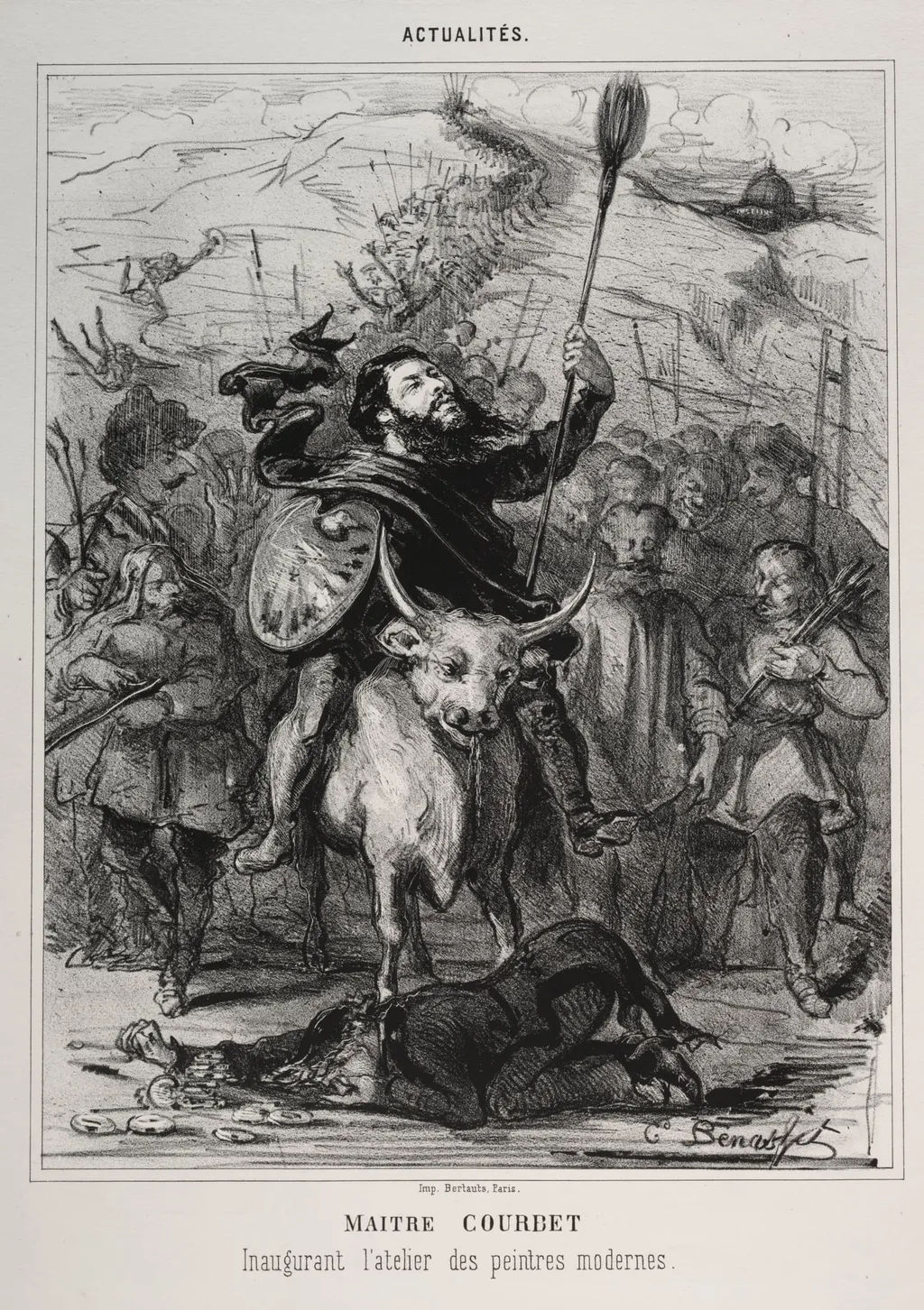
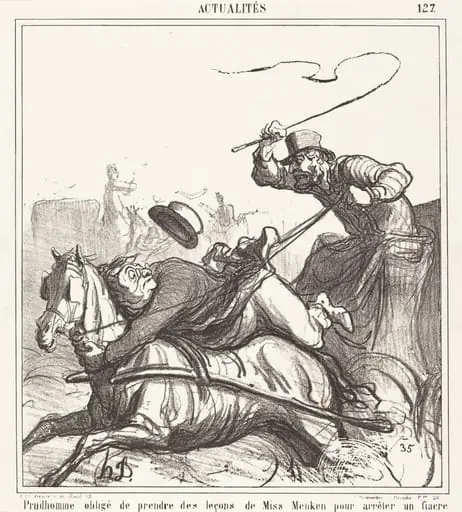
Actualities: Master Courbet Inaugurates the School of Modern Painting is a print by the Impressionist artist Émile Bénassit. It dates from 1868 and is held in the collection of the Cleveland Museum of Art.
About this work
Overview
Though rendered in a satirical tone, it engages with contemporary debates about artistic authority and the rise of realist painting in mid-19th-century France.
Created around 1868 by Émile Bénassit, this print depicts a surreal scene centered on a man mounted atop a white bull, wielding a broom. The work is part of a series titled Actualities and is held in the collection of The Cleveland Museum of Art. Though rendered in a satirical tone, it engages with contemporary debates about artistic authority and the rise of realist painting in mid-19th-century France.
Subject & Meaning
The figure on the bull is widely interpreted as a caricature of Gustave Courbet, the leading figure of the Realist movement. The broom symbolizes his role in sweeping away academic conventions, while the bull—a symbol of brute force and unpredictability—suggests the disruptive energy of his artistic philosophy. The surrounding crowd, reacting with varied expressions, reflects public ambivalence toward his radical influence on French art.
Technique & Style
Bénassit employs sharp linear definition and contrasting tones to heighten the theatricality of the scene. Light falls prominently on the central figure, isolating him against a densely populated background. The composition’s dynamic diagonals and exaggerated gestures evoke the spirit of political cartoons and satirical prints popular in Parisian journals of the era, blending realism with absurdist imagery.
History & Provenance
The print was produced during a period of intense cultural debate following Courbet’s prominence after the 1855 Exposition Universelle. Bénassit, a painter and illustrator known for his wit, created this image for publication in a satirical journal. It entered the Cleveland Museum of Art’s collection in the 20th century, where it remains as a rare visual document of artistic rivalry in post-revolutionary France.
Context
In the 1860s, Courbet’s rejection of idealized subjects and his public self-promotion provoked both admiration and ridicule. Bénassit’s print captures this tension, aligning with a broader trend of illustrated satire that mocked cultural figures. The image reflects how visual media helped shape public perception of artists as cultural provocateurs, not merely creators.
Legacy
Though not widely exhibited today, the print endures as a key example of how visual satire engaged with art-world politics. It illustrates the shifting boundaries between fine art and popular illustration, and how caricature could serve as both critique and historical record. Bénassit’s work offers insight into the reception of Realism beyond official exhibitions and critical reviews.
Artist & collection

 Saint James of Compostela
 Don Quixote de la Mancha
 St. Jacques
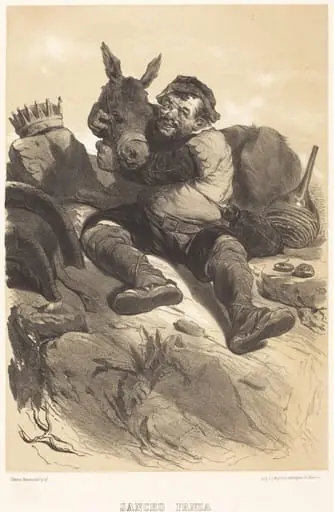 Sancho Panza
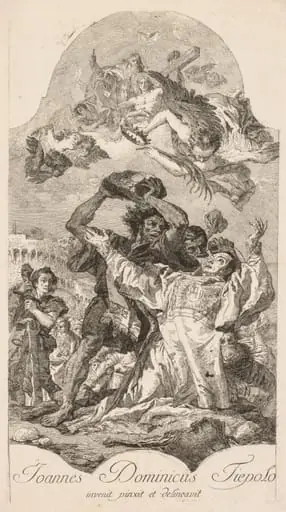 Martyrdom of St. Stephen
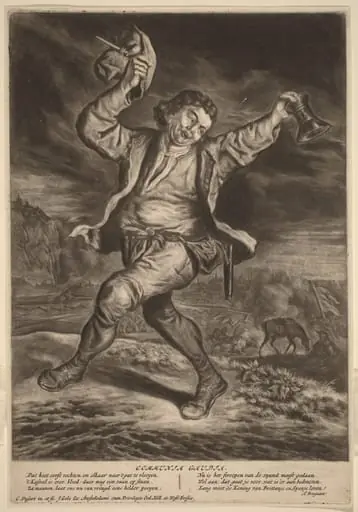 The Happy Patriot
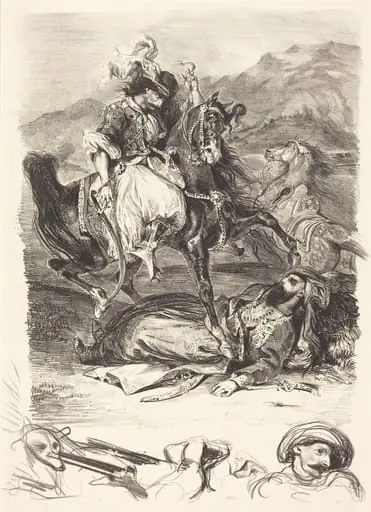 The Battle of the Giaour and the Pasha (Combat du Giaour et du Pacha)
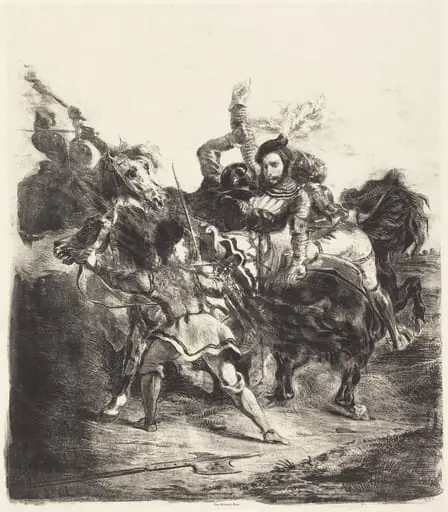 Weislingen Attacked by the Forces of Goetz (Weislingen attaqué par les gens de Goetz)
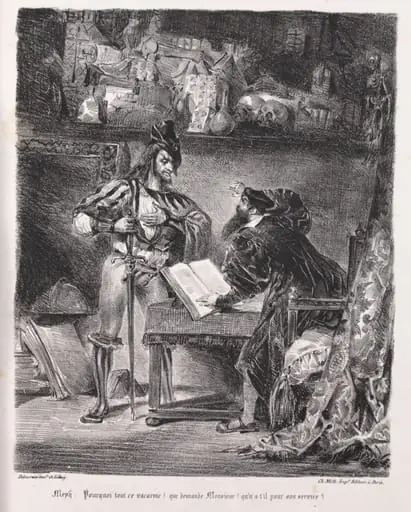 Illustrations for Faust: Méphistophélés visits Faust
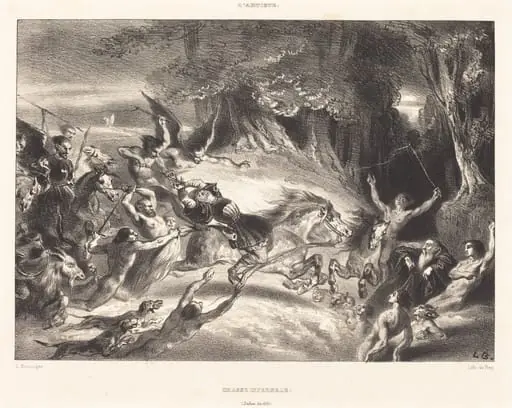 Chasse Infernale
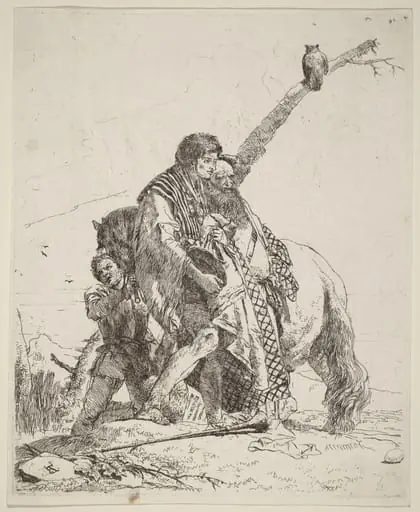 Youth, Sage, and Attendant with Horse
 Prudhomme obligé de prendre des leçons...