Artwork
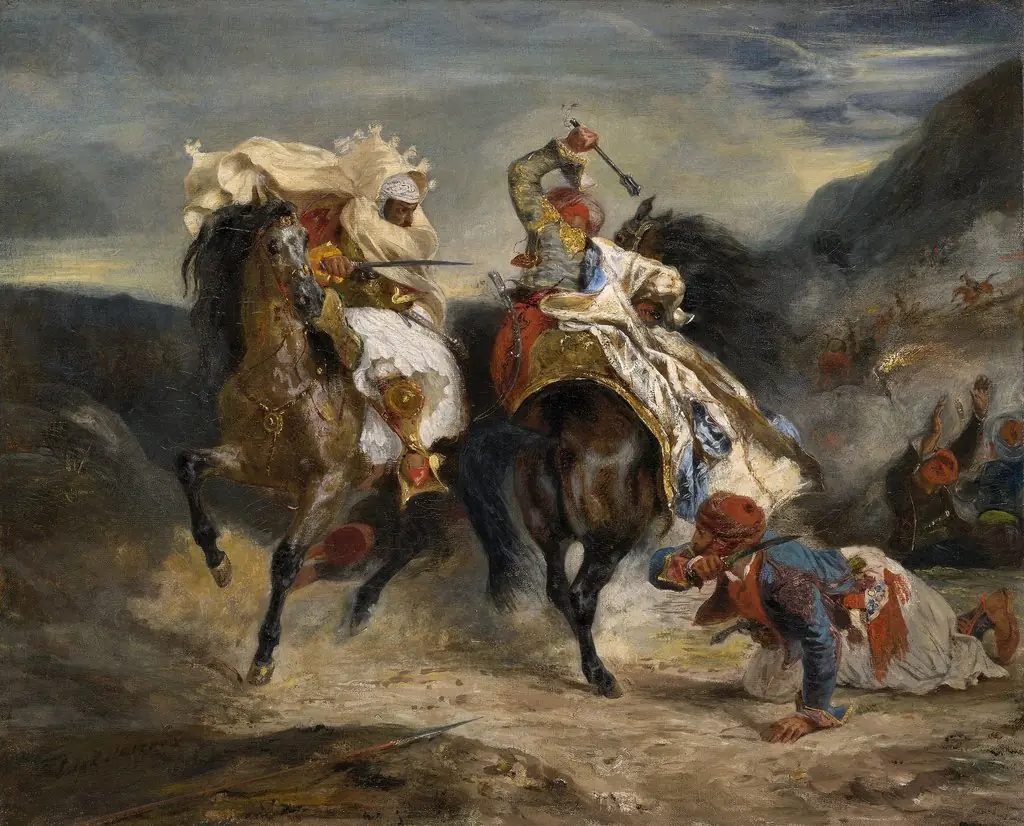
The Battle of the Giaour and the Pasha (Combat du Giaour et du Pacha)
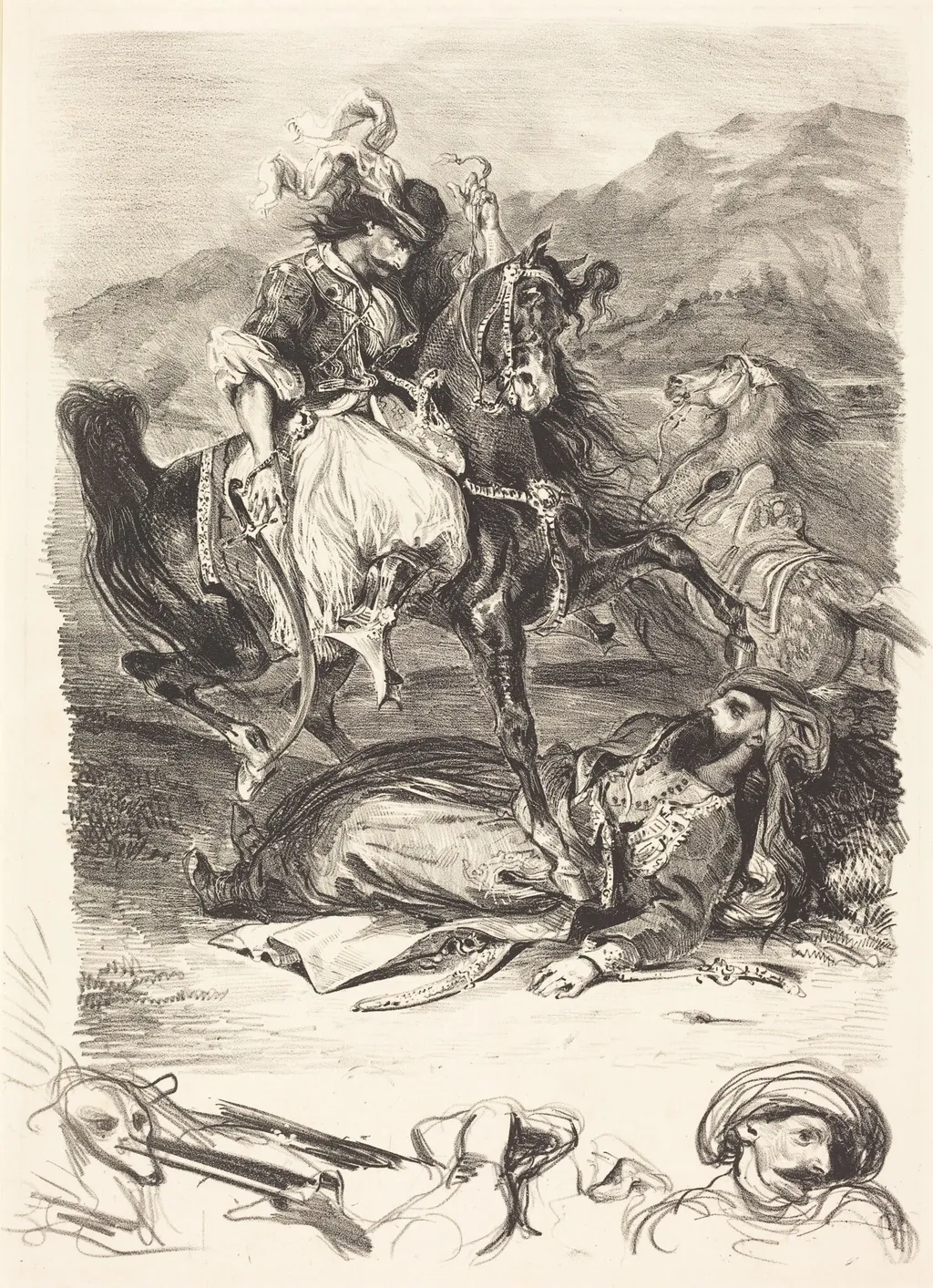
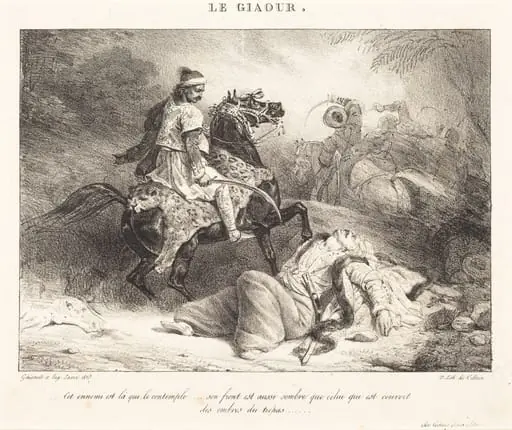
The Battle of the Giaour and the Pasha (Combat du Giaour et du Pacha) is an ink print by the Romanticist artist Eugène Delacroix. It dates from 1827 and is held in the collection of the National Gallery of Art.
About this work
Overview
Eugène Delacroix’s 1827 lithograph, *The Battle of the Giaour and the Pasha*, presents a violent encounter between two mounted combatants set against a rugged landscape of mountains and water. Rendered in a limited palette of grays, the image captures a moment of intense motion as horses rear and a fallen rider lies on the ground, emphasizing the drama characteristic of early Romantic prints.
Subject & Meaning
The composition illustrates the legendary clash between the Giaour, a Christian renegade, and the Ottoman Pasha, a theme drawn from Orientalist literature of the period. By focusing on the physical struggle and the stark contrast between the two figures, Delacroix underscores themes of conflict, heroism, and the exoticized violence that fascinated Romantic audiences.
Technique & Style
Executed as a lithograph, the work relies on bold, expressive lines and varied tonal washes to convey movement and tension. Delacroix’s handling of light and shadow creates depth within the limited grayscale range, while the vigorous brush‑like strokes recall the dynamism of Rubens and the coloristic vigor of Venetian Renaissance painters, albeit translated into monochrome.
History & Provenance
Created during the height of Delacroix’s early career, the print reflects his engagement with Romantic ideals and his interest in literary subjects. It was produced shortly after his celebrated oil paintings of the 1820s and circulated among collectors of French prints, contributing to the spread of his dramatic visual language across Europe.
Own this work as a print
Artist & collection
Artist
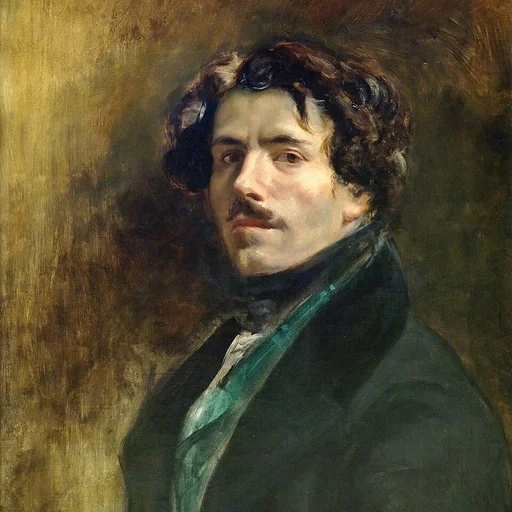
Ferdinand Victor Eugène Delacroix ( DEL-ə-krwah, -KRWAH; French: ; 26 April 1798 – 13 August 1863) was a French Romantic artist who was regarded as the leader of the French Romantic school.

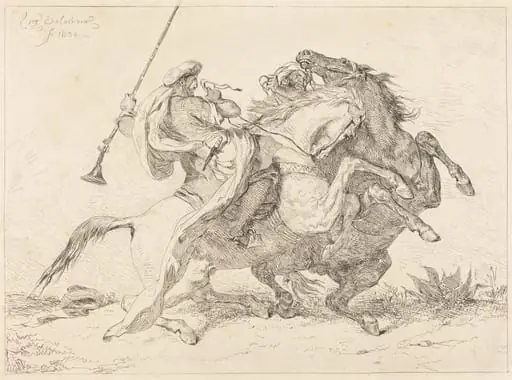 Encounter of the Moorish Horsemen (Rencontre de Cavaliers Maures)
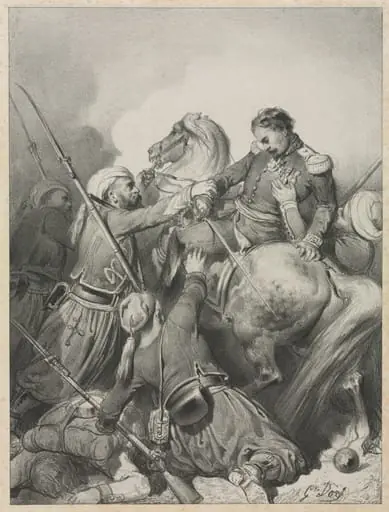 Sardinian Officer
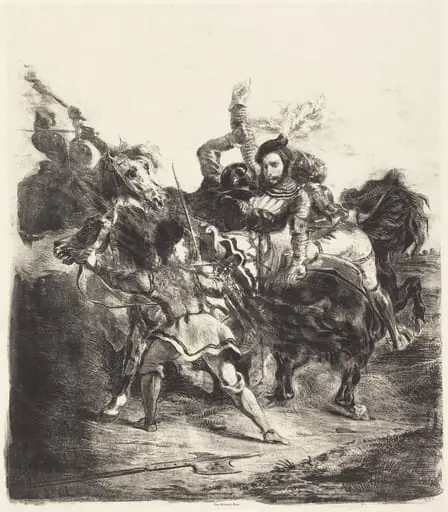 Weislingen Attacked by the Forces of Goetz (Weislingen attaqué par les gens de Goetz)
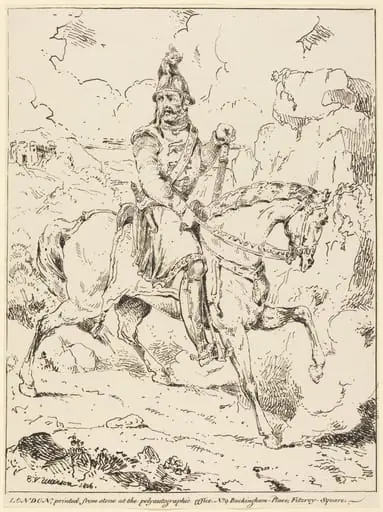 Knight in Armor on Horseback
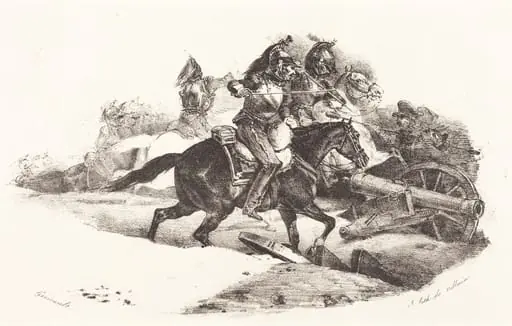 Cuirassiers Charging
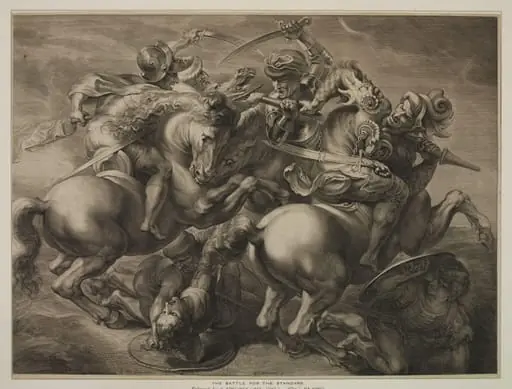 Battle for the Standard
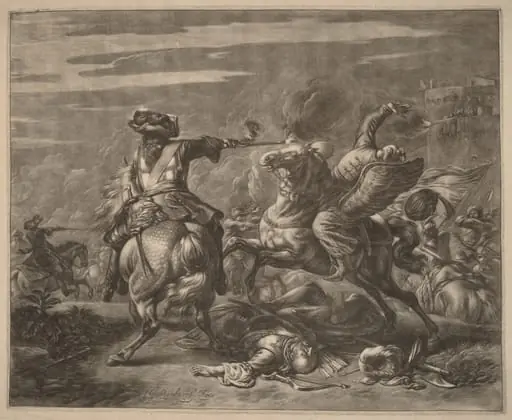 A Horseman Shooting a Turk from His Horse
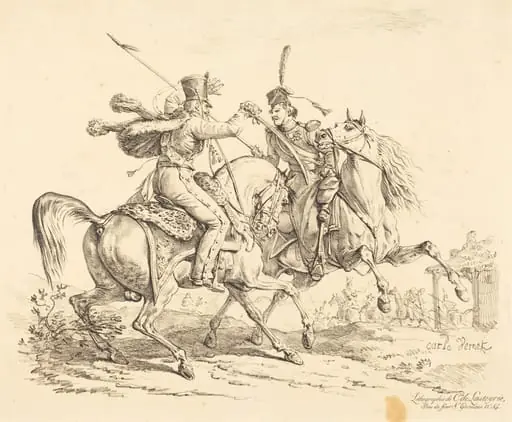 Hussard Striking a Cosack
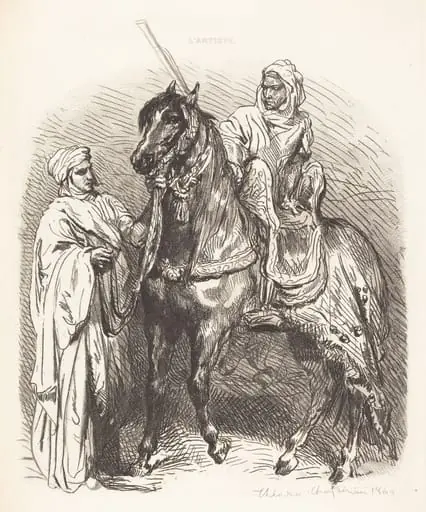 Arab Mounting
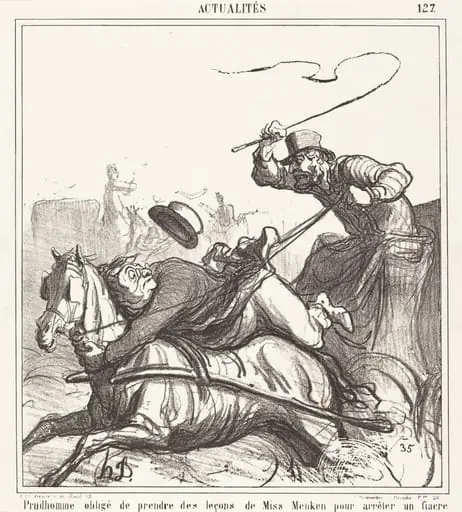 Prudhomme obligé de prendre des leçons...
 A Mameluke Chief on Horseback Signaling for Help
 Le Giaour (The Infidel)