Artwork
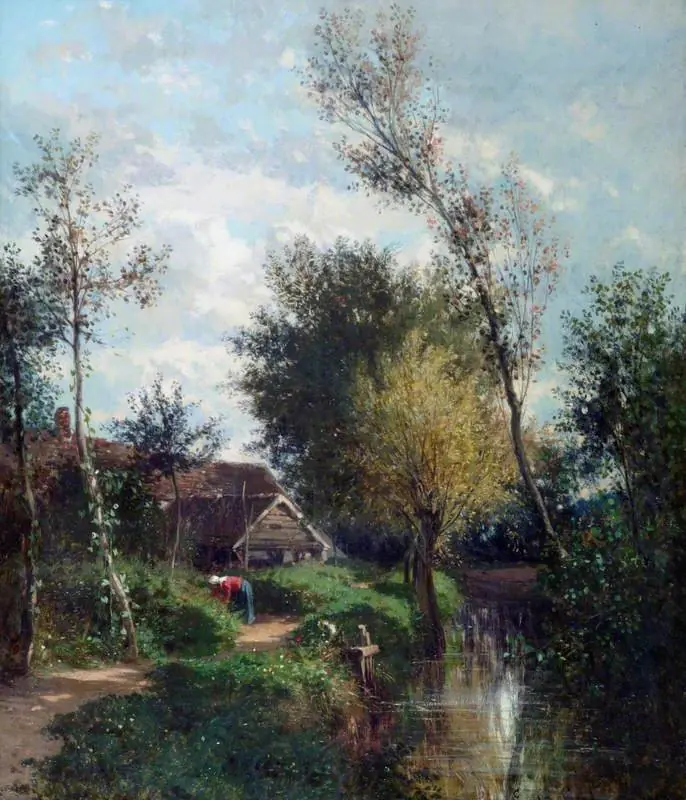
Landscape at Écouen, near Paris
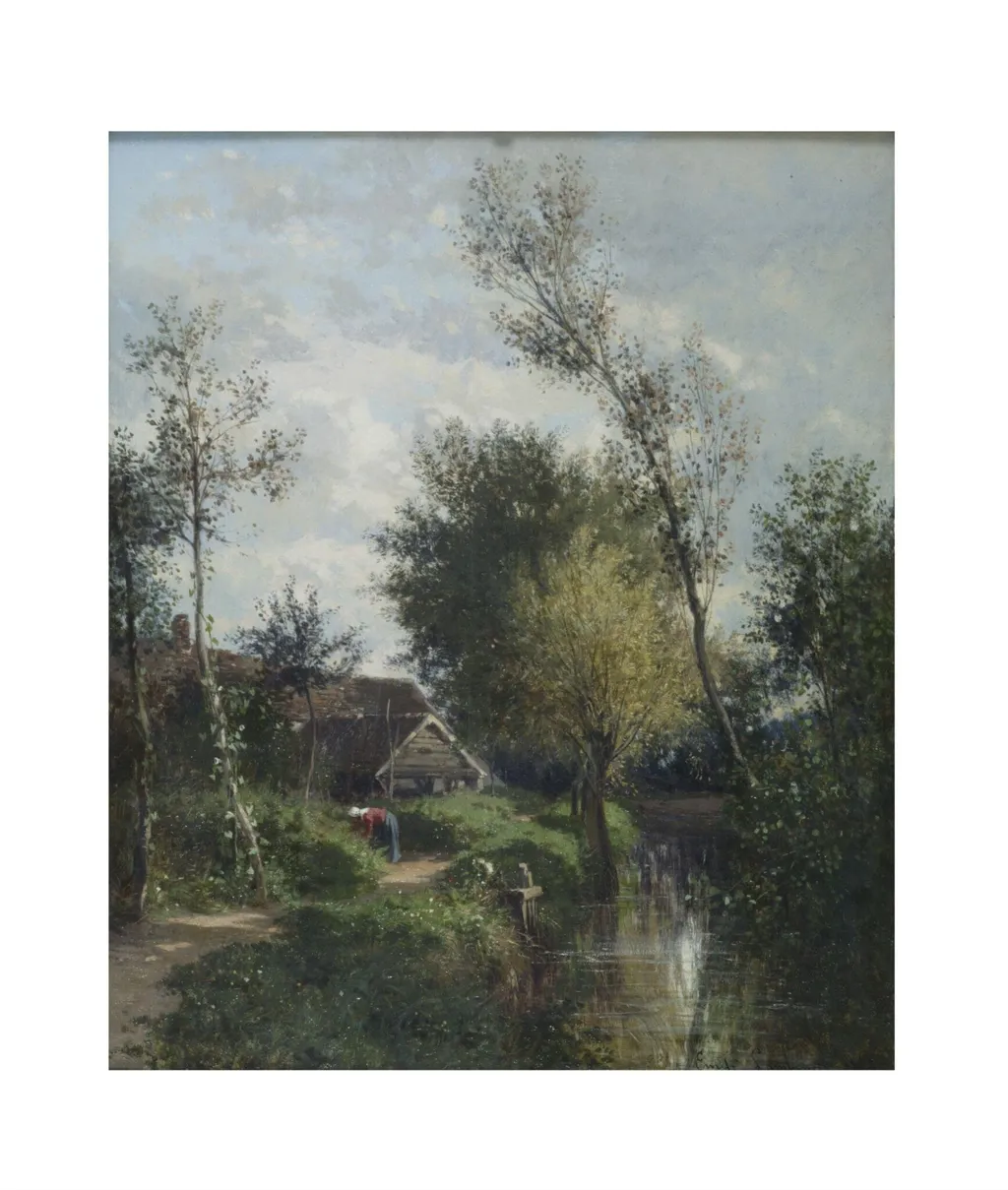
Landscape at Écouen, near Paris is an oil painting by the Barbizon school artist Émile Charles Lambinet. It dates from 1858 and is held in the collection of the Victoria and Albert Museum.
About this work
Émile Charles Lambinet painted *Landscape at Écouen, near Paris* in 1858.
Émile Charles Lambinet painted *Landscape at Écouen, near Paris* in 1858. This oil piece shows a cottage by the river in Écouen, north of Paris. It reflects Lambinet’s usual quiet, natural scenes.
Lambinet studied under famous teachers like Horace Vernet. He won Salon medals and later became a Knight of the Légion d’Honneur.
Lambinet often links to the Barbizon school, a Realist offshoot.
Check out the Victoria and Albert Museum.
Overview
Painted in 1858, *Landscape at Écouen, near Paris* is an oil work by Émile-Charles Lambinet depicting a modest cottage beside a quiet river in the village of Écouen, just north of the French capital. The scene reflects Lambinet’s consistent focus on unadorned rural environments, rendered with careful attention to atmosphere and natural detail. His training under established academic painters and later exposure to Corot shaped his approach to landscape as a subject worthy of quiet observation.
Subject & Meaning
The painting presents a humble riverside dwelling, surrounded by trees and water, with no human figures to distract from the stillness of the setting. The absence of narrative or dramatic action underscores a commitment to observing nature as it is, without idealization. This quietude aligns with the values of the Realist movement, which sought to portray everyday rural life and landscapes with sincerity and precision.
Technique & Style
Lambinet employed fine, controlled brushwork to capture the textures of bark, water, and foliage, while maintaining a restrained palette of earth tones and soft greens. Light is rendered subtly, suggesting the diffuse quality of overcast daylight rather than dramatic contrast. These choices reflect the influence of the Barbizon painters, who prioritized direct observation and tonal harmony over theatrical effects.
History & Provenance
Lambinet exhibited regularly at the Paris Salon from 1833 to 1876, earning medals in 1843, 1853, and 1857, and was made a Chevalier of the Légion d’Honneur in 1867. While the painting’s early ownership is undocumented, its inclusion in major collections, such as the Victoria and Albert Museum, confirms its recognition within 19th-century French art circles as a representative work of regional landscape painting.
Context
Écouen, a village near the Oise River, attracted artists in the mid-19th century for its unspoiled scenery and proximity to Paris. Lambinet, like others associated with the Barbizon school, sought refuge from urban academic conventions by painting en plein air. His work, though less radical than that of Corot or Rousseau, contributed to a broader shift toward naturalism in French landscape art during the 1850s.
Legacy
Lambinet’s landscapes, including this one, are now regarded as quiet exemplars of mid-century French Realism. Though he did not lead a movement, his consistent dedication to truthful depiction helped sustain the Barbizon tradition into the later 19th century. His paintings remain valued for their restraint and sensitivity to the rhythms of the natural world.
Artist & collection
Artist
Émile Charles Lambinet painted quiet, green landscapes around Paris in the mid-1800s.

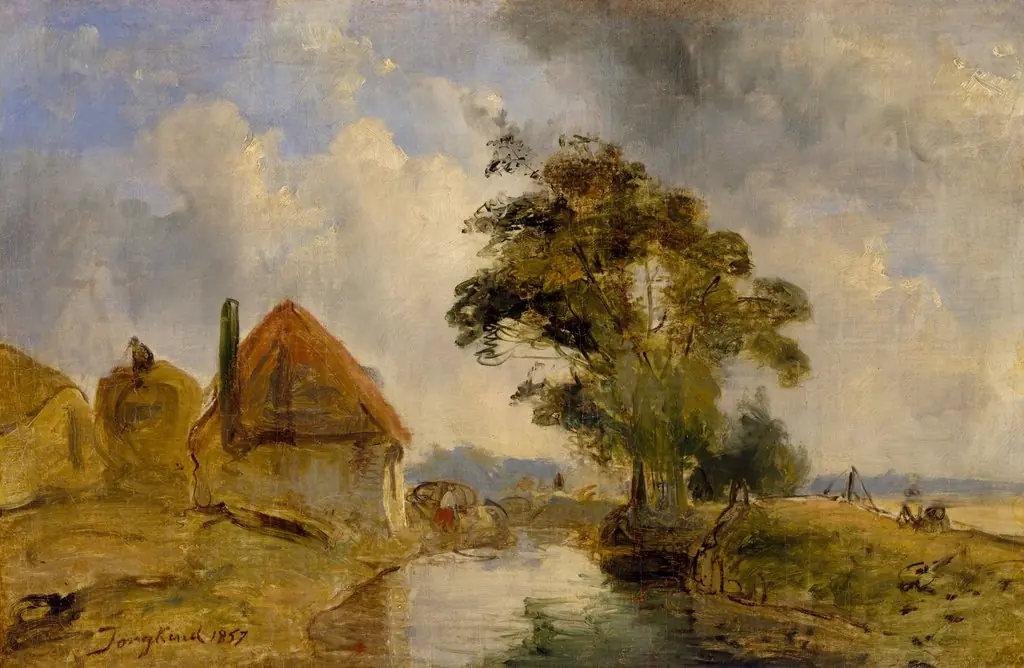 Environs of Breda
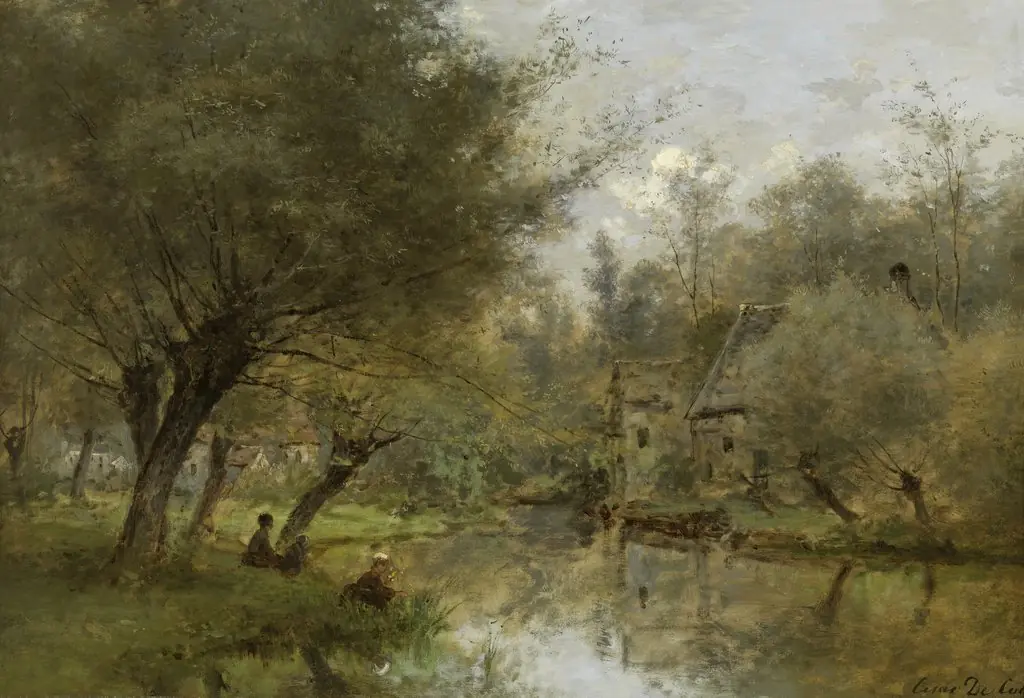 Landscape near Saint-Germain-en-Laye
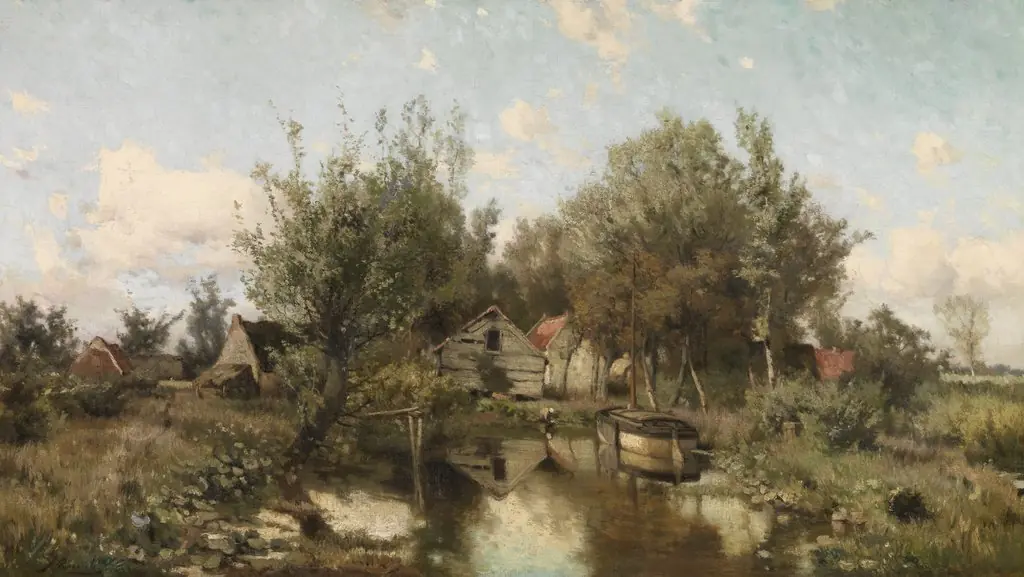 Landscape near Waasmunster
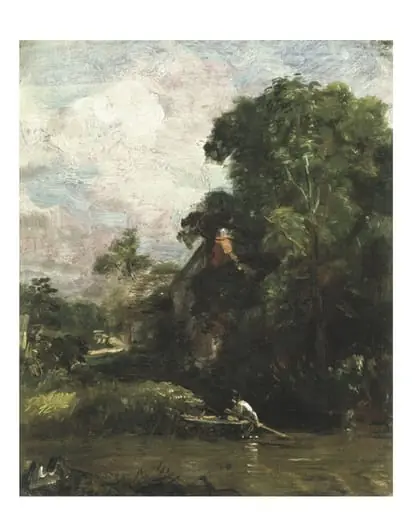 Sketch for <i>The Valley Farm</i>
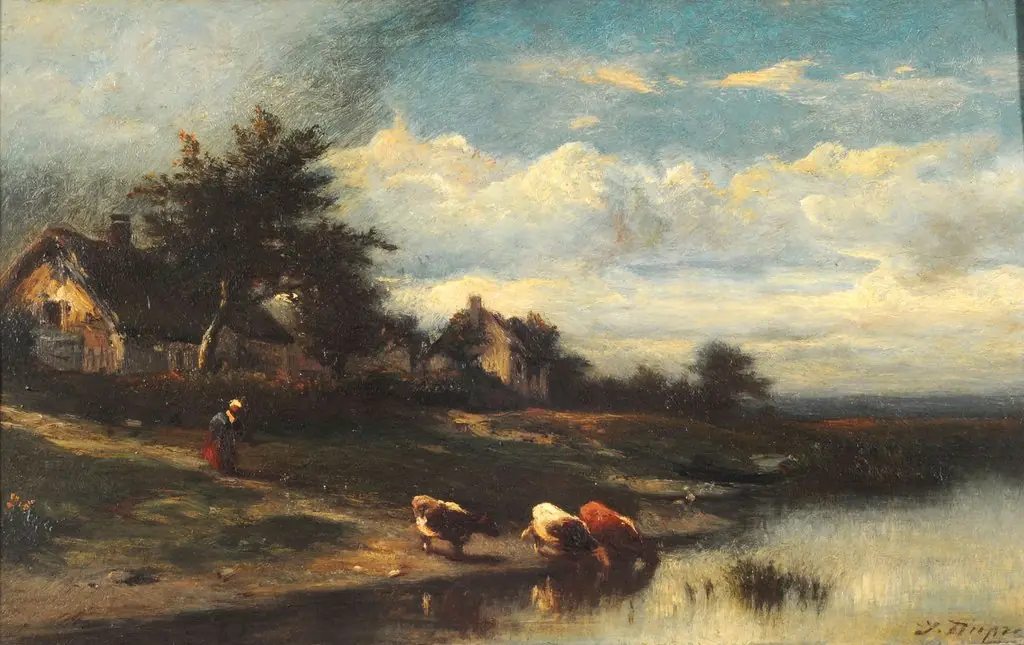 On the river
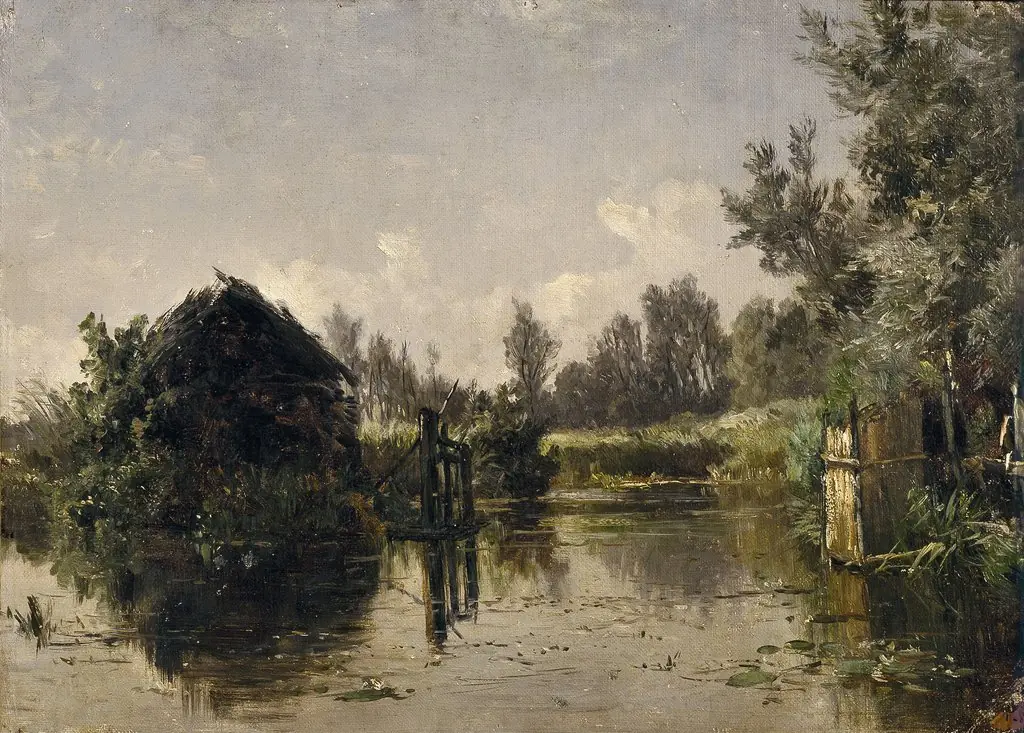 Canal abandonado en Vriesland (Holanda)
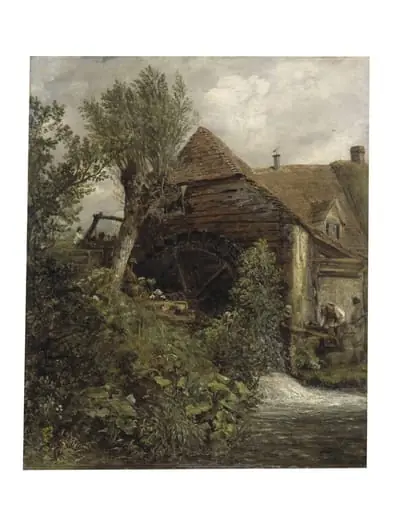 Gillingham Mill, Dorset
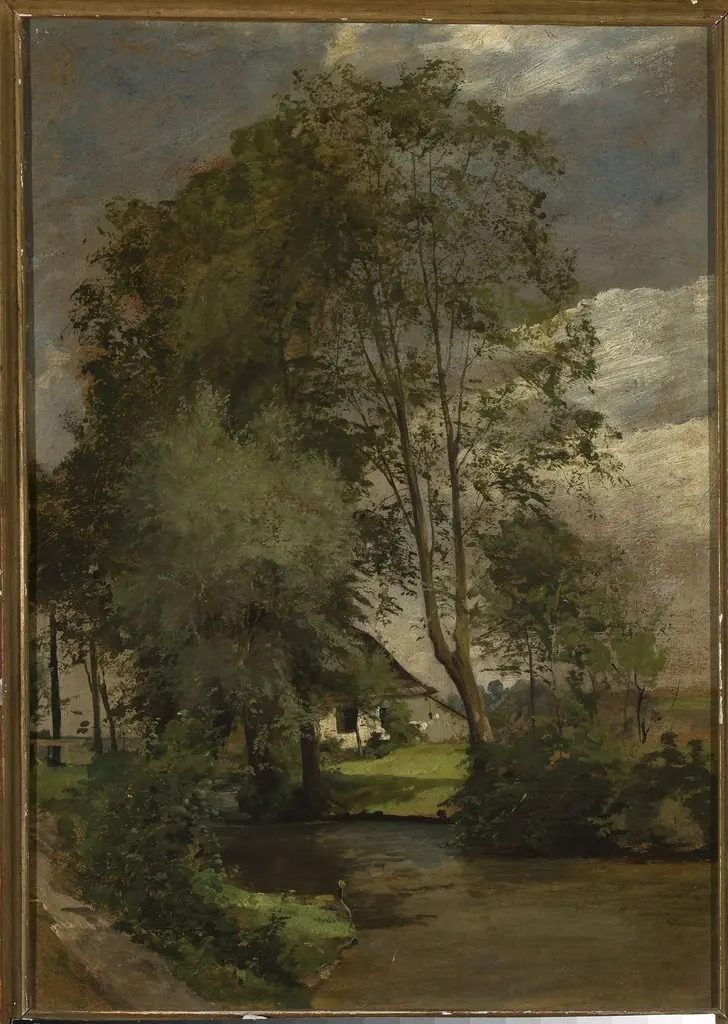 Countryside landscape
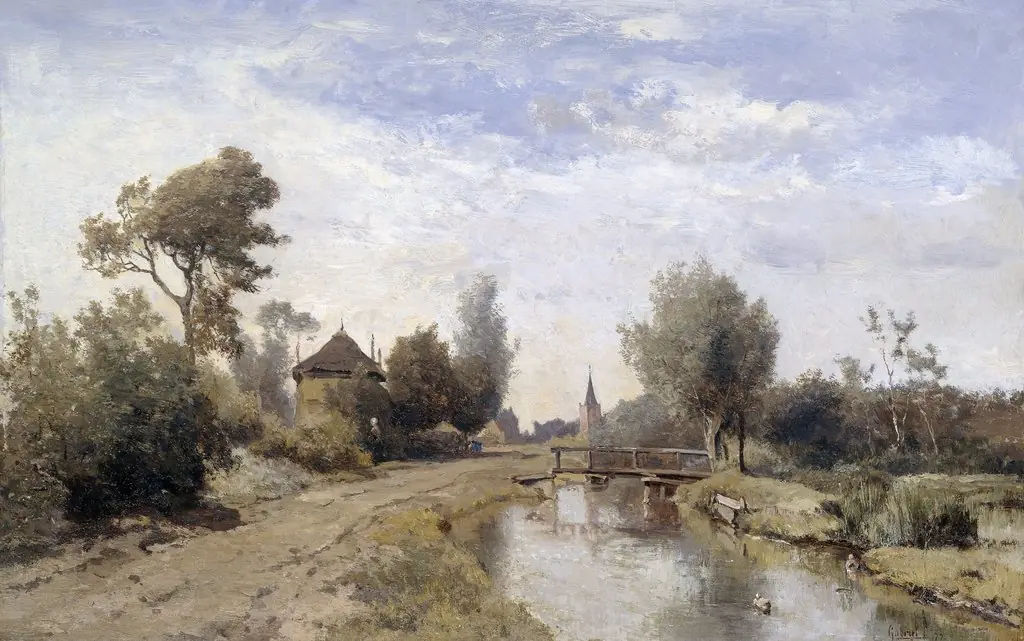 Landscape at Kortenhoef
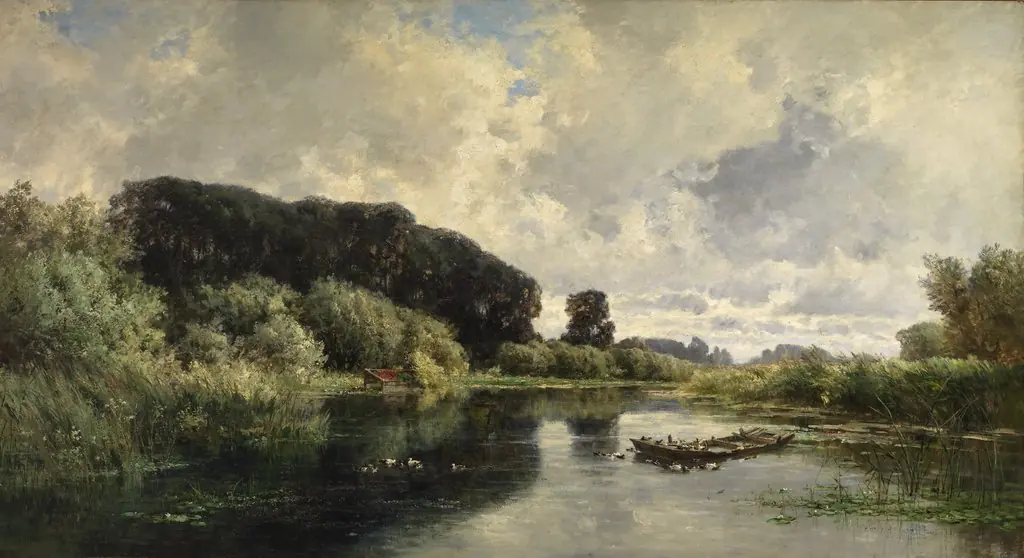 Cercanías de Vriesland (Holanda)
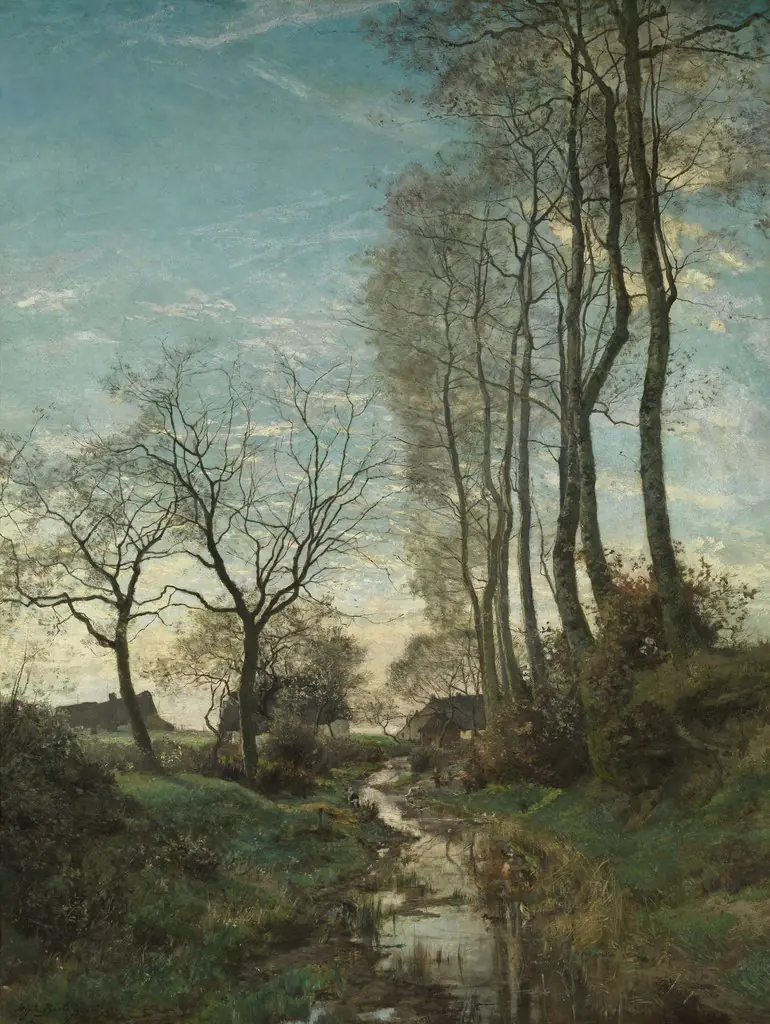 Josaphat Valley at Schaarbeek
 Landscape at Écouen, near Paris