Artwork
The Cabin
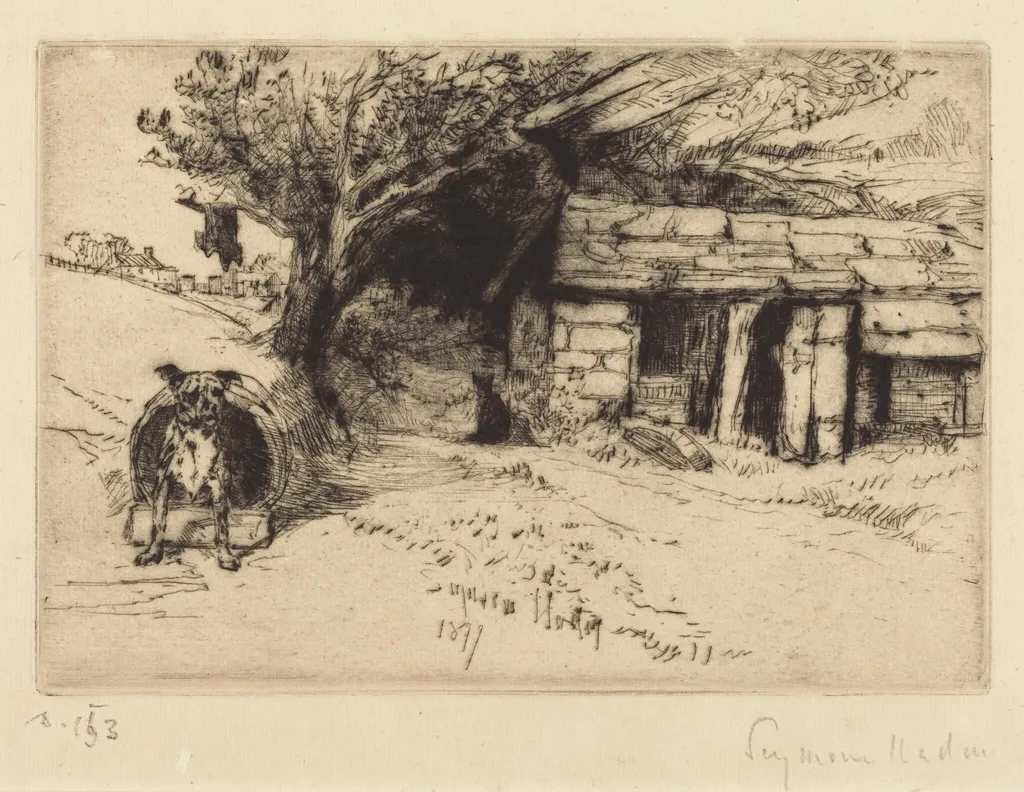
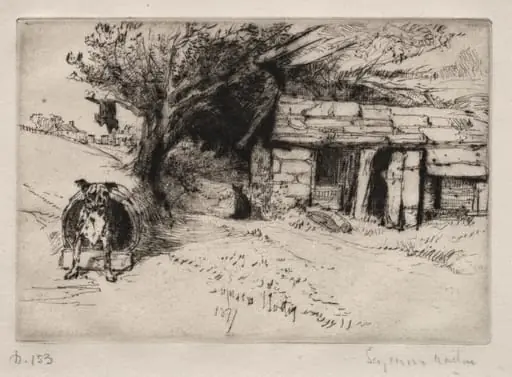
The Cabin is an ink print by the Impressionist artist Francis Seymour Haden. It dates from 1877 and is held in the collection of the National Gallery of Art.
About this work
Overview
Francis Seymour Haden’s drypoint print, titled The Cabin, was produced in 1877. Executed on laid paper with black ink, the work presents a modest rural scene rendered in a single monochrome tone. The composition centers on a weather‑worn cabin flanked by a solitary tree, while a cow rests on a patch of grass before the structure.
Subject & Meaning
The image captures an everyday moment in a pastoral setting: a small, dilapidated cabin, a tree growing directly against its side, and a calm bovine occupant. The inclusion of ordinary elements—rough ground, scattered hay, and the animal’s placid posture—suggests an unembellished observation of rural life, inviting viewers to consider the quiet persistence of the countryside.
Technique & Style
The resulting marks convey the bark’s roughness, the wood’s grain, and the uneven terrain with a tactile quality that approaches three‑dimensionality.
Haden employed the drypoint method, incising fine lines into a metal plate to produce a richly textured surface. The resulting marks convey the bark’s roughness, the wood’s grain, and the uneven terrain with a tactile quality that approaches three‑dimensionality. Executed in black on laid paper, the print aligns with Realist principles that favor precise, unidealized representation of commonplace subjects.
History & Provenance
Created in the late nineteenth century, The Cabin reflects Haden’s engagement with printmaking during a period when he was establishing his reputation as a leading etcher. While specific ownership records are limited, the work has been documented in catalogues of Haden’s oeuvre and appears in collections that focus on British printmaking of the 1800s.
Artist & collection


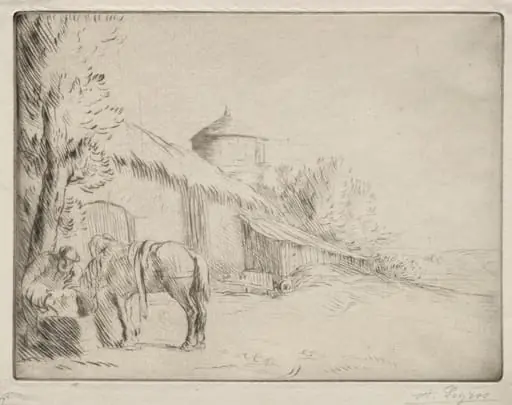 The Watering Place (2nd Plate)
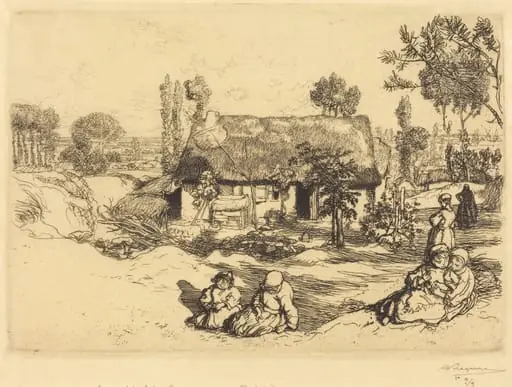 Shelter for the Poor, Vendee (Le nid de pauvres, Vendee)
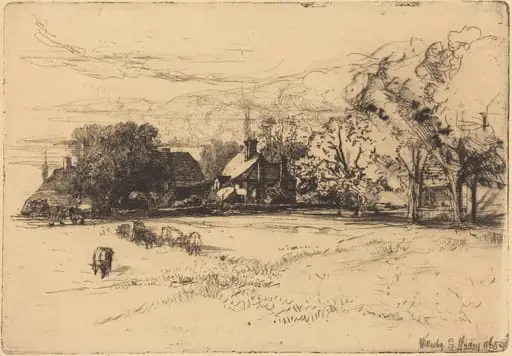 Old Willesley House
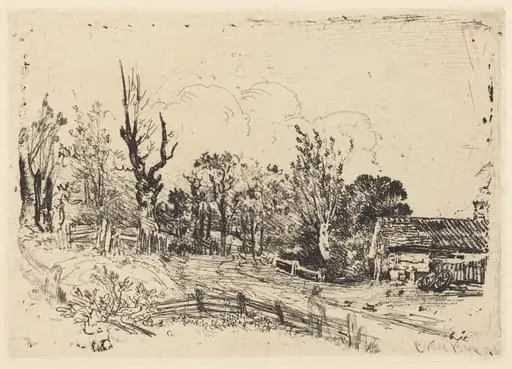 Road with a Farmhouse on the Right
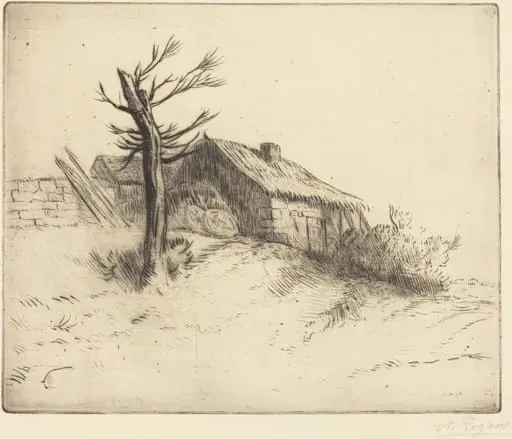 Thatched Cottage (Chaumiere)
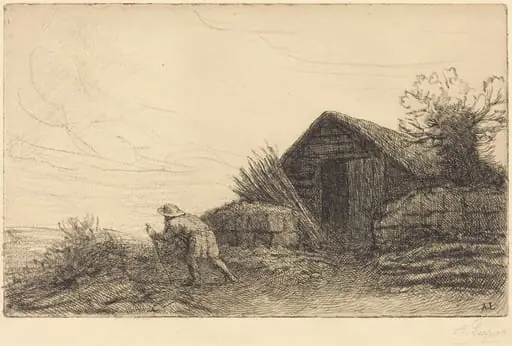 Along the Top of the Hill (Sur le haut de la colline)
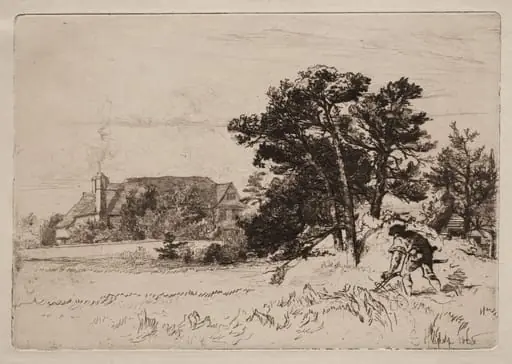 Old Willesley House
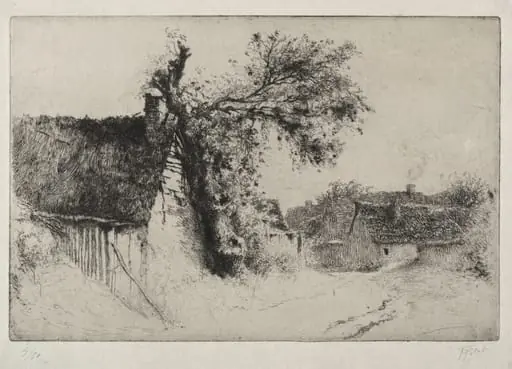 The Old Elm Tree
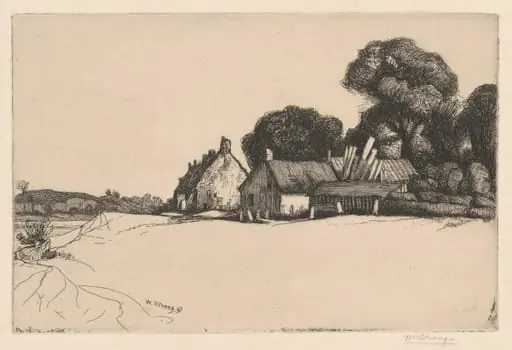 Kilcreggan
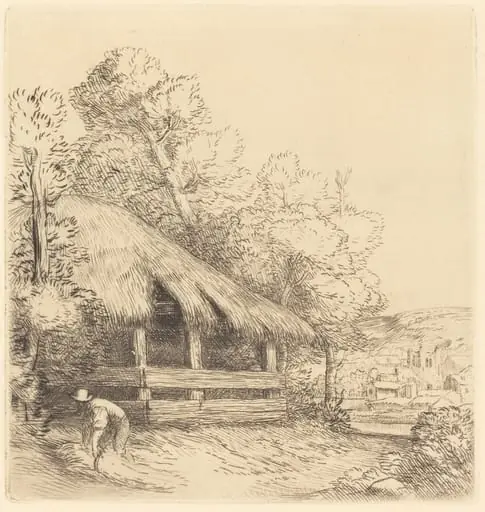 Little Shelter (Le petit hangar)
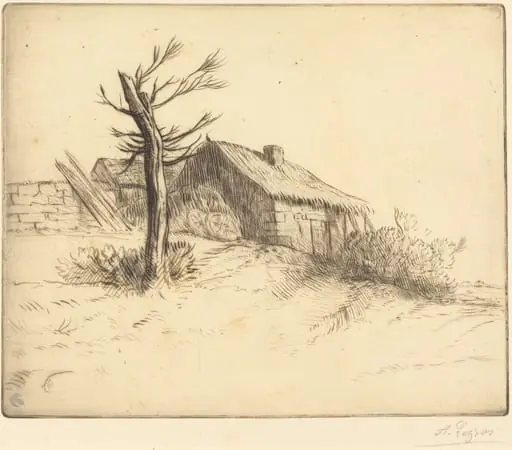 Thatched Cottage (Chaumiere)
 The Cabin