Artwork
Untitled
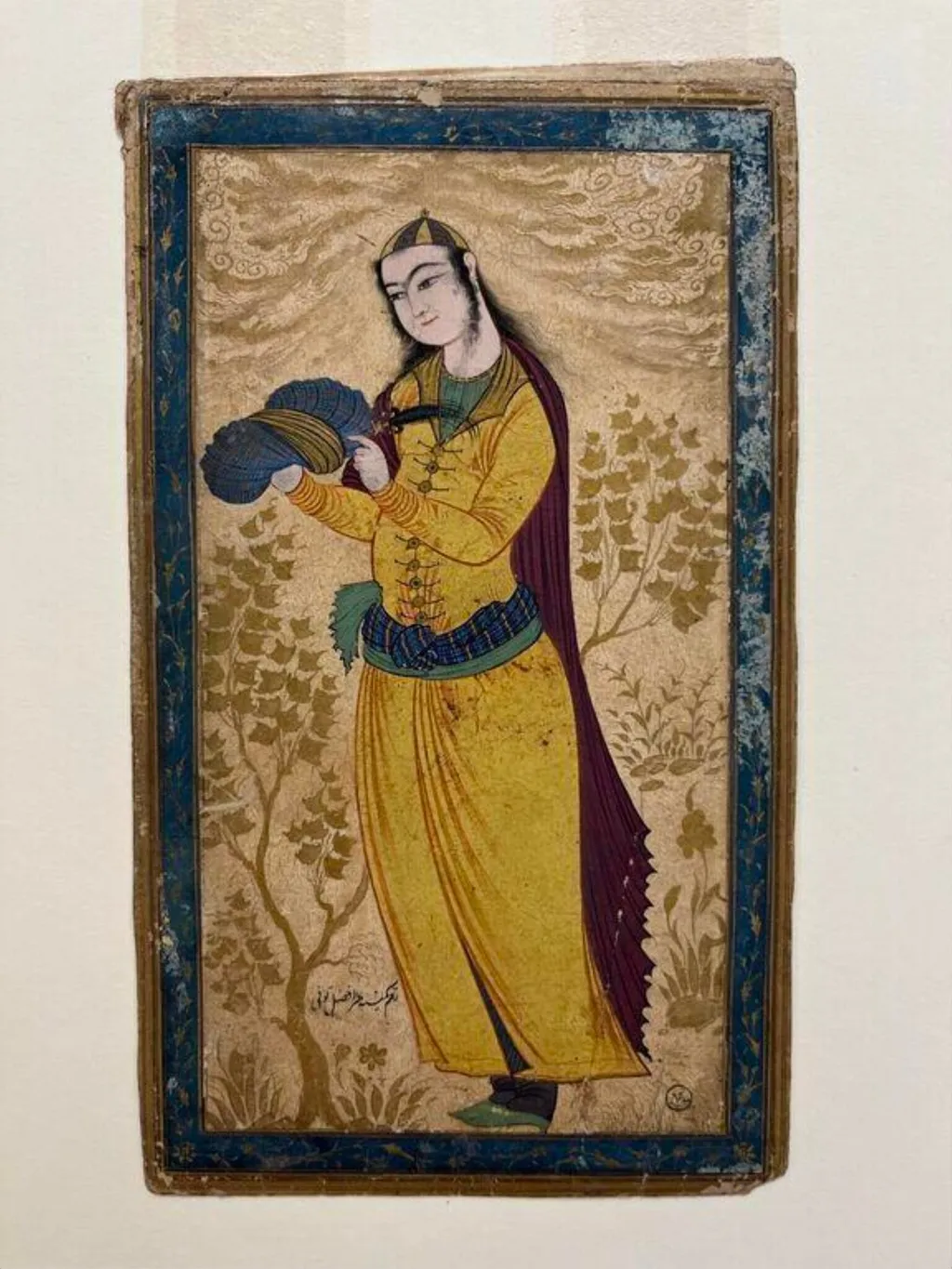
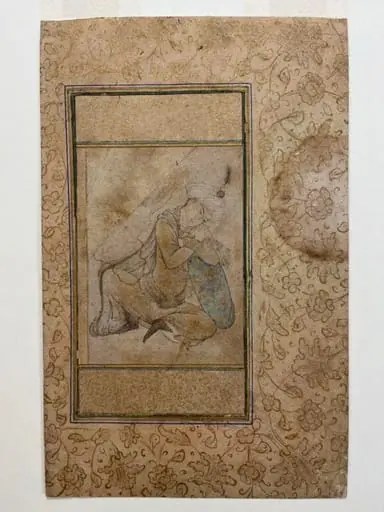
Untitled is a paint painting by the Baroque artist Mir Afdal Tuni. It dates from 1627 and is held in the collection of the Victoria and Albert Museum. This painting portrays a solitary male figure standing in a contemplative pose, holding a folded cloth.
About this work
Overview
The artist, Mir Afdal Tuni, signs the work with a self-referential epithet, suggesting a deliberate expression of humility or self-effacement.
This painting portrays a solitary male figure standing in a contemplative pose, holding a folded cloth. The figure is dressed in a long, richly trimmed robe, with subtle embroidery visible on the chest. The background features minimal vegetation and a decorative gold border framing the composition. The artist, Mir Afdal Tuni, signs the work with a self-referential epithet, suggesting a deliberate expression of humility or self-effacement.
Subject & Meaning
The figure, though unnamed, appears to be a person of refined status, indicated by the elaborate robe and the deliberate stillness of posture. The turban-like cloth held in hand may symbolize removal, transition, or ritual. The artist’s self-identification as 'the abject' introduces a layer of introspection, possibly reflecting on social or spiritual humility, contrasting the opulence of attire with a declaration of personal insignificance.
Technique & Style
The painting employs soft, even brushwork to render the figure’s facial features and fabric folds. Colors are muted yet distinct, with the yellow robe standing out against the pale background. Gold leaf outlines the composition’s edge, creating a luminous frame. Details such as embroidery are rendered with precision, suggesting a tradition of miniature painting where fine craftsmanship and symbolic restraint coexist.
History & Provenance
The work is attributed to Mir Afdal Tuni, an artist active in the late 18th or early 19th century, likely within the Persianate artistic sphere. His signature, including the self-designation 'the abject,' is rare and suggests a personal or devotional intent. The painting’s survival indicates it was likely preserved in a private or religious collection, though its specific early ownership remains undocumented.
Context
This piece aligns with regional traditions of Persian and Mughal portraiture, where figures are depicted with quiet dignity and symbolic detail rather than narrative action. The use of gold borders and stylized foliage reflects decorative conventions common in manuscript illumination and album paintings. The artist’s choice to emphasize humility within a context of luxury may reflect Sufi-inspired themes prevalent in the period.
Legacy
Mir Afdal Tuni’s work remains a quiet example of individual expression within a broader artistic tradition. His signature’s introspective tone distinguishes it from typical anonymous production, offering insight into the artist’s self-perception. While not widely reproduced, the painting contributes to scholarly understanding of personal identity in late Persianate visual culture.
Artist & collection
Artist
Mir Afdal Tuni painted delicate flower studies in the early 17th-century Mughal tradition.

 Officer of the Guards
 Personaj citind o scrisoare
 Prince Holding a Falcon
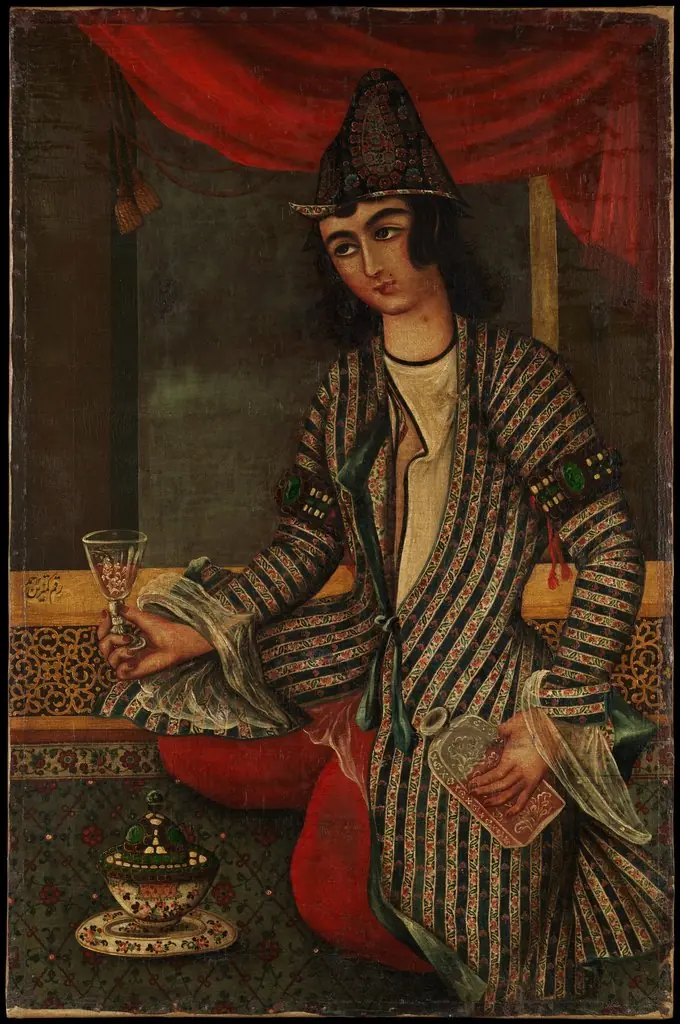 Portrait of a Young Man
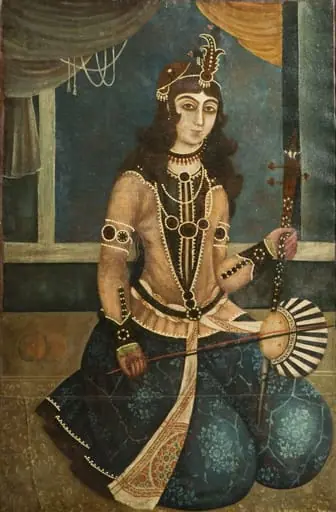 Woman playing a <i>kamānchah</i>
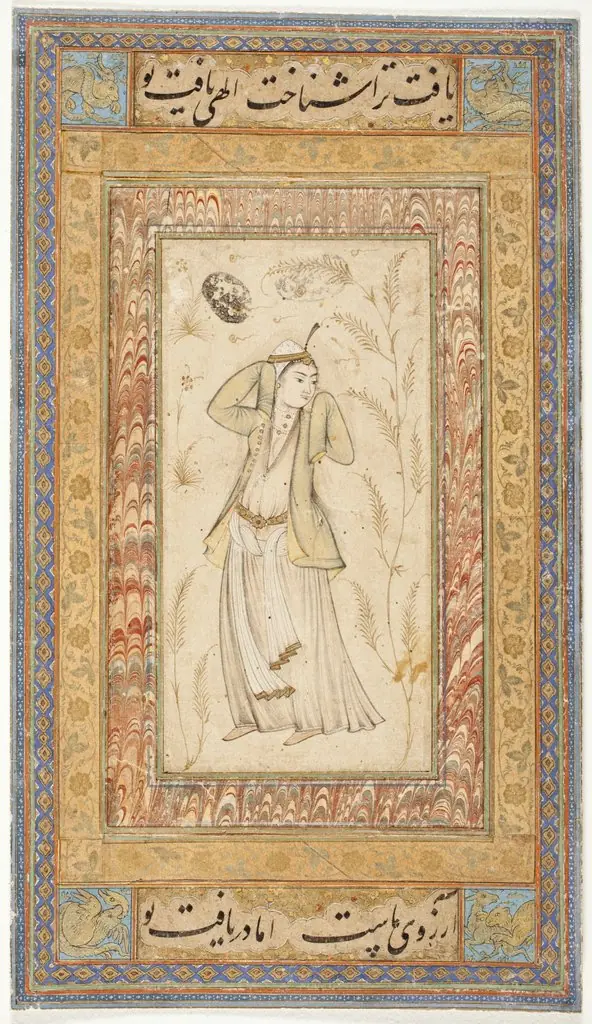 Female Dancer
 Untitled
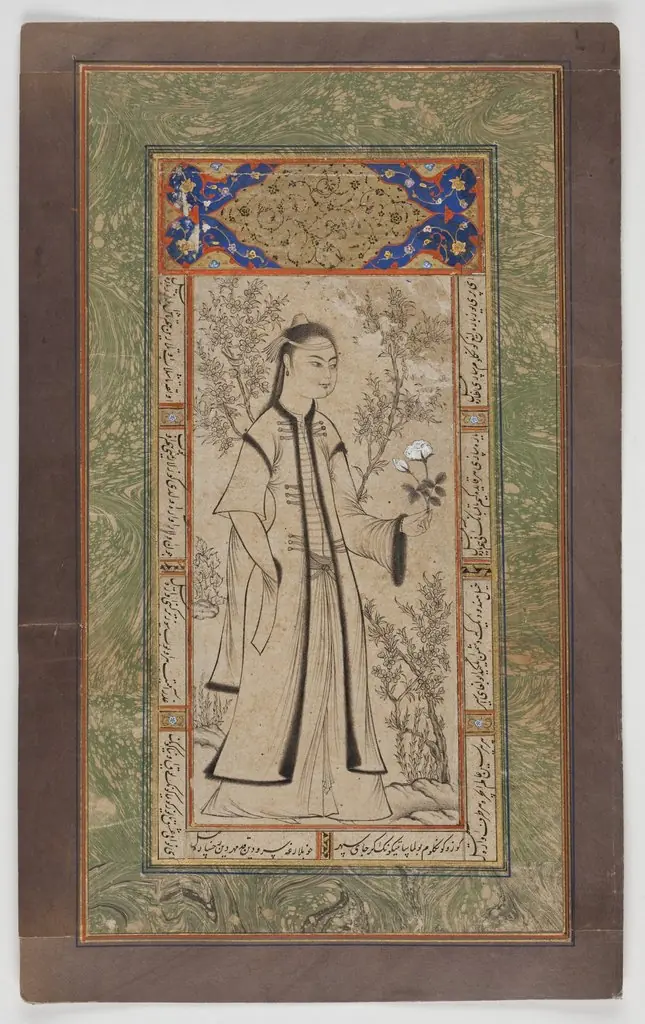 Lady with a Rose
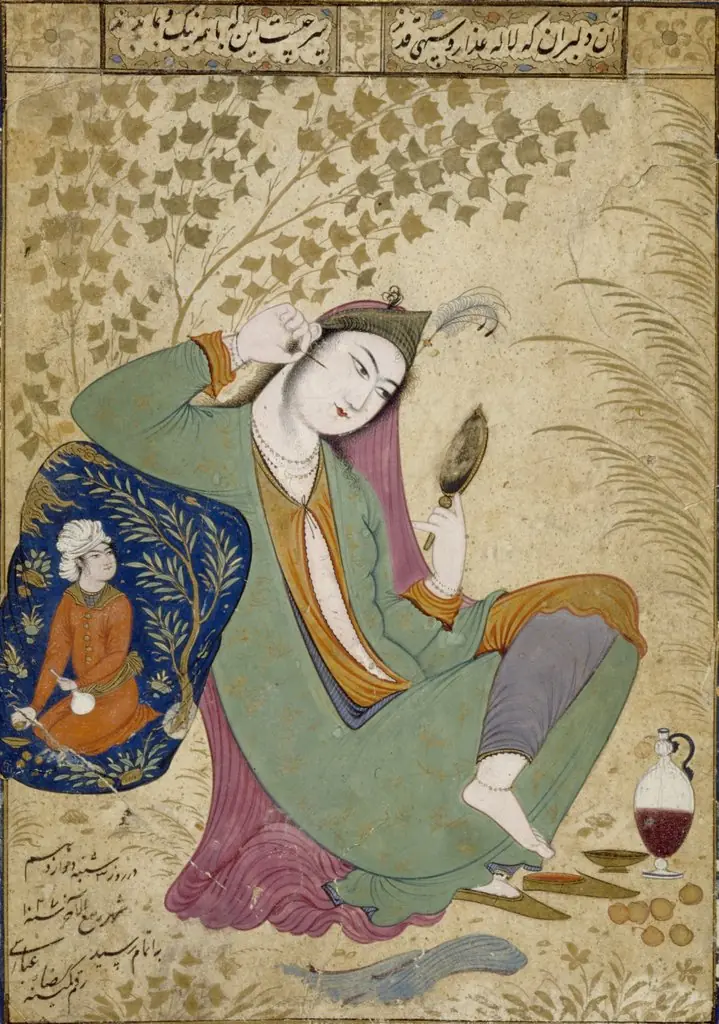 Lady with a Mirror
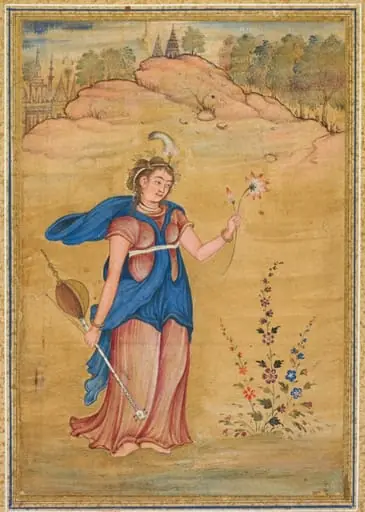 A female figure standing in a landscape holding a four-stringed “khuuchir” and a lotus
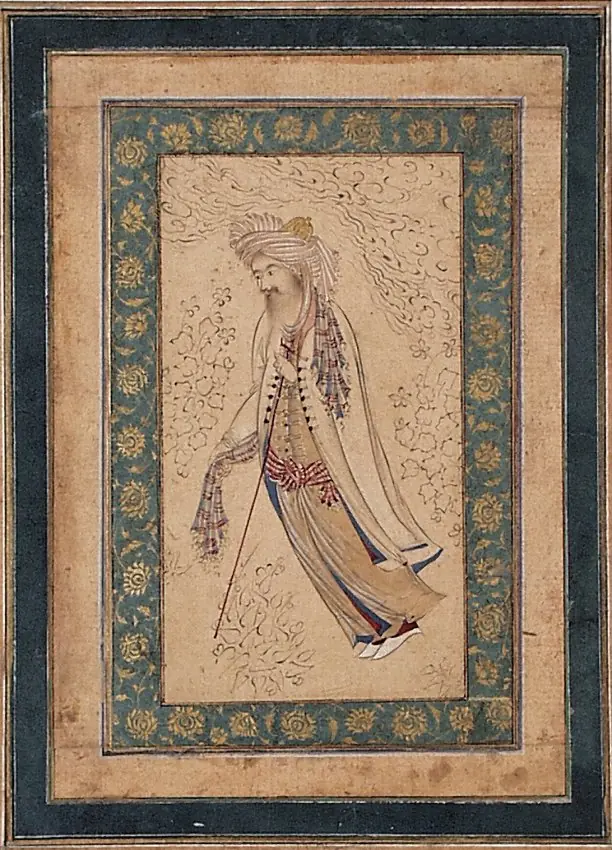 A Bearded Man Leaning on a Staff
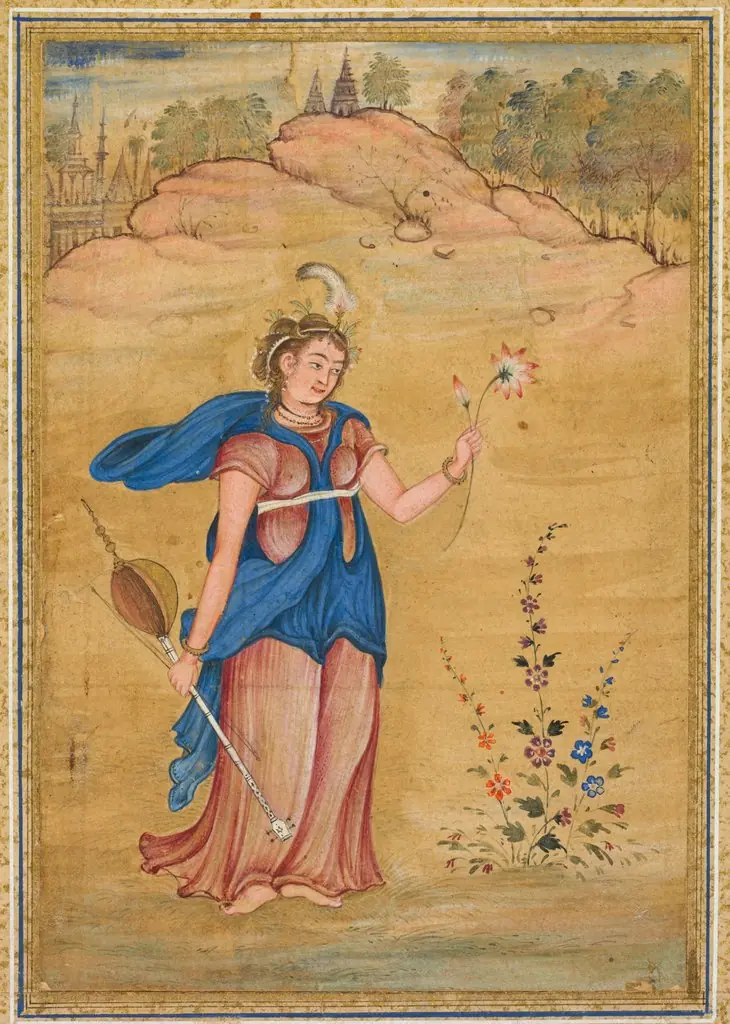 A female figure standing in a landscape holding a four-stringed “khuuchir” and a lotus