Artwork
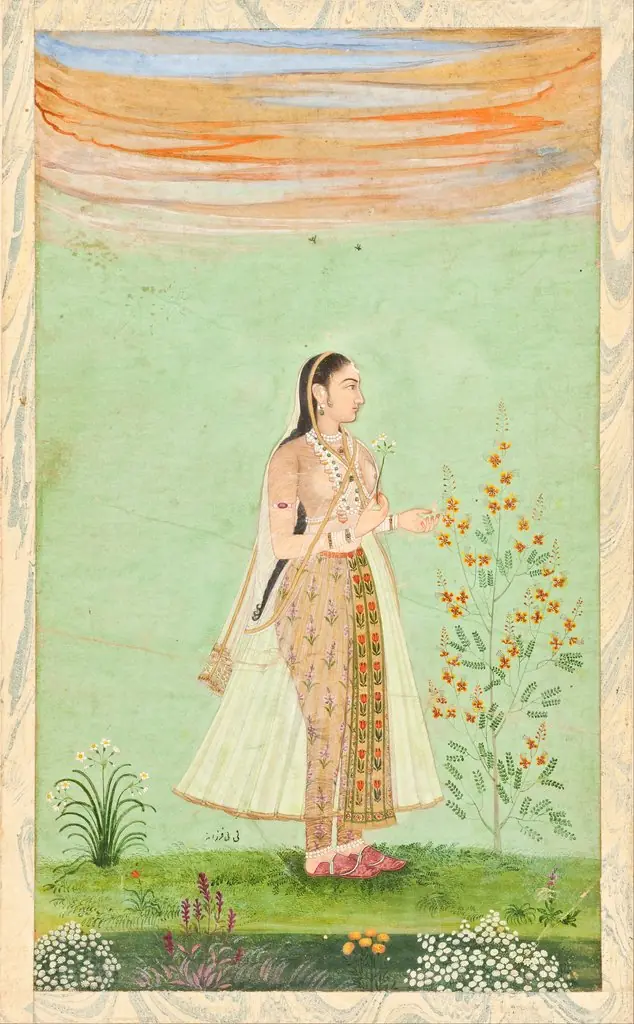
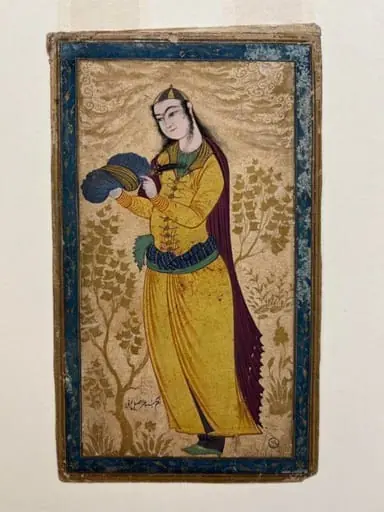
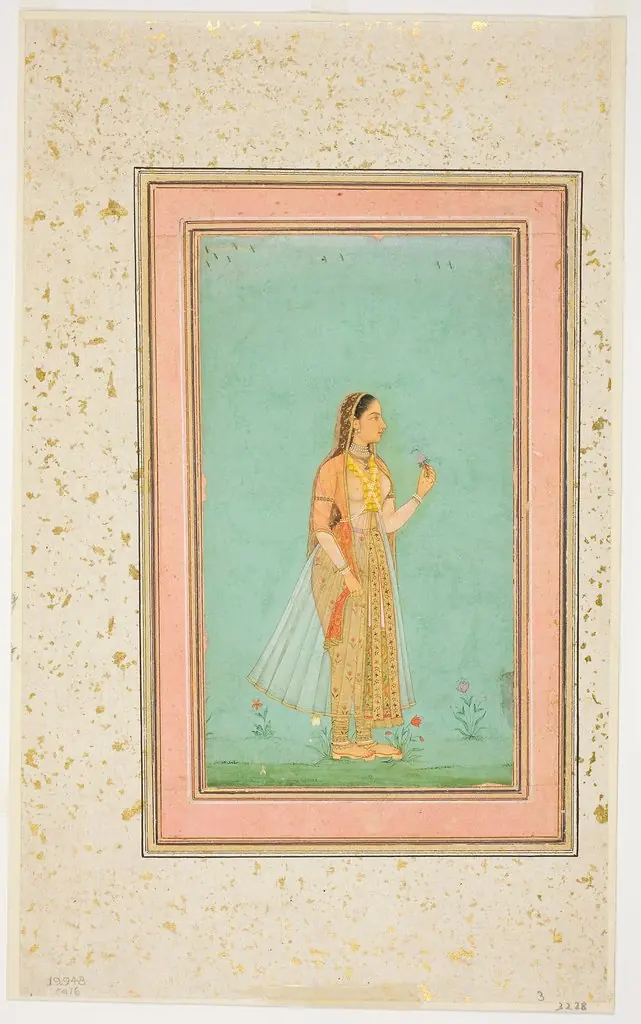
A female figure standing in a landscape holding a four-stringed “khuuchir” and a lotus
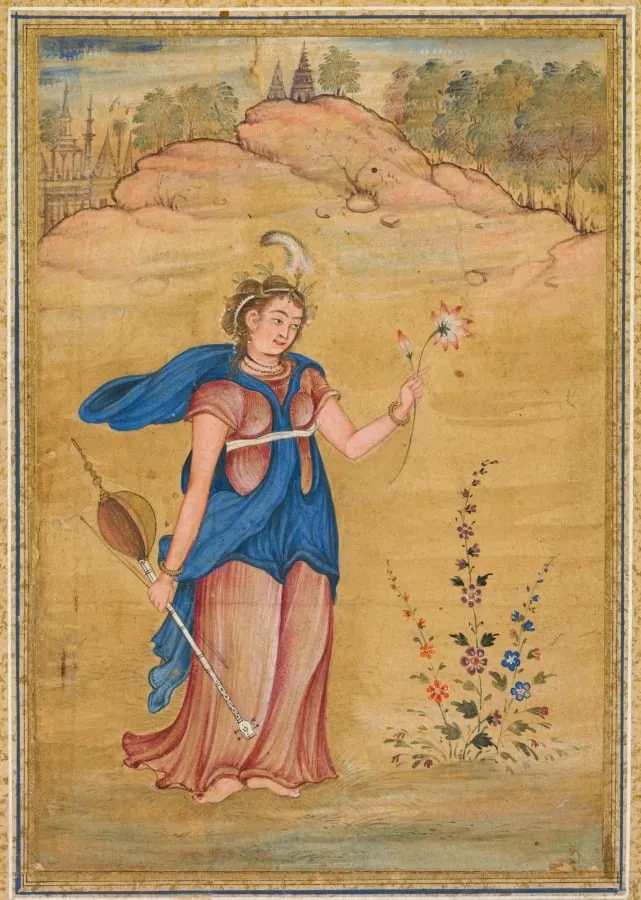
A female figure standing in a landscape holding a four-stringed “khuuchir” and a lotus is an unspecified painting by the Mughal Painting artist Unknown. It dates from 1590 and is held in the collection of the Cleveland Museum of Art. The painting depicts a solitary female figure standing in an arid landscape.
About this work
The lotus and instrument mix Hindu and Mongol symbols—showing how rulers borrowed ideas to link power, luck, and music.
A woman stands in a dry field, holding a four-stringed khuuchir and a lotus flower. Tiny plants sprout at her feet like she’s making the land bloom just by being there.
This painting comes from Akbar’s court in Mughal India. The lotus and instrument mix Hindu and Mongol symbols—showing how rulers borrowed ideas to link power, luck, and music. The feathered crown and robe suggest a blend of cultures, not just one tradition.
To see more art like this, look up court of Akbar (reigned 1556–1605).
Overview
The painting depicts a solitary female figure standing in an arid landscape. She holds a four‑stringed khuuchir in one hand and a lotus blossom in the other, while small shoots emerge at her feet, suggesting a transformative, life‑giving presence.
Subject & Meaning
In Indian visual tradition the lotus is a symbol of fertility, prosperity and divine favor, often associated with deities who bless rulers. The inclusion of the Mongolian‑style stringed instrument alludes to the goddess of learning and music, merging two cultural iconographies to convey a composite ideal of abundance and artistic patronage.
Technique & Style
The figure’s attire combines elements from diverse sources: a feathered crown reminiscent of Central Asian court dress, a robe whose drapery echoes motifs found in European engravings of biblical and classical subjects, and decorative patterns typical of Mughal court painting. The composition balances delicate brushwork with vivid coloration to highlight the contrast between the barren ground and the burgeoning flora.
History & Provenance
Created within the artistic workshops of Emperor Akbar’s court in Mughal India (reigned 1556–1605), the work reflects the empire’s policy of cultural synthesis. The painting remained in the imperial collection before entering a private European collection in the 19th century, where it was documented by early Orientalist scholars.
Context
The artwork exemplifies Akbar’s patronage of syncretic art, blending Hindu, Mongolian, and European visual vocabularies to articulate a universal vision of rulership. Its thematic focus on fertility and music influenced later Mughal painters, who continued to integrate foreign motifs into courtly representations of divine and royal authority.
Artist & collection

 Domestic Scene
 Giacomo and Cardinal Marco, investing Andrea, Abbot of San Zeno, with his Benefice
 The Nymph of Fontainebleau
 Portrait of a Woman
 Madonna and Child with Saints in the Enclosed Garden
 Venus and Minerva
 Family Group of Four on Sofa
 Wall painting from Room H of the Villa of P. Fannius Synistor at Boscoreale