Artwork
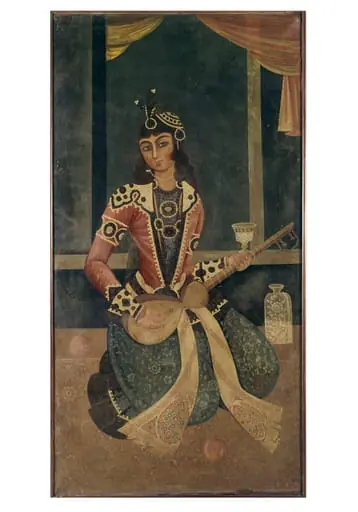
Woman playing a <i>kamānchah</i>
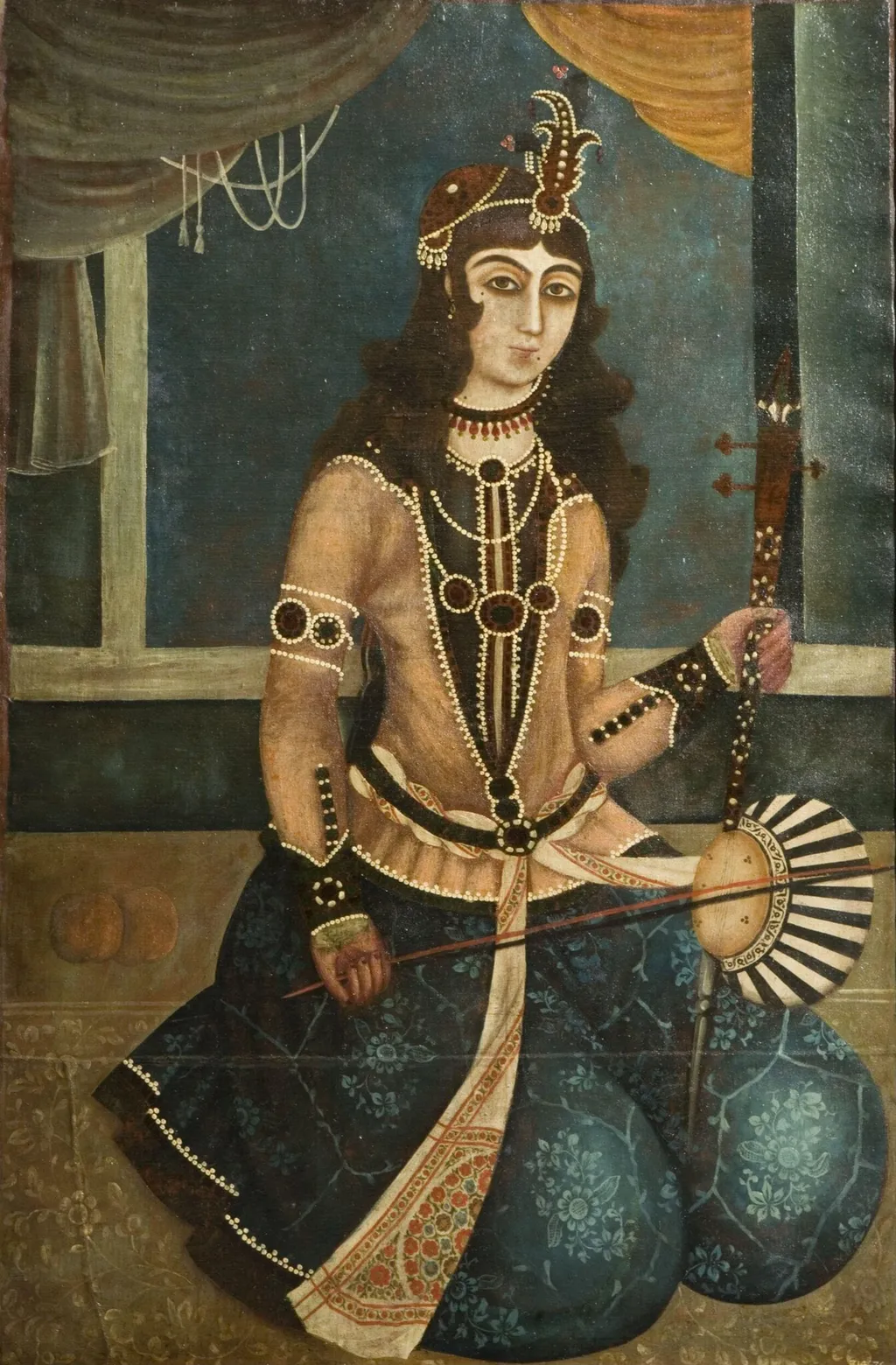
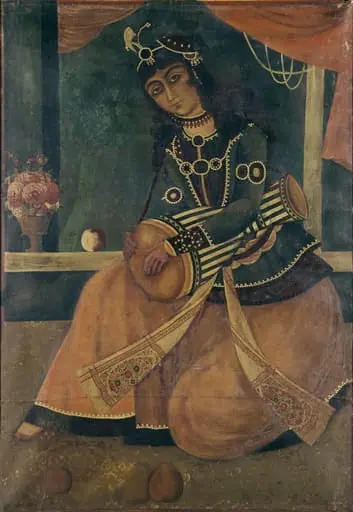
Woman playing a <i>kamānchah</i> is an oil painting by the Romanticist artist Unknown. It dates from 1800 and is held in the collection of the Victoria and Albert Museum. This oil painting depicts a woman playing a kamānchah, a stringed instrument, in a traditional Iranian seated position.
About this work
Overview
This oil painting depicts a woman playing a kamānchah, a stringed instrument, in a traditional Iranian seated position. Measuring approximately one foot in height, the compact work features a dominant, flattened figure set against a plain background.
Subject & Meaning
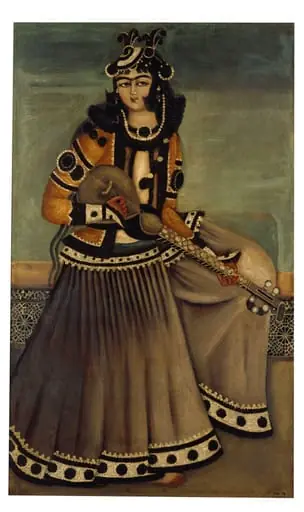
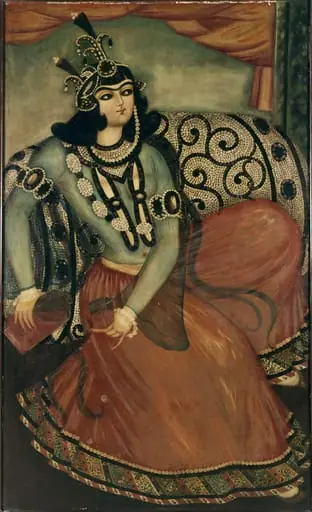
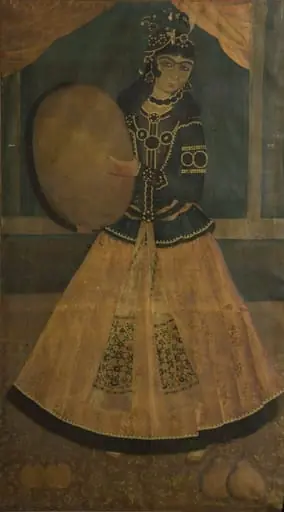
The subject is a woman, likely an imaginary portrait of a royal harem member, engaged in musical activity. The image reflects the Qajar dynasty's patronage of arts, particularly under Fath 'Ali Shah, who encouraged the revival of oil painting in Iran.
Technique & Style
Characterized by flattened figure forms and meticulous decorative detail, the painting exemplifies the style of oil works produced for Fath 'Ali Shah's residences. These were often integrated into palace walls as part of decorative series.
History & Provenance
Acquired by the Victoria and Albert Museum in 1876, the painting is believed to have originated from a Tehran palace constructed during Fath 'Ali Shah's reign (1797-1834). Its production falls within the Qajar revival of oil painting, which followed a decline after the 1722 Afghan invasion.
Context
Created during the Qajar dynasty's resurgence in the late 18th and early 19th centuries, the painting represents the cultural exchange between Iran and Europe, where oil painting techniques were introduced post-1600.
Legacy
As part of a distinct series of royal portraits, this work contributes to the understanding of Qajar-era art patronage and the revival of oil painting in 19th-century Iran, now preserved and showcased by the Victoria and Albert Museum.
Artist & collection

 Domestic Scene
 Giacomo and Cardinal Marco, investing Andrea, Abbot of San Zeno, with his Benefice
 The Nymph of Fontainebleau
 Portrait of a Woman
 Madonna and Child with Saints in the Enclosed Garden
 Venus and Minerva
 Family Group of Four on Sofa
 Wall painting from Room H of the Villa of P. Fannius Synistor at Boscoreale