Artwork
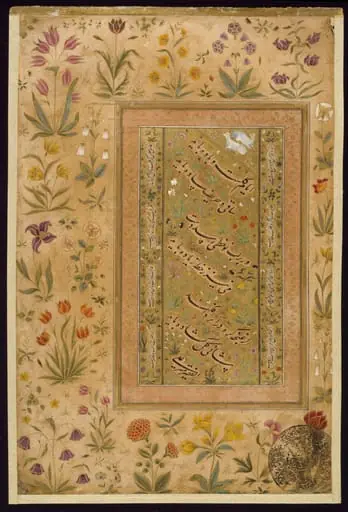
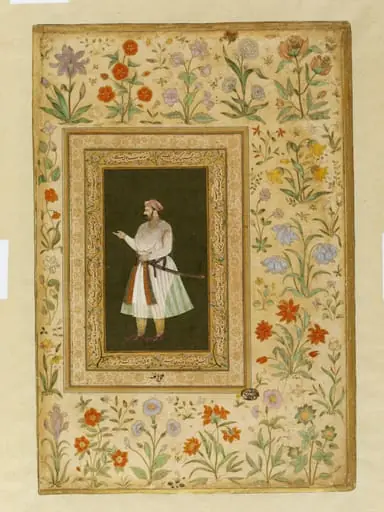
Persian calligraphy framed by an ornamental border of flowers, birds, and deer, from the Late Shah Jahan Album
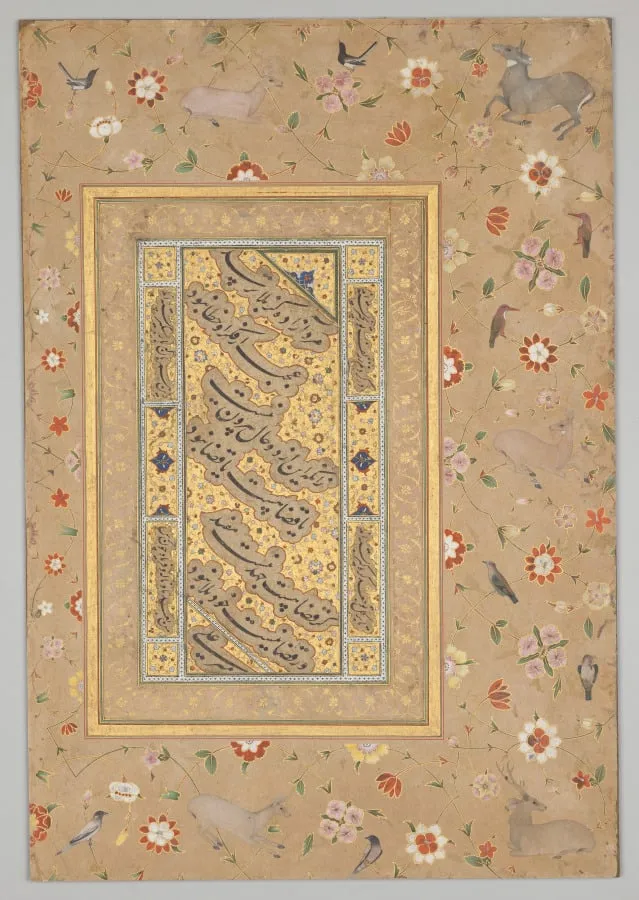
Persian calligraphy framed by an ornamental border of flowers, birds, and deer, from the Late Shah Jahan Album is an unspecified painting by the Mughal Painting artist Mir 'Ali Haravi. It dates from 1572 and is held in the collection of the Cleveland Museum of Art.
About this work
You see black Persian script floating inside a gold frame, surrounded by a bright border of flowers, birds, and deer.
You see black Persian script floating inside a gold frame, surrounded by a bright border of flowers, birds, and deer.
The calligraphy was written in Afghanistan around 1530, then sent to India a century later. Mughal artists added the border, filling it with life—deer listening to birds, vines heavy with blooms. The mix shows two cultures: Persian precision meets Indian love of nature.
To see more pages like this, look up *mughal india, court of shah jahan (reigned 1628–58)*.
Overview
A small manuscript page featuring Persian calligraphy is set within a gold‑lined frame and surrounded by an elaborate border of flowers, birds and deer. The calligraphic text, composed in black ink, occupies the central space, while the surrounding ornamentation fills the page with vivid natural motifs.
Subject & Meaning
The inscription contains a poem by the 14th‑century Persian poet Ibn‑i Yamin, which advises readers to remain untroubled by unforeseen misfortunes. The surrounding imagery—paired birds, grazing deer and flourishing vines—symbolizes the abundance and vitality of nature, reinforcing the poem’s theme of serenity amid life’s uncertainties.
Technique & Style
The calligraphy was executed in Afghanistan around 1530 by a Persian master, employing precise black ink on paper and accented with gold leaf. A century later, Mughal artists in India added the ornamental border, using delicate brushwork to render floral vines, blossoms, birds and deer in a style characteristic of Mughal naturalism.
History & Provenance
Originally a standalone Persian calligraphic sheet, the page was sent to the Indian subcontinent in the early 17th century and incorporated into a Shah Jahan‑era album. The Mughal addition of the border reflects the practice of integrating Persian literary art into Indian courtly collections.
Context
The piece exemplifies the cultural exchange between Persian and Mughal artistic traditions. Persian calligraphic refinement, focused on gem‑like elegance, meets the Mughal penchant for depicting lush, animated natural scenes, illustrating how courtly art blended aesthetic values across regions.
Artist & collection

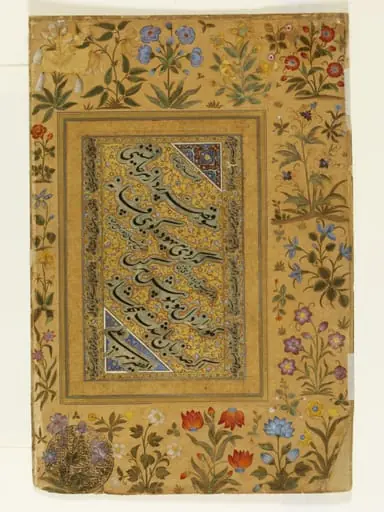
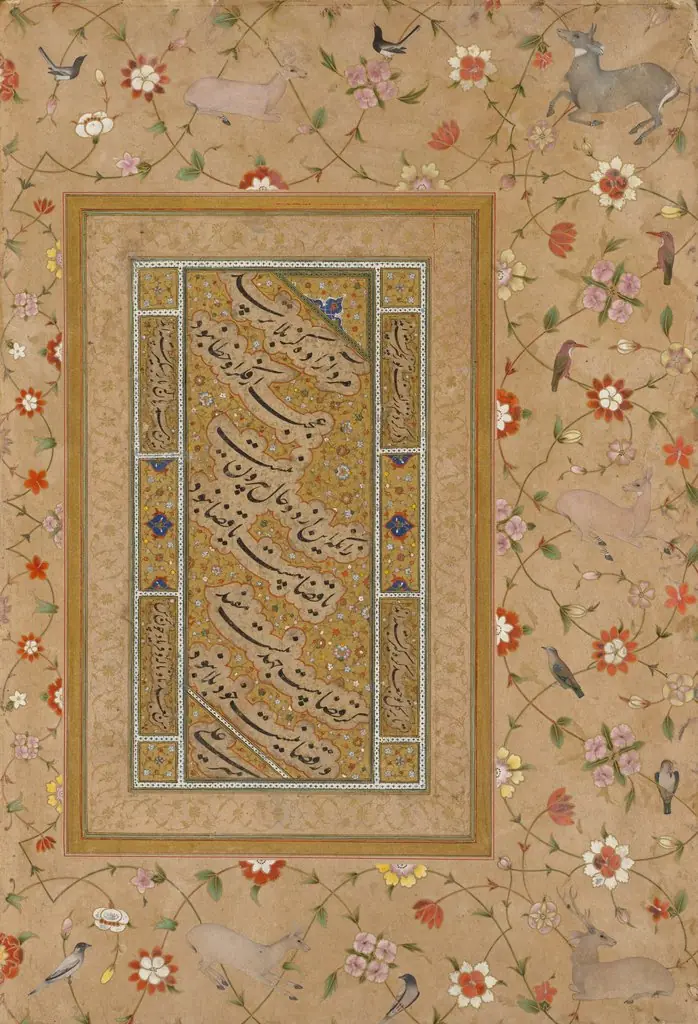 Page from the Late Shah Jahan Album: Persian Calligraphy framed by an ornamental border of flowers, birds, and deer
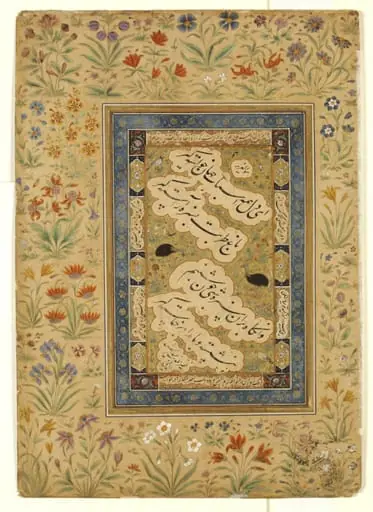
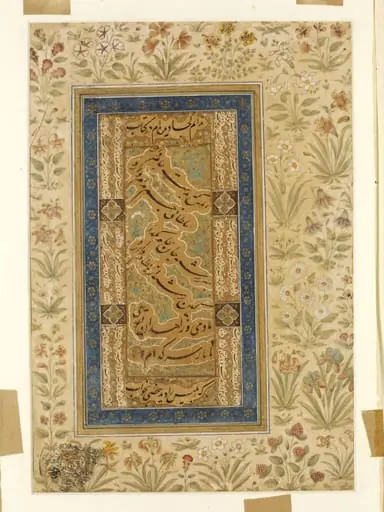
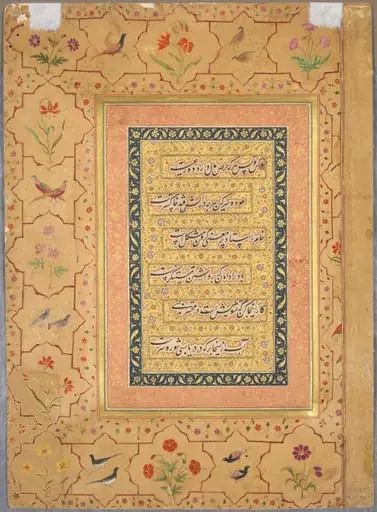 Calligraphy framed by an ornamental border with poppies and pairs of birds, from the Late Shah Jahan Album (verso)
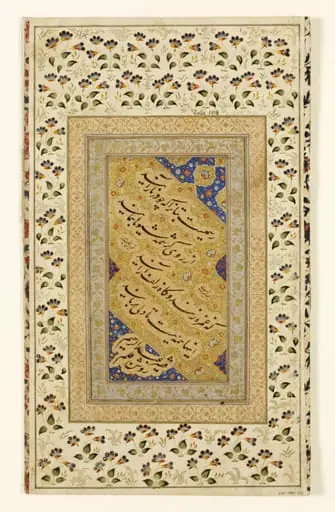
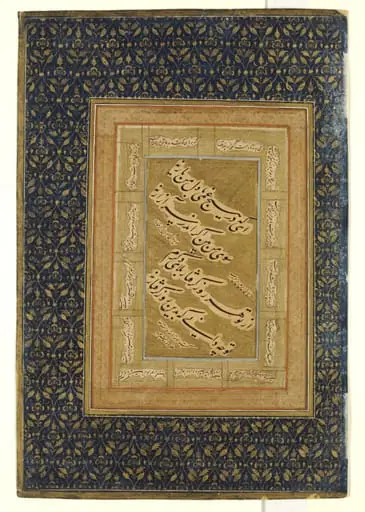
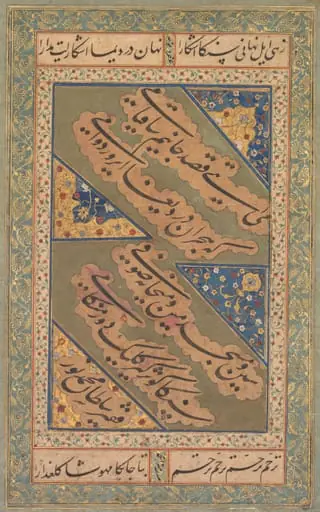 Calligraphy of Chaghatai Turkish Poems in Praise of Wine (verso)
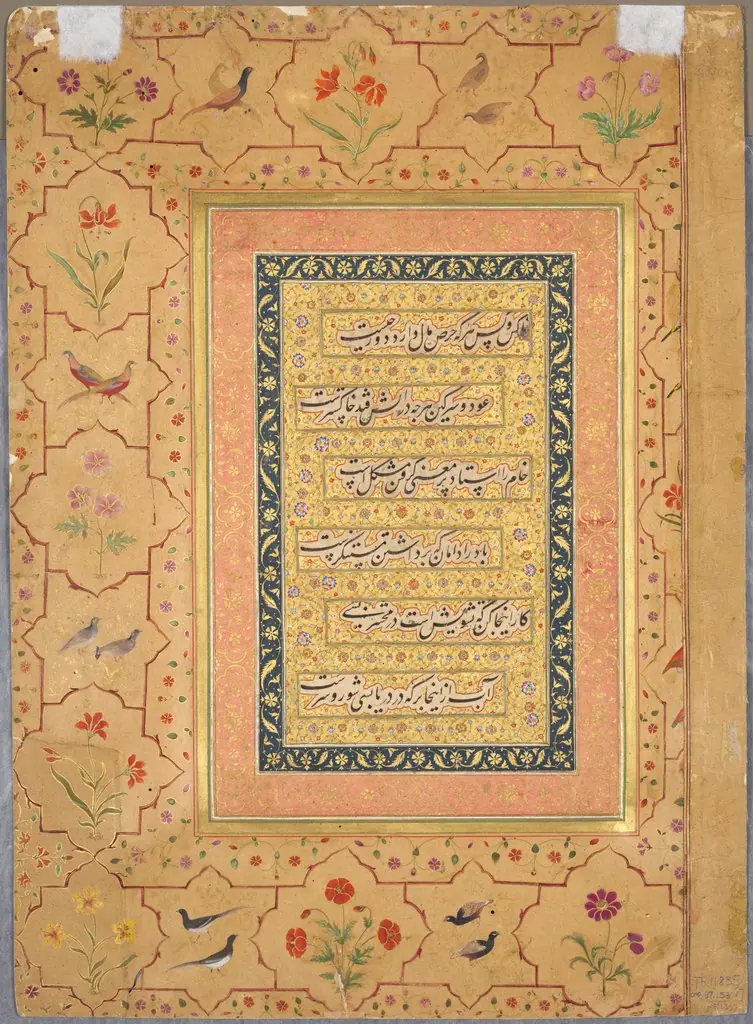 Page from the Late Shah Jahan Album: Calligraphy Framed by an Ornamental Border with Poppies and Pairs of Birds (verso)
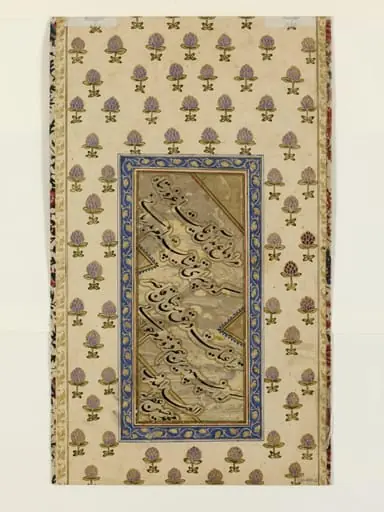
 Untitled