Artwork
Aurangzeb
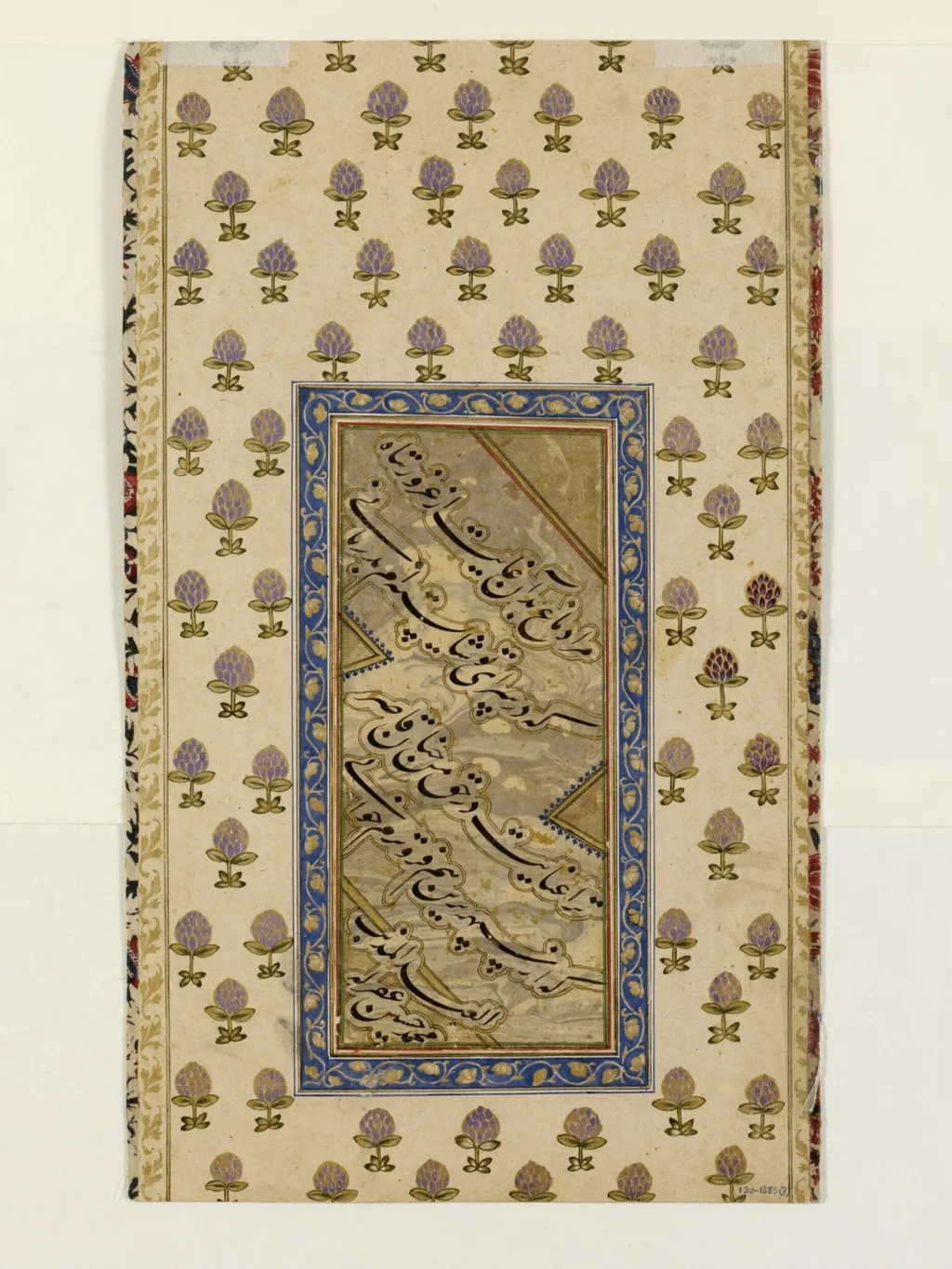
Aurangzeb is a paint painting by the Baroque artist Unknown. It dates from 1650 and is held in the collection of the Victoria and Albert Museum.
About this work
Overview
Created around the middle of the 17th century, this Mughal album page portrays the sixth emperor, Aurangzeb. Executed on paper with opaque water‑colour and gold, the work includes a separate calligraphic panel. Its decorative composition reflects the courtly aesthetic of the period, combining portraiture with intricate ornamental borders.
Subject & Meaning
The central figure is Aurangzeb, ruler of the Mughal empire from 1658 to 1707, presented in a stylised manner that emphasizes his authority rather than realistic likeness. The surrounding motifs—swirling lines and floral patterns—serve to frame the sovereign within a symbolic universe of order and divine favor, a common visual language in imperial portraiture.
Technique & Style
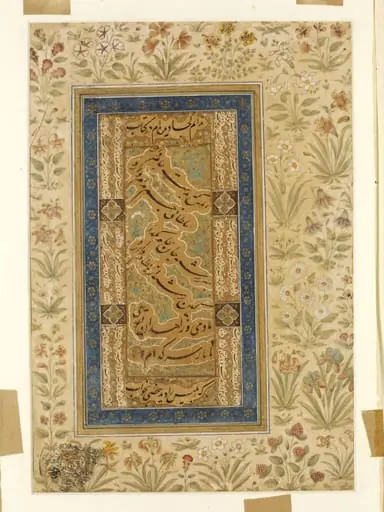
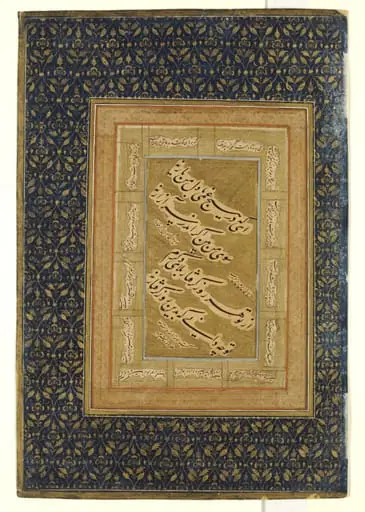
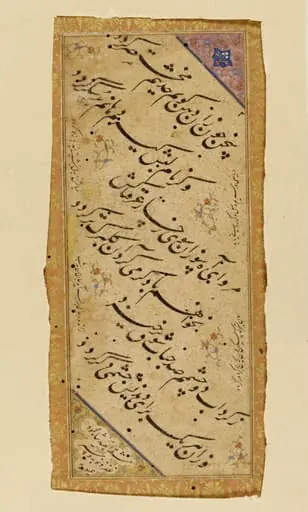
Within a bold blue border, a rectangle of black, sinuous strokes creates a dynamic contrast against a light gold field.
The artist employed opaque water‑colours mixed with gold leaf, a technique typical of Mughal miniature workshops. Within a bold blue border, a rectangle of black, sinuous strokes creates a dynamic contrast against a light gold field. The outer margins are filled with repeated lotus‑like blossoms in purple, green and gold, set against a beige ground, illustrating the period’s penchant for elaborate surface decoration.
History & Provenance
Originally part of a larger album, the page entered the market after being acquired in Tehran by Lieutenant Colonel Murdoch Smith. It was later purchased for a modest sum of £25, and its ownership trail was documented during a research project undertaken by the museum in 2023, confirming its provenance and contextual background.
Context
The piece belongs to a flourishing phase of Mughal art when imperial patronage encouraged the production of richly embellished album pages for personal and diplomatic use. Such works often combined portraiture with calligraphy, reflecting the synthesis of Persianate literary culture and Indian artistic traditions that defined the empire’s visual identity.
Artist & collection

 Domestic Scene
 Giacomo and Cardinal Marco, investing Andrea, Abbot of San Zeno, with his Benefice
 The Nymph of Fontainebleau
 Portrait of a Woman
 Madonna and Child with Saints in the Enclosed Garden
 Venus and Minerva
 Family Group of Four on Sofa
 Wall painting from Room H of the Villa of P. Fannius Synistor at Boscoreale
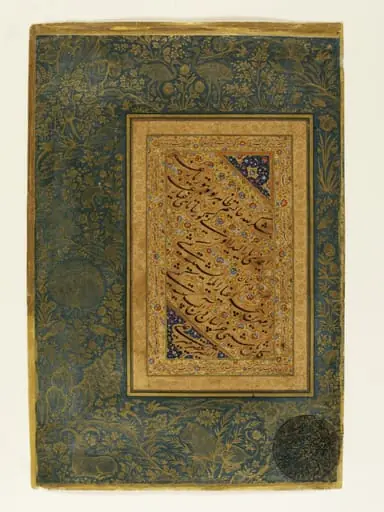 Untitled
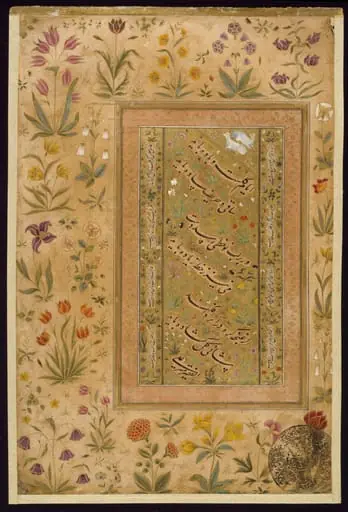 Untitled
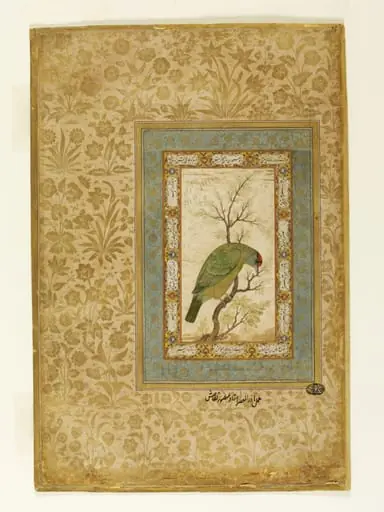 Untitled
 Untitled
 Untitled
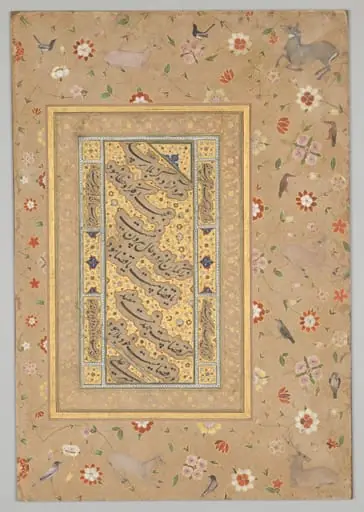 Persian calligraphy framed by an ornamental border of flowers, birds, and deer, from the Late Shah Jahan Album
 Untitled
 Untitled
 Untitled
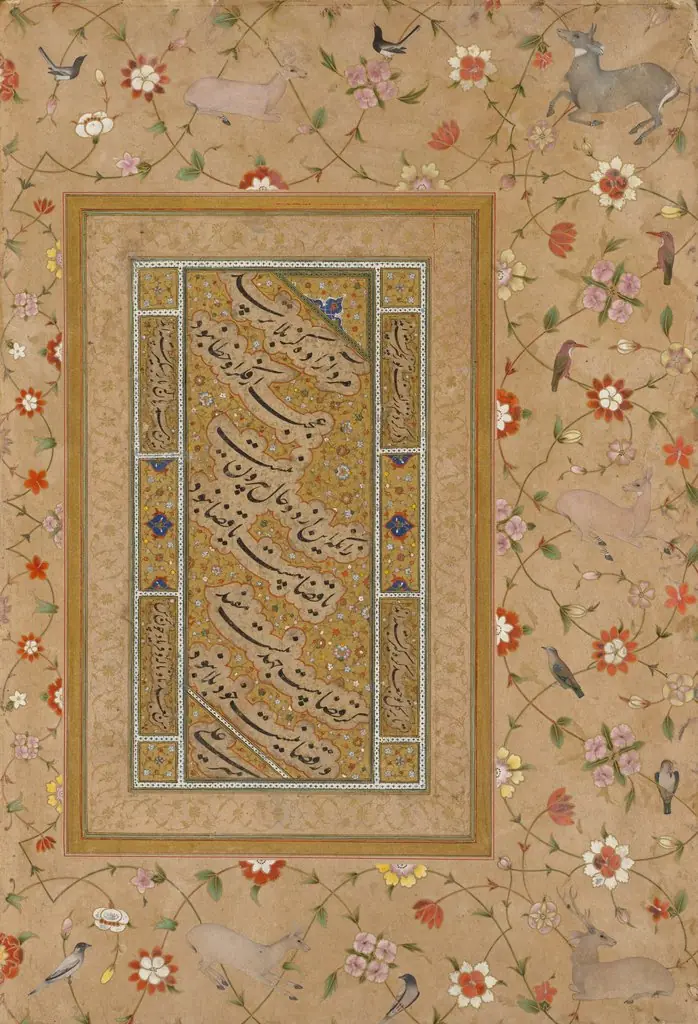 Page from the Late Shah Jahan Album: Persian Calligraphy framed by an ornamental border of flowers, birds, and deer
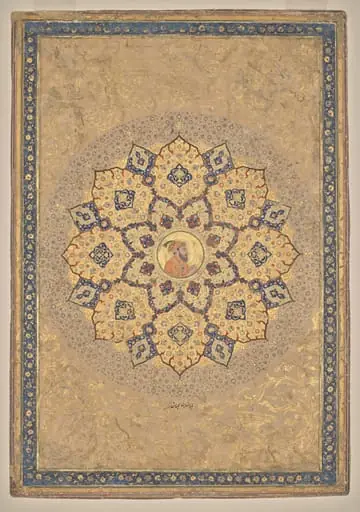 Shamsa (sunburst) with portrait of Aurangzeb (1618–1707), from the Emperor's Album (the Kevorkian Album)
 Untitled