Artwork
Untitled
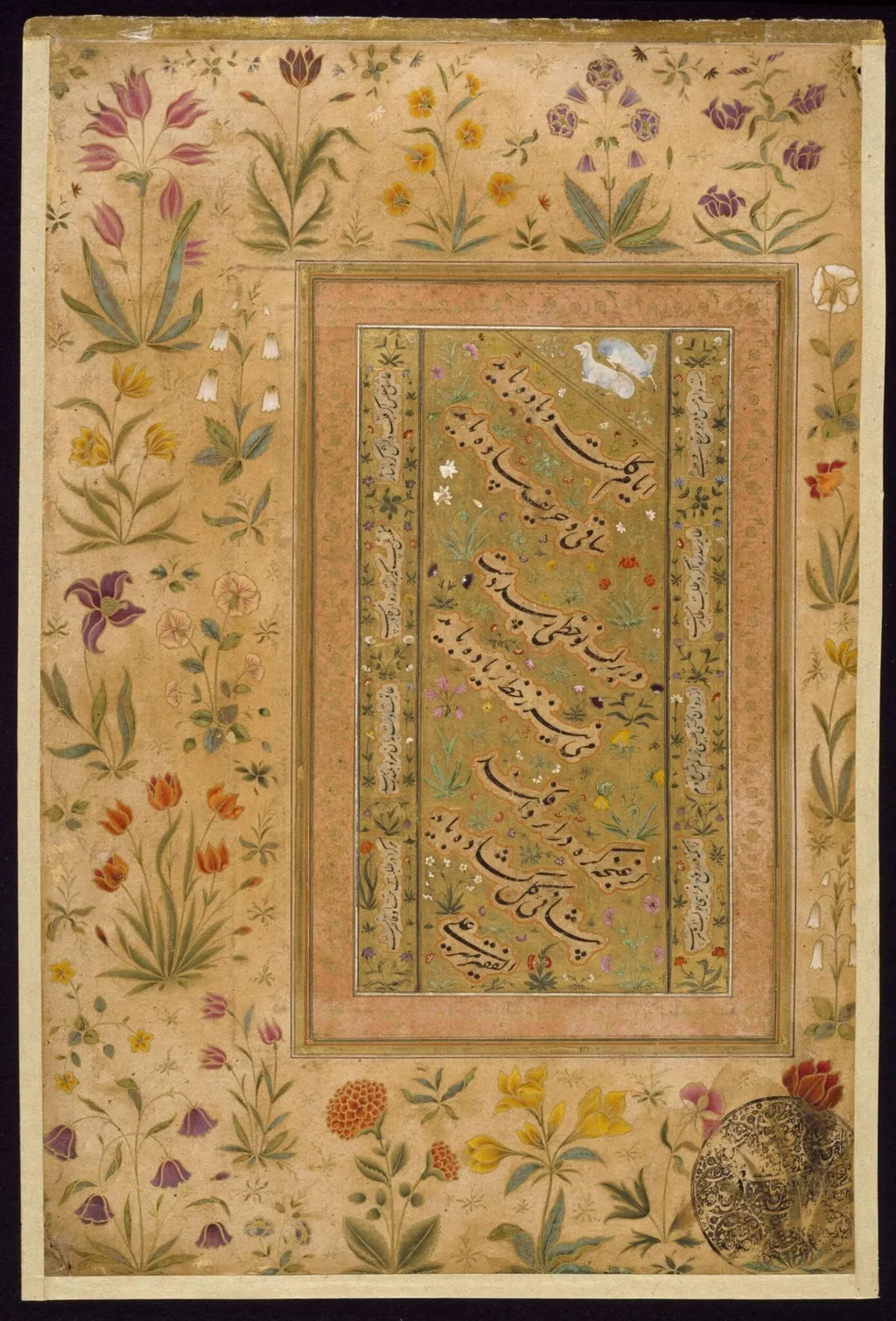
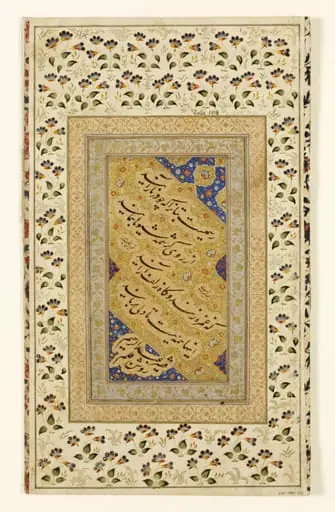
Untitled is a paint painting by the Baroque artist Mir 'Ali. It dates from 1608 and is held in the collection of the Victoria and Albert Museum.
About this work
Overview
It combines intricate floral decoration with a central inscription, reflecting the refined aesthetic of early 17th-century Persianate manuscript culture.
This opaque watercolor on paper, dated 1608, is a calligraphic panel by Mir 'Ali of Herat. It combines intricate floral decoration with a central inscription, reflecting the refined aesthetic of early 17th-century Persianate manuscript culture. The work was created shortly after the death of Raja Sangram, an event recorded in Emperor Jahangir’s memoirs, situating it within a specific political and cultural moment.
Subject & Meaning
The central panel features flowing black script on a gold ground, likely a poetic verse or religious quotation, common in devotional and courtly texts of the period. Surrounding it, a dense arrangement of tulips, roses, and lilies—symbols of beauty and transience—frames the text without overwhelming it. A small, patterned vase in the corner suggests a quiet, contemplative space, reinforcing the meditative tone of the composition.
Technique & Style
Mir 'Ali employed fine brushwork to render each petal and leaf with precision, using soft, layered watercolors to achieve subtle gradations of color. The gold background enhances the luminosity of the script, while the calligraphy itself demonstrates mastery of the nasta'liq hand. The balance between ornamental flora and disciplined script reflects a deliberate harmony between nature and textual authority.
History & Provenance
The painting entered the collection of Harriet Sarah, Baroness Wantage, and was bequeathed to a public institution in 1920. Its earlier history before this is undocumented, though its style and date align with works produced in the Mughal or Safavid court circles. The absence of a signature or seal leaves its original patronage uncertain, though its quality suggests imperial or aristocratic commission.
Context
Created in the aftermath of Raja Sangram’s death in late 1606, the work emerged during a period of courtly transition under Jahangir. While Mughal painting was increasingly naturalistic, this piece retains the Persianate tradition of integrating calligraphy with floral ornament, a practice valued for its spiritual and aesthetic resonance. Such panels often served as devotional objects or decorative elements in royal libraries.
Legacy
Mir 'Ali’s work exemplifies the enduring influence of Persian calligraphic traditions in South Asian courts. Though less widely known than his contemporaries, his integration of botanical detail with script influenced later manuscript illumination. This piece remains a quiet testament to the skill of artists who elevated textual beauty into visual poetry, preserving a refined aesthetic across generations.
Artist & collection
Artist
Persian calligrapher in the 17th-century Isfahan atelier tradition, Mir ‘Ali left flowing black-ink compositions on paper and albums that trained eyes as much as hands.

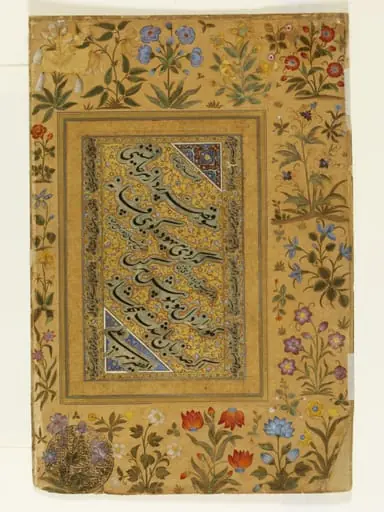
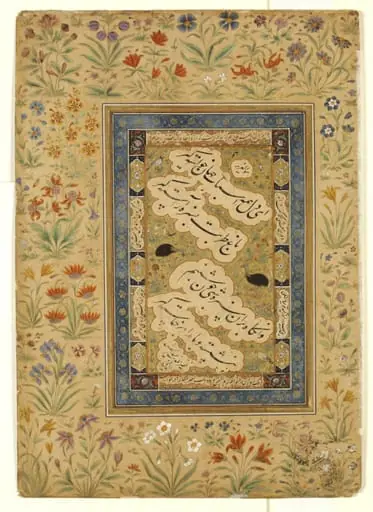 Untitled
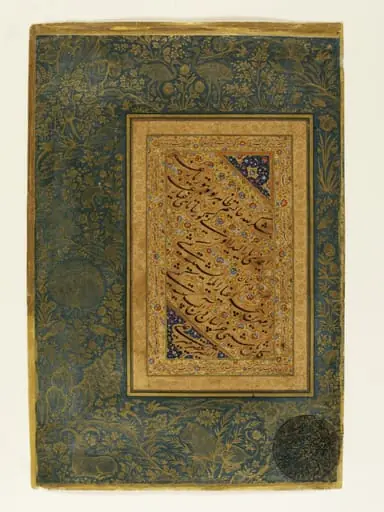
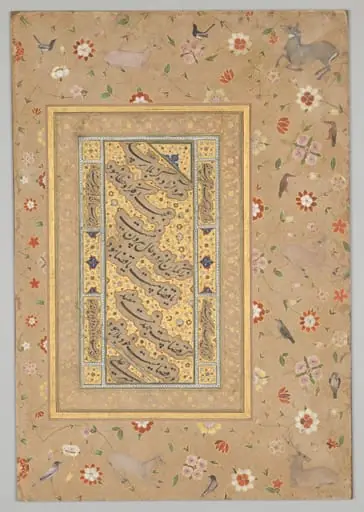 Persian calligraphy framed by an ornamental border of flowers, birds, and deer, from the Late Shah Jahan Album
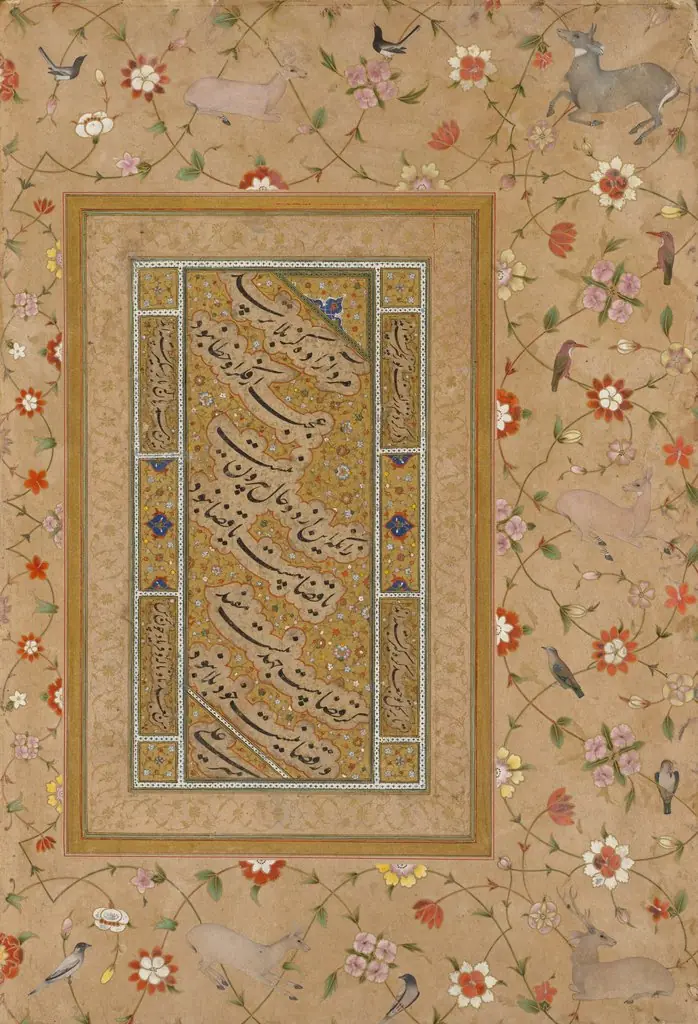 Page from the Late Shah Jahan Album: Persian Calligraphy framed by an ornamental border of flowers, birds, and deer
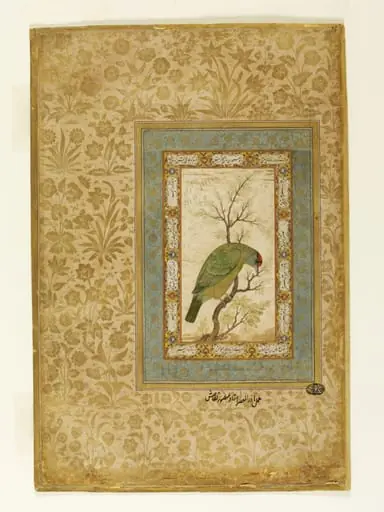 Untitled
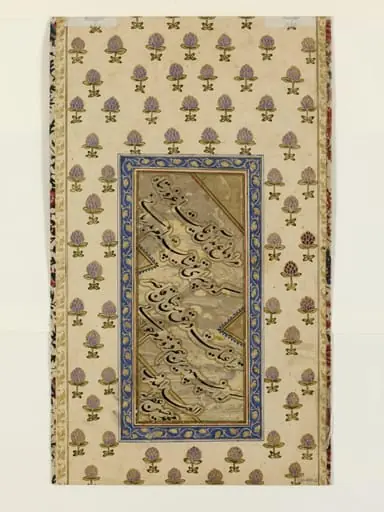 Aurangzeb
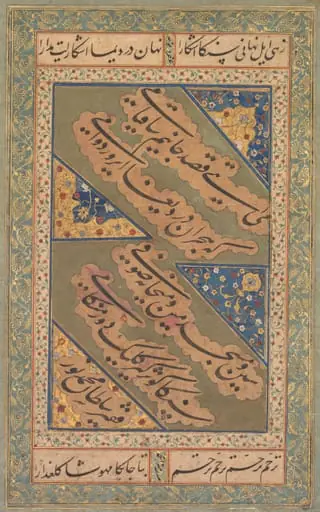 Calligraphy of Chaghatai Turkish Poems in Praise of Wine (verso)
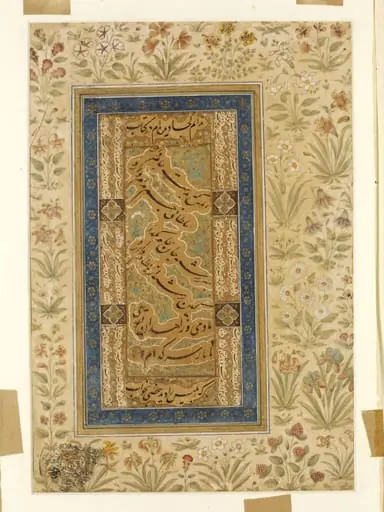
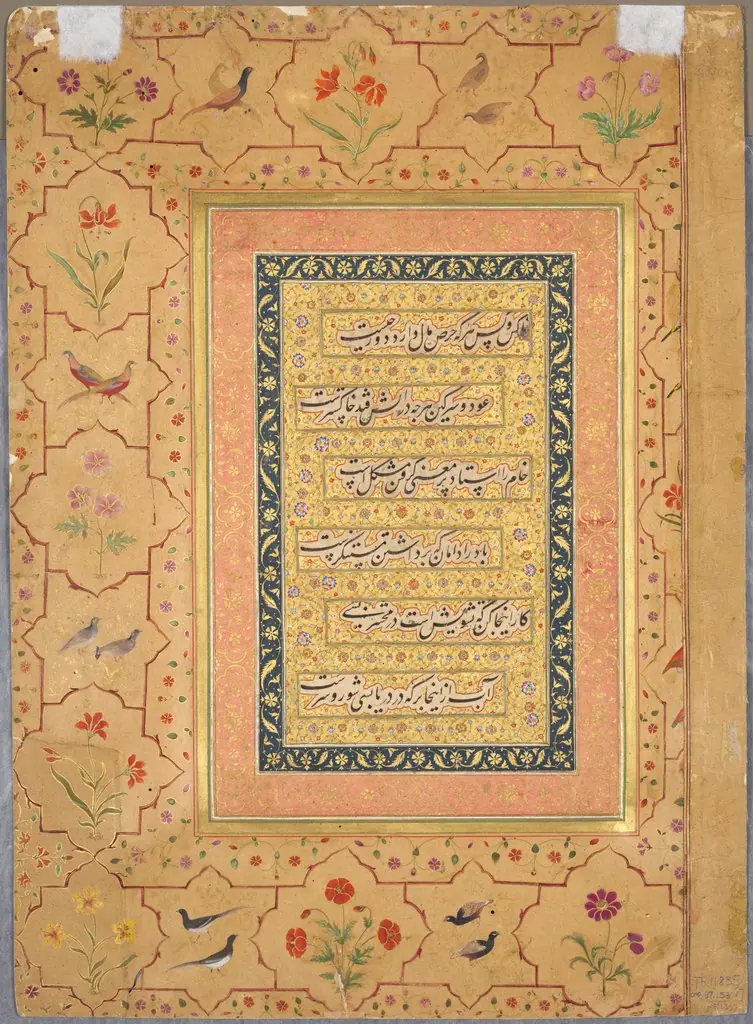 Page from the Late Shah Jahan Album: Calligraphy Framed by an Ornamental Border with Poppies and Pairs of Birds (verso)
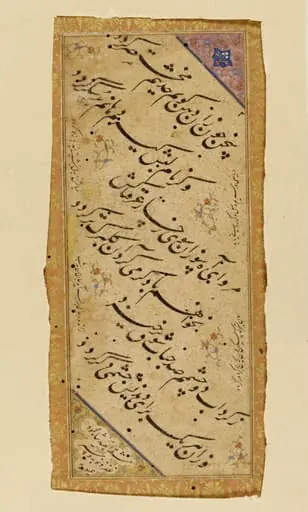 Untitled
 Untitled
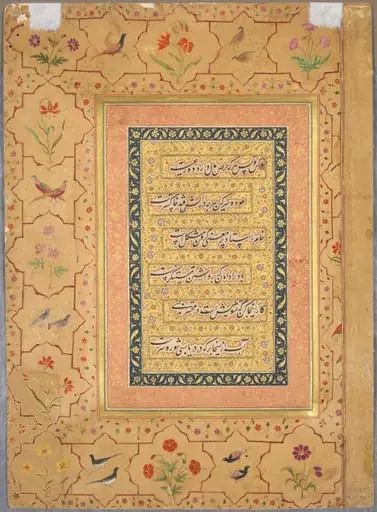 Calligraphy framed by an ornamental border with poppies and pairs of birds, from the Late Shah Jahan Album (verso)