Artwork
The Fourth Month, A Lady of the Enkyō Era (1744-48), from the series Thirty-six Elegant Selections
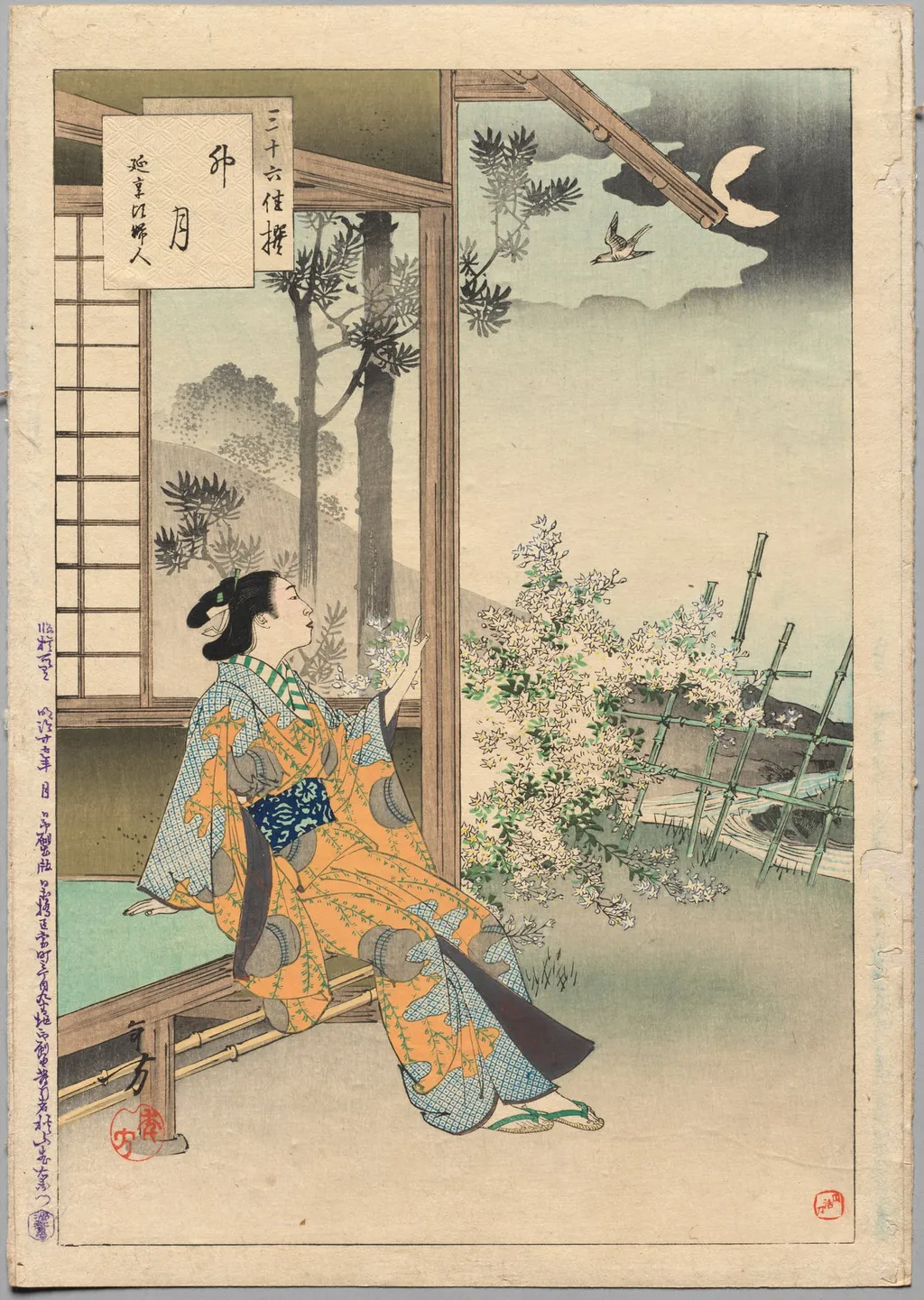
The Fourth Month, A Lady of the Enkyō Era (1744-48), from the series Thirty-six Elegant Selections is a print by the Impressionist artist Mizuno Toshikata. It dates from 1894 and is held in the collection of the Cleveland Museum of Art.
About this work
Overview
Created between 1744 and 1848, the series reflects a deliberate engagement with Japan’s past.
This woodblock print is one of thirty-six in a series depicting women from distinct historical eras, each rendered with attention to period-specific dress and demeanor. Created between 1744 and 1848, the series reflects a deliberate engagement with Japan’s past. The artist, Mizuno Toshikata, was trained by Tsukioka Yoshitoshi and later assumed his role as a newspaper illustrator, blending historical themes with contemporary printmaking practices.
Subject & Meaning
The figure represents a noblewoman from the Enkyō era (1744–1748), a brief but culturally significant period in the Edo dynasty. Her quiet posture and refined attire suggest an intimate, contemplative moment rather than a public display. The choice to portray her in solitude emphasizes personal dignity and the quiet continuity of aristocratic life, aligning with the series’ broader aim to honor historical femininity through restrained elegance.
Technique & Style
Executed in the ukiyo-e tradition, the print employs fine linework and subtle color gradations to convey texture and form. The woman’s kimono is rendered with delicate patterns, while the background remains minimal, focusing attention on her presence. The composition avoids dramatic action, favoring stillness and atmospheric detail—hallmarks of Mizuno’s approach, shaped by his mentor Yoshitoshi’s emphasis on psychological depth over spectacle.
History & Provenance
The print originates from a privately commissioned series produced during the late Edo period, likely intended for collectors with an interest in historical aesthetics. Mizuno Toshikata, as a successor to Yoshitoshi’s illustrative legacy, contributed to a growing market for historically informed prints. The work entered the Cleveland Museum of Art’s collection through documented acquisitions of Edo-period prints in the early 20th century.
Context
During the mid-19th century, Japanese artists increasingly turned to historical subjects as a means of cultural reflection amid rapid modernization. The Thirty-six Elegant Selections emerged within this trend, offering idealized portrayals of women from earlier centuries. These images served not as documentary records but as meditations on tradition, appealing to urban audiences seeking connection to a perceived refined past.
Legacy
Mizuno Toshikata’s series contributed to the preservation of historical visual language in print form, influencing later generations of artists who sought to reconcile tradition with modern media. Though less widely known than his mentor’s works, his prints remain valuable for their nuanced depiction of historical women and their role in sustaining cultural memory through art.
Own this work as a print
Artist & collection


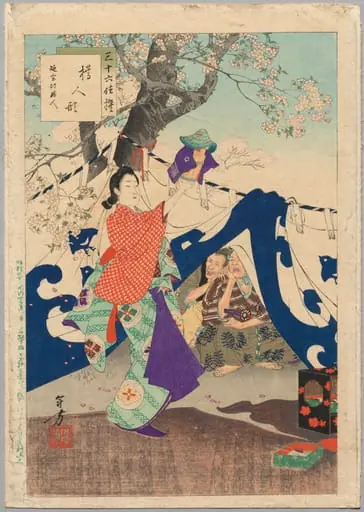 A Puppet Made from a Bucket, A Lady of the Enpō Era (1673–1681), from the series Thirty-six Elegant Selections
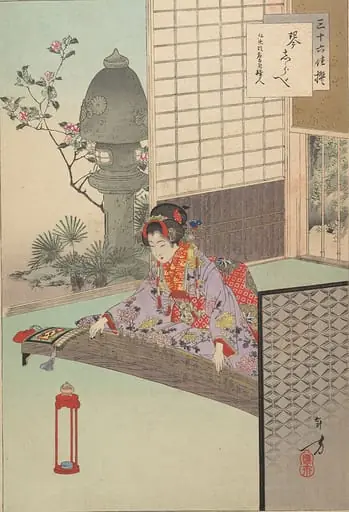
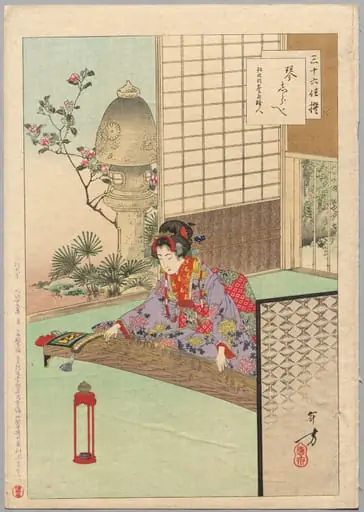 Playing the Koyo, A Lady from Nagoya of the Kōka Era (1844-48), from the series Thirty-six Elegant Selections
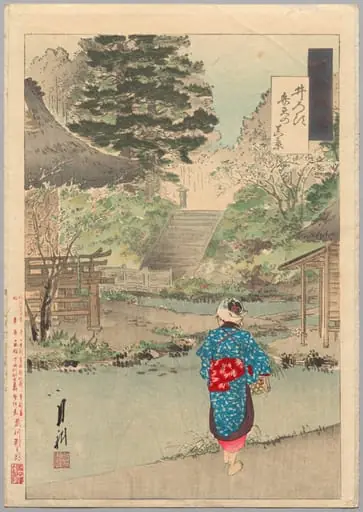 True View of Benten at Inokashira from the series Gekkō’s Miscellaney
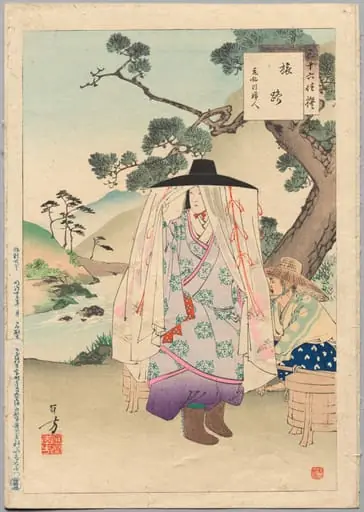 On the Road, A Lady of the Genkō Era (1313-34), from the series Thirty-Six Elegant Selections
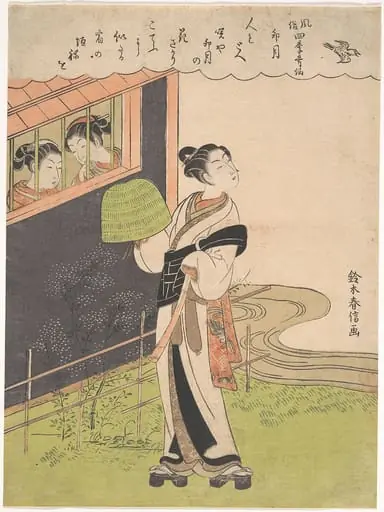 鈴木春信画 虚無僧・「風俗四季歌仙 卯月」|A Flute-Playing Monk (Komusō); The Fourth Month (Uzuki), from the series Fashionable Poetic Immortals of the Four Seasons (Fūzoku shiki kasen)
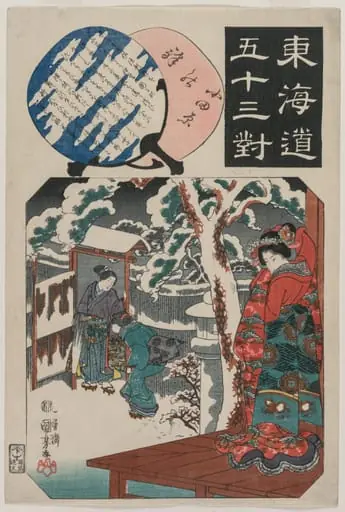 Odawara Station: Minamoto Yoritomo Visits the Daughter of Ito Nyudo (from the series Fifty-three Paired Illustrations for the Tokaido)