Artwork
Untitled
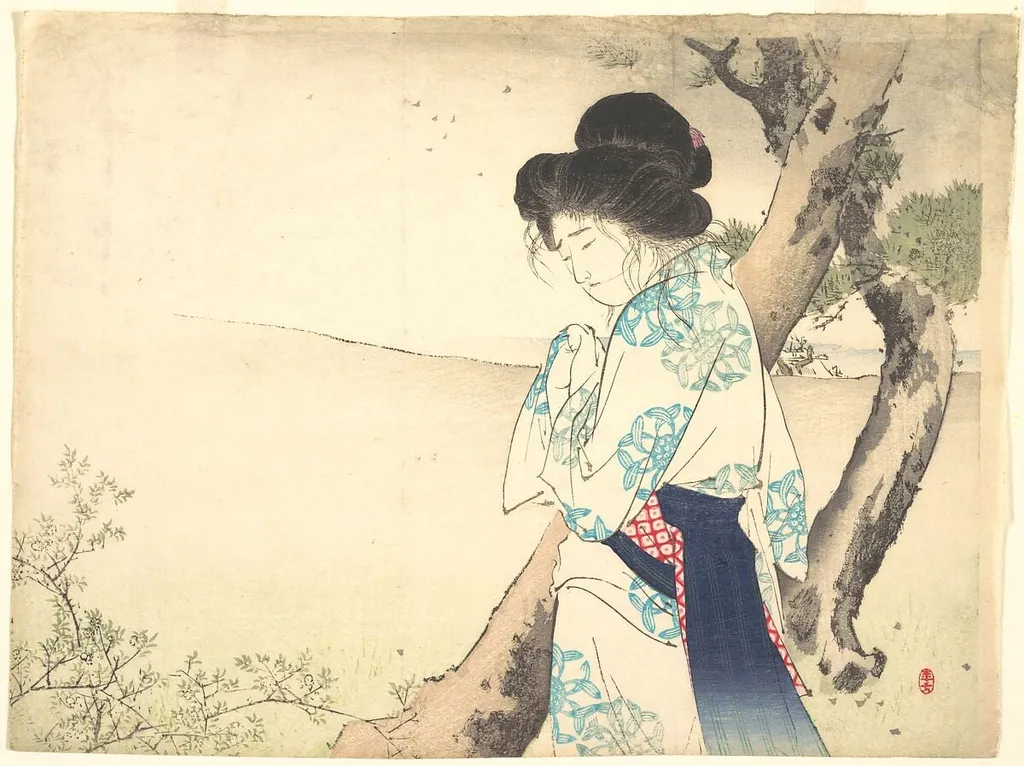
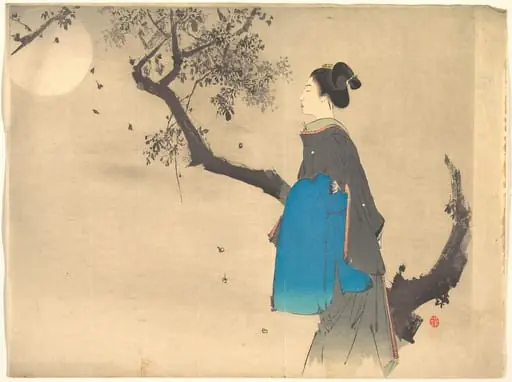
Untitled is an ink print by the Impressionist artist Mizuno Toshikata. It dates from 1905 and is held in the collection of the Metropolitan Museum of Art.
About this work
Overview
This woodblock print, dated around 1905, is attributed to Mizuno Toshikata and resides in The Metropolitan Museum of Art’s collection. Executed in ink and color on paper, it exemplifies early 20th-century Japanese printmaking, blending traditional techniques with a modern sensitivity to natural light and informal composition.
Subject & Meaning
The image depicts a solitary woman seated on a stone beside a quiet river. Her poised posture and restrained attire suggest contemplation rather than narrative action. The landscape around her—bare trees, a distant bridge, still water—enhances a mood of quiet solitude, evoking transient moments in nature without overt symbolism.
Technique & Style
The print employs delicate, fluid lines to render the woman’s robe and the surrounding branches, suggesting movement rather than rigid form. Colors are subdued yet distinct: soft blues, muted reds, and cool grays create a springlike atmosphere. The brushwork resembles sketch-like spontaneity, echoing Western Impressionist approaches while remaining rooted in ukiyo-e conventions.
History & Provenance
Created during a period of cultural exchange between Japan and the West, the work reflects Mizuno’s engagement with evolving artistic trends. It entered The Metropolitan Museum of Art’s collection as part of its broader effort to document Japanese prints from the Meiji era, though its specific acquisition history remains undocumented in public records.
Context
In early 1900s Japan, traditional woodblock printing adapted to new aesthetic influences, including Western painting. Artists like Mizuno moved away from theatrical scenes toward intimate, naturalistic subjects. This print aligns with a broader shift toward personal expression and landscape-focused imagery in late Meiji-period prints.
Legacy
Though not widely exhibited, the work contributes to understanding how Japanese printmakers absorbed and reinterpreted foreign styles without abandoning their technical heritage. Its quiet composition and restrained palette continue to inform scholarly discussions on cross-cultural aesthetics in modern Japanese art.
Artist & collection


 Untitled
 Untitled
 Untitled
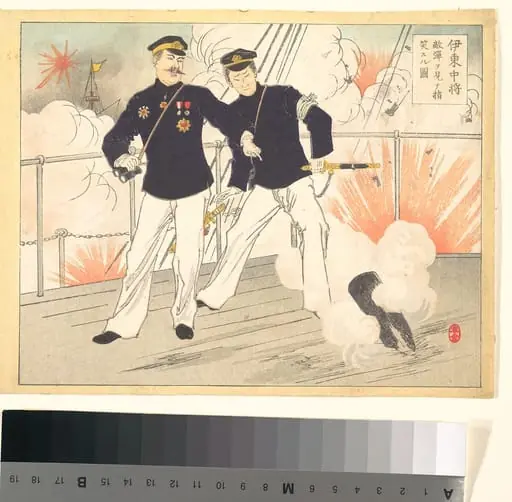 Ito Chujo tekidan o mite shi warau suru zu|Vice Admiral Ito Mocks, Points and Looks at the Enemy Bullets
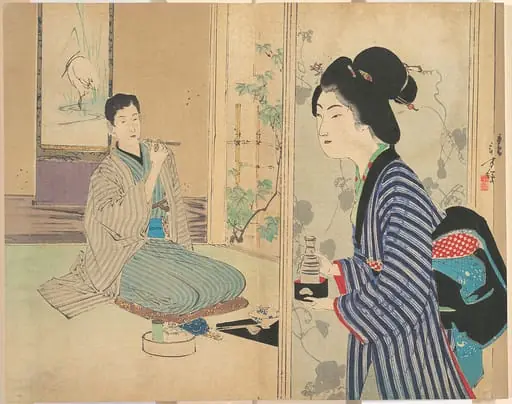 Untitled
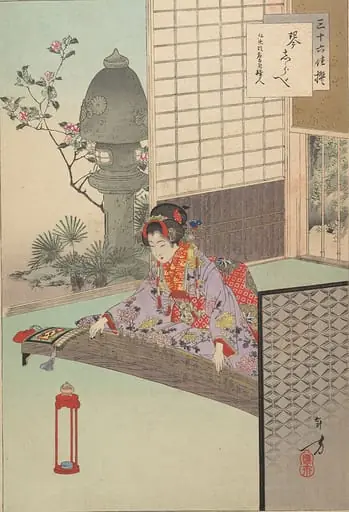 Untitled
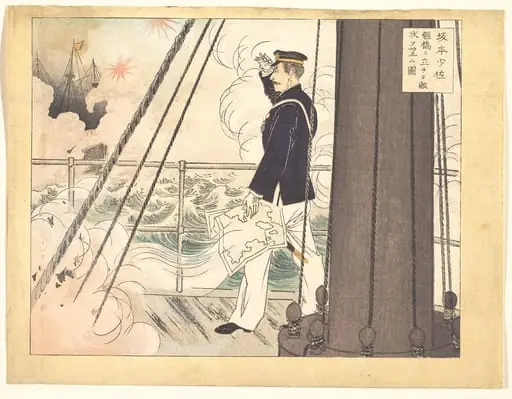 Sakamoto Otasuku Kankyo ni tachite tekijo o nozomu zu|Sakamoto Otasuku
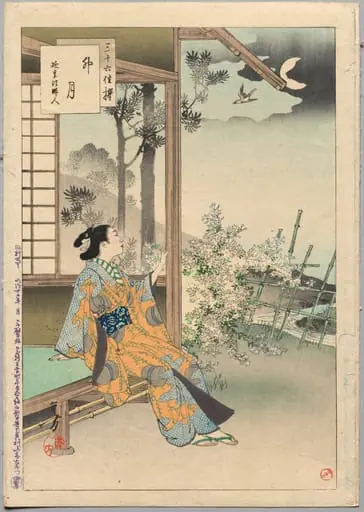 The Fourth Month, A Lady of the Enkyō Era (1744-48), from the series Thirty-six Elegant Selections
 Untitled
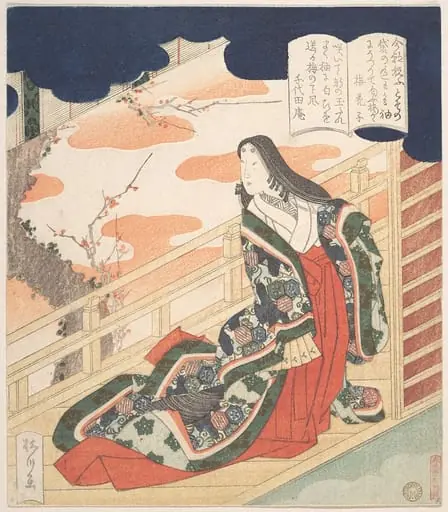 Untitled
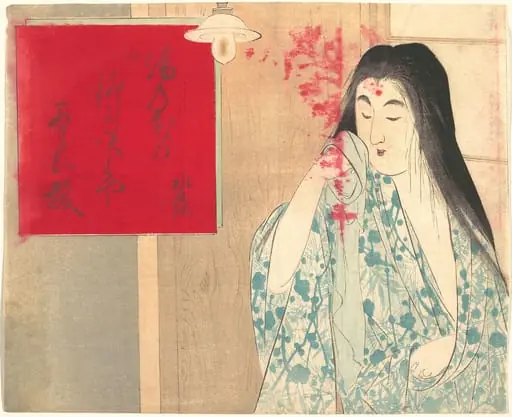 Untitled
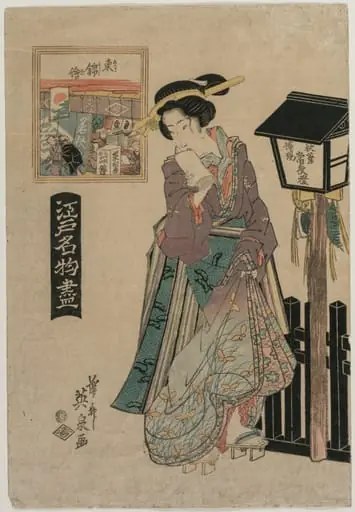 Pictures of Eastern Brocade (from the series Famous Products of Edo)
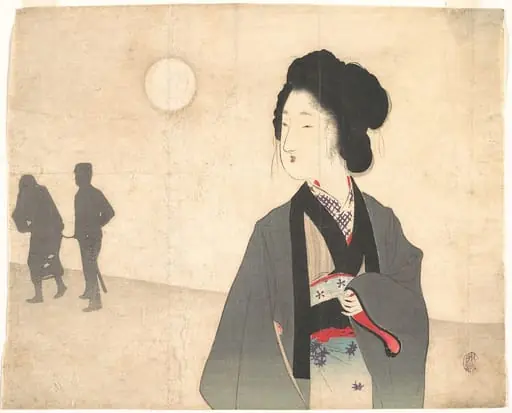 Untitled
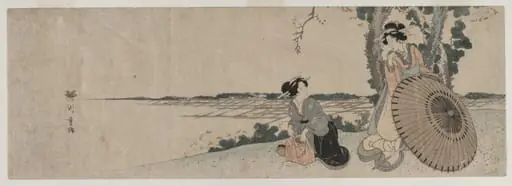 Two Women on a Hilltop
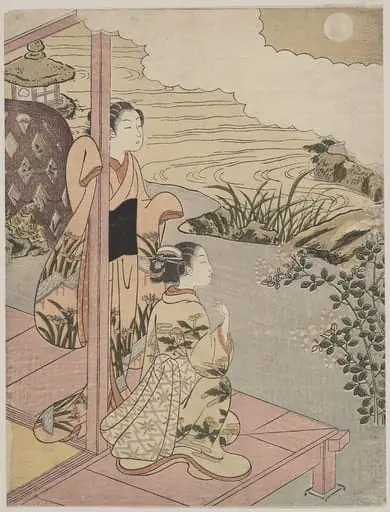 Untitled
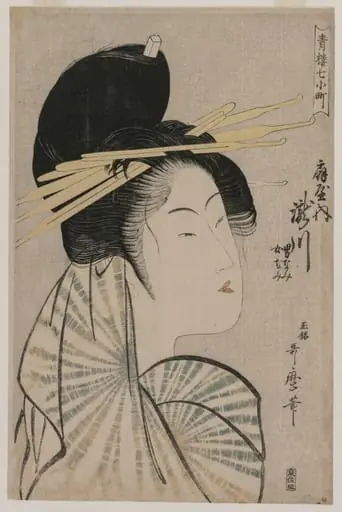 The Courtesan Takigawa of Ogiya (from the series Seven Aspects of Komachi in the Green Houses)
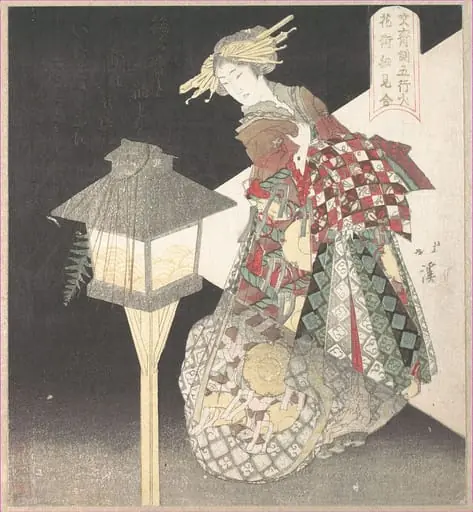 「文齊側五行火 花街細見合」|Courtesan by a Lantern, “Fire,” from the series Five Elements for the Bunsai Poetry Group, a Guide to the Yoshiwara Pleasure Quarters
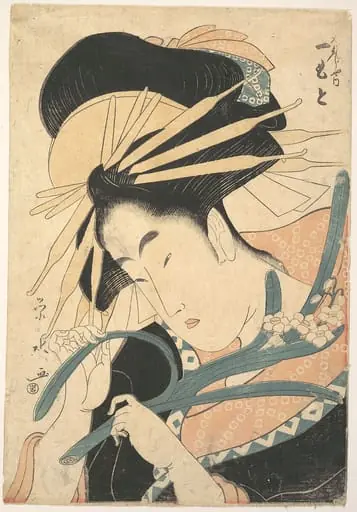 Untitled