Artwork
Untitled
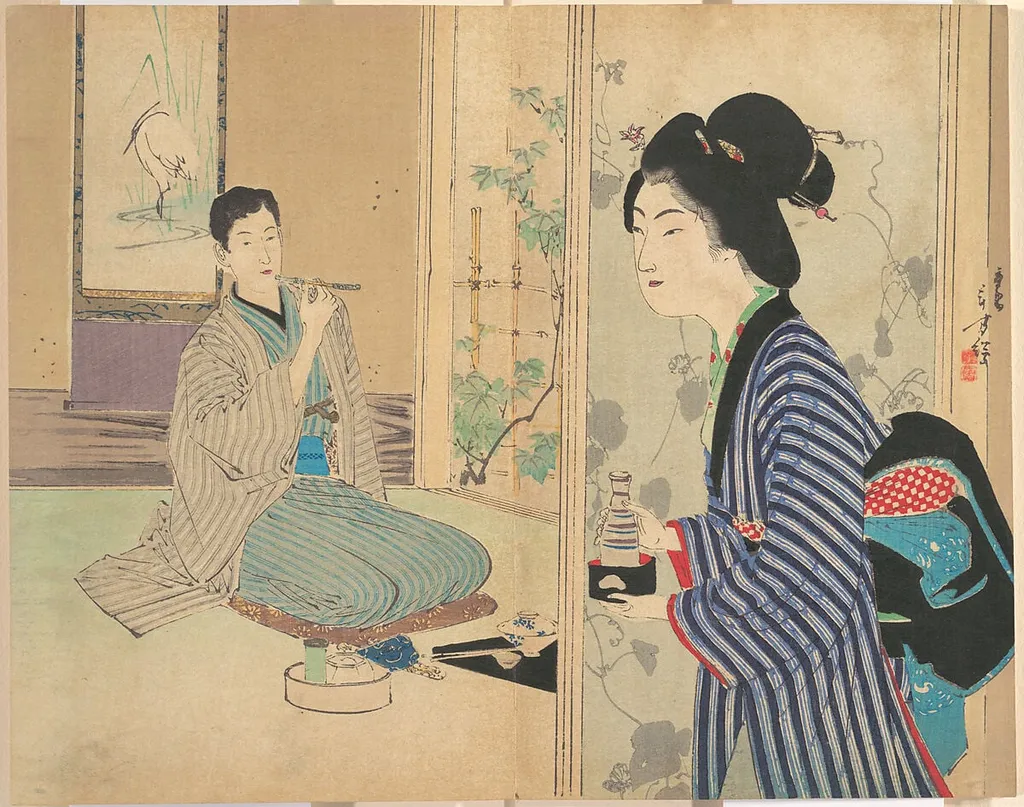
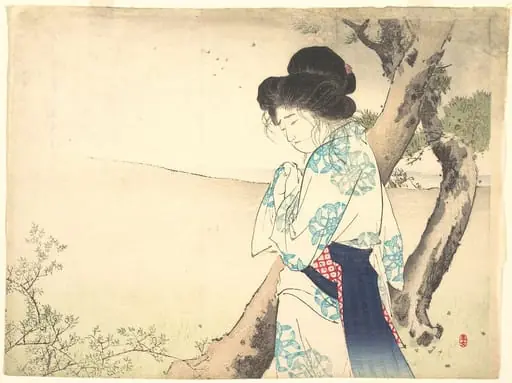
Untitled is an ink print by the Impressionist artist Mizuno Toshikata. It dates from 1887 and is held in the collection of the Metropolitan Museum of Art.
About this work
Overview
This woodblock print, dated 1887, is one of several genre scenes by Mizuno Toshikata produced during the late Meiji period.
This woodblock print, dated 1887, is one of several genre scenes by Mizuno Toshikata produced during the late Meiji period. Executed in ink and subtle color on paper, it was originally intended as a frontispiece for a publication. The work is part of the collection at The Metropolitan Museum of Art, where it represents the artist’s engagement with everyday domestic life through the traditional ukiyo-e medium.
Subject & Meaning
The scene depicts two individuals in an interior setting: one seated, smoking a pipe, and another standing, holding a bottle. Their postures and attire suggest a moment of quiet repose, possibly after a meal or social gathering. The absence of overt narrative cues invites interpretation of their relationship as casual or familiar, reflecting a broader interest in ordinary human interactions rather than dramatic or theatrical subjects.
Technique & Style
Toshikata employed fine woodblock carving and hand-coloring to achieve a restrained palette dominated by earth tones—beiges, browns, and muted blues. The lines are precise yet soft, with minimal shading, characteristic of late 19th-century printmaking that balanced traditional methods with emerging aesthetic preferences for subtlety. The composition is deliberately uncluttered, focusing attention on the figures and their immediate surroundings.
History & Provenance
Created in 1887, the print was likely produced for inclusion in a literary or periodical publication, common for genre prints of the era. It entered The Metropolitan Museum of Art’s collection through documented acquisition, though its earlier ownership history prior to museum acquisition remains unrecorded in public sources. Its survival as a single sheet suggests it was preserved as a standalone work rather than bound in a volume.
Context
During the Meiji period, Japanese artists like Toshikata navigated shifting cultural landscapes, blending traditional ukiyo-e techniques with modern subject matter. While Western influence grew, many printmakers continued to depict domestic interiors and quiet moments, offering a counterpoint to rapid modernization. This print reflects that tension—rooted in Edo-period aesthetics yet addressing contemporary life.
Legacy
Toshikata’s work, though less widely known than contemporaries like Kunisada or Hiroshige, contributes to the understanding of Meiji-era print culture. This piece exemplifies how genre scenes persisted as a vehicle for observing private life, even as mass media and photography began to reshape visual representation. Its preservation in a major museum underscores its value as a document of everyday aesthetics in transitional Japan.
Artist & collection


 Untitled
 Untitled
 Untitled
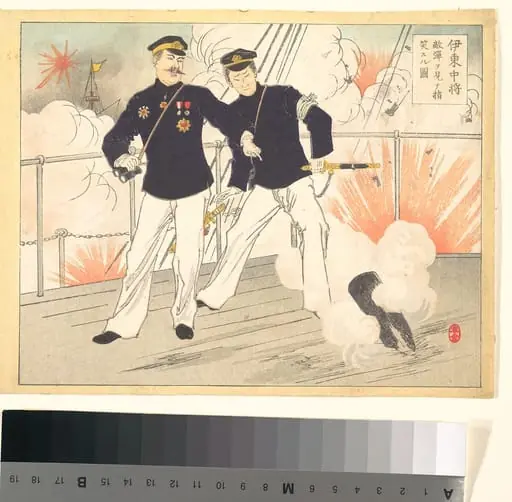 Ito Chujo tekidan o mite shi warau suru zu|Vice Admiral Ito Mocks, Points and Looks at the Enemy Bullets
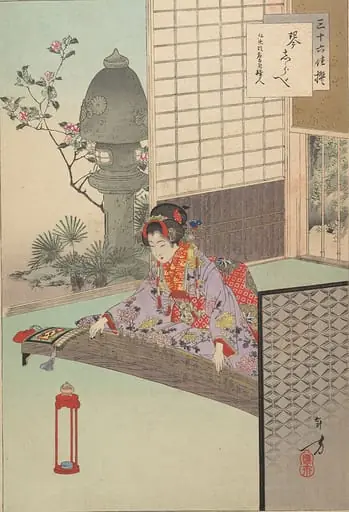 Untitled
 Untitled
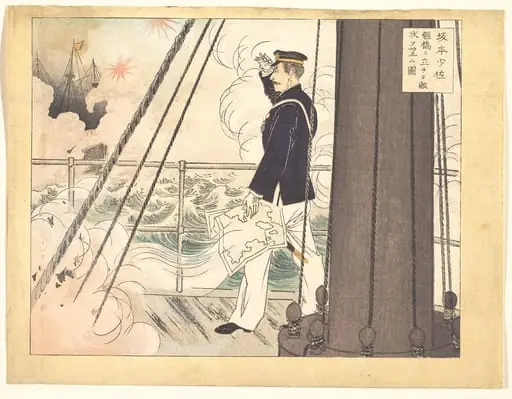 Sakamoto Otasuku Kankyo ni tachite tekijo o nozomu zu|Sakamoto Otasuku
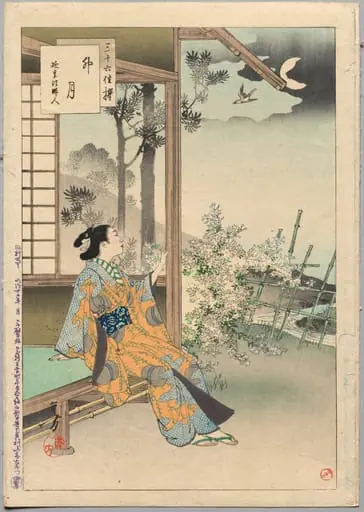 The Fourth Month, A Lady of the Enkyō Era (1744-48), from the series Thirty-six Elegant Selections
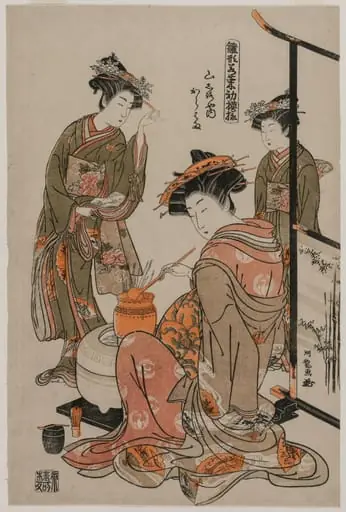 The Courtesan Karahama of Yamashiroya Performing the Tea Ceremony (from the series Models for Fahions: New Designs as Fresh as Young Leaves)
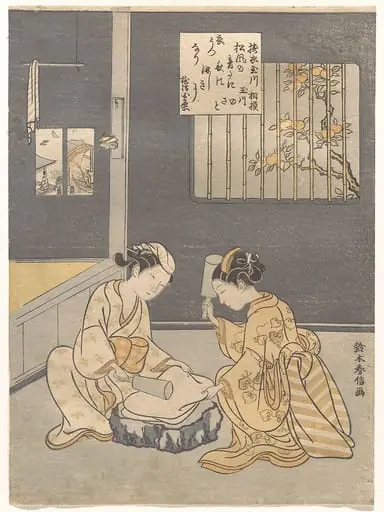 鈴木春信画 六玉川 「壔衣の玉川 摂津の名所」|Kōromō Uchi Tamagawa|The Cloth-Fulling Jewel River, a Famous Place in Settsu Province (Tōi no Tamagawa, Settsu no meisho), from an untitled series of Six Jewel Rivers (Mu Tamagawa)
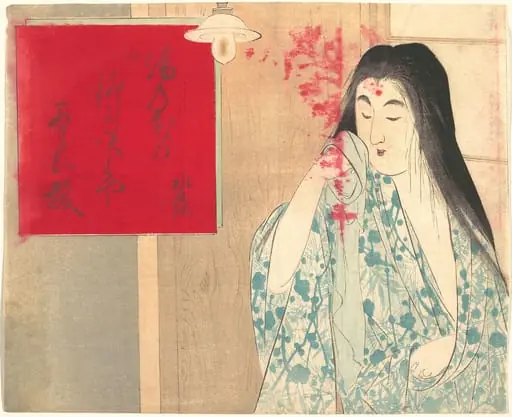 Untitled
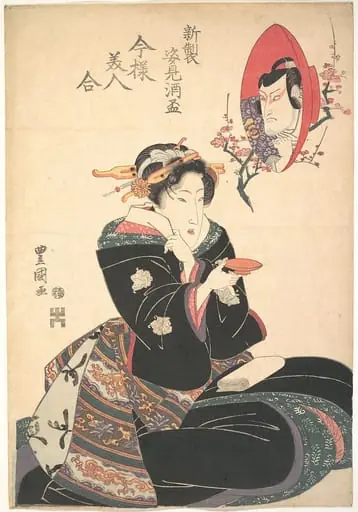 Untitled
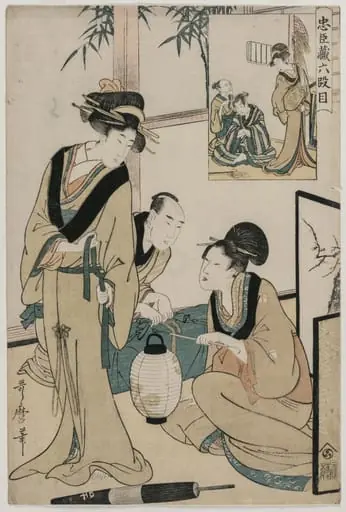 Chushingura: Act VI of The Storehouse of Loyalty
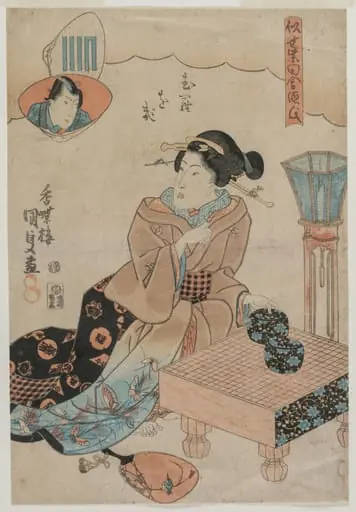 Muraogi, from the series The False Murasaki's Rustic Genji (Nise Murasaki Inaka Genji)
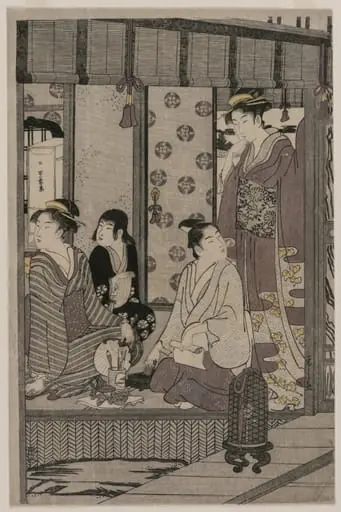 Morning Glory (from the series The Tale of Genji in Elegant Modern Dress)
 Daibutsu no bansho|Vesper Bell of the Temple of Great Buddha
 Untitled
 Untitled
 Women in a Tea House