Artwork
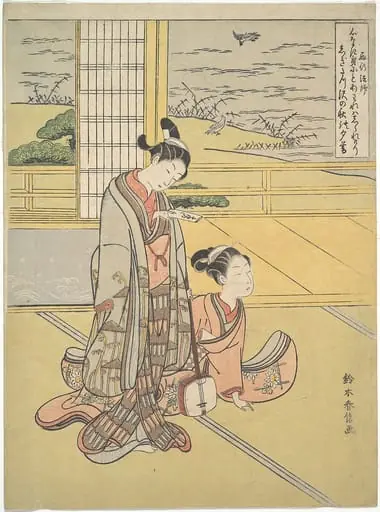
鈴木春信画 虚無僧・「風俗四季歌仙 卯月」|A Flute-Playing Monk (Komusō); The Fourth Month (Uzuki), from the series Fashionable Poetic Immortals of the Four Seasons (Fūzoku shiki kasen)
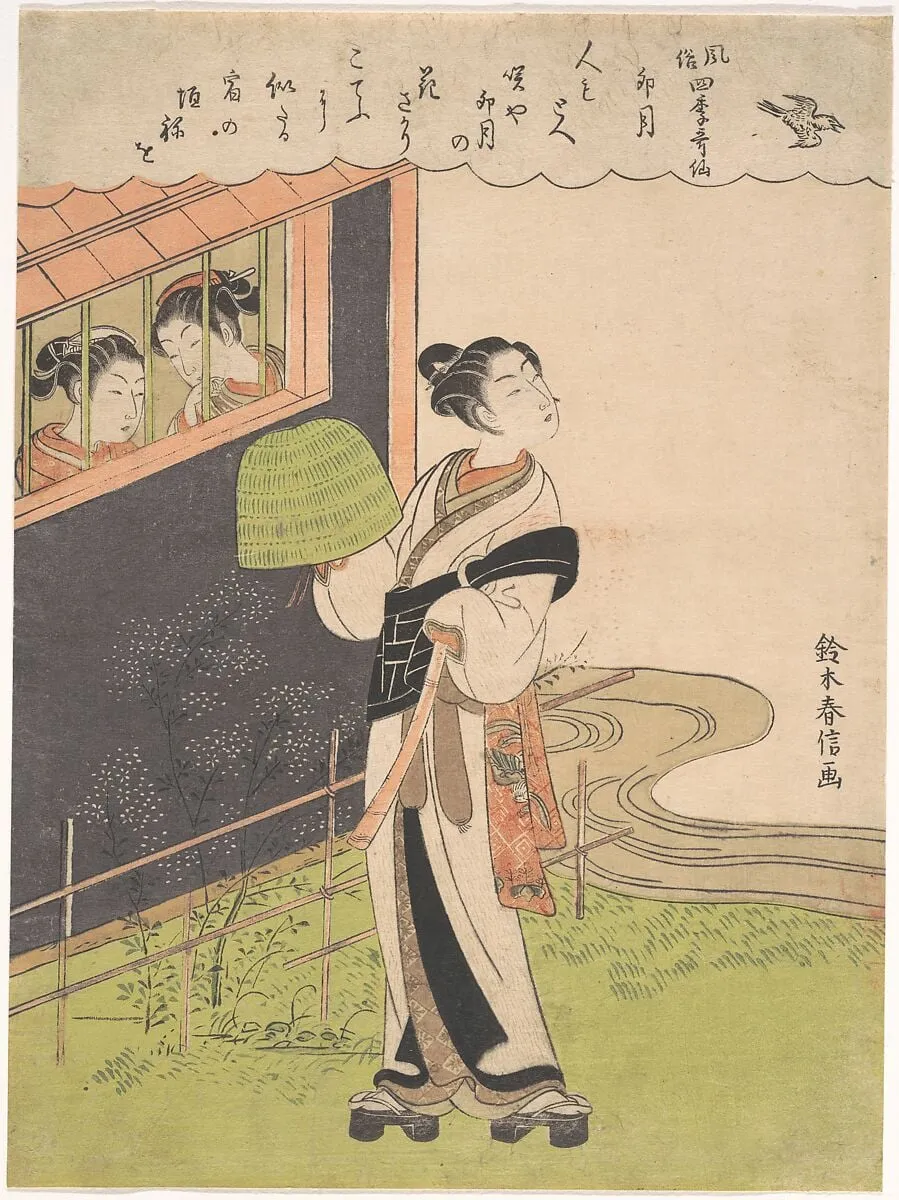
鈴木春信画 虚無僧・「風俗四季歌仙 卯月」|A Flute-Playing Monk (Komusō); The Fourth Month (Uzuki), from the series Fashionable Poetic Immortals of the Four Seasons (Fūzoku shiki kasen) is an ink print by the Romanticist artist Suzuki Harunobu. It dates from 1768 and is held in the collection of the Metropolitan Museum of Art.
About this work
Overview
Created around 1768 by the ukiyo‑e master Suzuki Harunobu, this woodblock print belongs to the series titled *Fūzoku shiki kasen* (Fashionable Poetic Immortals of the Four Seasons). It depicts a flute‑playing monk beneath blooming cherry trees, observed by a woman in a pink kimono. The work is part of the Metropolitan Museum of Art’s collection.
Subject & Meaning
The central figure wears a woven basket hat, or *tengai*, which conceals his face and identifies him as a silent, itinerant monk. He holds a bamboo flute, suggesting a moment of musical contemplation. A female onlooker leans against a fence, listening attentively as cherry petals drift, evoking a fleeting, lyrical encounter between the sacred and the secular.
Technique & Style
Harunefu employed the multicolor woodblock method, combining ink and pigments on paper to achieve delicate hues and soft gradients. The composition balances fine line work with subtle color washes, characteristic of his approach to creating affordable prints for a broad audience while retaining an elegant, refined aesthetic.
History & Provenance
The print was produced in the late Edo period, a time when mass‑produced images circulated widely among urban residents. It entered the Metropolitan Museum of Art’s collection through a 20th‑century acquisition, reflecting the museum’s ongoing effort to represent Japanese printmaking in its holdings.
Context
*Fūzoku shiki kasen* presents seasonal personae drawn from poetry and folklore, aligning visual art with literary tradition. This particular image, representing the fourth month (Uzuki), situates the monk within the cultural practice of seasonal appreciation, a motif prevalent in Edo‑era visual culture.
Artist & collection

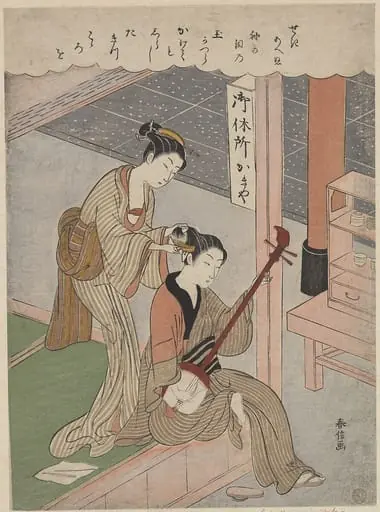
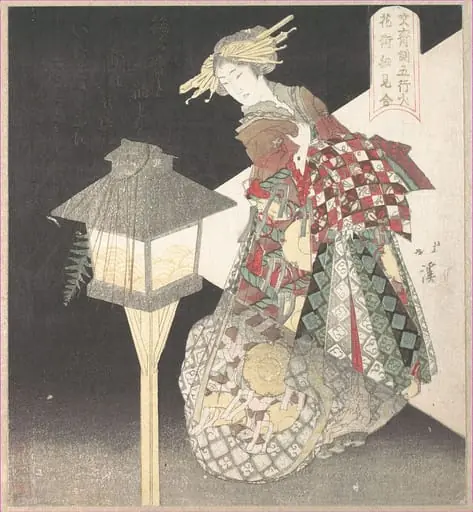 「文齊側五行火 花街細見合」|Courtesan by a Lantern, “Fire,” from the series Five Elements for the Bunsai Poetry Group, a Guide to the Yoshiwara Pleasure Quarters
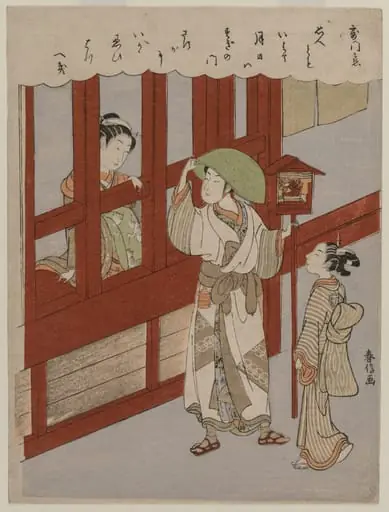 Love at the Brothel Gate
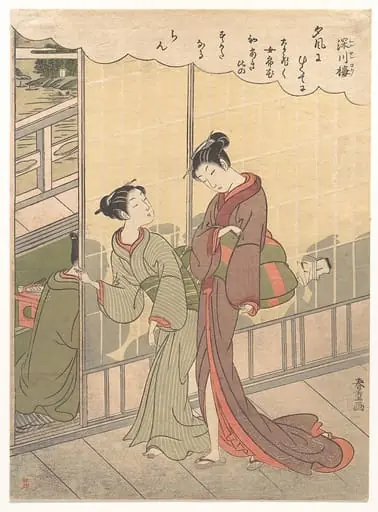 Untitled
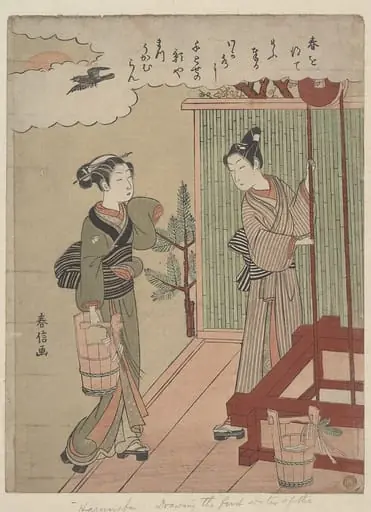 鈴木春信画 若水を汲む男女|Drawing the First Water of the New Year
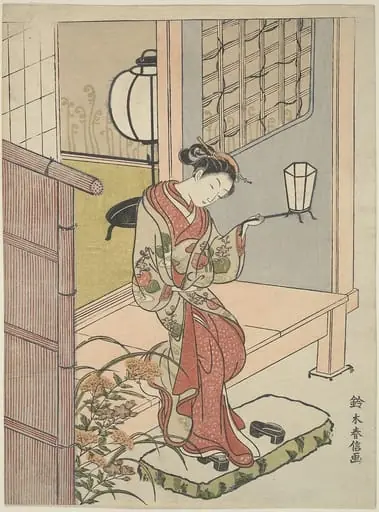 Untitled
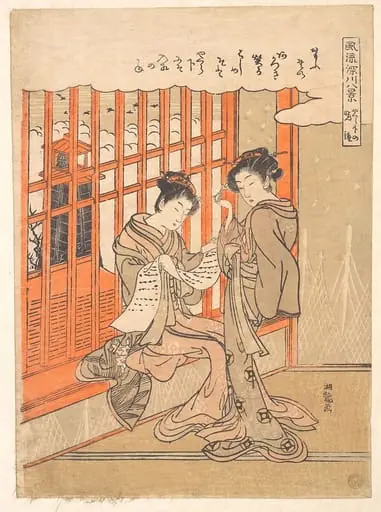 Untitled
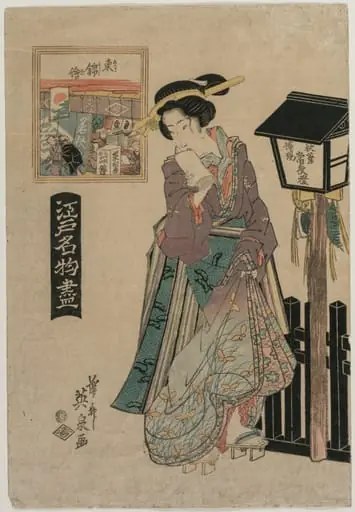 Pictures of Eastern Brocade (from the series Famous Products of Edo)
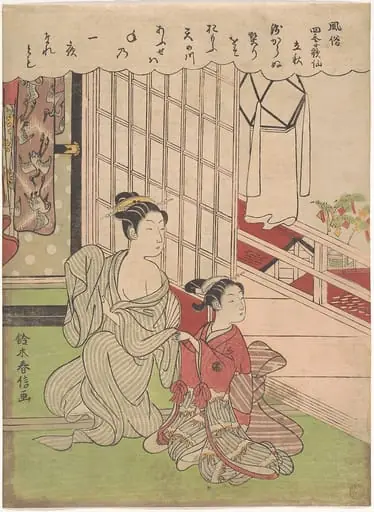 Aki|風俗四季歌仙 立秋|First Day of Autumn (Risshu)
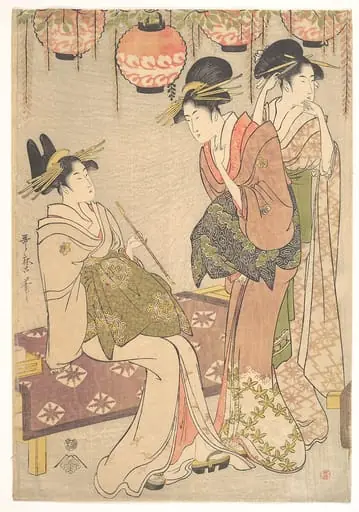 Untitled
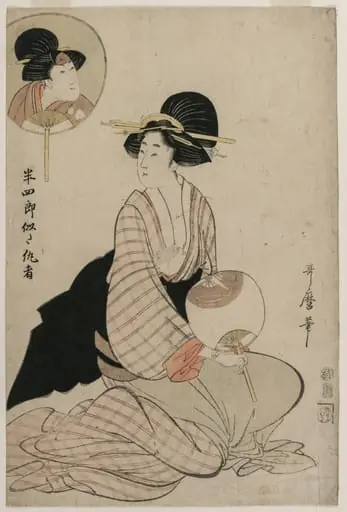 An Attractive Woman Who Looks Like the Actor Iwai Hanshiro V
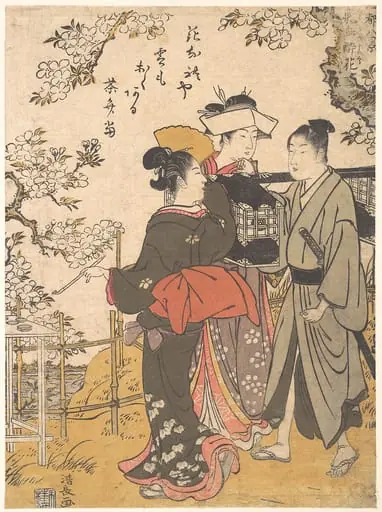 Untitled
 鈴木春信画 見立三夕 「西行法師」|A Young Man and Woman with a Shamisen; Monk Saigyō, from a series alluding to the Three Evening Poems (Sanseki waka)