Artwork
The Bridle Road
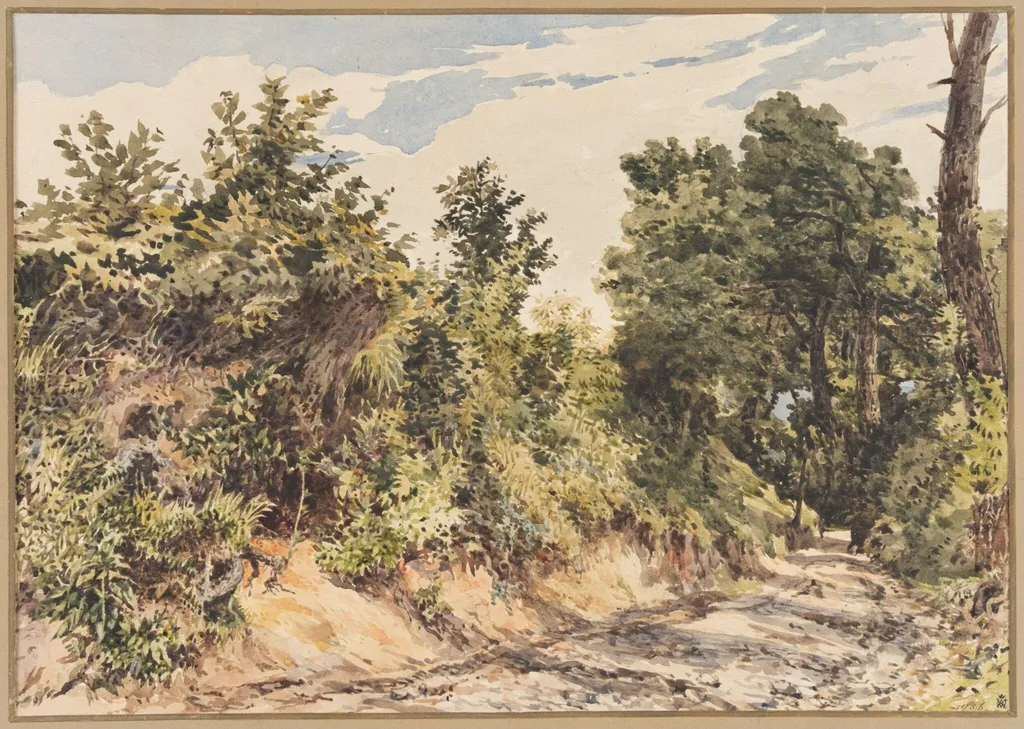
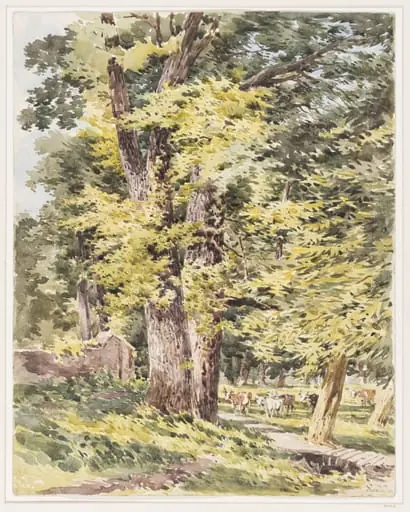
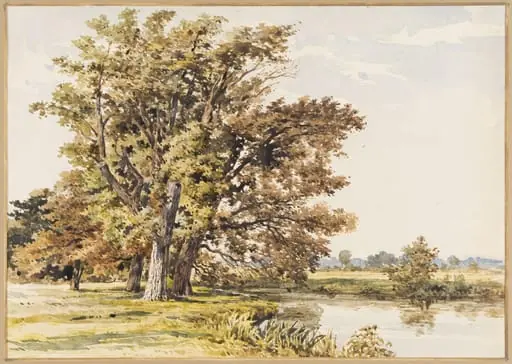
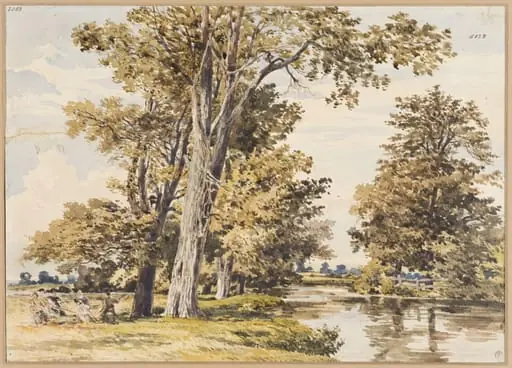
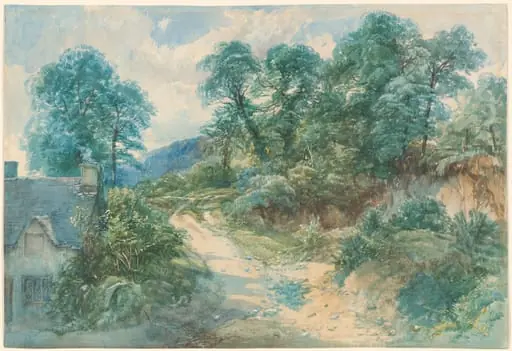
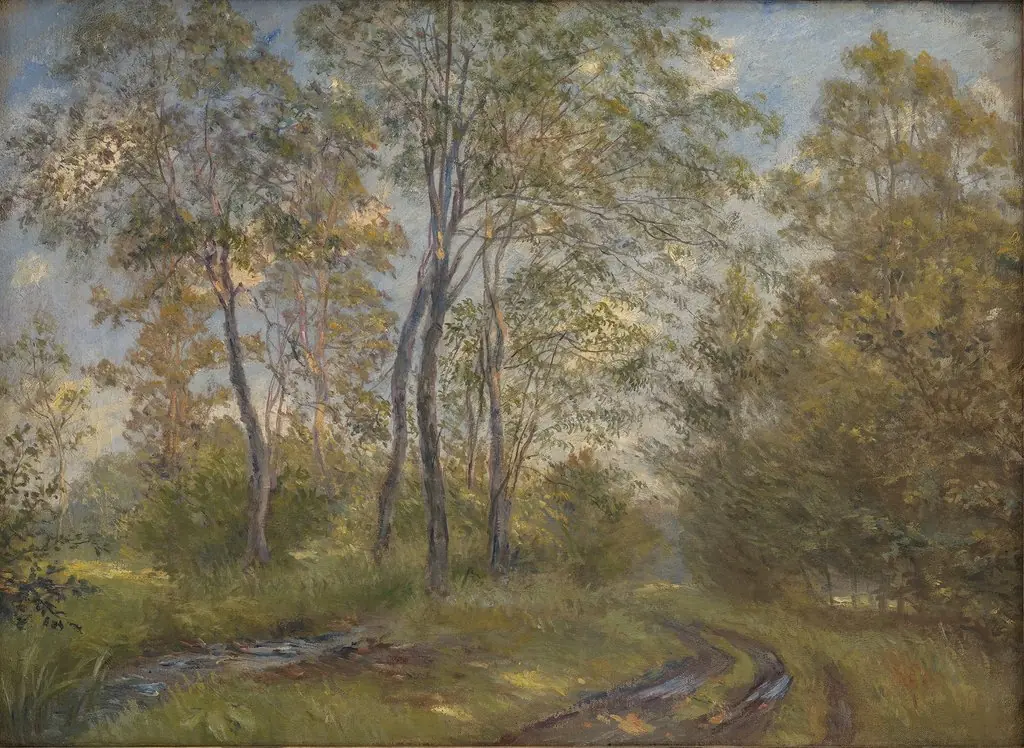
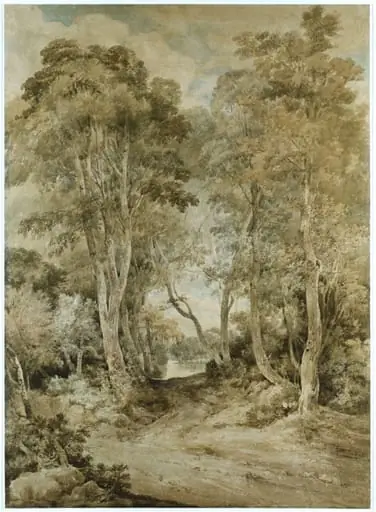
The Bridle Road is a watercolor work on paper by Charles Claude Pyne. It dates from 1850 and is held in the collection of the Victoria and Albert Museum. This watercolour portrays a secluded forest path, rendered in delicate washes of green, brown, and pale blue.
About this work
Overview
This watercolour portrays a secluded forest path, rendered in delicate washes of green, brown, and pale blue. The narrow trail winds between dense undergrowth and taller trees, suggesting a quiet, undisturbed natural setting. The artist captures the atmosphere with minimal detail, relying on soft tonal shifts rather than precise definition to evoke depth and stillness.
Subject & Meaning
The subject is a humble bridle path, unremarkable in function but imbued with quiet presence. No figures or signs of human activity appear, emphasizing solitude and the subtle rhythms of the woodland. The path invites contemplation, not travel—offering a momentary pause within nature’s quiet architecture.
Technique & Style
Loose, fluid brushwork defines the foliage and terrain, with layers of transparent washes creating texture without detail. Light is suggested through areas of untouched paper and faint glazes, mimicking dappled sun through canopy. The palette remains restrained, avoiding bold contrasts to preserve the scene’s subdued, intimate mood.
History & Provenance
The work is held in the collection of the Victoria and Albert Museum, where it is grouped with other 19th-century British watercolours focused on landscape. Its origins are unattributed in public records, though its style aligns with amateur and professional artists of the period who favored plein-air studies.
Context
Created during a time when watercolour was gaining recognition as a serious medium, this piece reflects a broader interest in intimate natural scenes over grand vistas. Such works often served as personal records of walks or retreats, valued for their immediacy and emotional resonance rather than public display.
Legacy
Though unsigned and unremarked in its time, the painting contributes to a quiet tradition of British landscape watercolours that prioritized atmosphere over spectacle. Its preservation in a major museum underscores its role as an example of everyday observation elevated through careful, unassuming technique.
Artist & collection