Artwork
Rien de trop (Nothing in Excess)
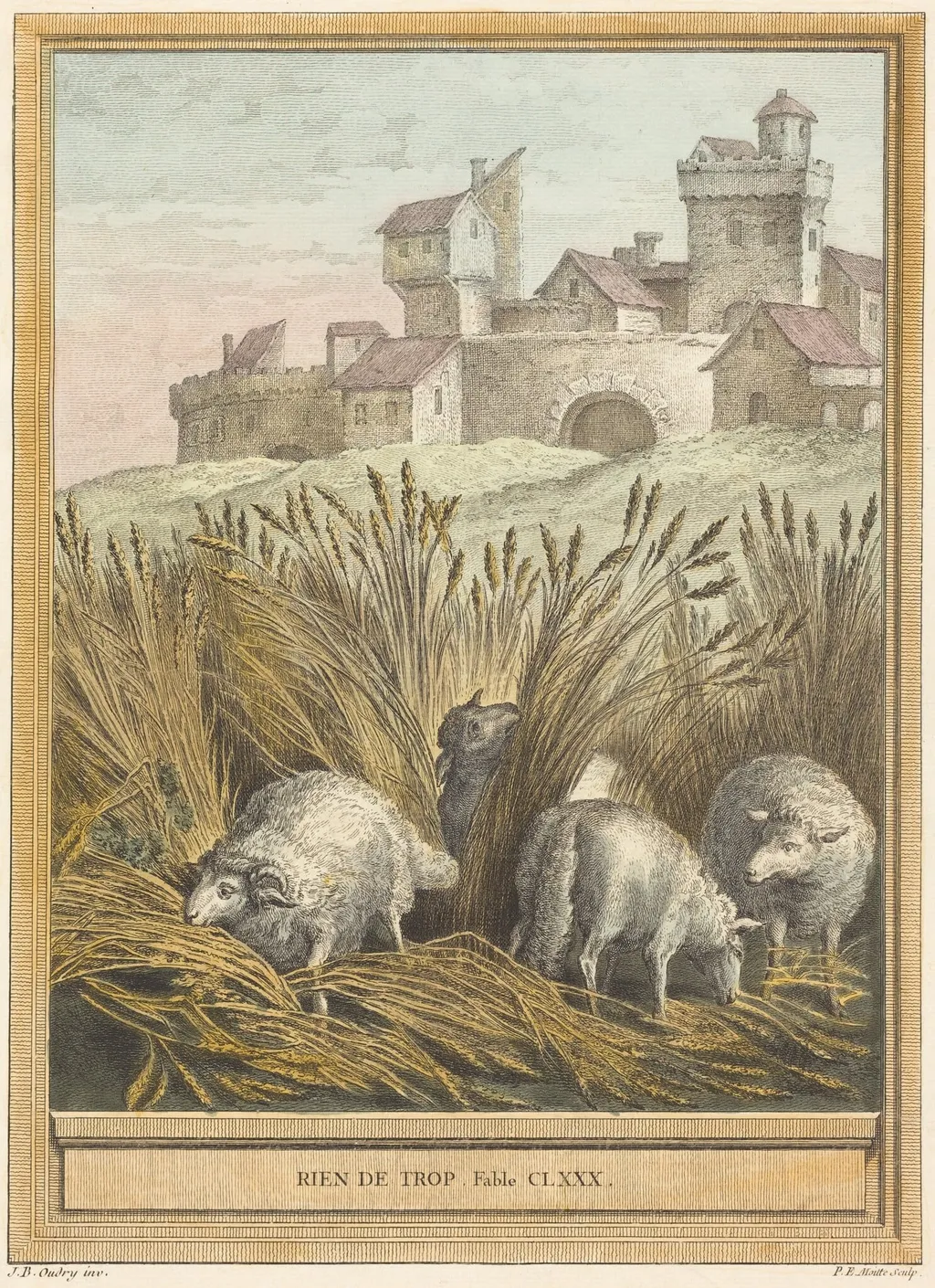
Rien de trop (Nothing in Excess) is an ink print by the Romanticist artist Pierre Etienne Moitte. It dates from 1756 and is held in the collection of the National Gallery of Art.
About this work
Overview
It belongs to the printmaking tradition of 18th-century France, where etching allowed for fine linear detail and subtle tonal variation.
Rien de trop (Nothing in Excess) is a hand-colored etching by Pierre Etienne Moitte, dated 1756. It belongs to the printmaking tradition of 18th-century France, where etching allowed for fine linear detail and subtle tonal variation. The work presents a rural landscape in quiet harmony, rendered with deliberate restraint in both composition and color. Its title, drawn from classical maxims, suggests a philosophical undercurrent to its serene imagery.
Subject & Meaning
The scene depicts three sheep grazing in tall, golden grass, set against a distant hillside village with modest dwellings and a single stone tower. The animals appear still, almost contemplative, reinforcing a mood of calm. The title, referencing the Greek aphorism 'meden agan,' implies a virtue of moderation. The absence of human figures and the gentle pacing of the landscape invite reflection on simplicity and balance in rural life.
Technique & Style
Moitte employed etching with acid to create fine, controlled lines, then added delicate hand-coloring to enhance the natural tones of grass, stone, and sky. The rendering of the grass is particularly nuanced—soft yet defined—with parallel strokes suggesting movement without agitation. Buildings are simplified but structurally clear, their forms grounded in careful perspective. The pale sky and muted palette contribute to a restrained, harmonious aesthetic.
History & Provenance
Created in 1756, the print emerged during a period when French artists increasingly turned to pastoral subjects as expressions of Enlightenment ideals. Moitte, primarily known for his architectural drawings, used etching to explore rural tranquility. While specific early ownership records are sparse, the work aligns with private collections of the time that valued prints for their moral and aesthetic subtlety rather than grandeur.
Context
In mid-18th-century France, pastoral imagery gained traction as a counterpoint to urbanization and courtly excess. Moitte’s print reflects broader cultural interest in classical virtues and natural order. Unlike dramatic landscapes of the period, this work avoids narrative or spectacle, instead offering a quiet meditation on restraint. Its tone resonates with contemporary literary and philosophical currents that prized moderation and harmony.
Legacy
Rien de trop remains a modest but telling example of French printmaking’s capacity for quiet expression. Though Moitte did not achieve widespread fame, his work contributes to a lesser-known strand of 18th-century art that valued restraint over spectacle. The print’s enduring appeal lies in its unembellished vision of rural peace, offering a visual counterpart to Enlightenment ideals of balance and self-restraint.
Artist & collection


 Pastoral Landscape with a Ruin
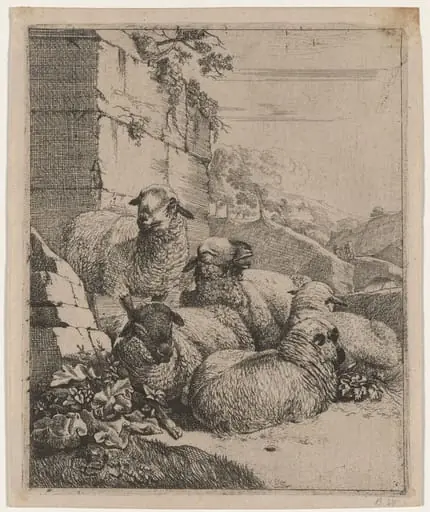 Flock of Sheep Resting
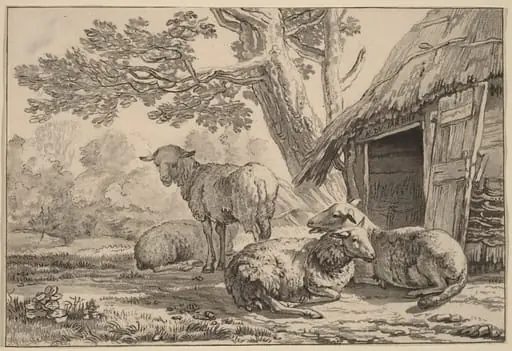 Sheepcote
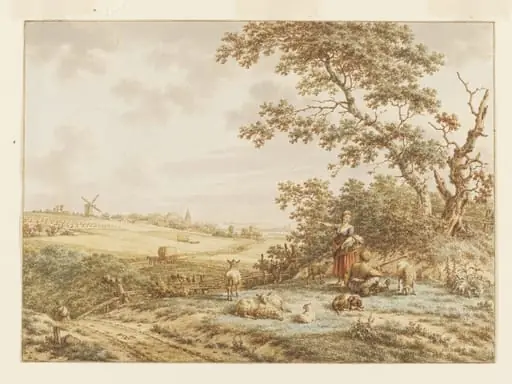 Landscape with Figures and Sheep
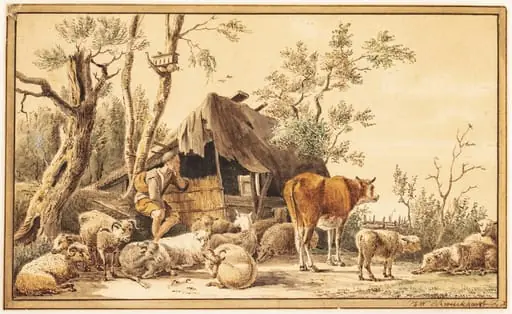 En fårehyrde med sin hjord ved et skur
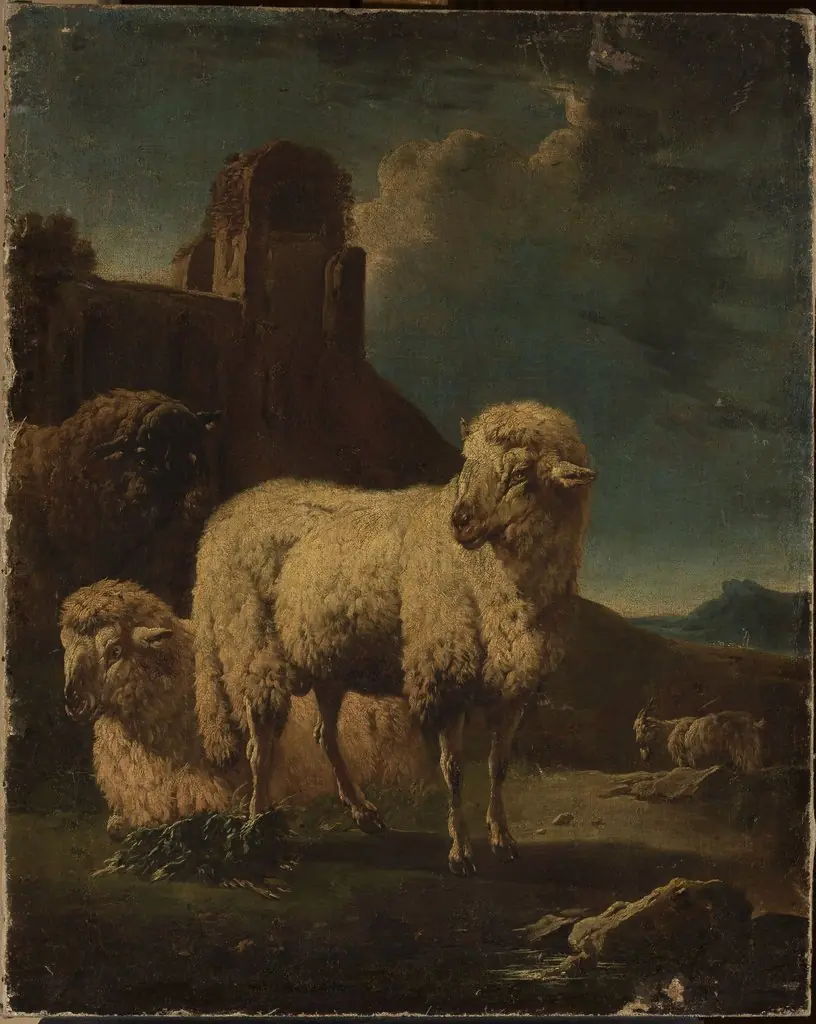 Rams with ruins in the background
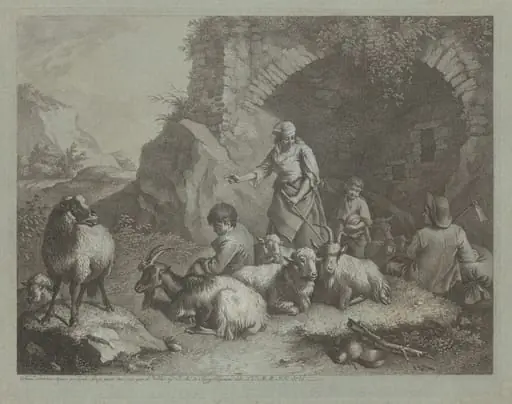 Woman, Shepherd Boys, and Sheep near an Arch
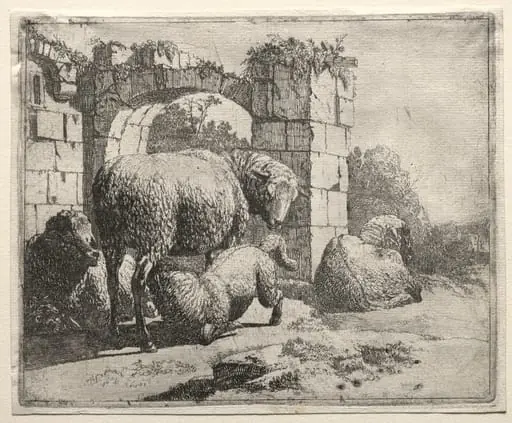 Sheep Near the Ruins of an Arch
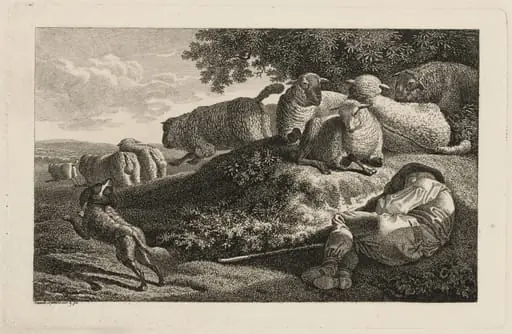 A Shepherd Sleeping while His Dog Guards His Flock
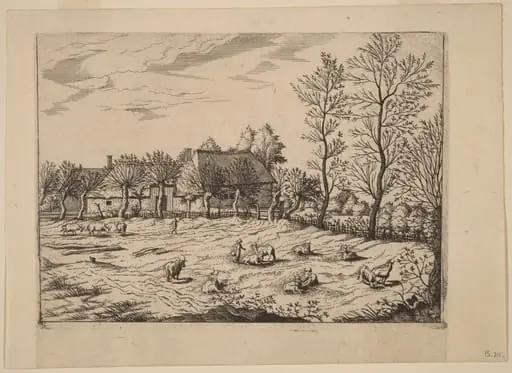 Farm
Farm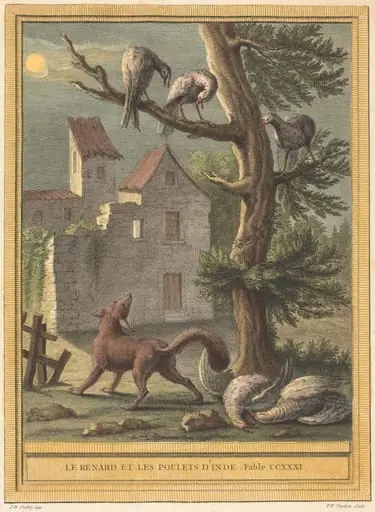 Le renard et les poulets d'Inde (The Fox and the Hens from India)
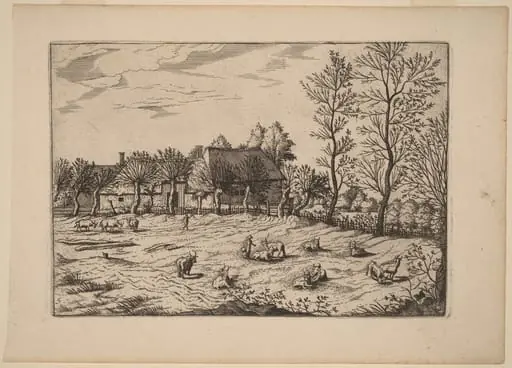 Farm
Farm