Artwork
Woman, Shepherd Boys, and Sheep near an Arch
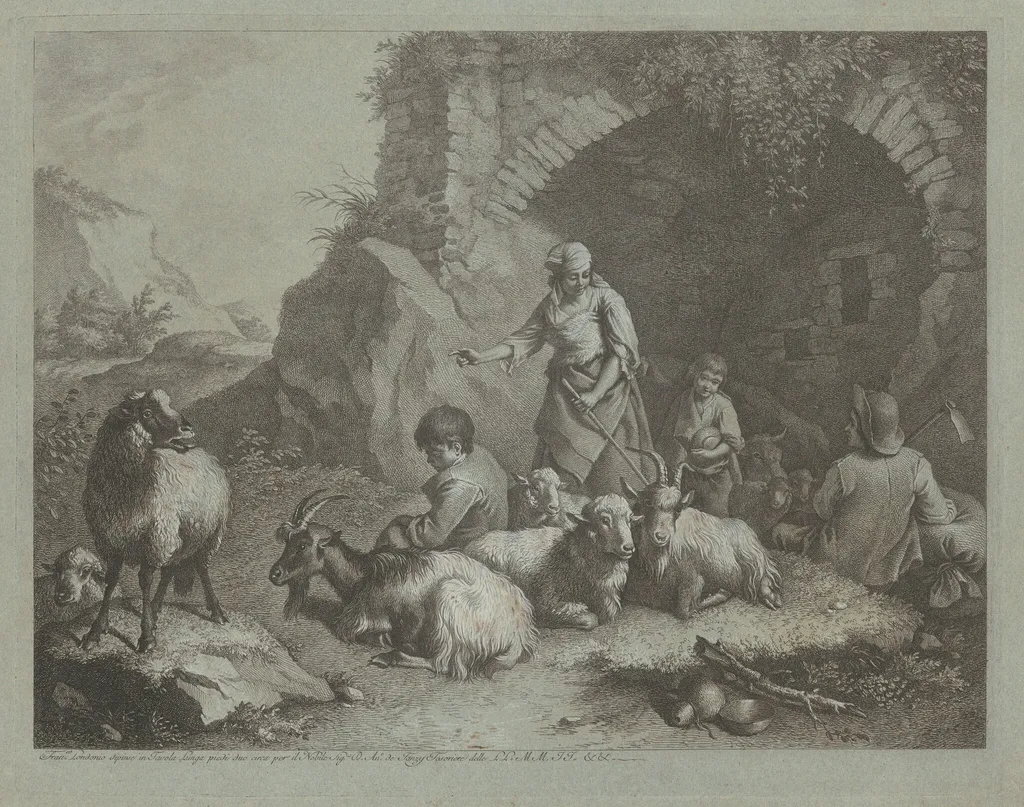
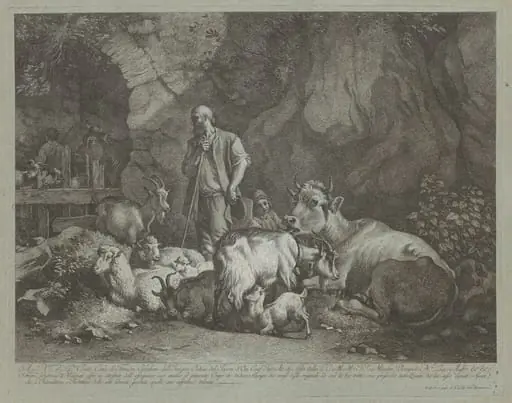
Woman, Shepherd Boys, and Sheep near an Arch is an ink print by the Baroque artist Francesco Londonio. It dates from 1770 and is held in the collection of the National Gallery of Art.
About this work
Overview
Created in 1770, this print by Francesco Londonio presents a pastoral tableau rendered as an etching with white heightening on blue laid paper. The composition gathers a woman, three shepherd boys, and a flock of sheep and goats around a rocky arch, set within a gently rolling landscape.
Subject & Meaning
The scene captures a moment of rural routine: the woman, dressed in a simple gown and headscarf, holds a staff and appears to supervise the children as they tend the animals. The inclusion of both sheep and goats, as well as the architectural arch, underscores themes of pastoral labor and the harmony between humans, livestock, and the countryside.
Technique & Style
Londonio employed fine, cross‑hatched lines to model the textures of fur, stone, and foliage, while the white heightening accentuates highlights against the blue paper background. The delicate rendering of light and shadow reflects the late‑Baroque attention to detail, moving toward the lighter, more decorative sensibility of the Rococo.
History & Provenance
Trained in Milan under Ferdinando Porta and Giovanni Battista Sassi, and later under engraver Benigno Bossi, Londonio produced this work during his mature period after studies in Rome and Naples. The print aligns with the genre scenes popular among affluent Northern Italian patrons of the eighteenth century.
Context
Londonio’s oeuvre is noted for its focus on rustic life, especially peasants and animals. This piece fits within a broader tradition of Italian pastoral prints that celebrated agrarian simplicity while appealing to the taste for idyllic, narrative subjects among the era’s elite collectors.
Artist & collection

Artist
Francesco Londonio (1723–1783) was an Italian painter, engraver, and scenographer, active mainly in his native Milan in a late-Baroque or Rococo style.

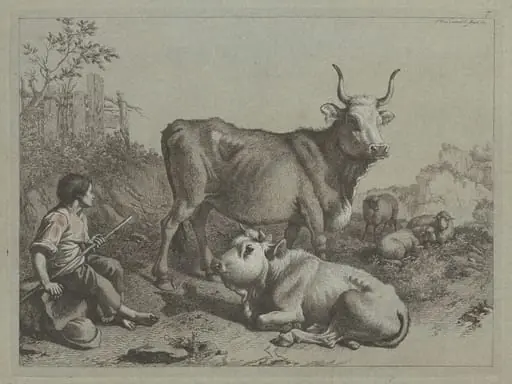
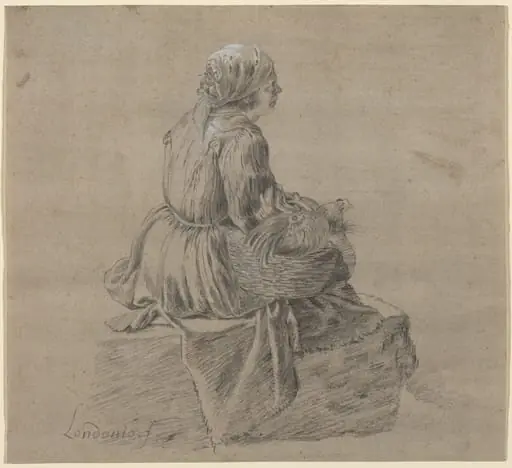
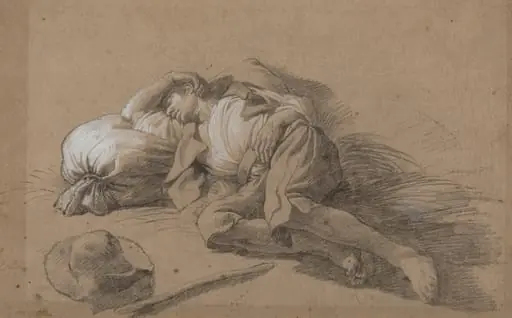
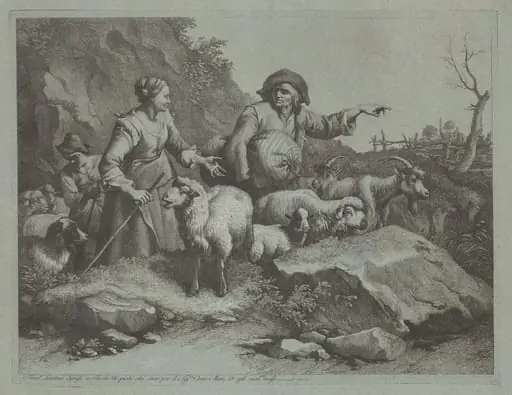 Peasant Man with a Sack and Two Shepherdesses
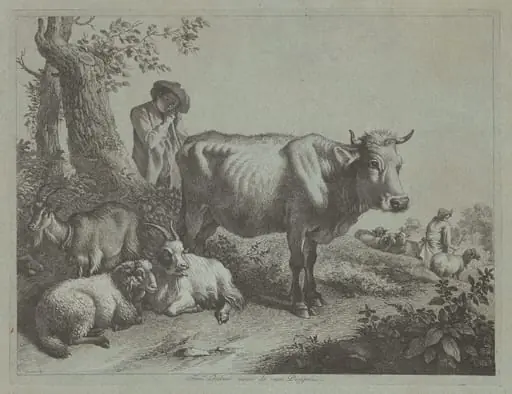 Standing Cow and a Shepherd Boy with Flock
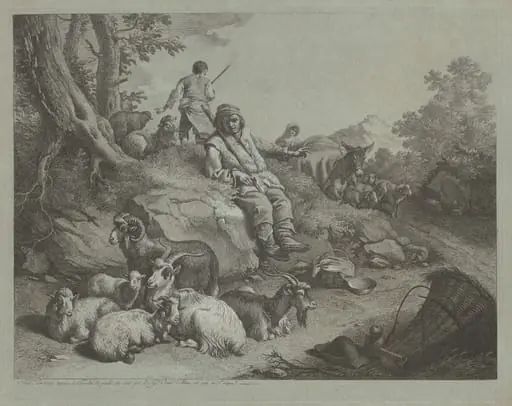 Seated Shepherd before a Flock of Goats
 Goat with Bell
 Reynard the Fox: The Jealous Horse
 Reynard Returns Home, Accompanied by the Ram and the Rabbit
 Two Girls Conversing: One Standing and Spinning
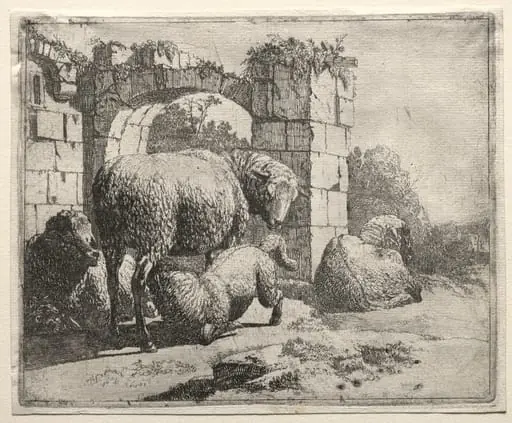 Sheep Near the Ruins of an Arch