Artwork
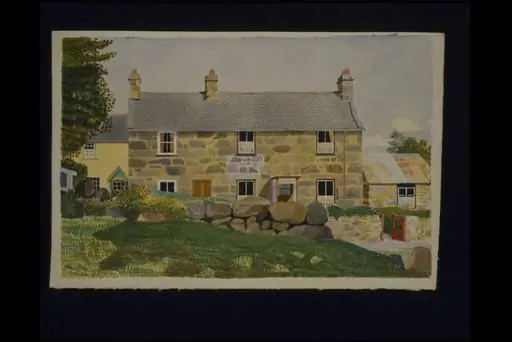
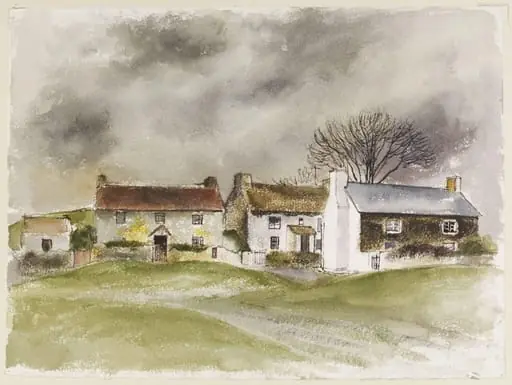
Ddu-Allt, Tan-y-Bwlch, Merionethshire
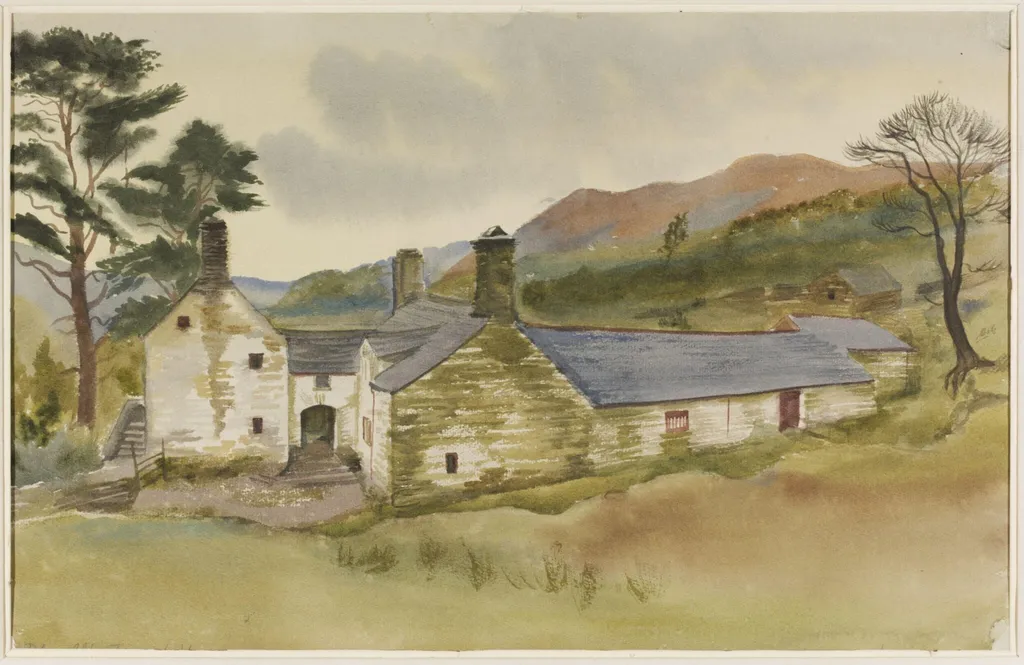
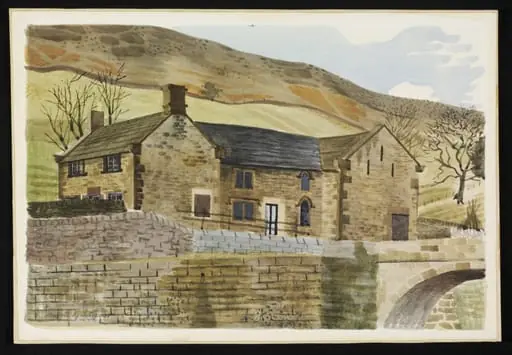
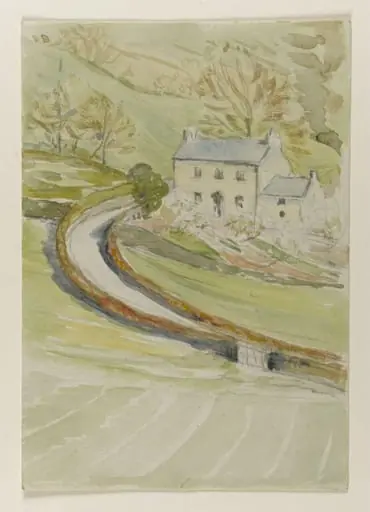
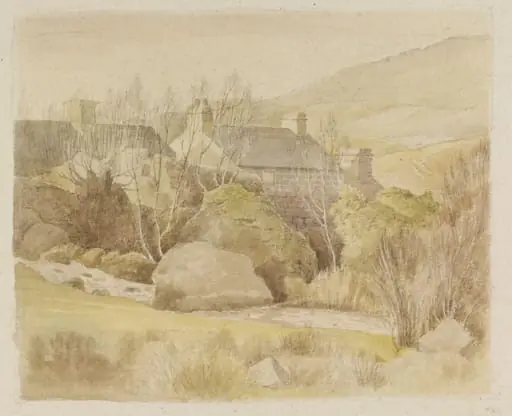
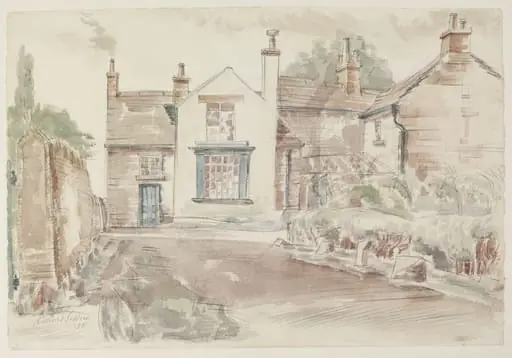
Ddu-Allt, Tan-y-Bwlch, Merionethshire is a watercolor work on paper by the British Romanticist artist Mona Moore. It dates from 1941 and is held in the collection of the Victoria and Albert Museum.
About this work
Overview
The scene focuses on two modest stone structures nestled among rolling hills, rendered with delicate, translucent washes that evoke stillness and timelessness.
Painted in 1941 by Mona Moore, this watercolour captures a quiet valley in Snowdonia, Wales. Created under the 'Recording Britain' initiative, the work is one of over 1,500 pieces commissioned during World War II to preserve visual records of the British countryside. The scene focuses on two modest stone structures nestled among rolling hills, rendered with delicate, translucent washes that evoke stillness and timelessness.
Subject & Meaning
The painting centers on two rural buildings: one a dwelling with an arched entrance and chimney, the other a barn featuring red-framed windows. Neither is grand nor modern, emphasizing ordinary, enduring architecture. The absence of human figures and the gentle landscape suggest a quiet resilience, reflecting the project’s aim to document everyday rural life as a form of cultural preservation amid wartime uncertainty.
Technique & Style
Moore employed light, transparent watercolour washes to suggest form without heavy detail. The sky and hills are softly blended, creating a hazy, atmospheric depth. Structural elements like the buildings are defined with minimal lines and subtle tonal shifts, avoiding sharp contrasts. This restrained approach enhances the sense of calm, aligning with the project’s preference for lyrical, unembellished observation over dramatic effect.
History & Provenance
Commissioned by the Pilgrim Trust and directed by Sir Kenneth Clark, the 'Recording Britain' project enlisted artists to document landscapes at risk from war or modernization. Moore’s work was part of this effort, contributing to a national archive now held by the Victoria and Albert Museum. The painting remains in the museum’s collection, preserved as a record of early 20th-century rural Britain.
Context
During World War II, Britain faced threats to its cultural and physical landscape. The 'Recording Britain' initiative responded to fears of destruction and rapid change by turning artists into documentarians of the countryside. Rural scenes like this one were prioritized as symbols of continuity, offering a sense of stability and identity when the nation’s future was uncertain.
Legacy
The 'Recording Britain' collection endures as a significant archive of mid-20th-century British topography. Moore’s watercolour, like others in the series, offers a quiet testament to the aesthetics of ordinary places. It continues to inform understandings of wartime cultural preservation and the role of art in sustaining collective memory during periods of upheaval.
Artist & collection
Artist
Mona Moore painted quiet watercolours of Welsh villages and coastline in the 1940s.

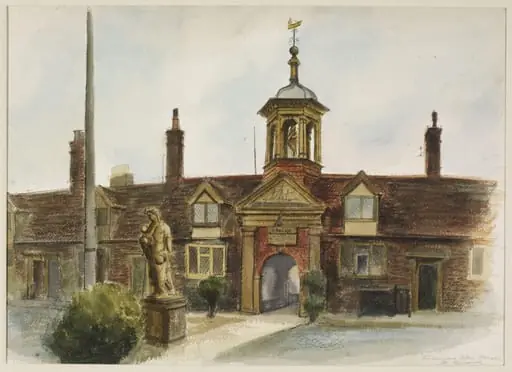 Fishermen's Almshouses, Great Yarmouth
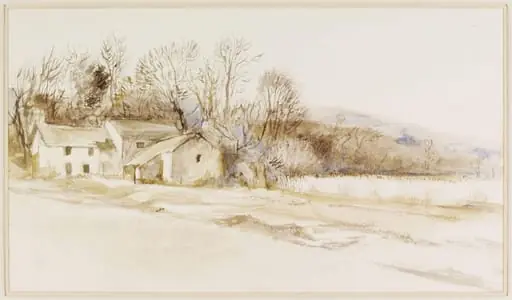 Old Mill, Clynne Valley, Gower, Glamorganshire
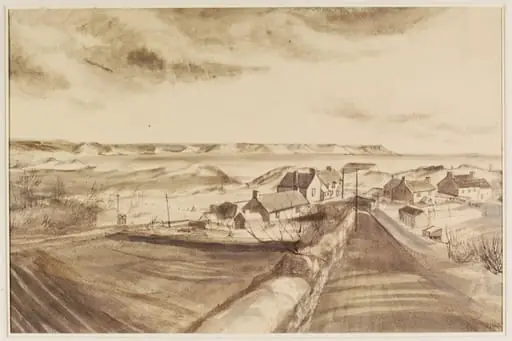 Oxwich Bay and Village, Gower, Glamorganshire
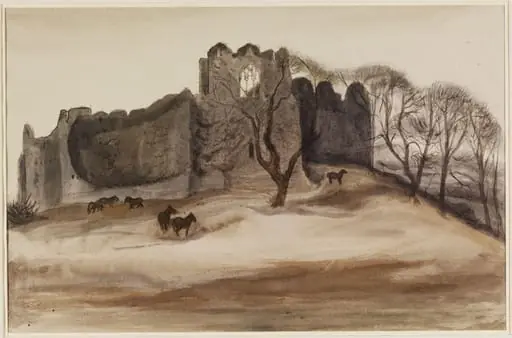 Oystermouth Castle, Gower, Glamorganshire
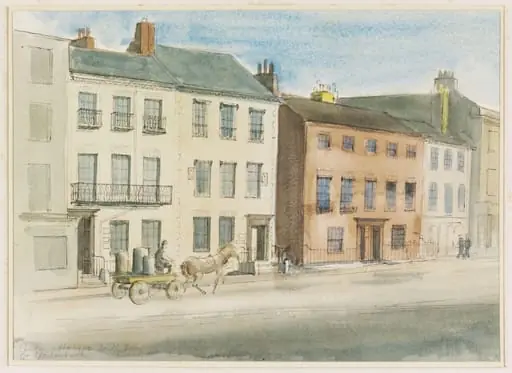 18th Century Houses, South Quay, Great Yarmouth
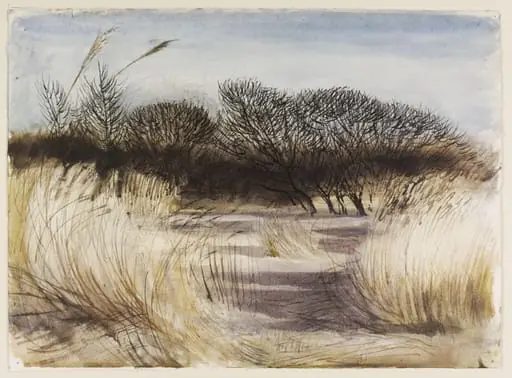 Oxwich, Gower, Glamorganshire
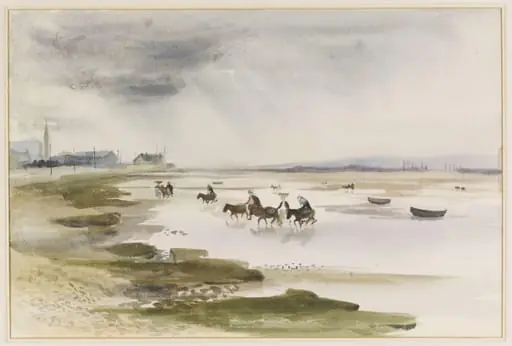 Penclawdd, Gower, Glamorganshire
 Penrice Village, Gower, Glamorganshire