Artwork
Oystermouth Castle, Gower, Glamorganshire
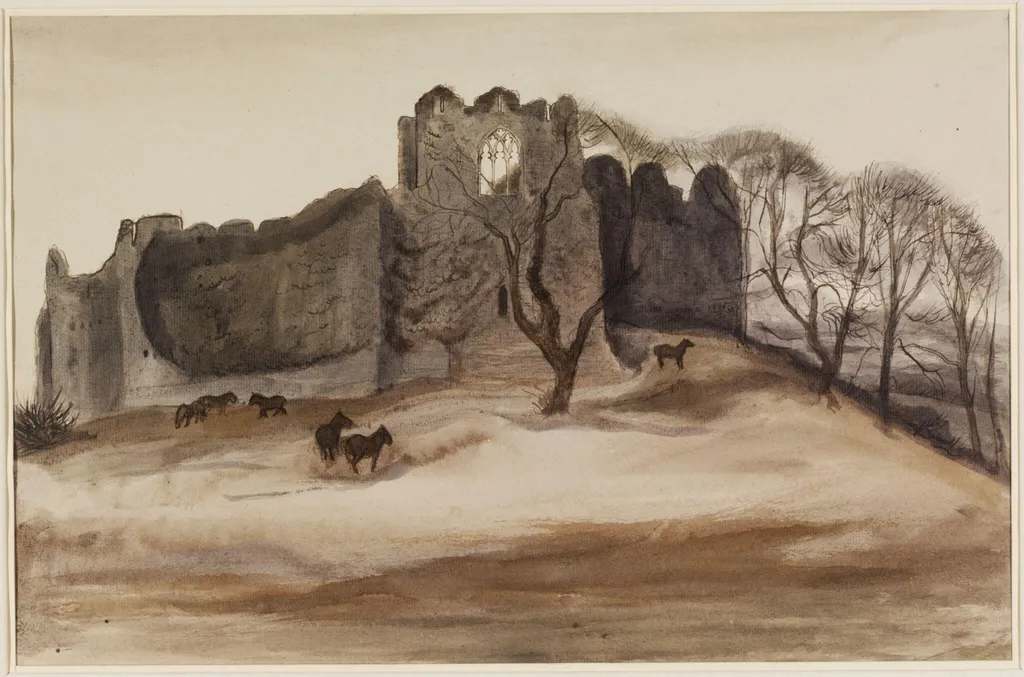
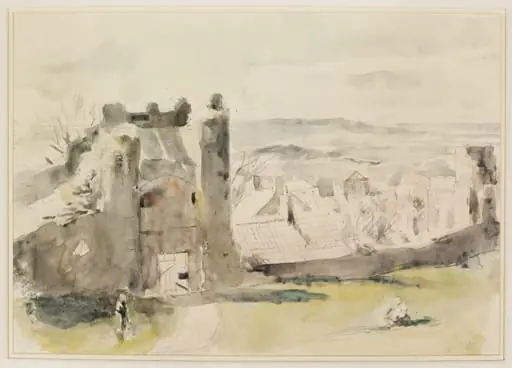
Oystermouth Castle, Gower, Glamorganshire is a watercolor work on paper by Mona Moore. It dates from 1940 and is held in the collection of the Victoria and Albert Museum.
About this work
Overview
Executed in muted browns and greys, the work presents the castle as a weathered ruin, its stone walls softened by time and vegetation.
Painted in 1940 by Mona Moore, this watercolour captures Oystermouth Castle in Gower, Wales, during winter. Executed in muted browns and greys, the work presents the castle as a weathered ruin, its stone walls softened by time and vegetation. The quiet composition reflects the subdued palette and stillness characteristic of the artist’s approach, aligning with the broader aims of the Recording Britain project to preserve visual records of the nation’s heritage during wartime.
Subject & Meaning
The scene centers on the castle’s remaining tower, its traceried window visible through the skeletal branches of winter trees. Wild ponies graze across the grounds, introducing subtle motion and life to the decaying structure. The juxtaposition of natural resilience and architectural decay suggests a quiet endurance — the land reclaiming its history, while the animals embody an unbroken continuity of rural existence.
Technique & Style
Moore employed delicate watercolour washes to convey texture and atmosphere, using thin layers to suggest crumbling stone and bare foliage. The restrained tonality — dominated by earthy browns and soft greys — avoids dramatic contrast, enhancing the painting’s contemplative mood. Fine linework defines architectural details without overstatement, allowing the medium’s transparency to reinforce the sense of seasonal stillness.
History & Provenance
Created in 1940 as part of the Recording Britain initiative, the work was commissioned to document landscapes and structures at risk of loss during wartime. The project, supported by the Pilgrim Trust, employed artists to record vernacular architecture and rural scenes. This watercolour entered the Victoria and Albert Museum’s collection as part of the project’s archival output, preserved for its historical and artistic value.
Context
During the early 1940s, Britain faced widespread disruption, and the Recording Britain project sought to affirm cultural identity through visual documentation. Oystermouth Castle, though no longer a fortified residence, represented a tangible link to the past. Moore’s depiction, free of romanticism, emphasized quiet decay and natural reclamation — a reflection of a nation turning inward to value what endured.
Legacy
The painting remains a quiet testament to the Recording Britain project’s mission: to preserve the visual character of the countryside during a time of uncertainty. Its understated realism and attention to detail offer insight into how artists responded to heritage not as monuments, but as living, evolving parts of the landscape — a perspective that continues to inform historical conservation practices today.
Artist & collection
Artist
Mona Moore painted quiet watercolours of Welsh villages and coastline in the 1940s.

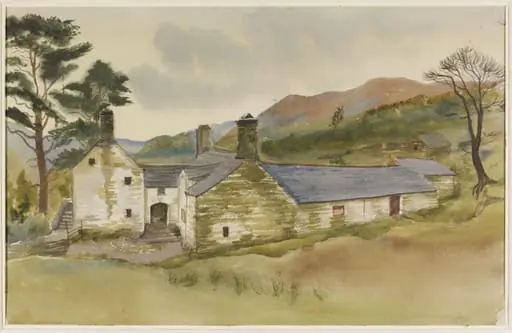 Ddu-Allt, Tan-y-Bwlch, Merionethshire
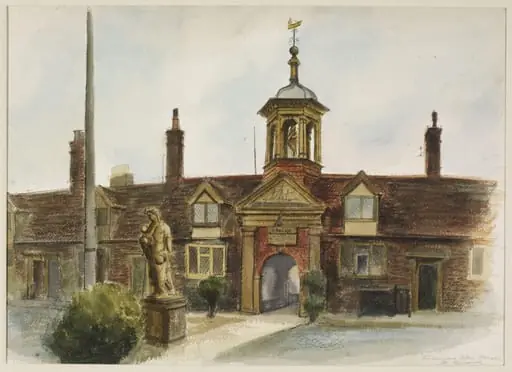 Fishermen's Almshouses, Great Yarmouth
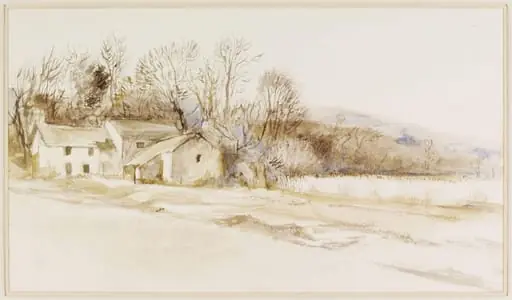 Old Mill, Clynne Valley, Gower, Glamorganshire
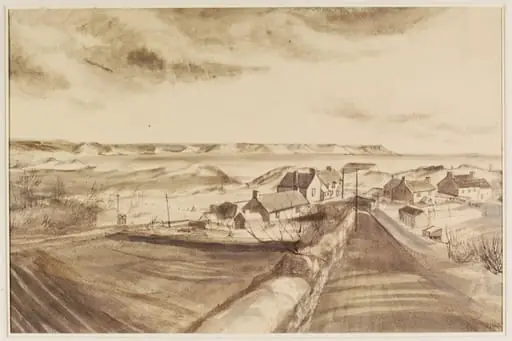 Oxwich Bay and Village, Gower, Glamorganshire
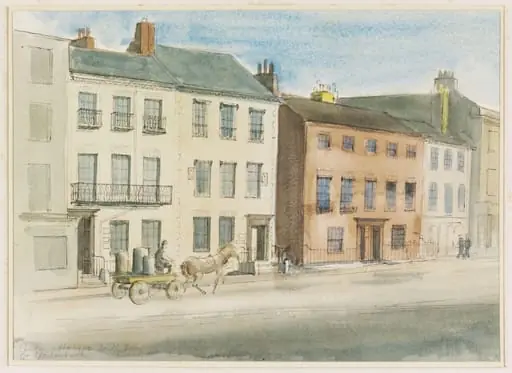 18th Century Houses, South Quay, Great Yarmouth
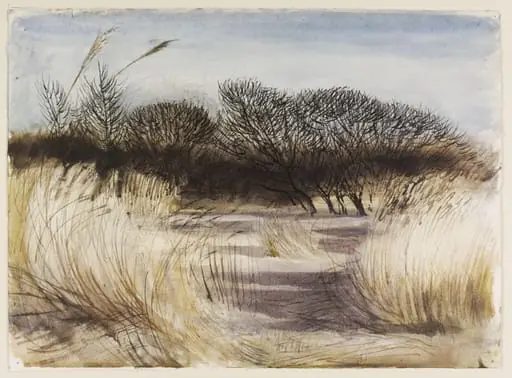 Oxwich, Gower, Glamorganshire
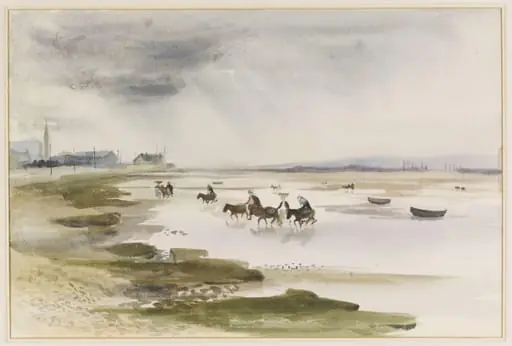 Penclawdd, Gower, Glamorganshire
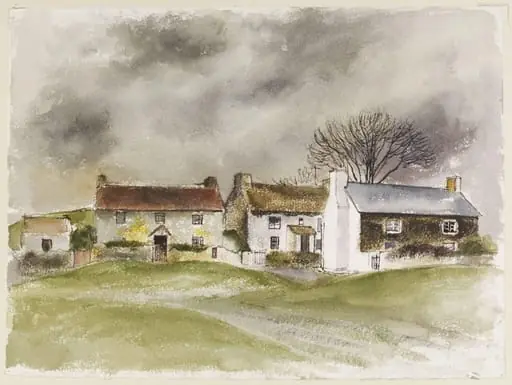 Penrice Village, Gower, Glamorganshire