Artwork
Japanese Fantasy
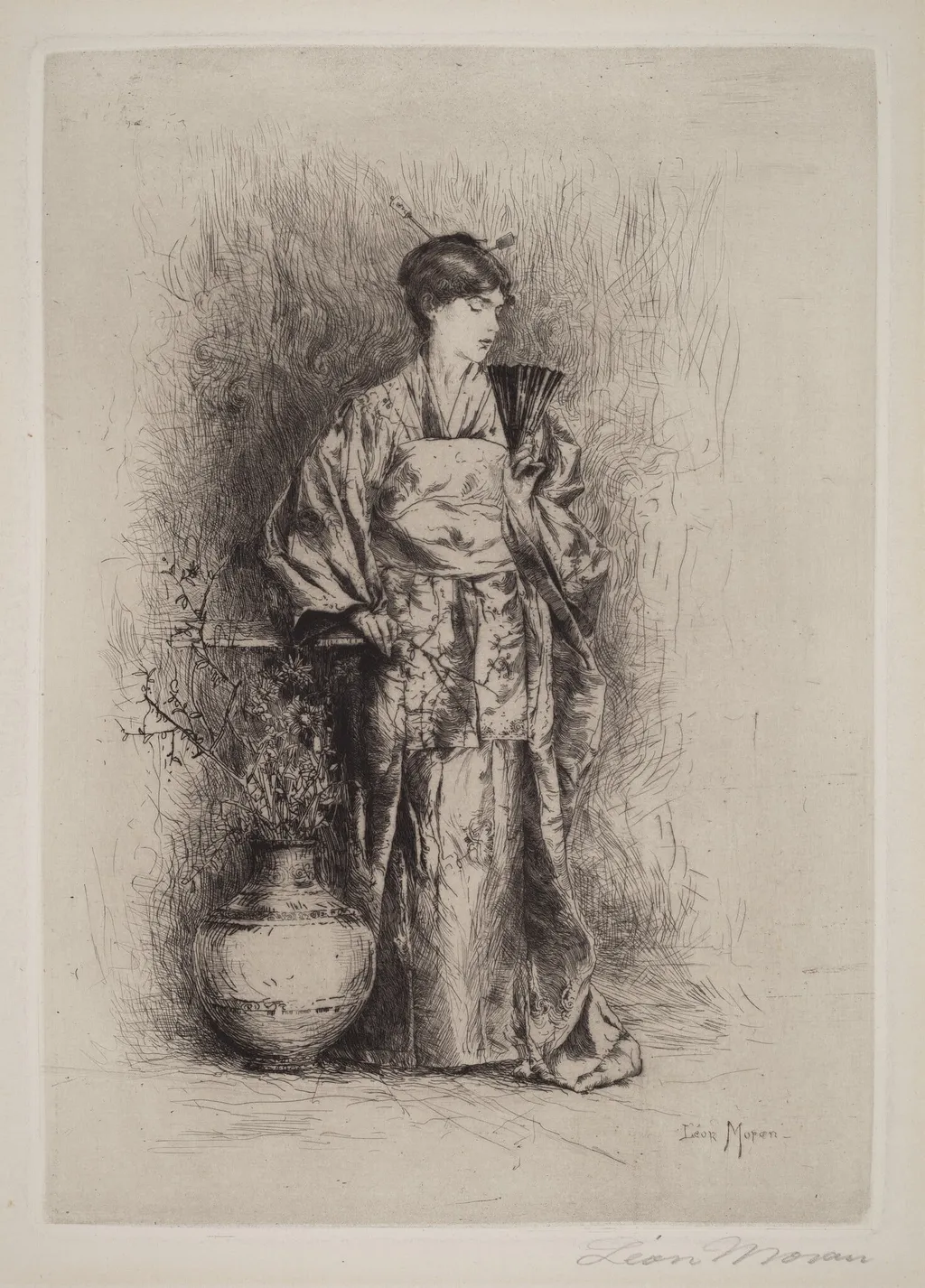
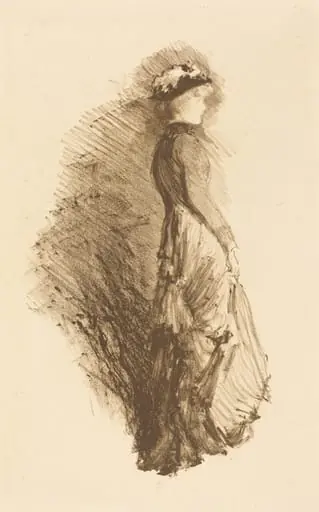
Japanese Fantasy is an ink print by the Impressionist artist Leon Moran. It dates from 1884 and is held in the collection of the National Gallery of Art.
About this work
Overview
Japanese Fantasy is an 1884 etching by American artist Leon Moran, produced during a period of growing Western interest in Japanese aesthetics.
Japanese Fantasy is an 1884 etching by American artist Leon Moran, produced during a period of growing Western interest in Japanese aesthetics. The work is part of the National Gallery of Art’s collection in Washington, D.C. Unlike traditional Japanese prints, Moran’s approach blends Western printmaking techniques with imagined Eastern motifs, reflecting 19th-century Orientalist trends rather than direct cultural study.
Subject & Meaning
The figure is a stylized woman dressed in a flowing robe with a high collar, holding a fan and standing beside a slender vase. Her posture and attire suggest an idealized, non-specific Asian femininity, common in Western art of the era. The background’s sketchy, wind-swept lines evoke an atmospheric setting, but lack geographic or cultural specificity. The image functions more as a fantasy than a representation of actual Japanese life.
Technique & Style
Moran employed etching to create fine, incised lines that produce a textured, almost scratchy surface. The technique allows for both delicate detail and loose, gestural marks, particularly evident in the background’s rapid, irregular strokes. The contrast between the smooth, defined figure and the chaotic, textured surroundings gives the image a dynamic, unfinished quality, emphasizing mood over precision.
History & Provenance
Created in 1884, the etching entered the National Gallery of Art’s collection through its foundational acquisitions of American prints. Its provenance traces to Moran’s personal oeuvre, though little is documented about its early exhibition or ownership. It remains one of the few known works by Moran that engage with East Asian themes, suggesting it was an experimental piece within his broader practice.
Context
In the late 19th century, Japanese art and design influenced Western artists through imported prints and decorative objects. Moran’s etching responds to this Japonisme trend, but filters it through a romanticized, Western lens. Unlike contemporaries who studied Japanese techniques directly, Moran constructed an imagined scene, reflecting broader cultural appropriation rather than authentic engagement.
Legacy
Japanese Fantasy stands as a modest example of American printmaking’s engagement with Orientalist themes. It is not widely reproduced or studied, but it illustrates how Western artists selectively adopted Eastern imagery to serve aesthetic or exoticizing agendas. The work contributes to understanding the complexities of cross-cultural representation in 19th-century art.
Artist & collection