Artwork
An Armenian Woman
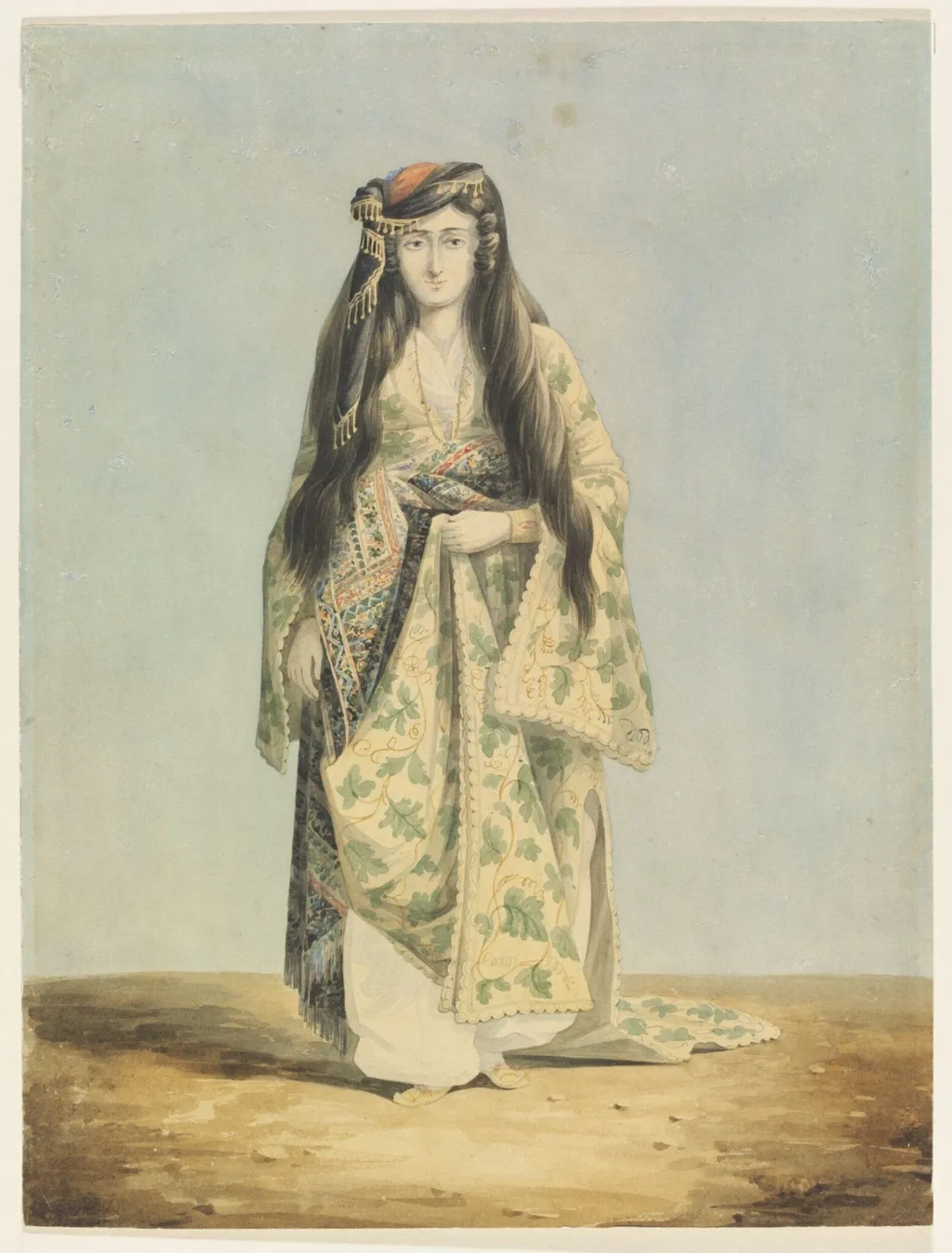
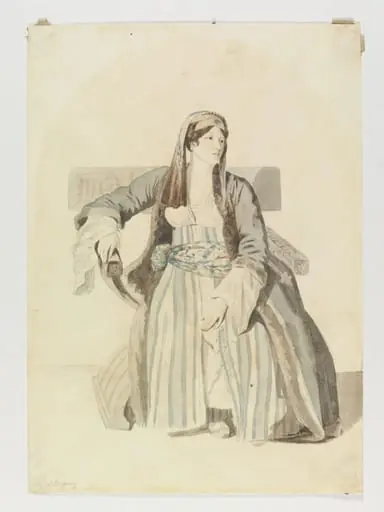
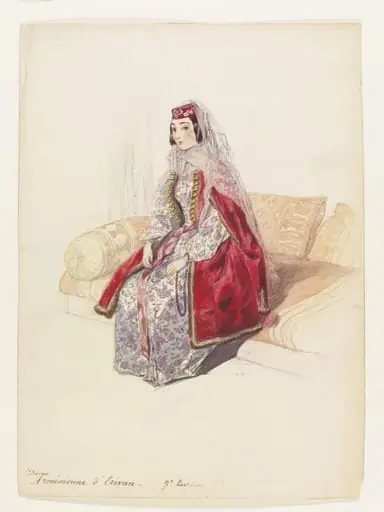
An Armenian Woman is a watercolor work on paper by the American Folk Art artist William Page. It dates from 1820 and is held in the collection of the Victoria and Albert Museum.
About this work
Overview
Unlike his later landscape-focused works, this piece reflects Page’s initial interest in ethnographic observation and figure study.
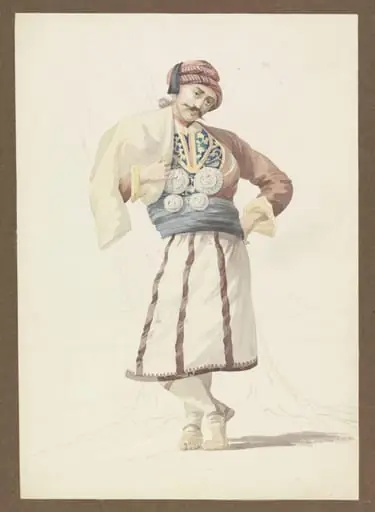
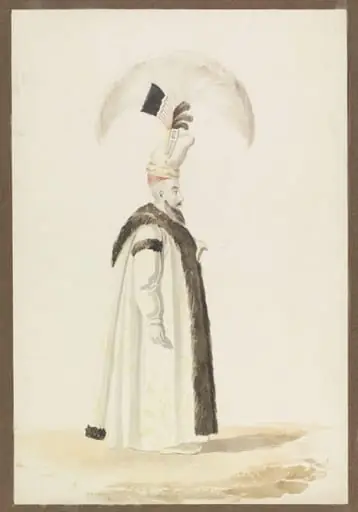
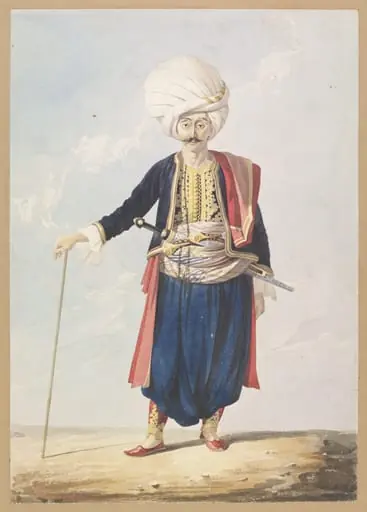
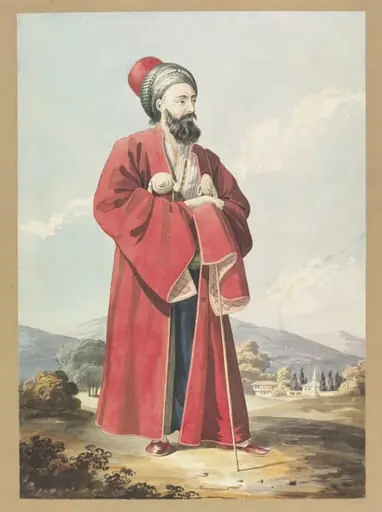
An Armenian Woman is a watercolour portrait by William Page, created around 1820. It belongs to a series of costume studies produced during his early career, informed by his travels in the Near East. The work captures a single figure in quiet repose, emphasizing textile detail and subtle lighting. Unlike his later landscape-focused works, this piece reflects Page’s initial interest in ethnographic observation and figure study.
Subject & Meaning
The subject is a woman dressed in regional Armenian attire, her identity not explicitly documented. Her loose dark hair, veiled head, and red tasseled hat suggest local dress customs, while the folded cloth in her hand implies domestic or ceremonial function. The image avoids narrative or emotion, instead presenting a restrained, observational record of cultural dress, consistent with 19th-century ethnographic interests.
Technique & Style
Page employs transparent watercolour washes to render the texture of fabric and the soft gradations of light on skin. The background is minimal, directing focus to the figure’s garments and facial contours. Brushwork is precise but not rigid, allowing the medium’s fluidity to suggest volume and fold. This approach aligns with early 19th-century academic traditions that valued detail and tonal harmony over dramatic expression.
History & Provenance
The watercolour entered the collection of Prue Heathcote-Williams in March 1974. Prior to this, its ownership history is not publicly documented. As part of Page’s early oeuvre, it likely remained in private hands or institutional archives after its creation, reflecting its status as a study rather than a public commission. Its survival suggests continued interest in ethnographic art from the period.
Context
Created during the height of Romantic-era fascination with distant cultures, the work reflects a broader European trend of documenting regional dress and customs. While not overtly political, such studies contributed to ethnographic knowledge and visual archives. Page’s approach—detailed yet unembellished—mirrors contemporaneous travel sketches by artists and scholars exploring the Ottoman and Near Eastern regions.
Legacy
An Armenian Woman remains a representative example of Page’s formative years, illustrating his transition from figure studies to landscape painting. It contributes to the historical record of how Western artists interpreted non-European subjects during the early 1800s. Though not widely exhibited, it endures as a quiet testament to the period’s interest in cultural documentation through intimate, observational art.
Artist & collection