Artwork
Funeral Scene in Imaginary Architecture
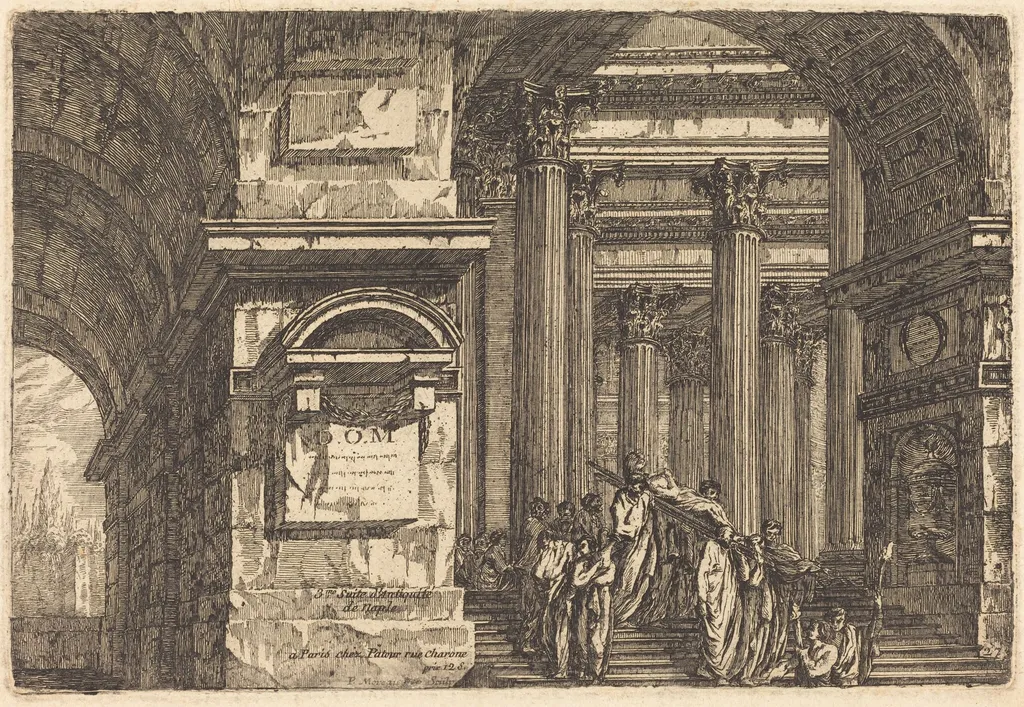
Funeral Scene in Imaginary Architecture is an ink print by the Baroque artist Pierre Moreau. It dates from 1722 and is held in the collection of the National Gallery of Art.
About this work
Overview
Pierre Moreau’s 1722 etching, titled Funeral Scene in Imaginary Architecture, presents a staged funerary tableau within an elaborate, fictitious stone edifice.
Pierre Moreau’s 1722 etching, titled Funeral Scene in Imaginary Architecture, presents a staged funerary tableau within an elaborate, fictitious stone edifice. The composition centers on a sarcophagus bearing Latin inscription, surrounded by three cloaked figures whose faces remain indistinct. A narrow window above casts a muted light across the scene, emphasizing the heavy, carved walls and columnar supports that frame the mournful gathering.
Subject & Meaning
The work depicts a ceremonial burial set in an imagined architectural space, suggesting a timeless, allegorical contemplation of death. The anonymity of the mourners and the theatrical arrangement invite viewers to focus on the ritual’s universal aspects rather than a specific narrative, while the Latin text on the coffin reinforces a scholarly, perhaps moralizing tone typical of early‑18th‑century funerary art.
Technique & Style
Executed as an etching on laid paper, Moreau employs fine, cross‑hatching to render the texture of stone surfaces and the folds of drapery. The linear quality of the medium allows precise delineation of architectural details—carvings, columns, and window framing—while the subdued tonal range creates a somber atmosphere appropriate to the subject.
History & Provenance
Created in 1722, the print belongs to a period when French printmakers explored imagined antiquity and theatrical staging. Though specific ownership records are scarce, the piece has been cited in scholarly surveys of early modern etching, indicating its circulation among collectors interested in architectural fantasies and funerary iconography.
Context
Funeral Scene in Imaginary Architecture reflects the early‑18th‑century fascination with classical motifs and the use of invented settings to explore moral themes. It aligns with contemporary trends in French print culture that blended academic learning—evident in the Latin inscription—with decorative imagination, positioning the work within a broader discourse on the relationship between architecture, narrative, and mortality.
Artist & collection


 Il Greco in Troia: Plate 8
 Architectural Fantasy with an Obelisk and Arcade
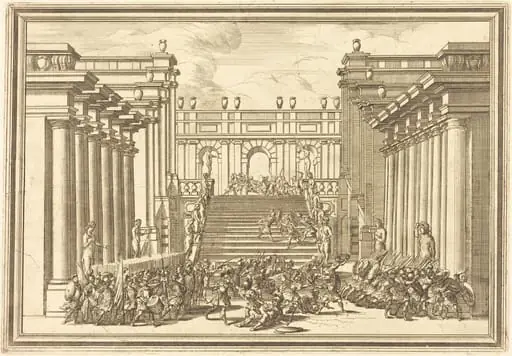 Il Greco in Troia: Plate 3
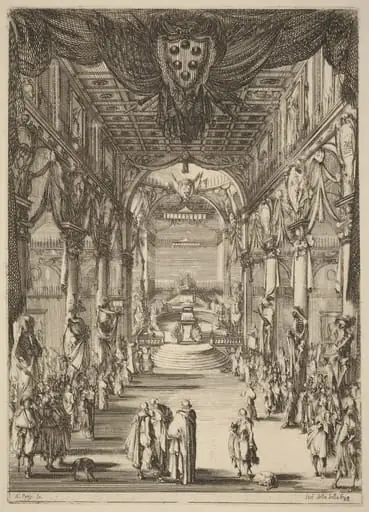 Funeral of Prince Francesco de Medici
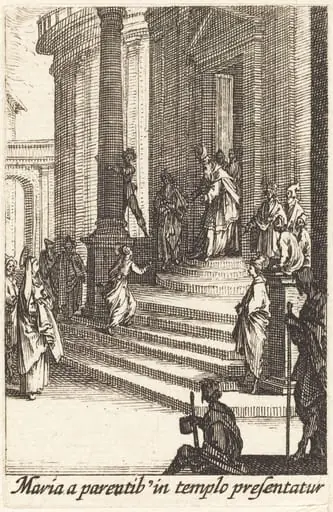 The Presentation of the Virgin
 The Presentation of the Virgin
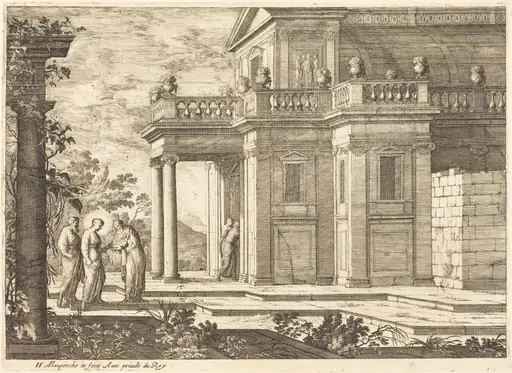 Presentation in the Temple
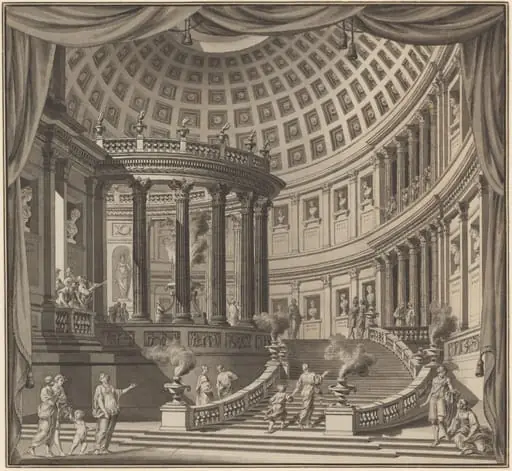 Design for a Stage Curtain: The Interior of an Elaborate Temple Dedicated to Illustrious Men
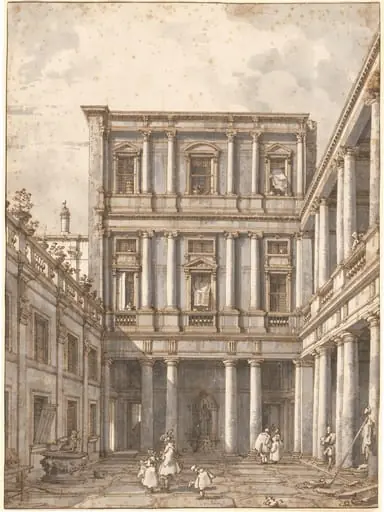 A Venetian Courtyard, in the Procuratie Nuove