Artwork
Il Greco in Troia: Plate 3
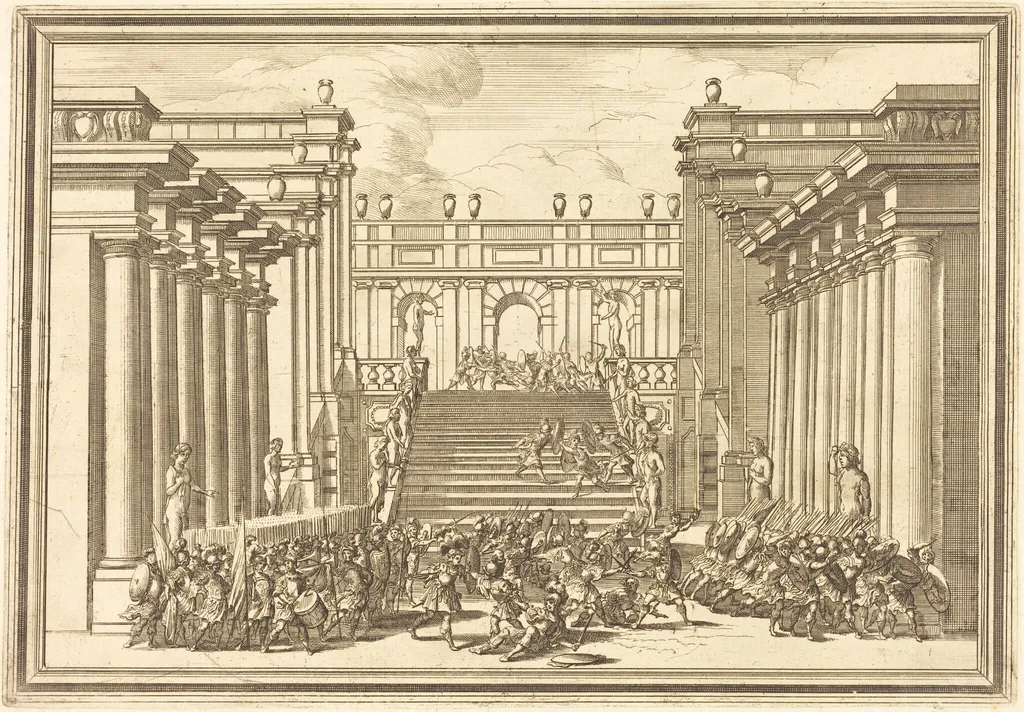
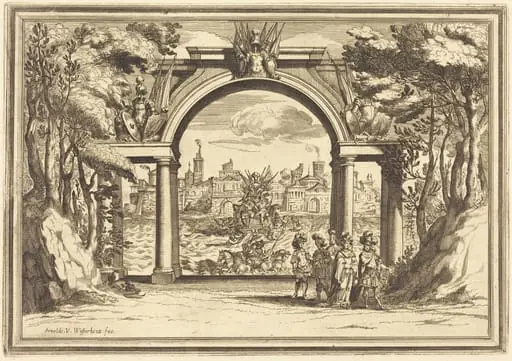
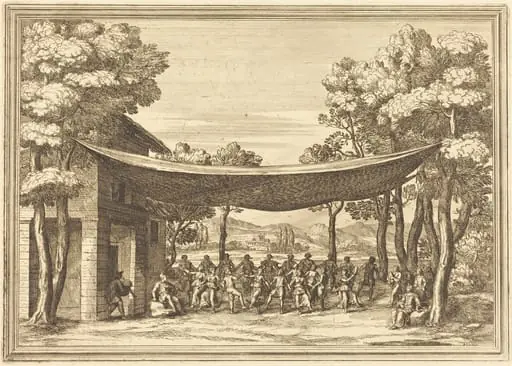
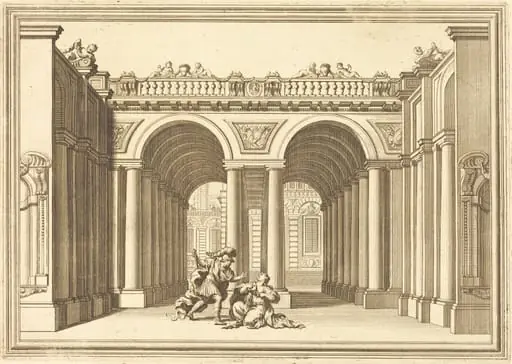
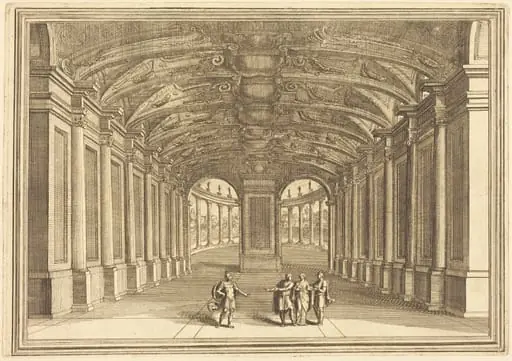
Il Greco in Troia: Plate 3 is an ink print by the Baroque artist Arnold von Westerhout. It dates from 1688 and is held in the collection of the National Gallery of Art.
About this work
Overview
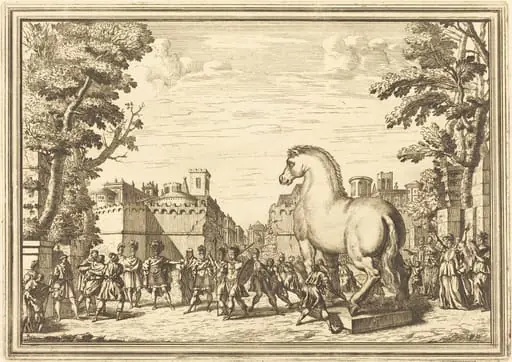
Arnold von Westerhout’s 1688 print, titled Il Greco in Troia: Plate 3, is a restruck engraving executed on laid paper. The composition depicts a tumultuous battle set on a monumental staircase that ascends toward a dilapidated temple, with two statues perched on pedestals above the fray.
Subject & Meaning
The scene captures a chaotic clash of armored combatants and robed figures, some mounted on horses, others fallen on the ground. The ruined architectural elements—broken columns and arched windows—frame the violence, suggesting a narrative of conflict amidst decay, possibly alluding to the legendary Greek siege of Troy.
Technique & Style
Von Westerhout combined etching, drypoint, and aquatint processes to achieve fine line work and tonal variation. The print’s dense arrangement of minute details—individual soldiers, horses, and scattered bodies—demonstrates the artist’s skill in rendering complex, crowded compositions within the limits of the medium.
History & Provenance
Created in 1688, the work is a restrike, indicating that the plate was reprinted after its initial issue. It remains an example of late‑17th‑century Northern European printmaking, reflecting the period’s interest in classical and mythological subjects rendered for a broad audience.
Context
The engraving belongs to a series illustrating episodes from the Trojan War, a popular theme in Baroque art that allowed artists to explore dramatic movement and architectural grandeur. Westerhout’s treatment aligns with contemporary tastes for elaborate, narrative prints that could be disseminated widely.
Artist & collection