Artwork
Χωρίς Τίτλο
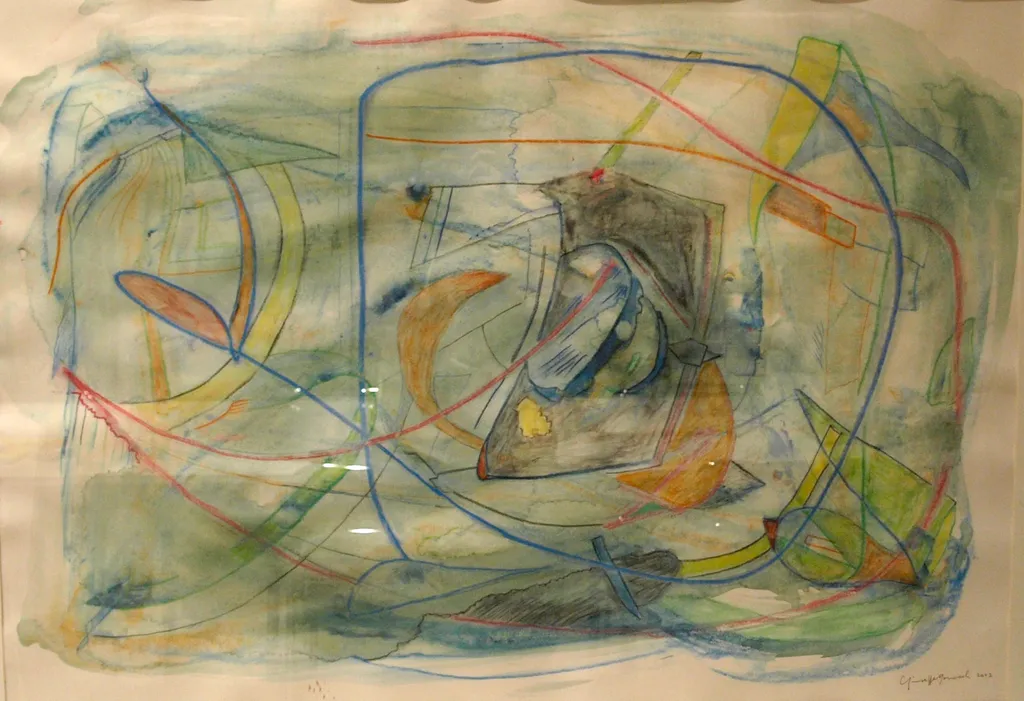
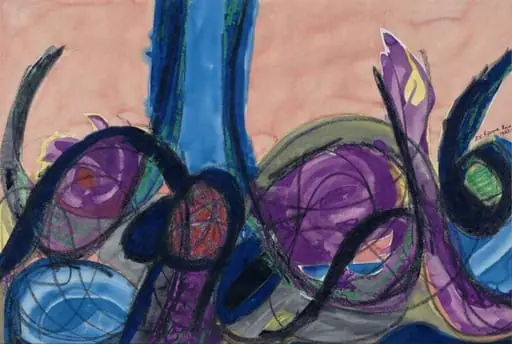
Χωρίς Τίτλο is an unspecified painting by Giselle Morovits. It dates from 2001 and is held in the collection of the Metropolitan Organisation of Museums of Visual Arts of Thessaloniki – MOMus.
About this work
The artist seems to have layered colors and lines on top of each other, making it feel busy but not quite finished.
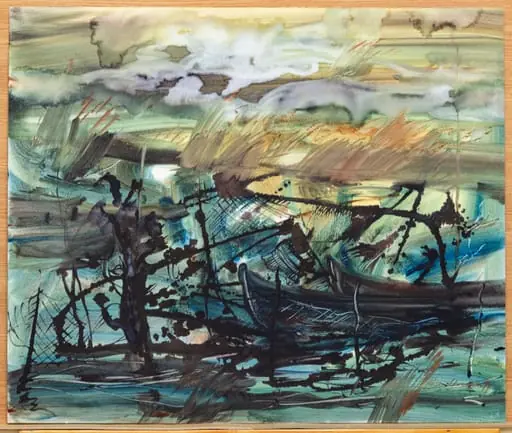
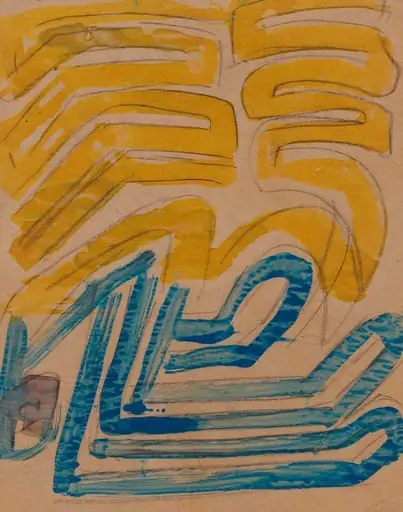
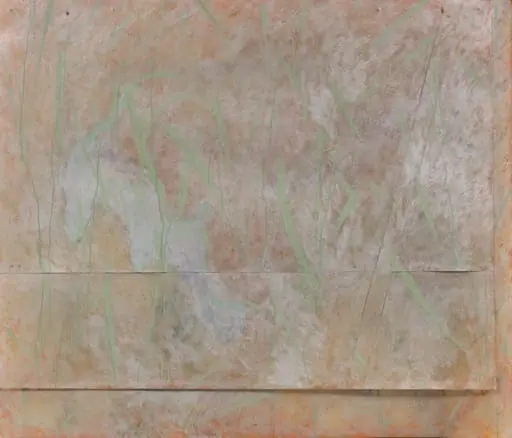
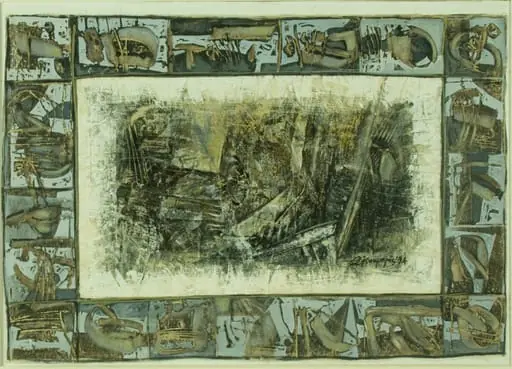
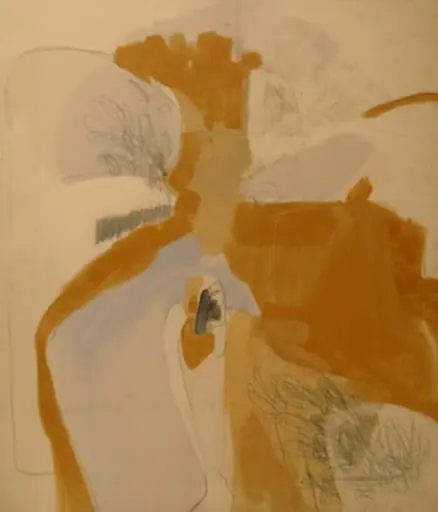
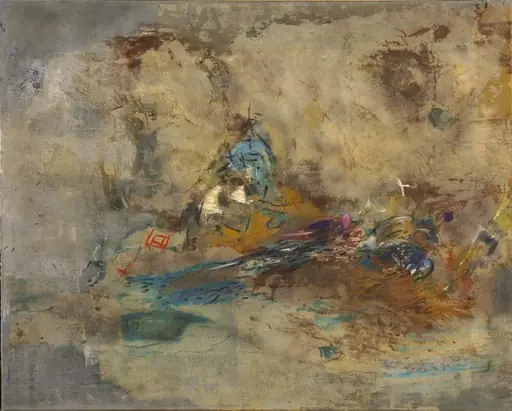
This painting looks like a loose, sketchy drawing with lots of overlapping shapes. You see two big circles with wavy lines inside, one orange-brown and one pale green. Bright blue and red lines crisscross the whole thing, almost like a tangled web. The colors are soft—mostly greens, yellows, and whites—with some darker patches that look like shadows or smudges.
The artist seems to have layered colors and lines on top of each other, making it feel busy but not quite finished. The signature in the corner says *Morovits, 2001*, so it’s recent compared to older paintings.
If you like this style, check out Morovits, Giselle.
Overview
Χωρίς Τίτλο, created by Giselle Morovits in 2001, is a mixed-media artwork characterized by loose, layered compositions and soft color palette, currently housed at the Museum of Ethnography.
Subject & Meaning
The subject of Χωρίς Τίτλο remains ambiguous, with two prominent overlapping circles (one orange-brown, one pale green) and crisscrossing blue and red lines, suggesting a complex, possibly abstract, narrative.
Technique & Style
Morovits employs a sketchy, layered technique, combining soft hues (greens, yellows, whites) with darker accents, creating a busy, quasi-unfinished appearance.
History & Provenance
Signed *Morovits, 2001*, the work is a relatively recent piece by the artist, now part of the Museum of Ethnography's collection.
Context
While specific contextual influences are unclear, the artwork's style aligns with contemporary mixed-media practices emphasizing expressive layering and color play.
Legacy
As a relatively recent work, its long-term impact remains to be assessed; however, it contributes to Morovits' body of work, potentially influencing future interpretations of her style.
Artist & collection
Artist
Museum
Metropolitan Organisation of Museums of Visual Arts of Thessaloniki – MOMus
Continue through works from the same source collection.