Artwork
Untitled
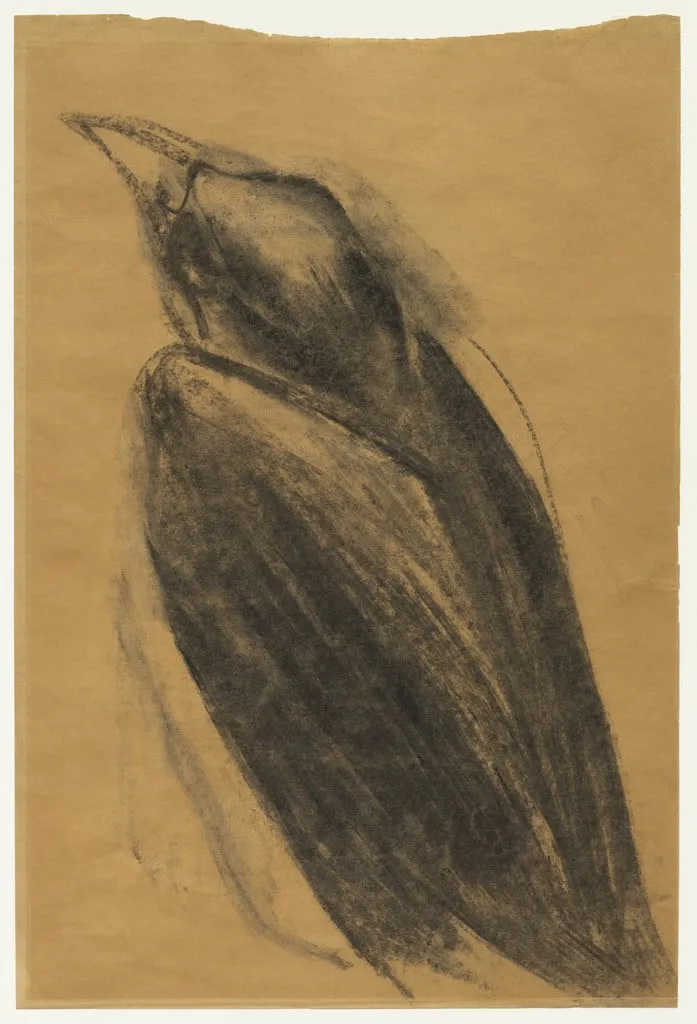
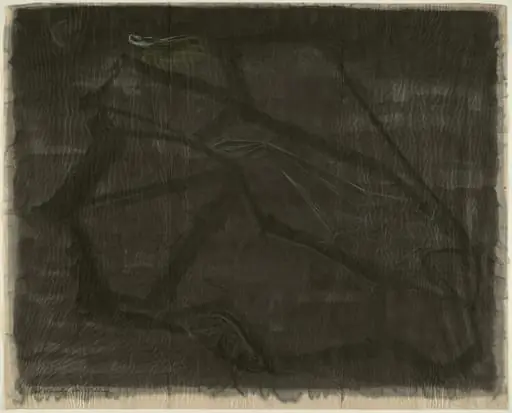
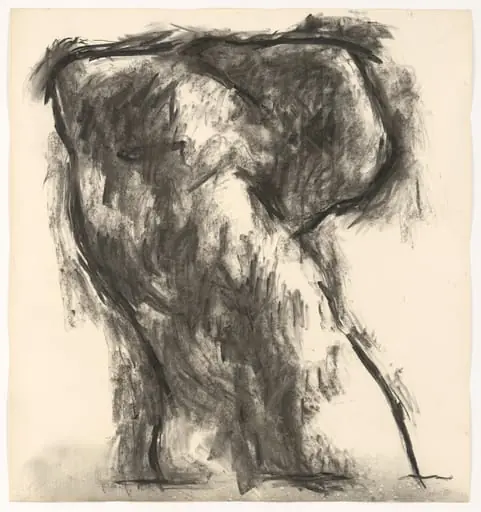
Untitled is a charcoal drawing by Morris Graves. It dates from 1942 and is held in the collection of the Museum of Modern Art.
About this work
Overview
The absence of context or background focuses attention on the figure’s form and the materiality of the medium.
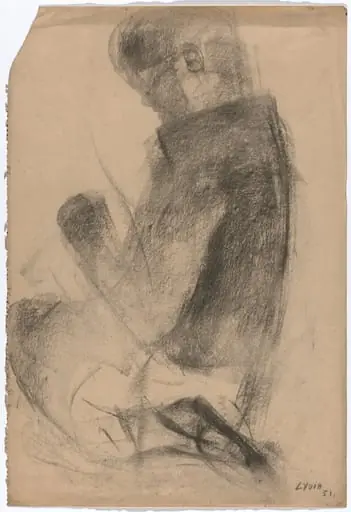
Created in 1942, this charcoal drawing by Morris Graves is a quiet, introspective work on unadorned paper. Executed with loose, gestural strokes, it captures a solitary, indistinct figure enveloped in motion. The absence of context or background focuses attention on the figure’s form and the materiality of the medium. Graves’ use of smudged charcoal and minimal detail reflects a deliberate restraint, aligning with his broader interest in evoking inner states rather than depicting external reality.
Subject & Meaning
The figure, shrouded in a flowing cloak and tall hat, resists clear identification, suggesting a spirit, guardian, or inner presence rather than a specific person. Its obscured face and blurred contours invite contemplation, echoing Graves’ fascination with mysticism and the unseen dimensions of consciousness. The work does not narrate but evokes a sense of solitude and quiet mystery, consistent with his symbolic language rooted in personal mythology and spiritual inquiry.
Technique & Style
Graves employed charcoal with a tactile immediacy, using smudging and scumbling to create soft, atmospheric transitions. The rough, rapid strokes suggest movement and impermanence, while the lack of defined edges dissolves the figure into its surroundings. The warm tone of the paper serves as a neutral ground, enhancing the depth of the dark forms. This technique prioritizes emotional resonance over precision, aligning with modernist tendencies to explore perception and materiality.
History & Provenance
The drawing entered the collection of The Museum of Modern Art as part of its broader engagement with mid-20th-century American artists. It reflects Graves’ recognition within the New York art scene despite his geographic distance from its centers. His inclusion in institutional collections during the 1940s marked a shift in how regional American art was valued, particularly work that fused personal symbolism with abstract expression.
Context
Graves was a central figure in the Northwest School, a group of artists influenced by Zen aesthetics, Pacific Northwest landscapes, and Eastern philosophy. In the early 1940s, amid global conflict, many artists turned inward, seeking solace in symbolic imagery. This drawing emerges from that climate—its muted tones and elusive form reflect a cultural moment where art became a vessel for introspection rather than representation.
Legacy
This work exemplifies Graves’ enduring contribution to American modernism: the fusion of spiritual themes with experimental technique. His use of charcoal to suggest rather than define influenced later artists exploring abstraction and psychological depth. Though not widely exhibited, such drawings remain key to understanding how regional identity and introspective symbolism shaped postwar American art beyond mainstream narratives.
Artist & collection
Artist
Morris Cole Graves (August 28, 1910 – May 5, 2001) was an American painter. He was one of the earliest Modern artists from the Pacific Northwest to achieve national and international acclaim. His style, referred to by…