Artwork
Bardolph
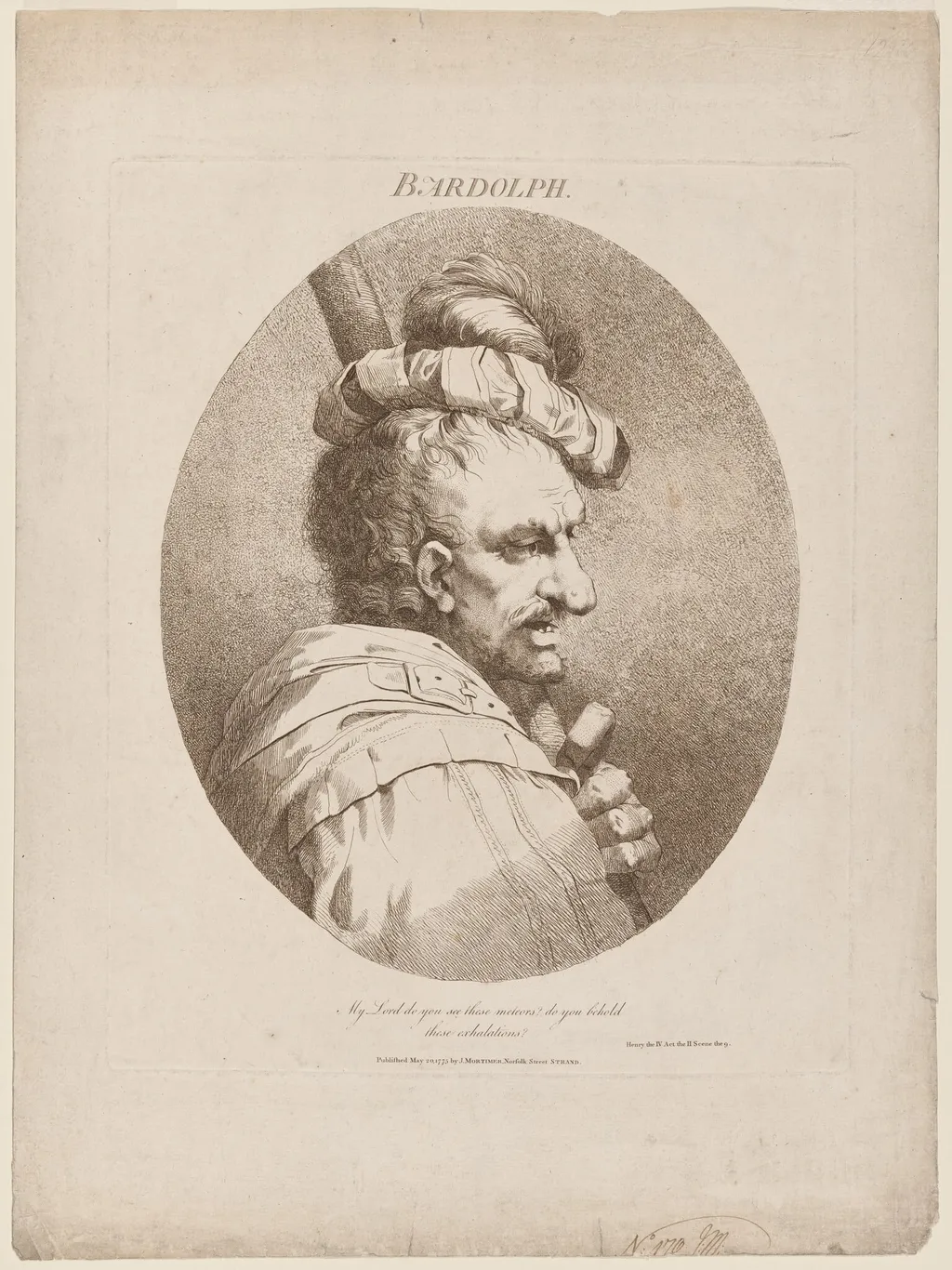
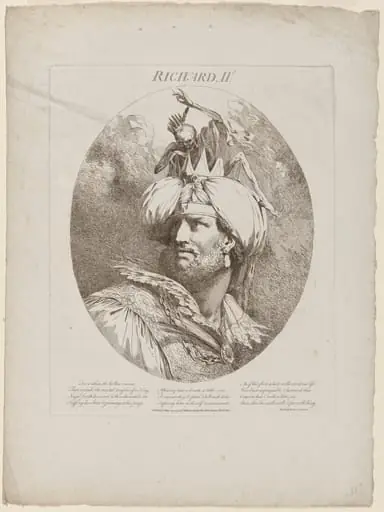
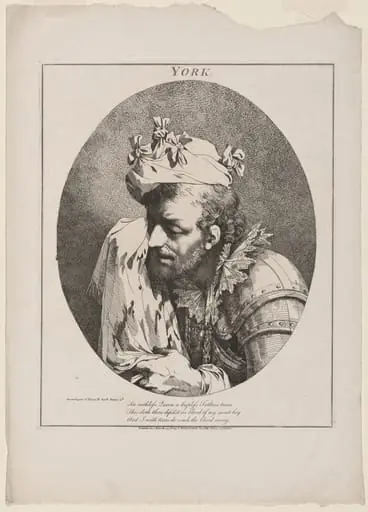
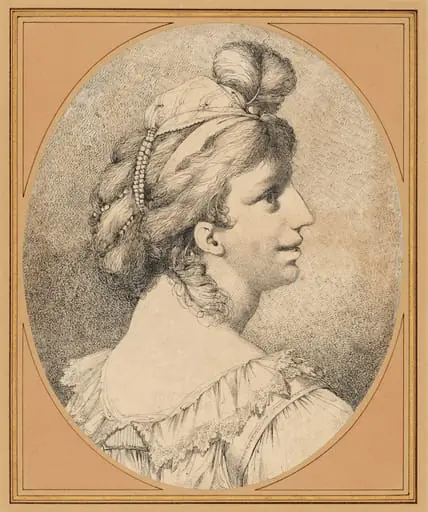
Bardolph is an ink print by the Romanticist artist John Hamilton Mortimer. It dates from 1763 and is held in the collection of the National Gallery of Art.
About this work
The Romanticism movement is evident in the expressive and emotive quality of the portrait, which captures the subject's introspective nature.
The image is a portrait of a man, titled "Bardolph," created by John Hamilton Mortimer in 1763. The man is depicted in a circular frame, with his head turned to the right and his gaze directed downward. He has a large nose and a prominent forehead, and his hair is styled in a high pompadour. He wears a jacket with a high collar and a cloak draped over his shoulder.
The portrait is rendered in brown-black ink on laid paper, giving it a warm and earthy tone. The etching technique used to create the image adds a sense of texture and depth to the portrait.
The Romanticism movement is evident in the expressive and emotive quality of the portrait, which captures the subject's introspective nature. To learn more about the artist behind this work, look up John Hamilton Mortimer.
Overview
Bardolph is a 1763 etching by John Hamilton Mortimer, a British artist who practiced as a painter, printmaker, and draftsman. This early print showcases Mortimer's skill in figure subjects, characteristic of his work during this period.
Subject & Meaning
The etching portrays a man, identified as Bardolph, in a contemplative pose. His downward gaze and introspective expression suggest a focus on inner thoughts, aligning with emerging Romantic sensibilities.
Technique & Style
Executed in brown-black ink on laid paper, the etching exhibits Mortimer's use of expressive line work and texture, enhancing the subject's emotional depth. The circular frame and dramatic lighting further evoke the influence of Salvator Rosa's manner.
History & Provenance
Created in 1763, Bardolph represents an early example of Mortimer's printmaking. Mortimer later held a position of prominence as President of the Society of Artists in 1774.
Context
Bardolph reflects Mortimer's engagement with Romanticism, emphasizing emotional intensity and individuality. This contrasts with the more classical approaches prevalent at the time, positioning the work within the broader shift towards Romantic ideals in 18th-century British art.
Legacy
While Bardolph itself may not have been widely reproduced or directly influential, it contributes to the understanding of Mortimer's development and the gradual adoption of Romantic elements in British art during the late 18th century.
Artist & collection
Artist
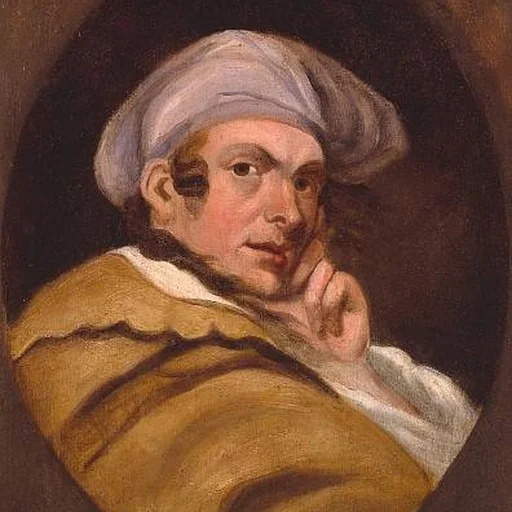
John Hamilton Mortimer (17 September 1740 – 4 February 1779) was a British figure and landscape painter and printmaker, known for romantic paintings set in Italy, works depicting conversations, and works drawn in the…

![Mucius Scaevola [recto], by John Hamilton Mortimer](https://artifactworldgallery.com/img/john-hamilton-mortimer--mucius-scaevola-recto--0de678fa443f7962-w320.webp)