Artwork
The Maréchal de Brissac
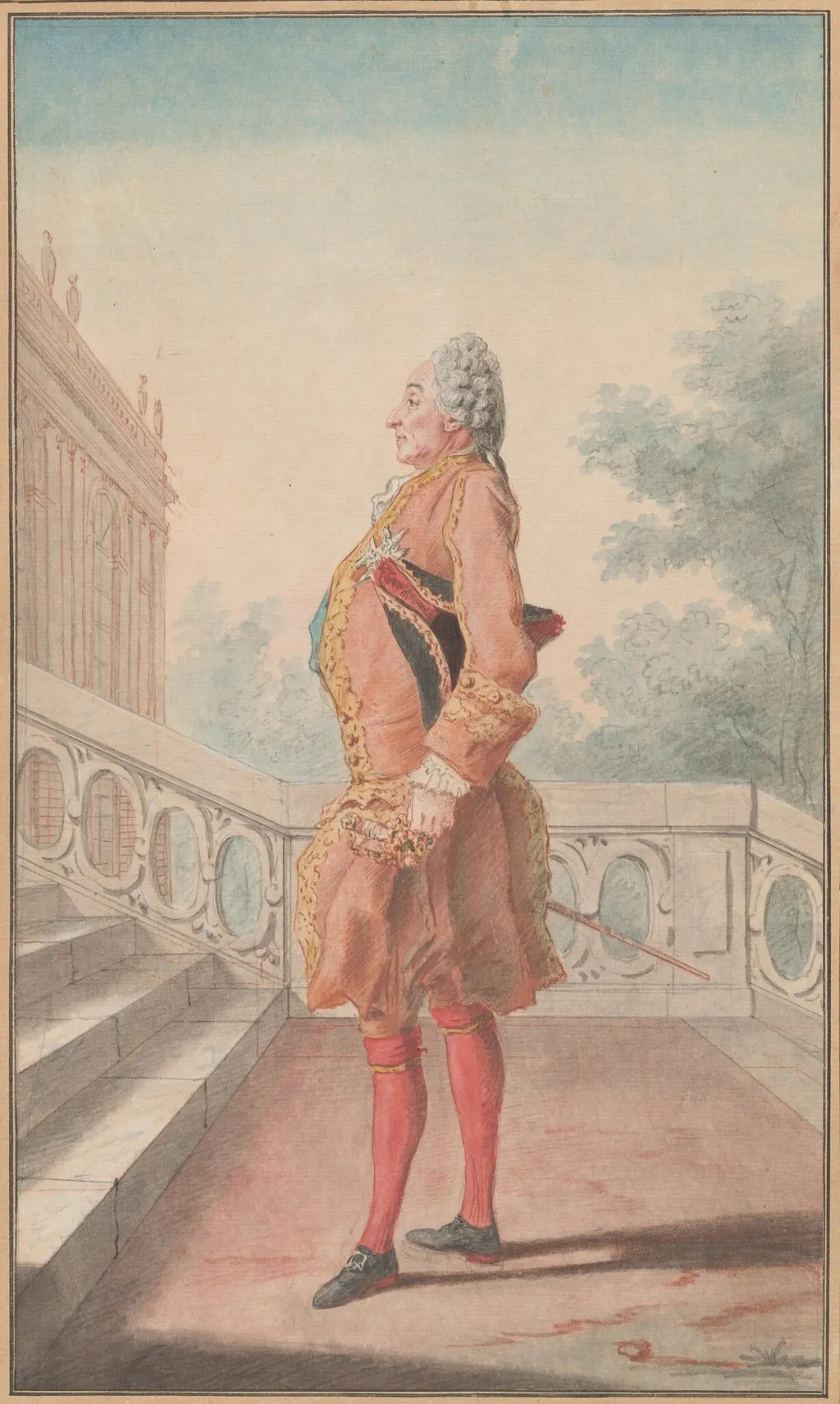
The Maréchal de Brissac is a watercolor drawing by the Romanticist artist Carrogis, Louis de, called Carmontelle. It dates from 1763 and is held in the collection of the National Gallery of Art. This watercolor drawing, executed in 1763 by Louis de Carrogis, known as Carmontelle, depicts a nobleman in formal attire.
About this work
Overview
Rendered on laid paper with graphite and chalk underdrawing, it is part of the National Gallery of Art’s collection in Washington, D.
This watercolor drawing, executed in 1763 by Louis de Carrogis, known as Carmontelle, depicts a nobleman in formal attire. Rendered on laid paper with graphite and chalk underdrawing, it is part of the National Gallery of Art’s collection in Washington, D.C. The work exemplifies Carmontelle’s skill in capturing portraiture with light, delicate media, blending observational precision with the elegance of French aristocratic life in the mid-18th century.
Subject & Meaning
The figure is identified as the Maréchal de Brissac, a high-ranking military officer and courtier. His ornate coat with gold embroidery, blue vest, and red stockings signal his status within the French nobility. The balcony setting, with its stone railing and distant architecture, suggests a private residence or palace terrace. The sword at his side reinforces his military role, while his poised stance conveys dignity rather than action, reflecting the ceremonial nature of his position.
Technique & Style
Carmontelle employed watercolor over precise graphite and chalk outlines to achieve subtle tonal gradations and fine detail. The texture of the fabric, the sheen of the gold trim, and the soft rendering of foliage demonstrate his mastery of transparent washes. The background is lightly suggested, drawing focus to the figure’s costume and posture. This method reflects the French tradition of intimate, lifelike portraiture favored in aristocratic circles, prioritizing immediacy over grandeur.
History & Provenance
Created in 1763, the drawing likely served as a personal or courtly commission, possibly intended as a keepsake or gift. It entered the National Gallery of Art’s collection through the Chester Dale bequest in 1963. While its early ownership history is not fully documented, its survival in good condition suggests it was carefully preserved within private collections before its institutional acquisition.
Context
Carmontelle was known for his portraits of French aristocrats and intellectuals during the reign of Louis XV. His works often captured subjects in informal yet refined settings, bridging the gap between formal portraiture and genre scenes. This drawing aligns with a broader cultural interest in documenting individual identity and social rank through visual means, particularly among the French elite before the Revolution.
Legacy
Carmontelle’s watercolor portraits, including this one, are valued for their sensitivity and technical finesse. They offer insight into the visual culture of pre-Revolutionary France, where personal identity and social standing were expressed through dress and setting. Though less widely known than his contemporaries, his drawings remain important records of aristocratic life and the evolution of portrait drawing in the 18th century.
Artist & collection

Artist
Carrogis, Louis de, called Carmontelle
Carrogis, Louis de, called Carmontelle (1760–1770) was an artist.

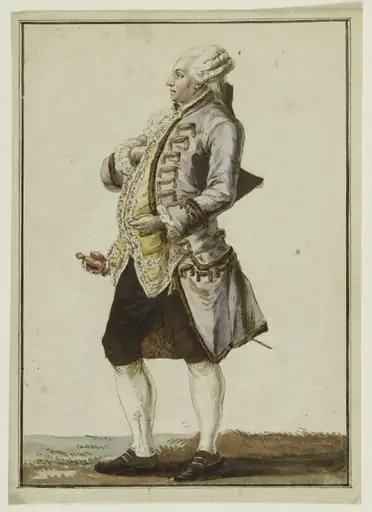 Homme vêtu d'un habit en surtout à brandebourgs de camelot de soie
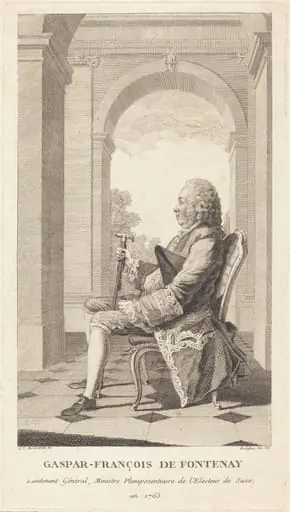 Gaspar-François de Fontenay
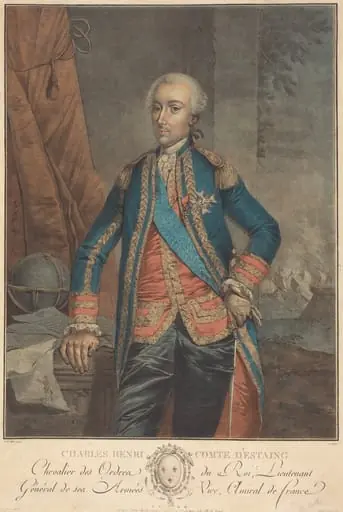 Charles Henri, Comte d'Estaing
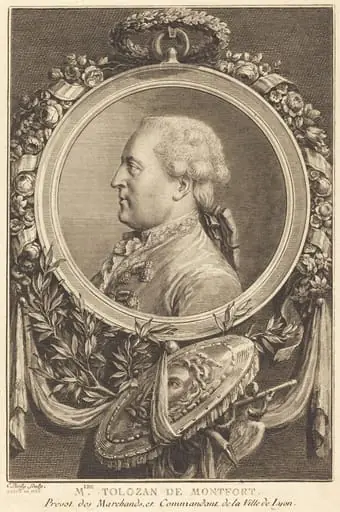 Tolozan de Montfort
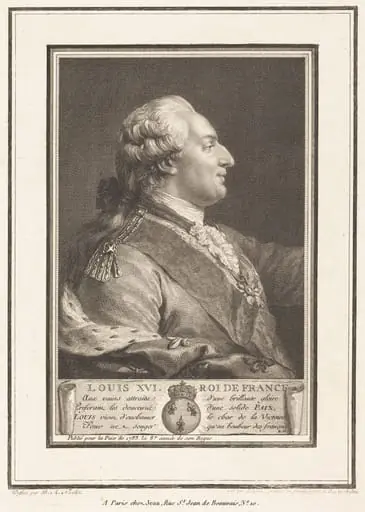 Louis XVI, Roi de France
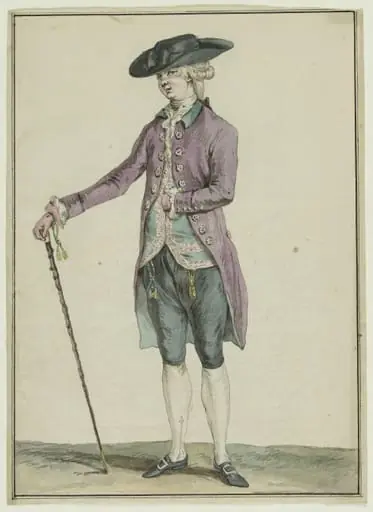 Petit maître en chenille, Habit du matin
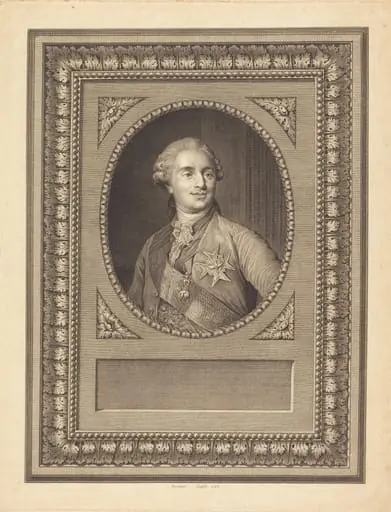 Louis XVI, King of France
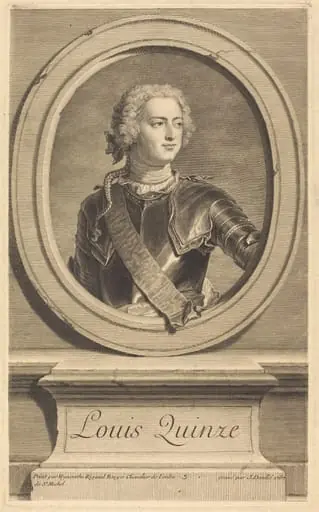 Louis XV
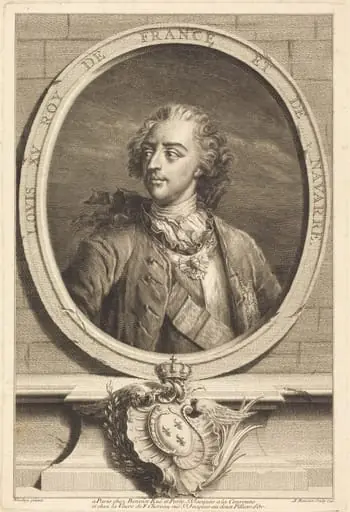 Louis XV, King of France
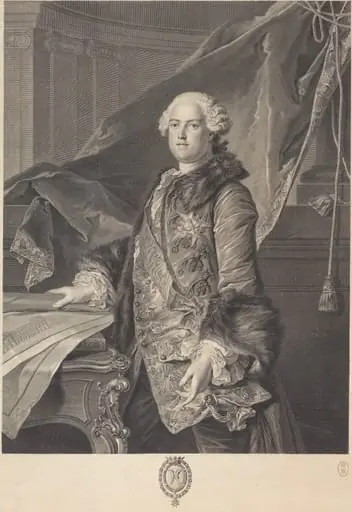 Marquis de Marigny
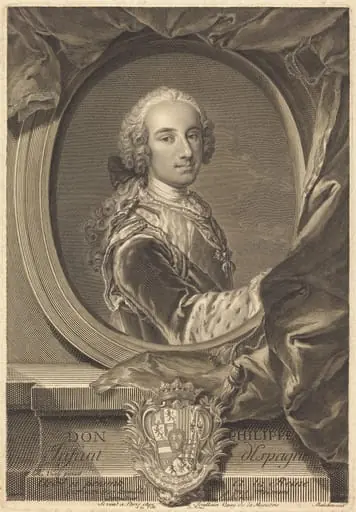 Don Philippe, Infant d'Espagne
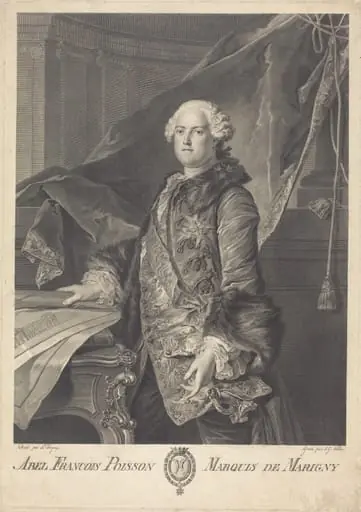 Abel Francois Poisson, Marquis de Marigny