Artwork
A Sebil at the Chouf
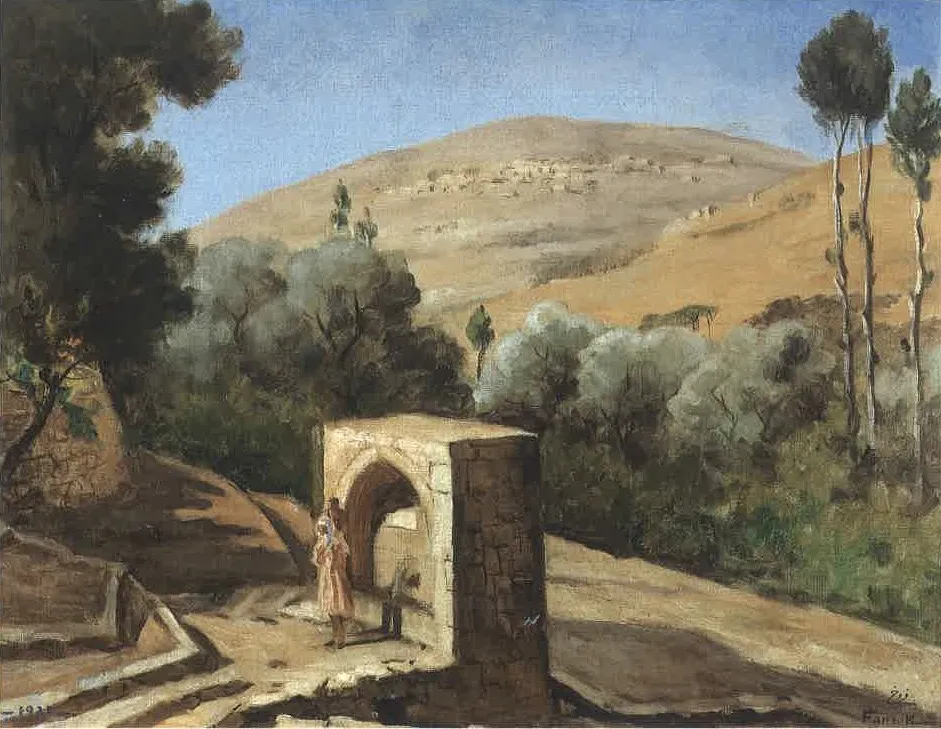
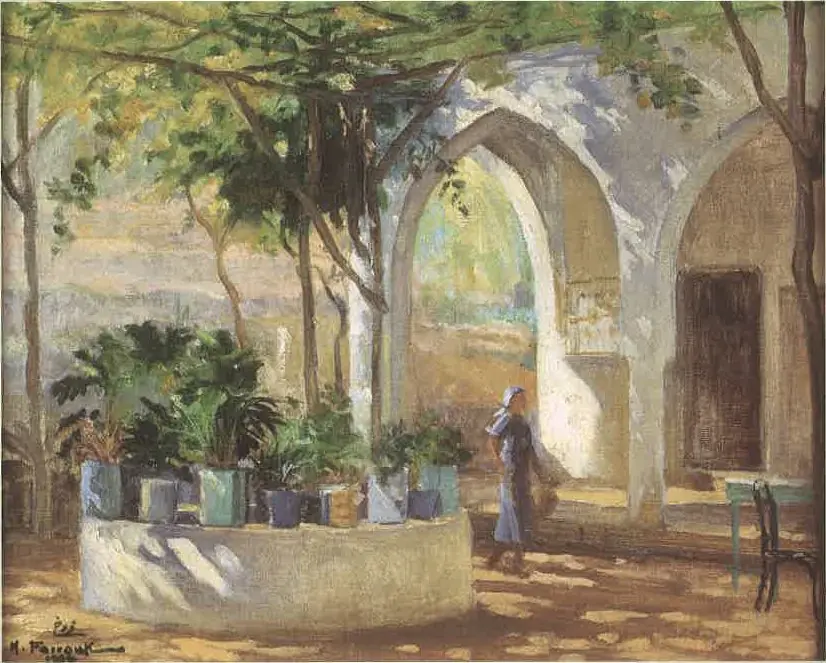
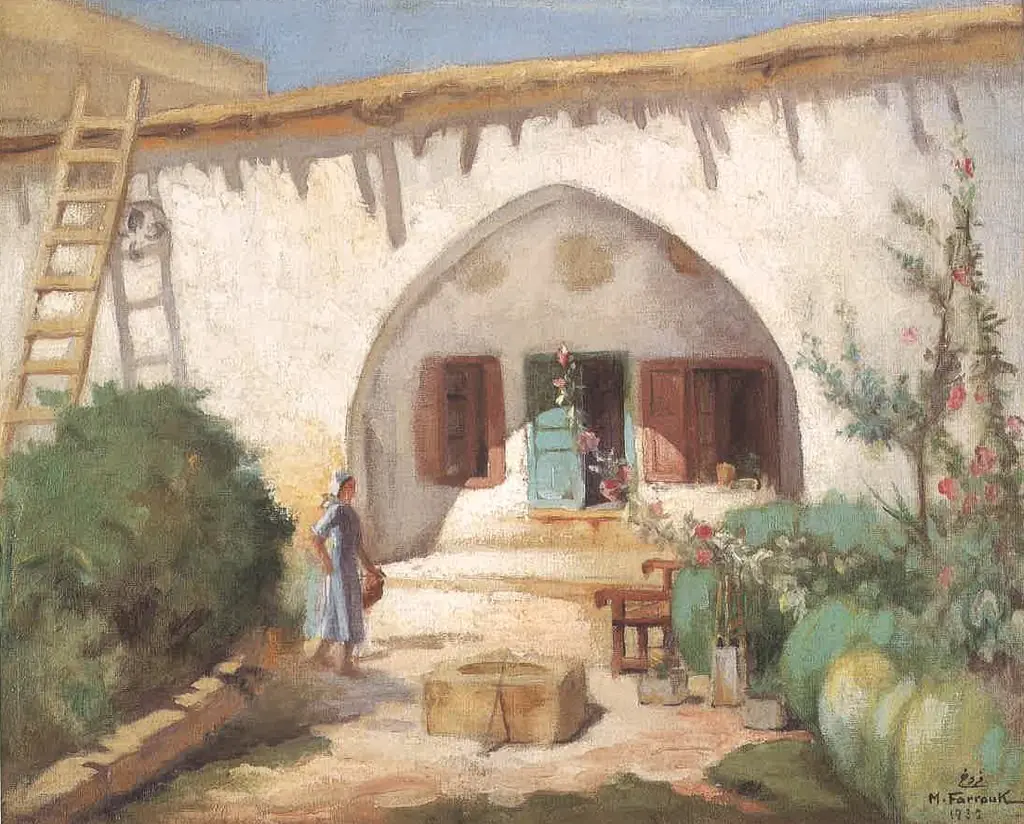
A Sebil at the Chouf is an oil painting by the Orientalist artist Moustafa Farroukh. It dates from 1939 and is held in the collection of the Sursock Museum.
About this work
Overview
A Sebil at the Chouf, painted circa 1939 by Lebanese artist Moustafa Farroukh, is a landscape painting within the Orientalist tradition. It features a sebil (stone water fountain), a female figure, and characteristic umbrella-shaped stone pines of Lebanon's Chouf Mountains.
Subject & Meaning
The painting's central elements—a sebil, a woman, and distinctive local flora—convey a serene Lebanese landscape. The sebil, a common Orientalist motif, symbolizes communal water sources, while the woman and stone pines add cultural and geographical specificity.
Technique & Style
While specific technical details of this work are not provided, Farroukh's use of oil paint is consistent with Orientalist landscape conventions. His style, evident across over 2,000 paintings, likely blends realistic depiction with the romanticization characteristic of the movement.
History & Provenance
Created around 1939, A Sebil at the Chouf is part of Moustafa Farroukh's prolific output. The work is currently housed in the Sursock Museum's collection.
Context
This painting reflects Farroukh's contribution to the Orientalist movement, which often focused on depicting Middle Eastern scenes for Western audiences. However, as a Lebanese artist, Farroukh's work may also offer a more nuanced, indigenous perspective on traditional Lebanese landscapes.
Legacy
As part of Farroukh's extensive body of work and through its presence in the Sursock Museum, A Sebil at the Chouf contributes to the artist's legacy as a prominent Lebanese painter of the 20th century, though its individual impact within his oeuvre is not specified.
Artist & collection

Artist
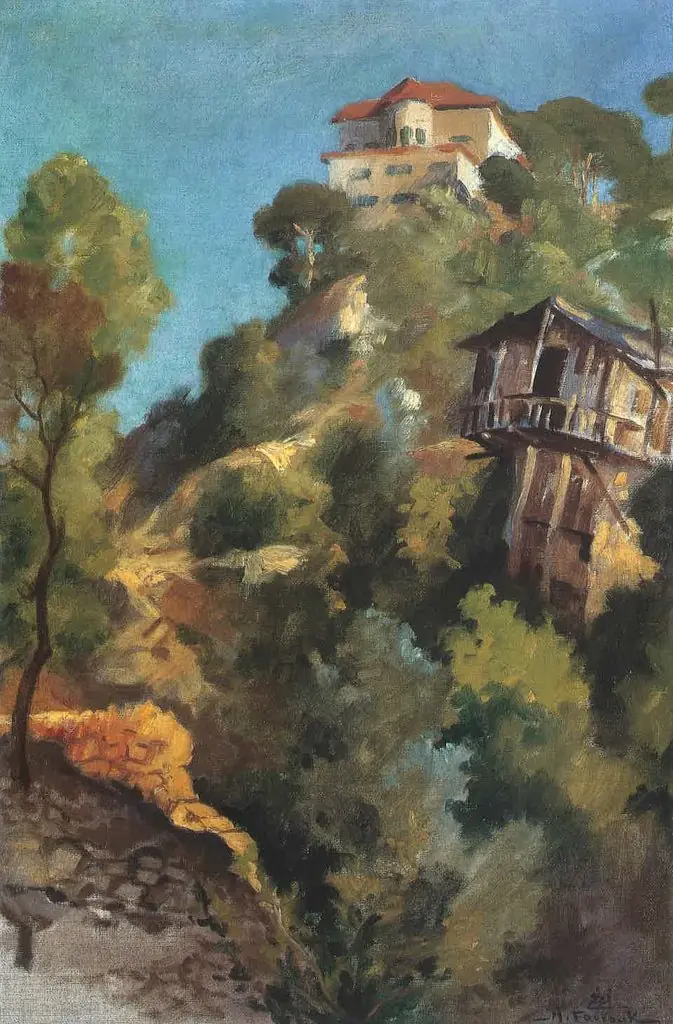
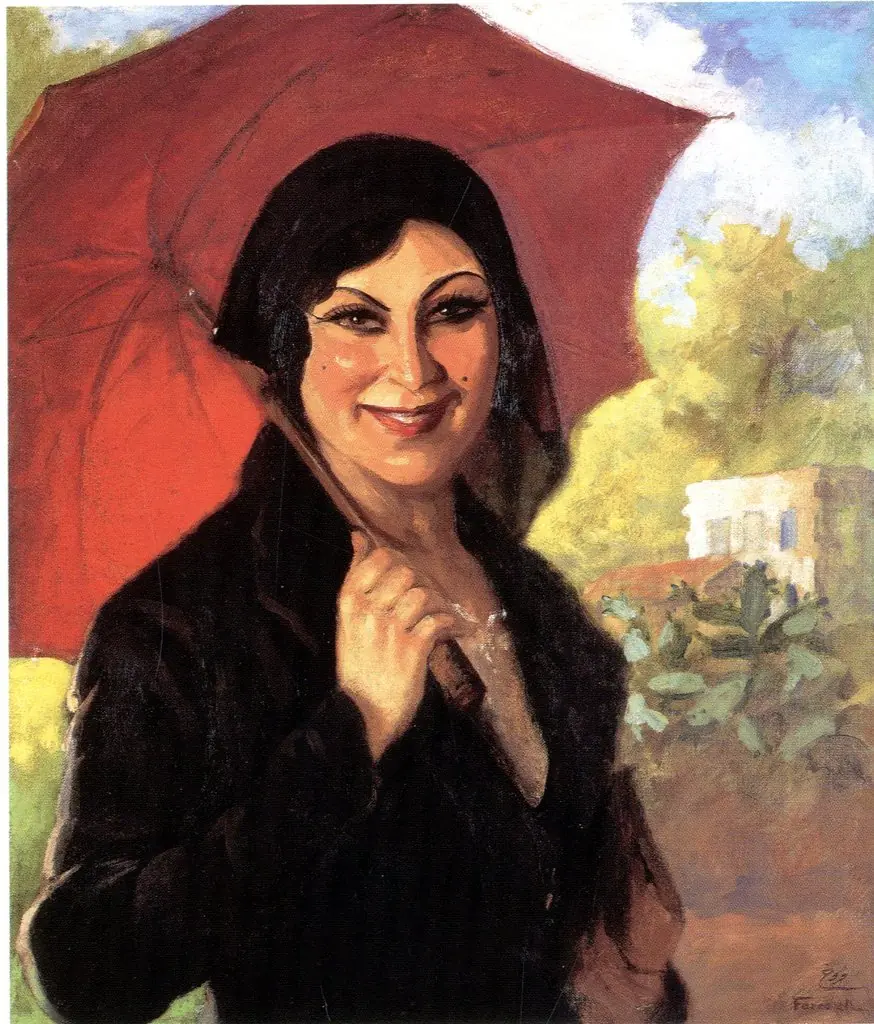
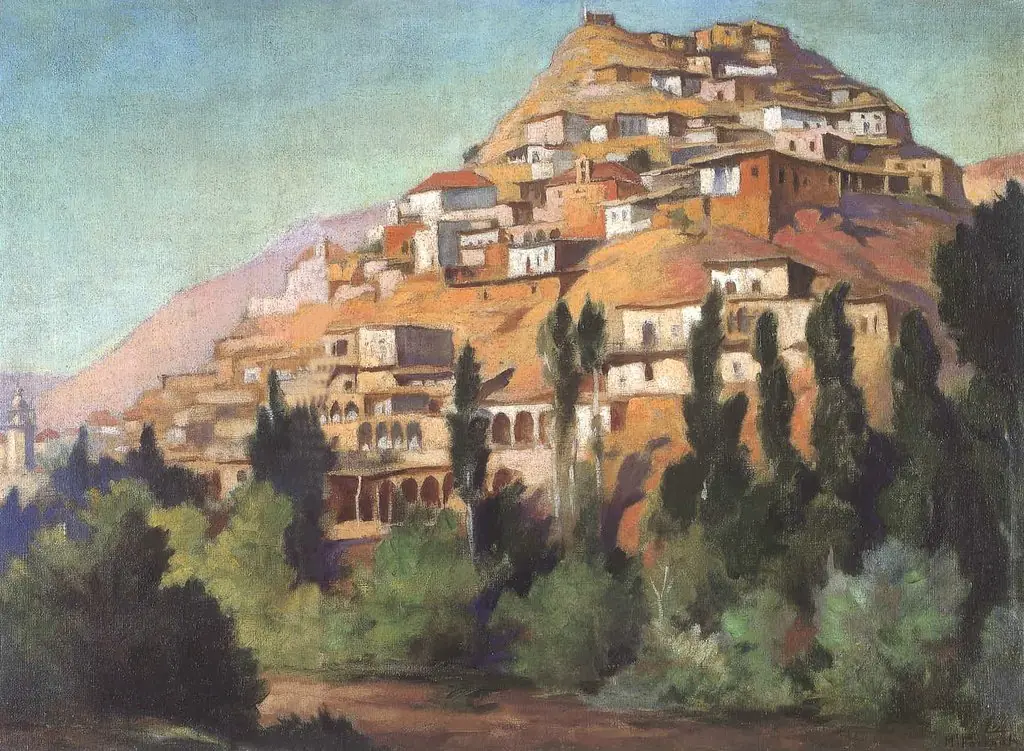
Moustafa Farroukh (Arabic: مصطفى فروخ; 1901 – 1957) was one of Lebanon's most prominent painters of the 20th century.

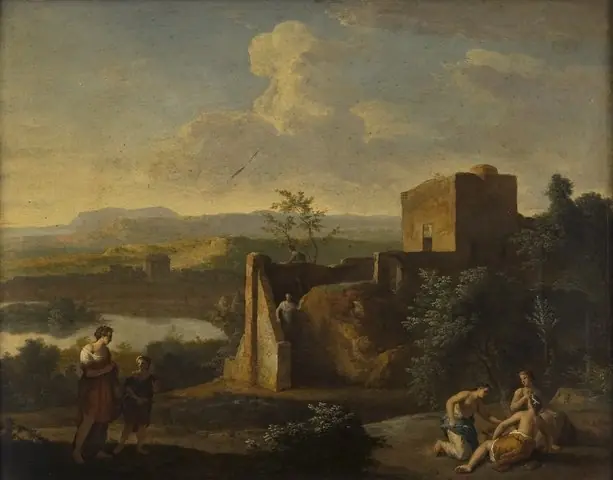 Idyllic Landscape with Watch-tower
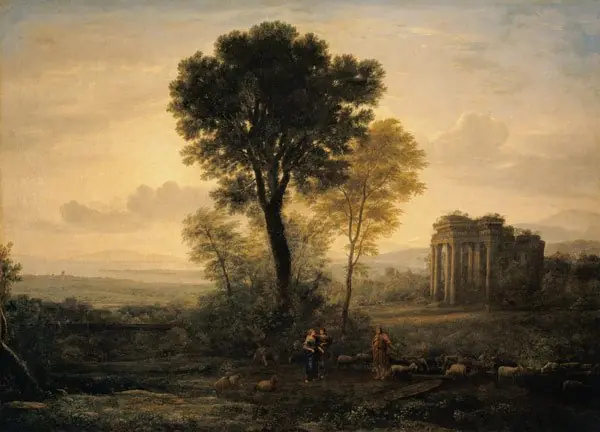 Landscape with Jacob, Rachel and Leah at the Well (Morning)
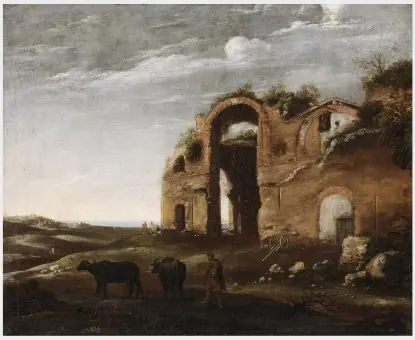 Landscape with the Ruins of the Baths of Diocletian, Rome
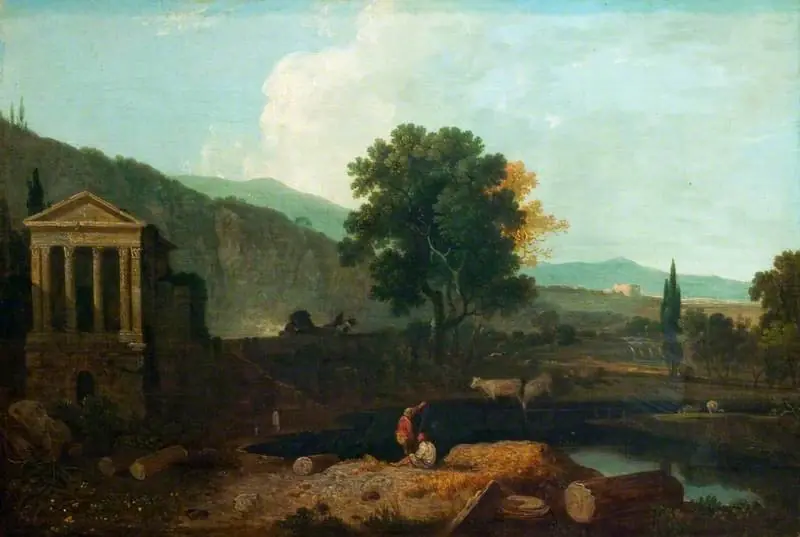 Landscape with the Temple of Clitumnus, near Spoleto
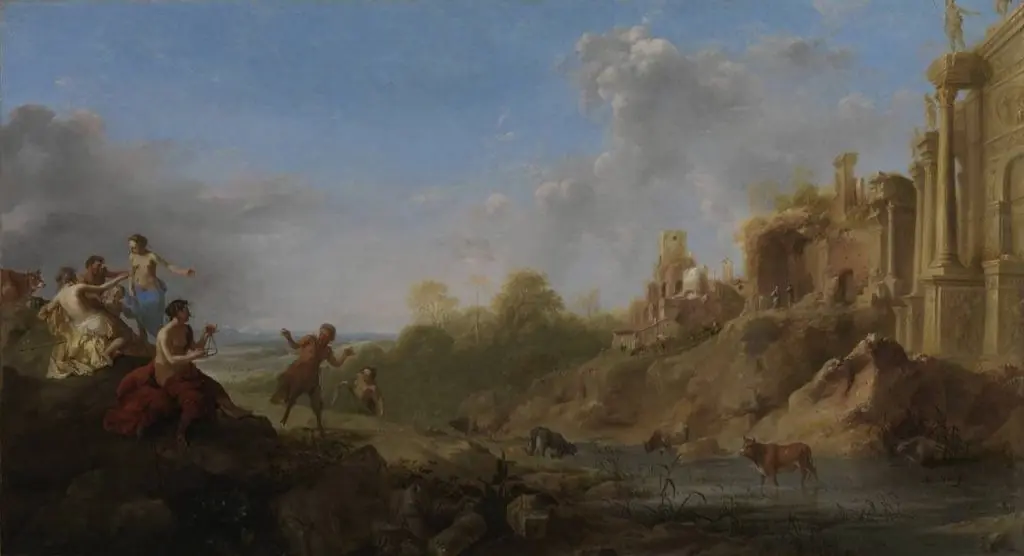 Ruinenlandschaft mit tanzendem Faun
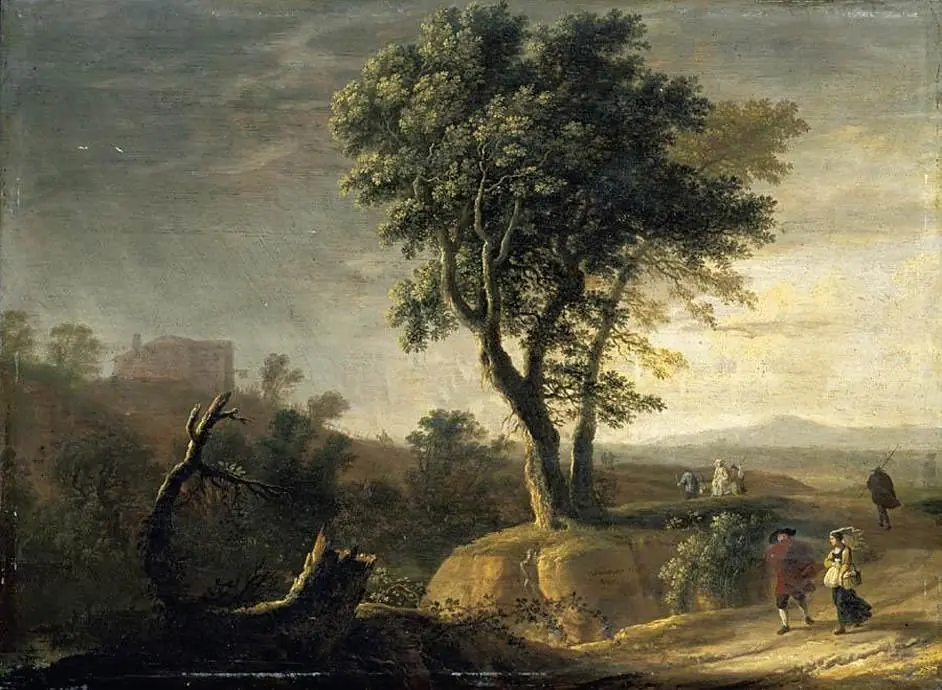 Thunderstorm
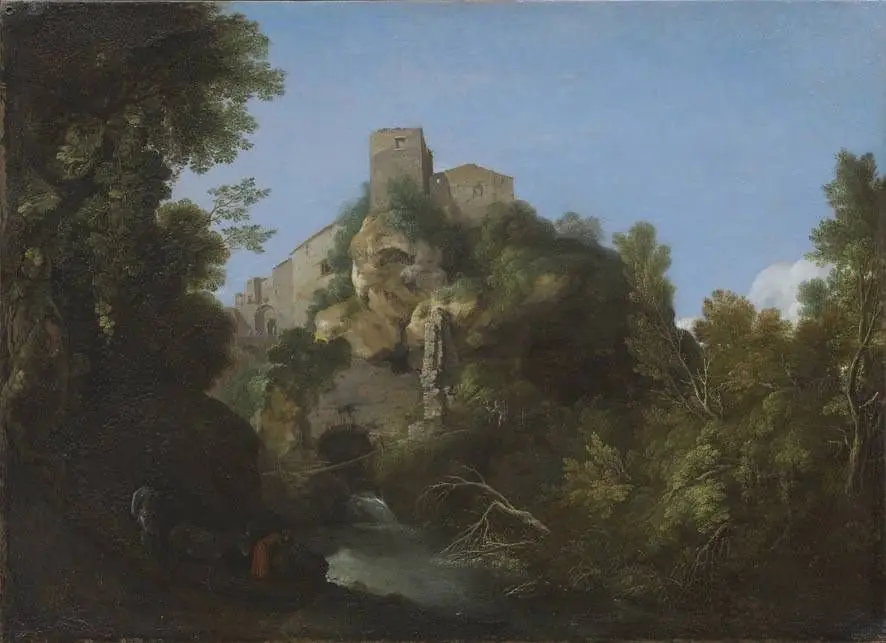 Italianate landschap
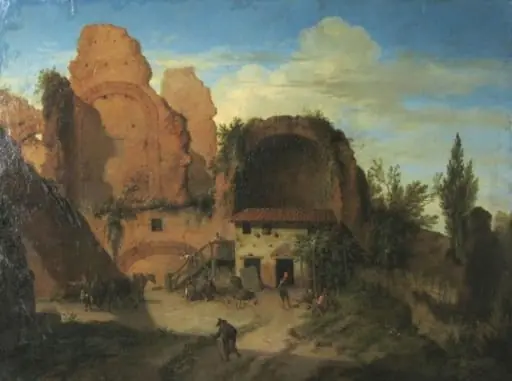 Ruină cu cârciumă țărănească
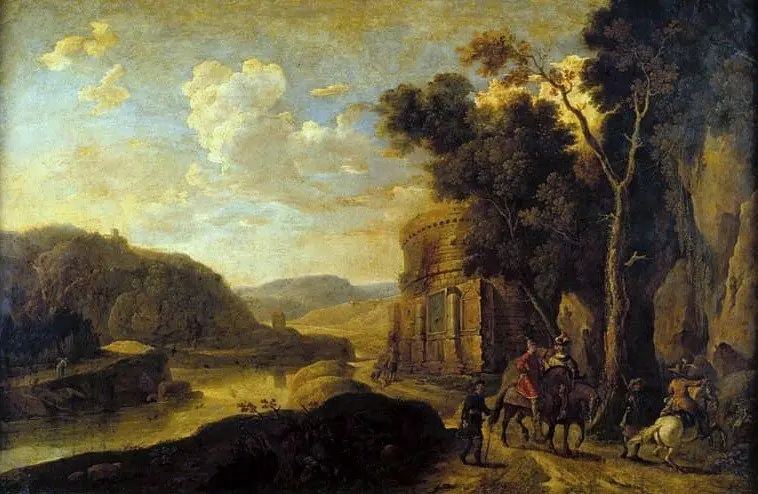 Return from the Hunt
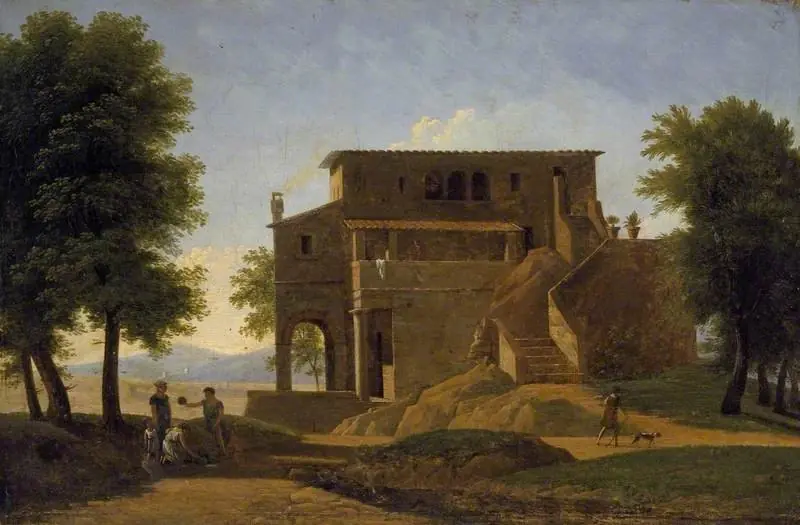 An Italian Villa
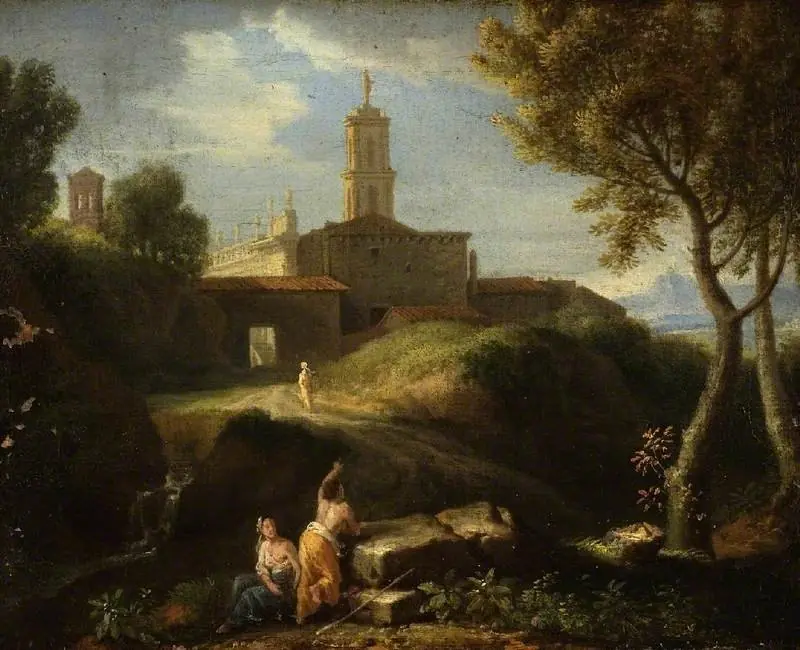 Roman buildings
 Landscape