Artwork
A Village House
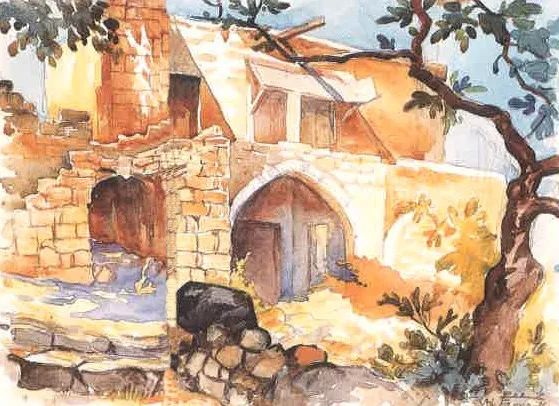
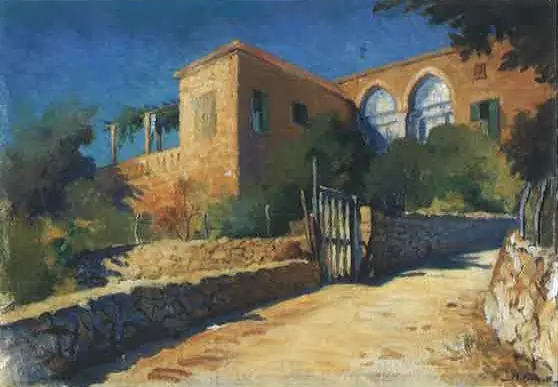
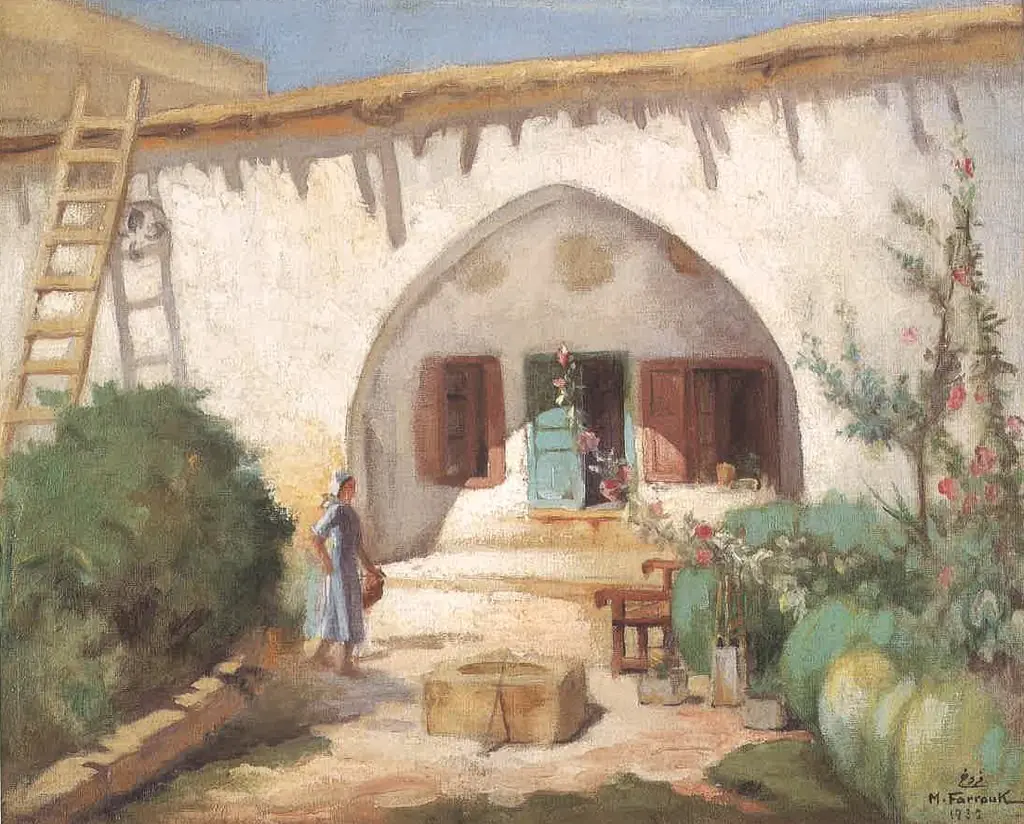
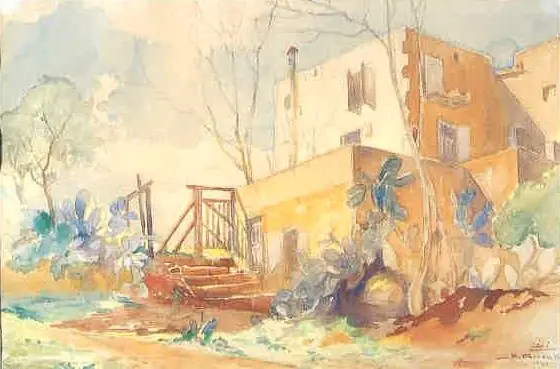
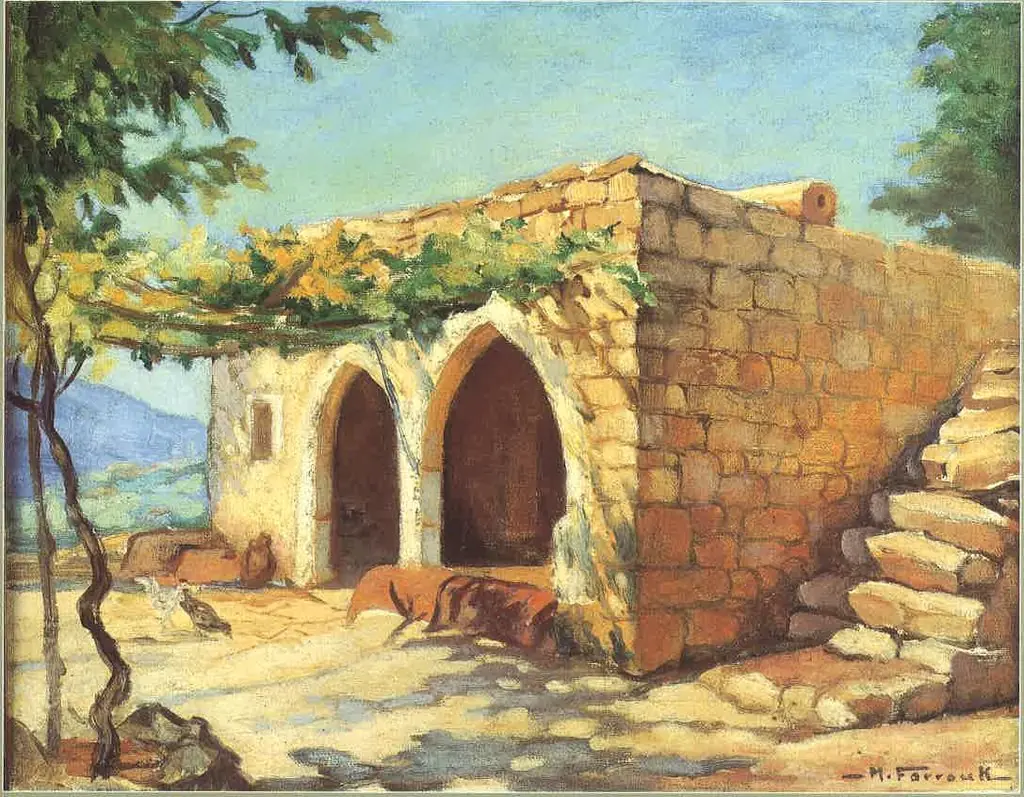
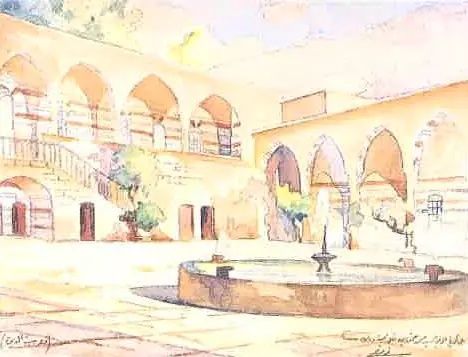
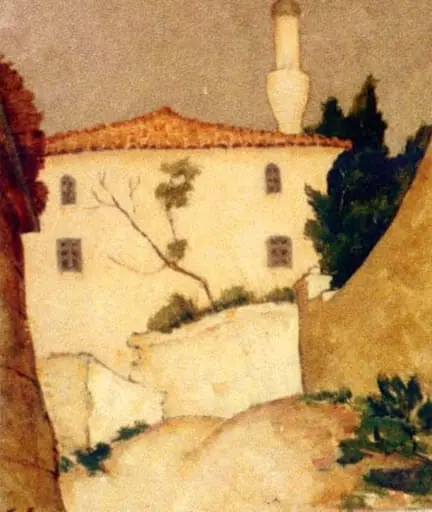
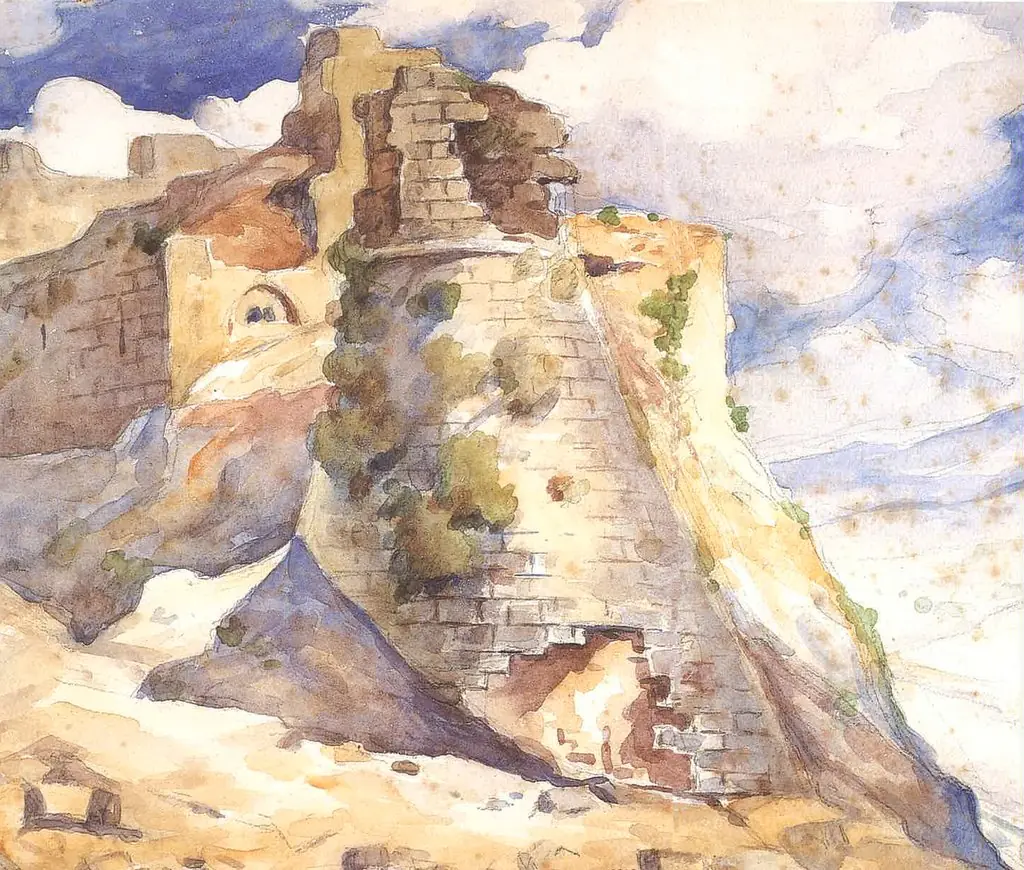
A Village House is a watercolor painting by Moustafa Farroukh. It dates from 1939 and is held in the collection of the Sursock Museum.
About this work
Overview
The work belongs to the Sursock Museum’s collection and reflects Farroukh’s broader engagement with Lebanese landscapes during the early 20th century.
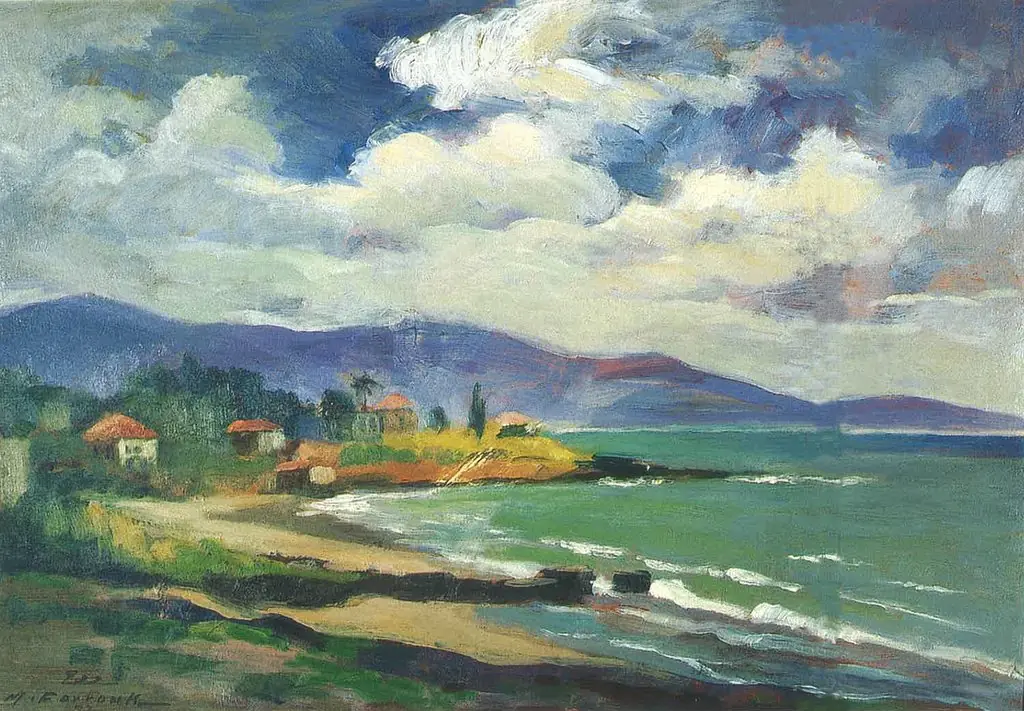
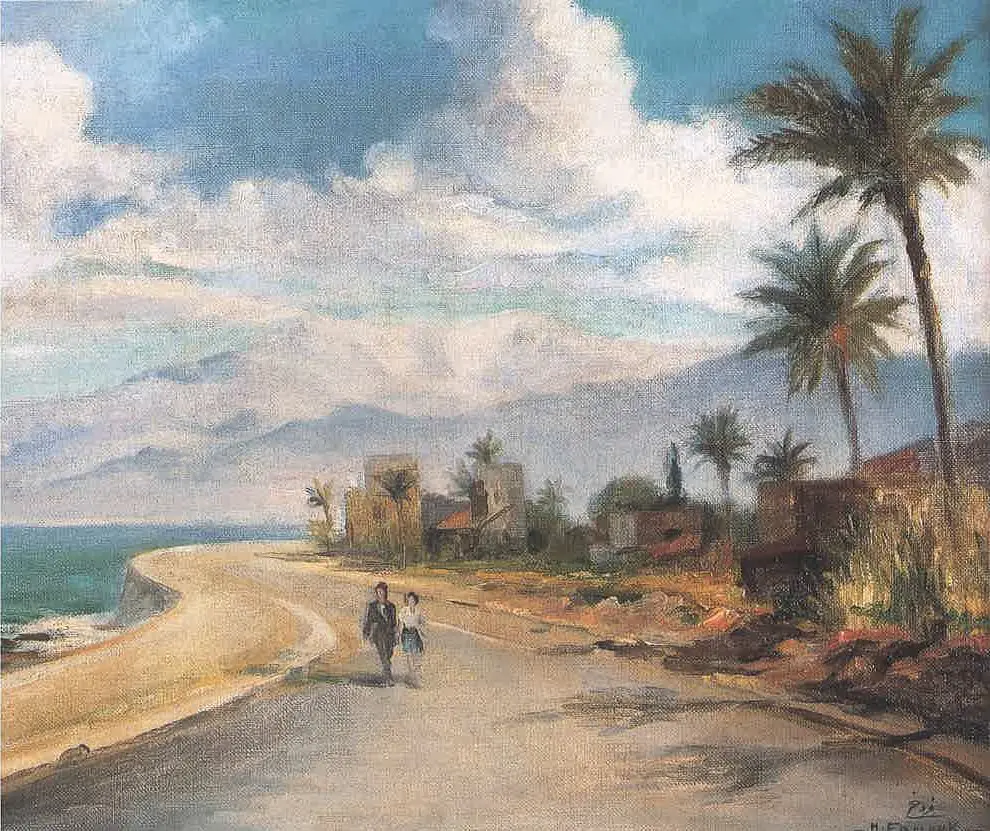
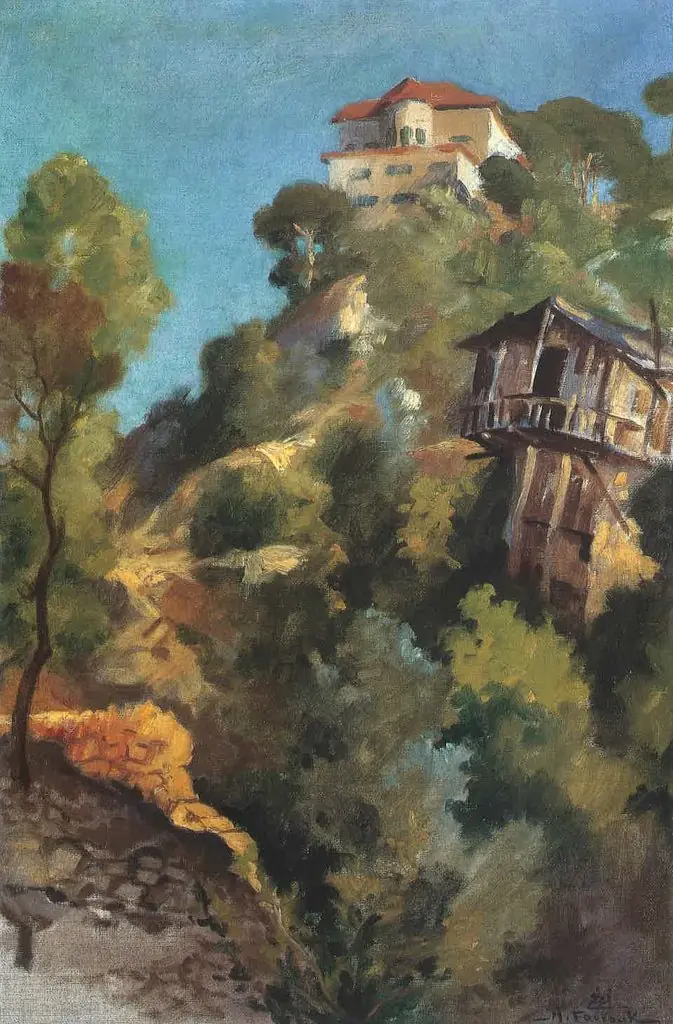
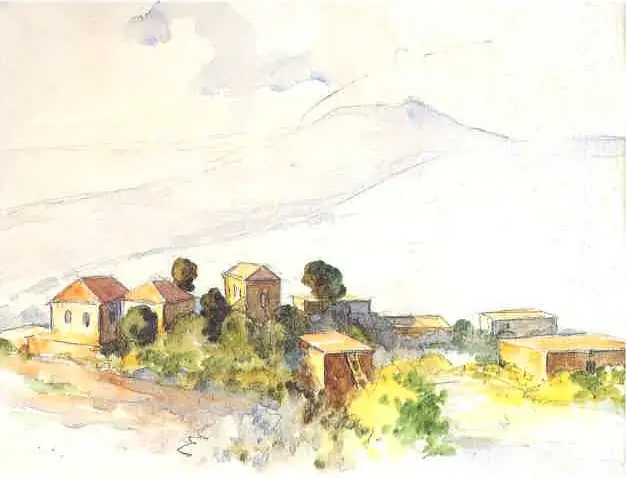
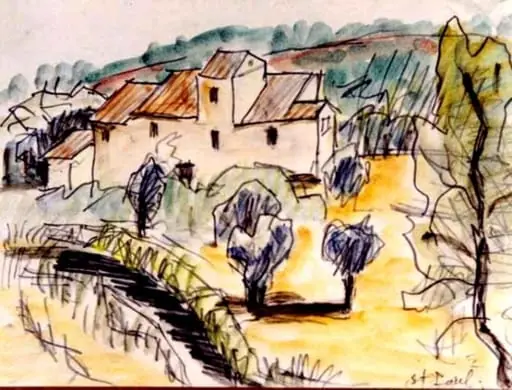
Created around 1939, *A Village House* is a watercolor painting by Lebanese artist Moustafa Farroukh. It captures a quiet rural scene with modest architecture and natural elements rendered in delicate washes. The work belongs to the Sursock Museum’s collection and reflects Farroukh’s broader engagement with Lebanese landscapes during the early 20th century. His use of watercolor emphasizes lightness and restraint, distinguishing his approach from more saturated oil techniques of the period.
Subject & Meaning
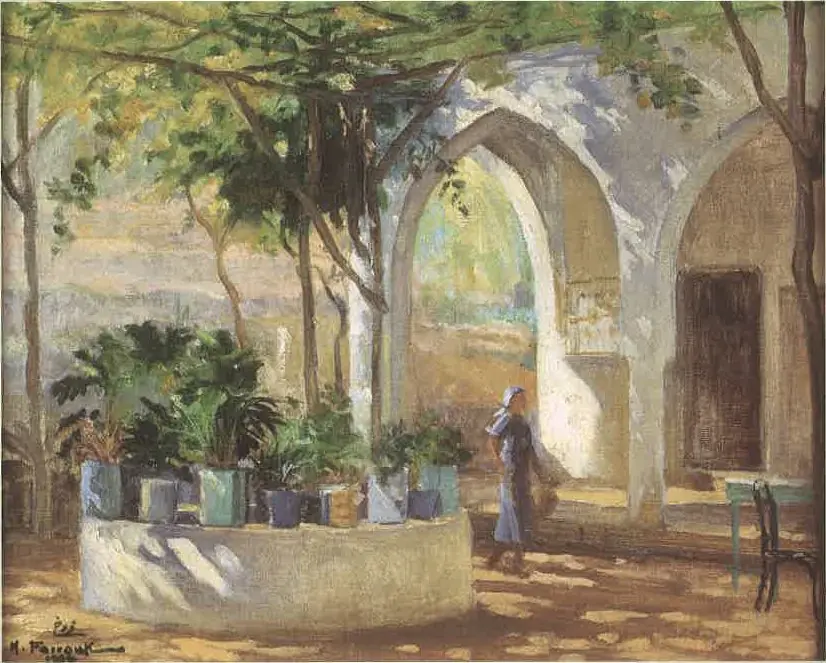
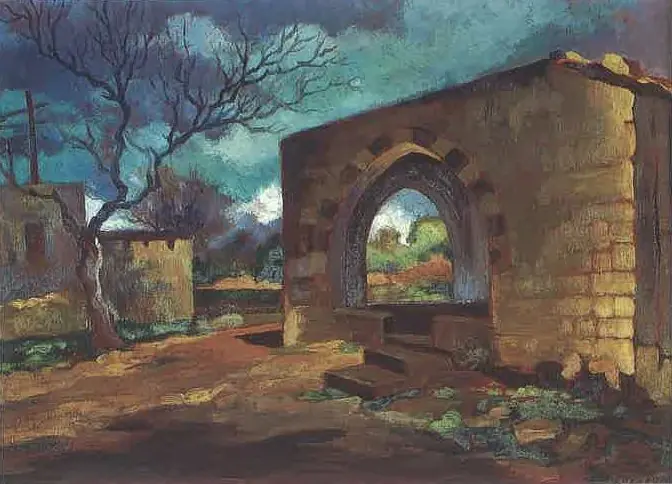
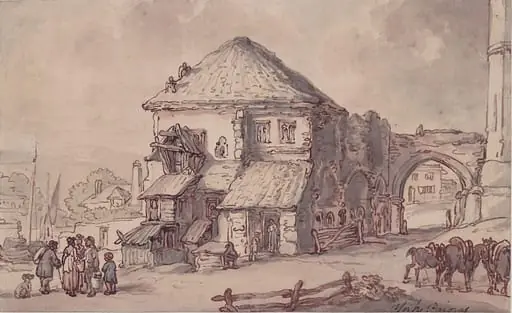
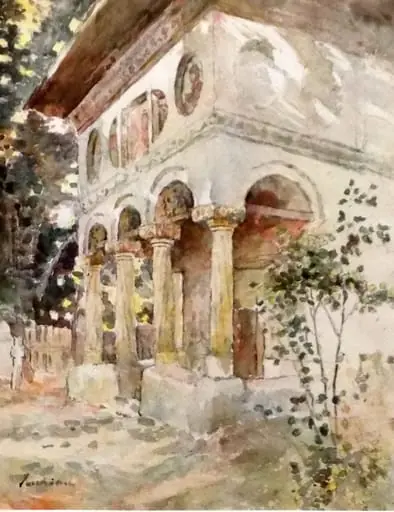
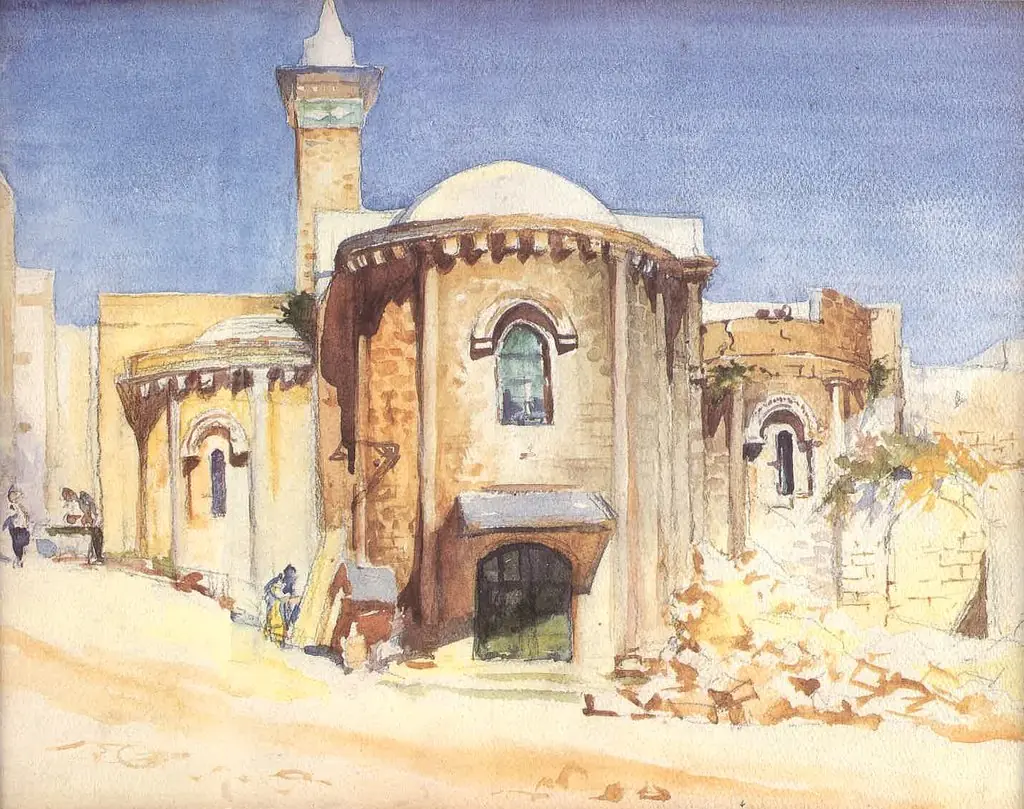
The painting presents a simple domestic setting: a stone house with a pointed roof, an arched entrance, and a surrounding stone wall with an opening. A tree stands beside the structure, anchoring the composition in nature. These elements suggest a quiet, enduring rural life, free from urban disruption. The absence of figures invites contemplation rather than narrative, focusing attention on the harmony between built and natural forms.
Technique & Style
Farroukh employed watercolor to achieve a soft, translucent effect, allowing underlying paper texture to subtly influence the surface. Earth tones—browns, beiges, and muted blues—dominate, reinforcing the scene’s grounded character. The brushwork is precise yet fluid, capturing the grain of stone and the texture of foliage without heavy detail. This restrained technique conveys atmosphere over drama, aligning with a lyrical realism common in regional modernist painting.
History & Provenance
The painting entered the Sursock Museum’s collection in the decades following its creation, where it remains part of a significant archive of Lebanese modern art. Farroukh, a prolific artist with over two thousand works, was active in Beirut’s cultural circles and contributed to the development of a national artistic identity. His works, including this watercolor, were often acquired by institutions seeking to document Lebanon’s visual heritage during the Mandate and early independence periods.
Context
In the late 1930s, Lebanon was under French Mandate rule, and artists like Farroukh sought to define a local aesthetic distinct from European models. Rural scenes became a means of expressing cultural continuity amid political change. *A Village House* reflects this trend, portraying everyday architecture and landscape not as exoticized motifs but as familiar, lived-in environments. Farroukh’s focus on vernacular forms aligned with broader regional movements in art and literature.
Legacy
Farroukh’s watercolors, including this work, helped establish a visual vocabulary for Lebanese modernism rooted in local observation. His emphasis on quiet, unidealized landscapes influenced later generations of artists who turned to domestic and rural subjects. Though less widely exhibited than his oil paintings, his watercolors are valued for their sensitivity and technical discipline, contributing to a nuanced understanding of Lebanon’s artistic evolution in the 20th century.
Artist & collection
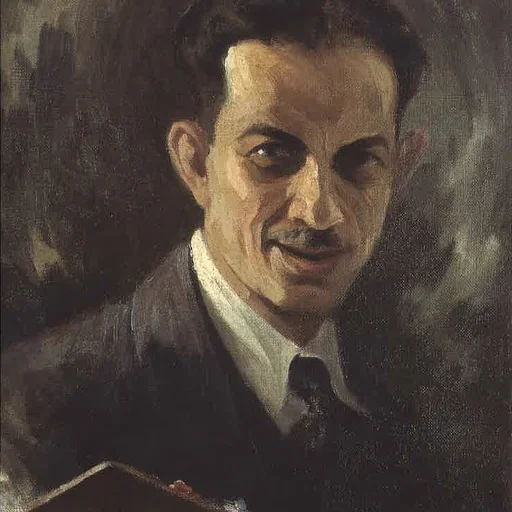
Artist
Moustafa Farroukh (Arabic: مصطفى فروخ; 1901 – 1957) was one of Lebanon's most prominent painters of the 20th century.