Artwork
Irzal at Dhour El Choueir
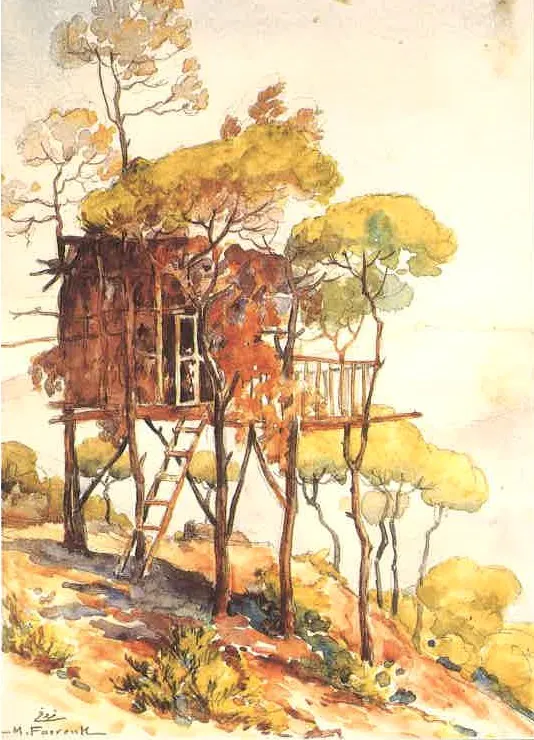
Irzal at Dhour El Choueir is a watercolor painting by Moustafa Farroukh. It dates from 1939 and is held in the collection of the Sursock Museum.
About this work
Overview
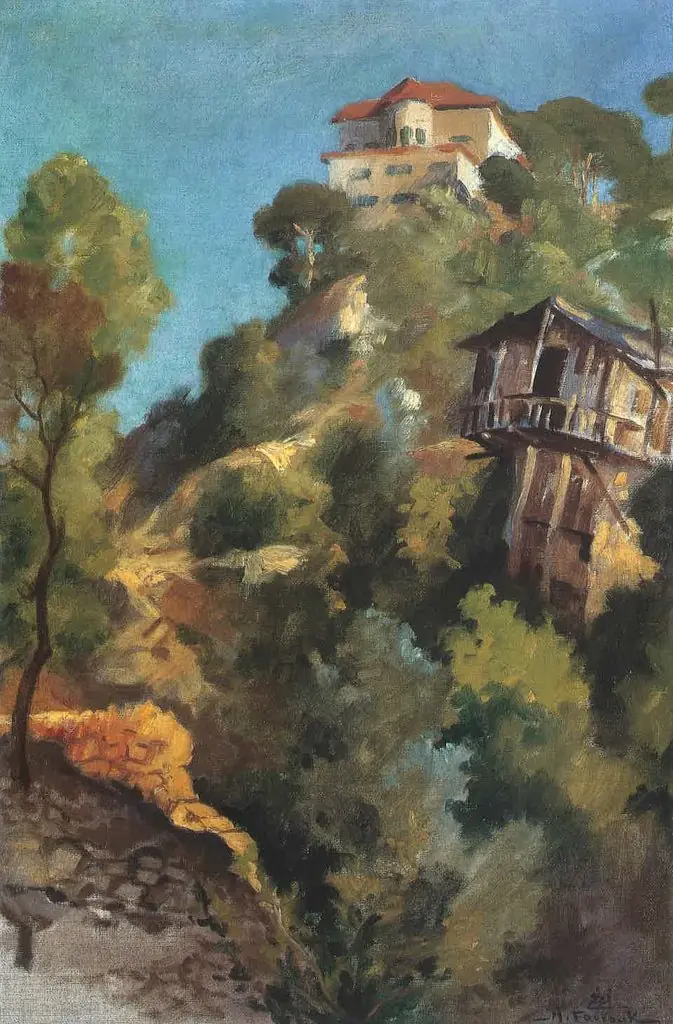
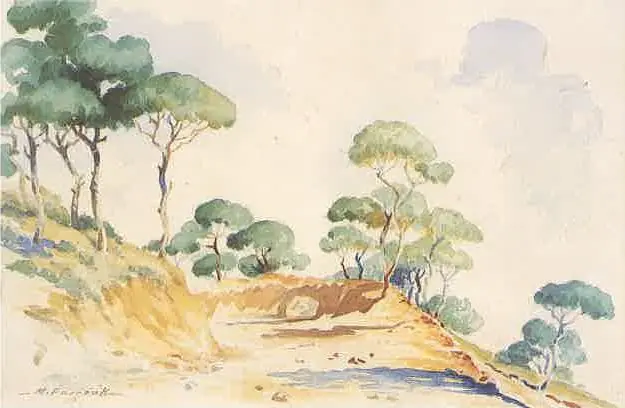
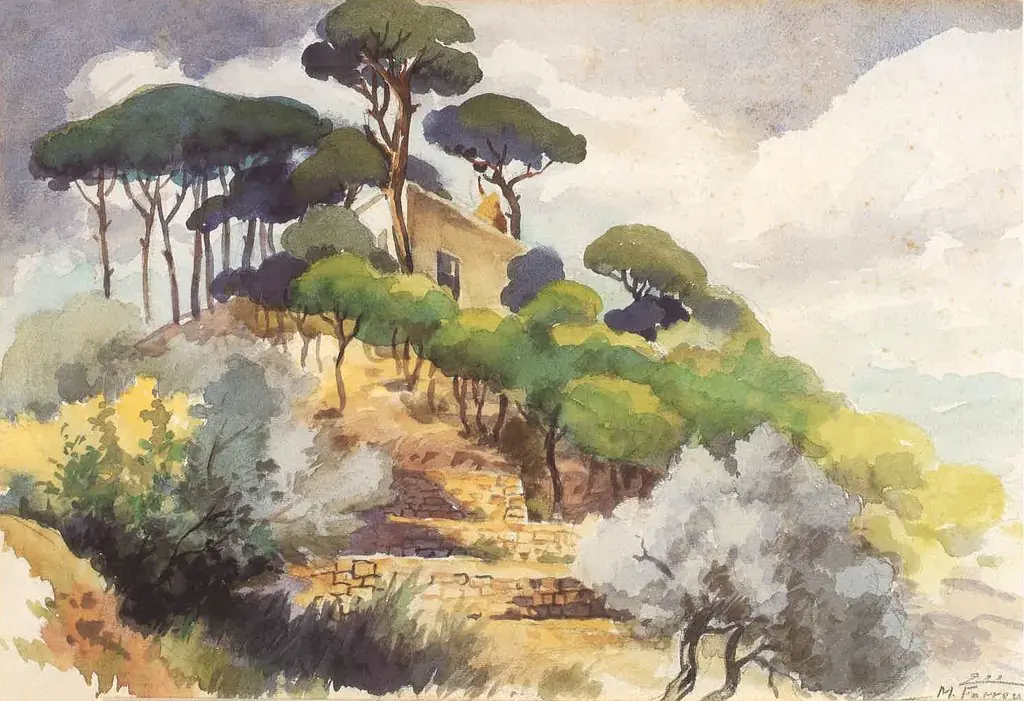
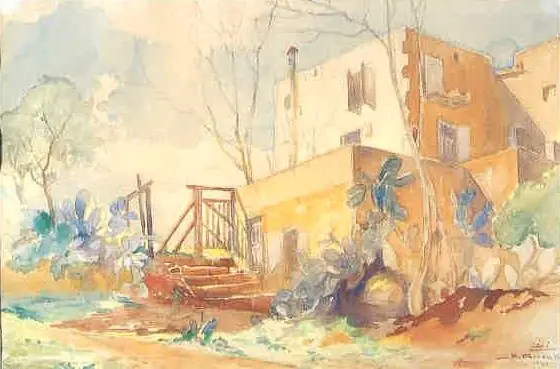
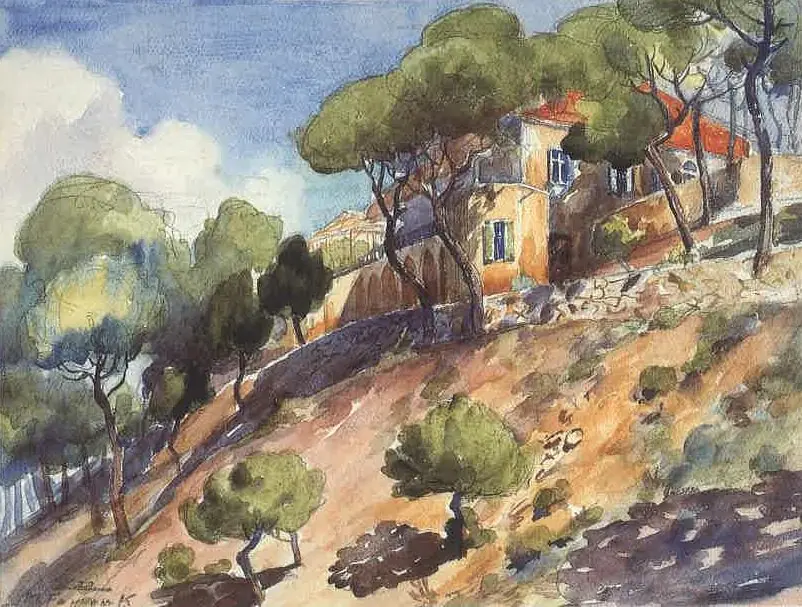
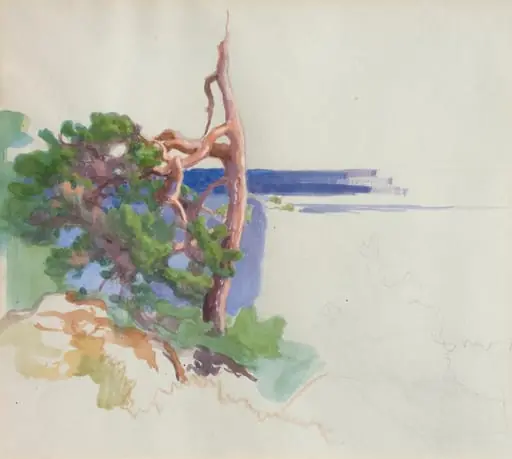
It portrays a wooden structure nestled in the branches of a stone pine, accessible by a ladder, set against a gently rolling hillside and pale sky.
Painted around 1939 by Moustafa Farroukh, *Irzal at Dhour El Choueir* is a watercolor work capturing a quiet rural scene in Lebanon. It portrays a wooden structure nestled in the branches of a stone pine, accessible by a ladder, set against a gently rolling hillside and pale sky. Farroukh, a central figure in modern Lebanese art, used watercolor to convey subtlety and atmosphere, aligning with his broader focus on local landscapes and everyday natural elements.
Subject & Meaning
The painting centers on a tree house, a modest structure integrated into the landscape rather than dominating it. The ladder suggests human presence without figures, evoking solitude and quiet labor. The stone pine, a native species, anchors the composition, while the hillside and sky frame the scene in a way that emphasizes harmony between architecture and nature, reflecting a contemplative relationship with the Lebanese countryside.
Technique & Style
Farroukh employed watercolor with restrained brushwork, allowing the paper’s texture to contribute to the luminosity of the sky and foliage. Washes of pale blue and soft greens create atmospheric depth, while the wooden structure is rendered with delicate lines and muted tones. The medium’s transparency enhances the sense of lightness, avoiding heavy detail in favor of suggestive form and mood, characteristic of his lyrical approach to landscape.
History & Provenance
The painting has remained in the collection of the Sursock Museum in Beirut since its creation. Farroukh produced over two thousand works during his career, many of which documented Lebanese terrain and rural life. While *Irzal at Dhour El Choueir* is not among his most widely exhibited pieces, its presence in the museum’s holdings underscores its significance as part of his sustained engagement with the Lebanese environment.
Context
In the late 1930s, Lebanon was under French mandate, and artists like Farroukh sought to define a visual identity rooted in local terrain and vernacular life. His work contrasted with European academic traditions by focusing on unidealized, intimate scenes. *Irzal at Dhour El Choueir* reflects this shift, portraying a humble structure in a familiar setting, affirming the cultural value of the Lebanese landscape amid broader political and social change.
Legacy
Farroukh’s watercolors, including this piece, helped establish a precedent for modern Lebanese painting that prioritized personal observation over grand narrative. His emphasis on natural motifs and quiet domesticity influenced subsequent generations of artists seeking to ground their work in local experience. Though less known internationally, his contributions remain embedded in Lebanon’s artistic heritage through institutional preservation and scholarly attention.
Artist & collection
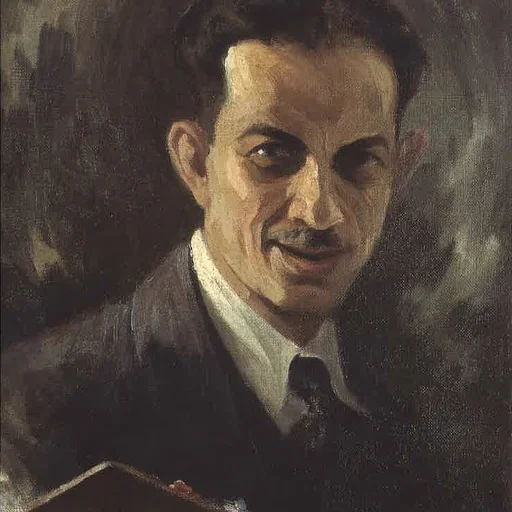
Artist
Moustafa Farroukh (Arabic: مصطفى فروخ; 1901 – 1957) was one of Lebanon's most prominent painters of the 20th century.