Artwork
Irzal at Dhour El Choueir
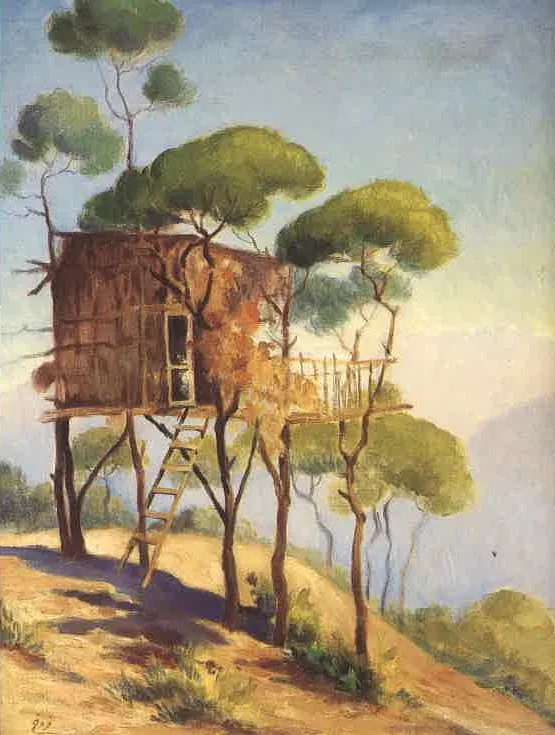
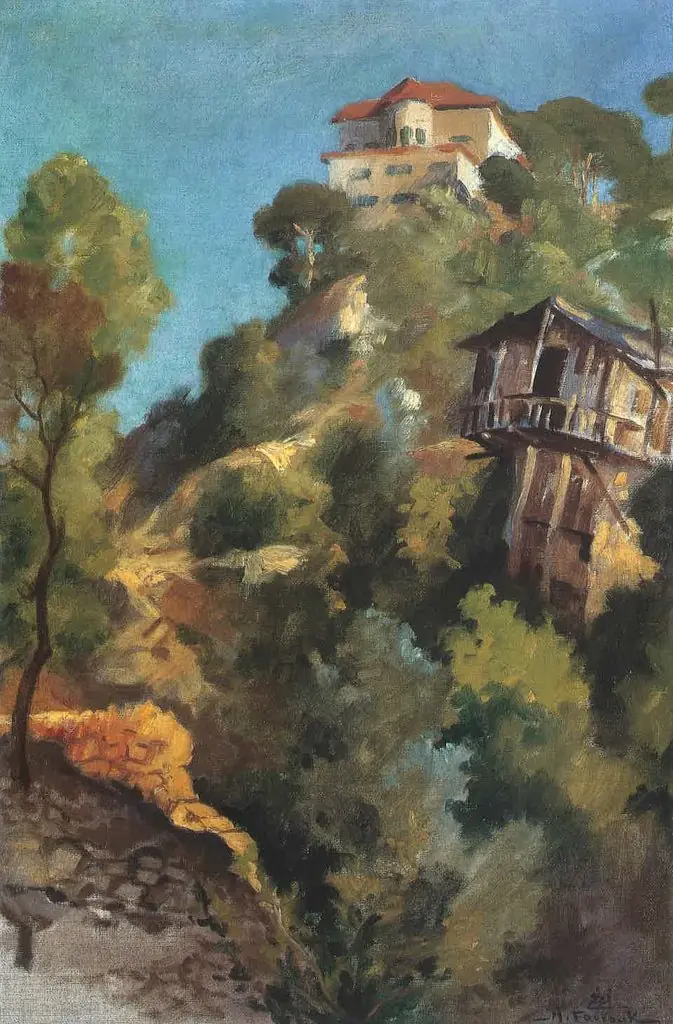
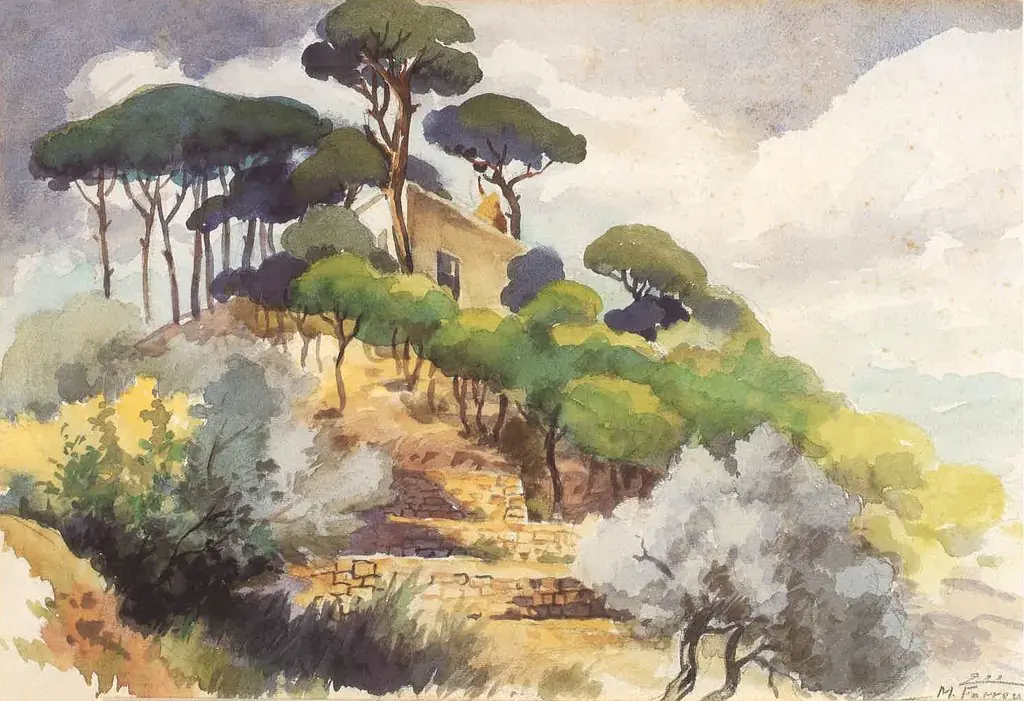
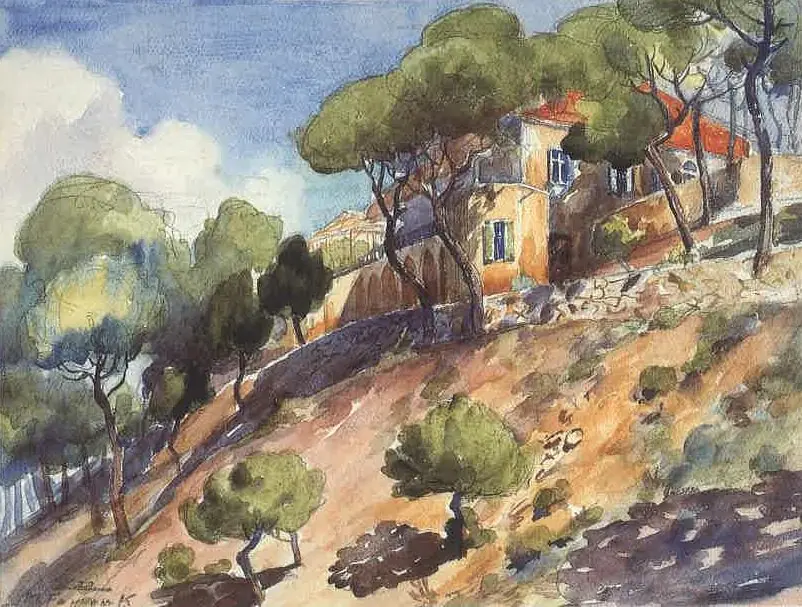
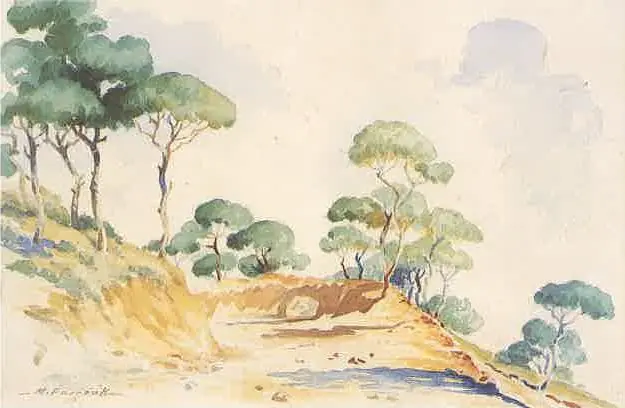
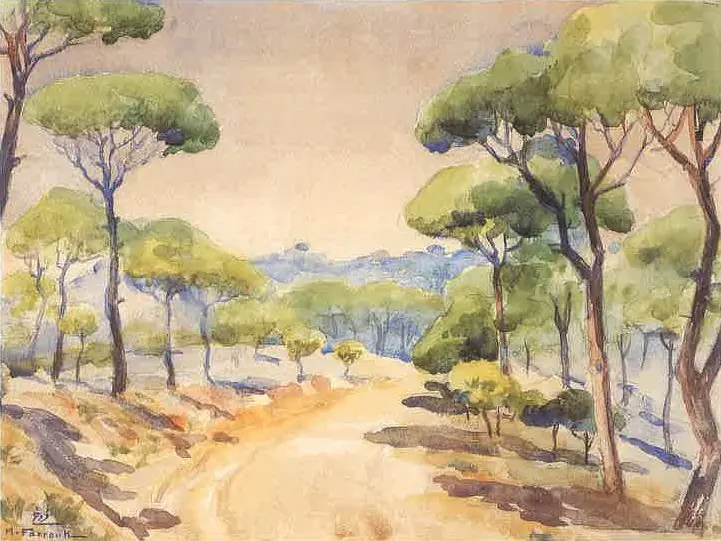
Irzal at Dhour El Choueir is an oil painting by the Orientalist artist Moustafa Farroukh. It dates from 1939 and is held in the collection of the Sursock Museum.
About this work
Overview
It is part of the Sursock Museum’s permanent collection, reflecting Farroukh’s role in shaping modern Lebanese art through his attention to local environments.
Painted around 1939 by Lebanese artist Moustafa Farroukh, *Irzal at Dhour El Choueir* is an oil-on-canvas work that captures a quiet rural scene in the mountains near Beirut. Though often associated with Orientalist themes, the painting avoids exoticism, focusing instead on a modest, intimate landscape. It is part of the Sursock Museum’s permanent collection, reflecting Farroukh’s role in shaping modern Lebanese art through his attention to local environments.
Subject & Meaning
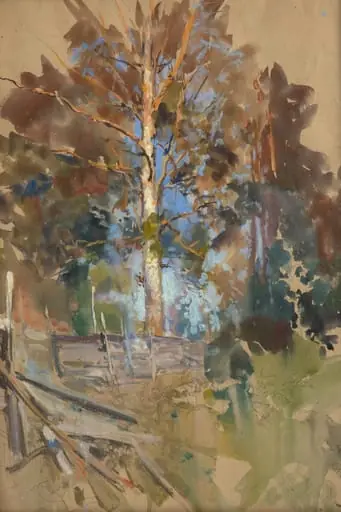
The painting centers on a wooden structure nestled among the branches of a stone pine, accessible by a simple ladder. Surrounding trees and a soft, open sky frame the scene without narrative intrusion. The structure suggests a quiet refuge, perhaps a watchtower or seasonal shelter, evoking solitude rather than symbolism. The absence of human figures reinforces a sense of stillness, inviting contemplation of place over story.
Technique & Style
Farroukh employed subtle tonal gradations to model the tree trunks and branches, using warm earth tones that contrast gently with the pale blue sky. Brushwork is restrained, favoring smooth transitions over texture or detail. Light falls evenly, avoiding dramatic chiaroscuro; instead, the atmosphere is rendered through muted contrasts and soft edges, creating a calm, unified composition rooted in observation rather than theatrical effect.
History & Provenance
Created during Farroukh’s mature period, the painting was acquired early by the Sursock Museum, which has maintained it in its collection since the mid-20th century. Its preservation reflects the museum’s commitment to documenting Lebanon’s artistic heritage. No significant exhibition or ownership history beyond the museum is documented, suggesting its quiet prominence within national collections rather than public fame.
Context
In late 1930s Lebanon, artists like Farroukh were shifting from imported European styles toward localized subjects. While Orientalist conventions lingered, this work diverges by portraying an unidealized, everyday landscape. Dhour El Choueir, a mountain village, was a retreat for Beirut’s elite, yet Farroukh depicts it without embellishment—offering a quiet counterpoint to romanticized depictions of the region common elsewhere.
Legacy
Farroukh’s *Irzal at Dhour El Choueir* contributes to a broader recognition of Lebanese modernism grounded in personal observation. Its understated tone and regional focus influenced later generations seeking authenticity over spectacle. Though not widely reproduced, it remains a touchstone in discussions of how Lebanese artists redefined landscape painting through intimacy and restraint.
Artist & collection
Artist
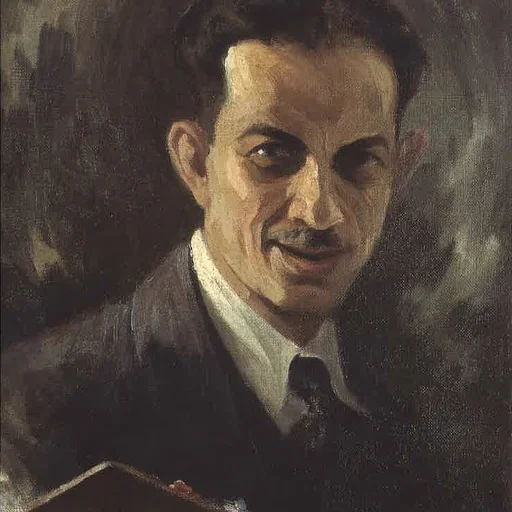
Moustafa Farroukh (Arabic: مصطفى فروخ; 1901 – 1957) was one of Lebanon's most prominent painters of the 20th century.