Artwork
Portrait of a Bedouin Fortune teller
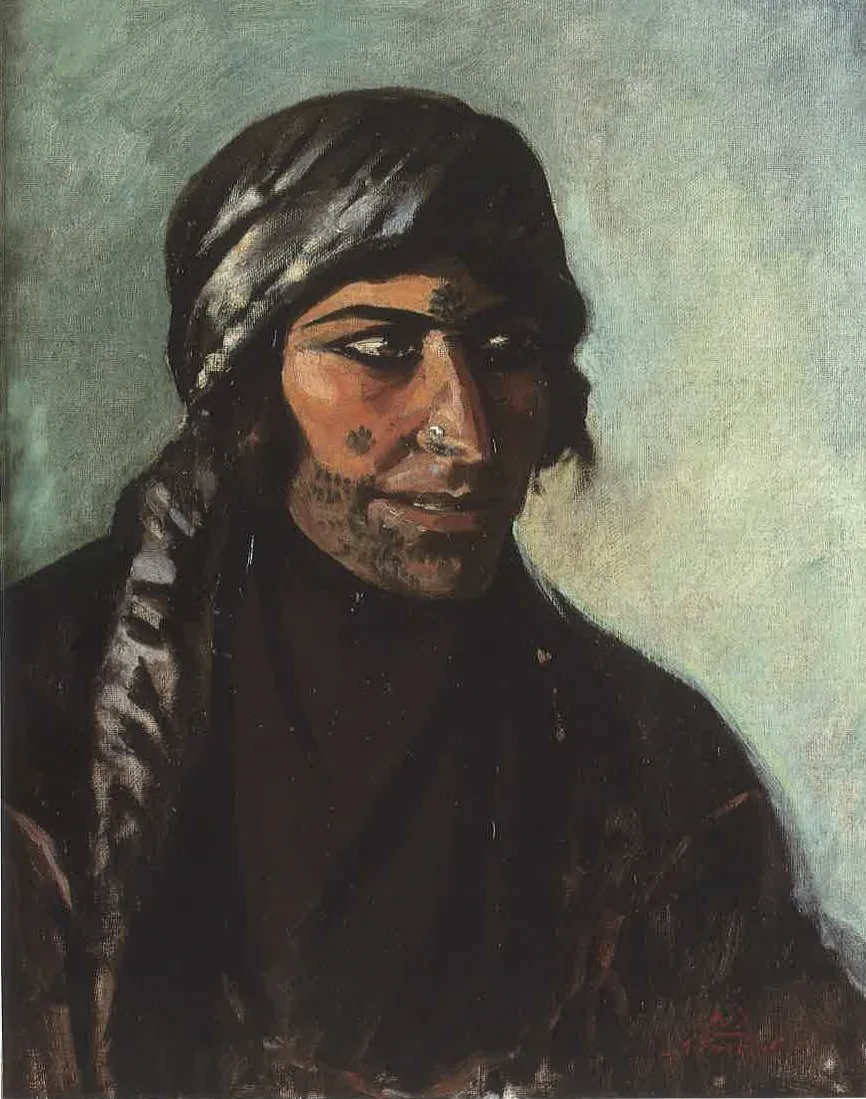
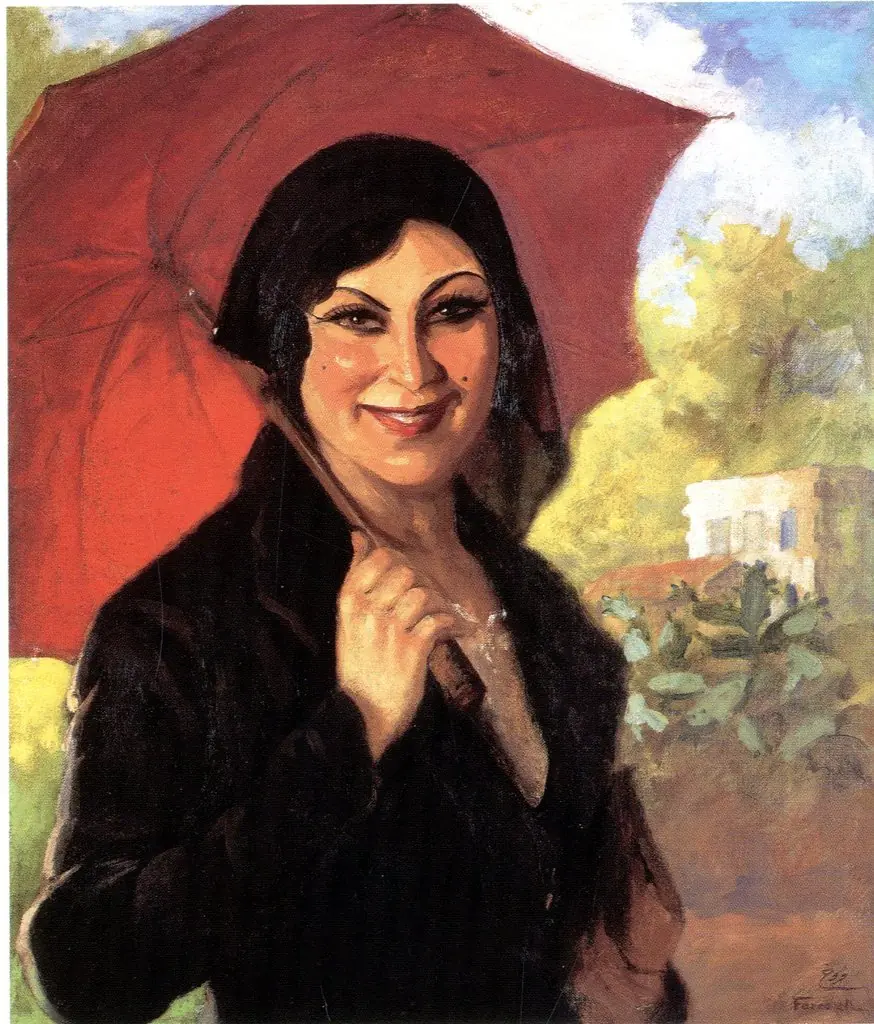
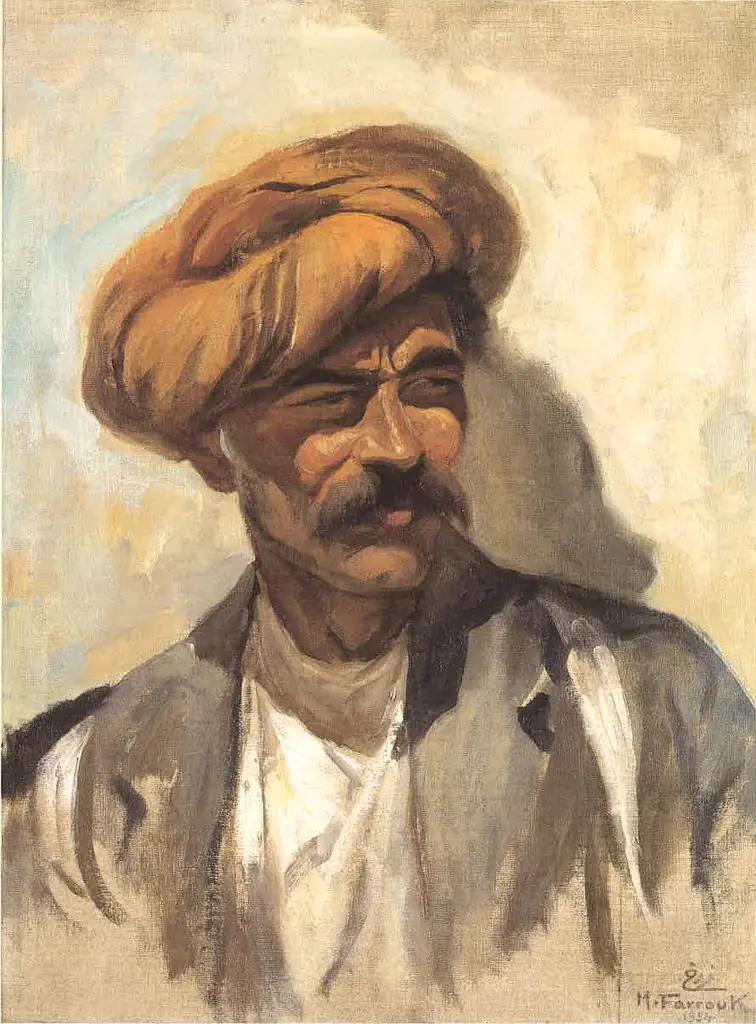
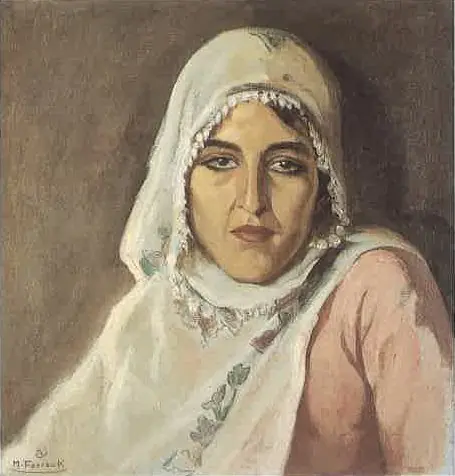
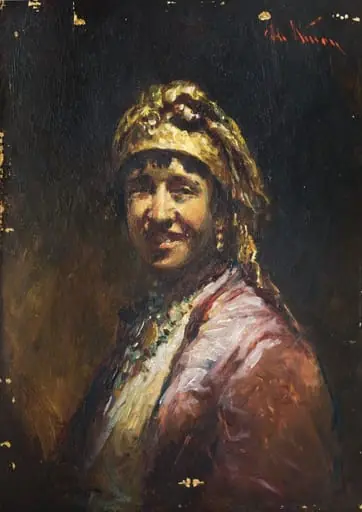
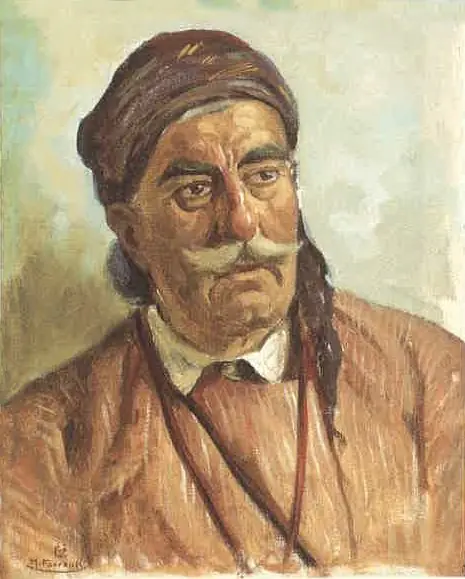
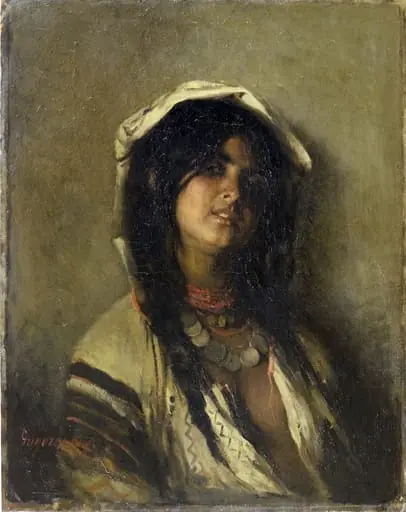
Portrait of a Bedouin Fortune teller is an oil painting by the Orientalist artist Moustafa Farroukh. It dates from 1939 and is held in the collection of the Sursock Museum.
About this work
Overview
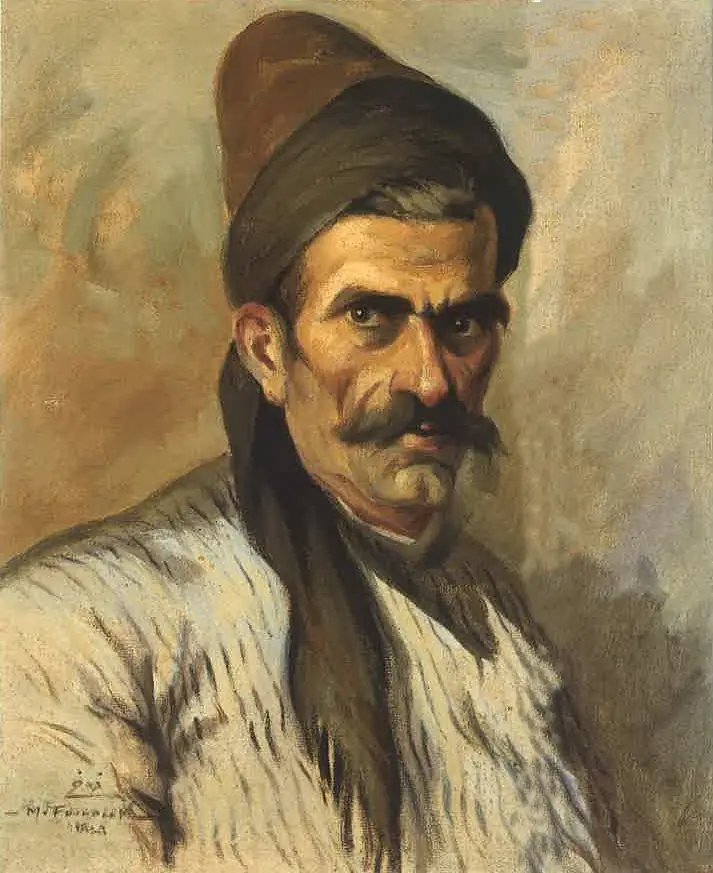
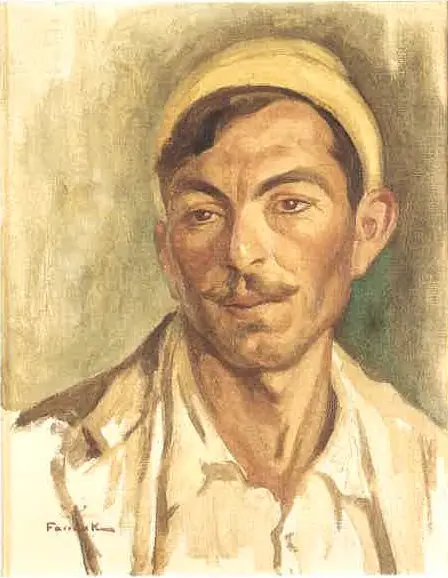
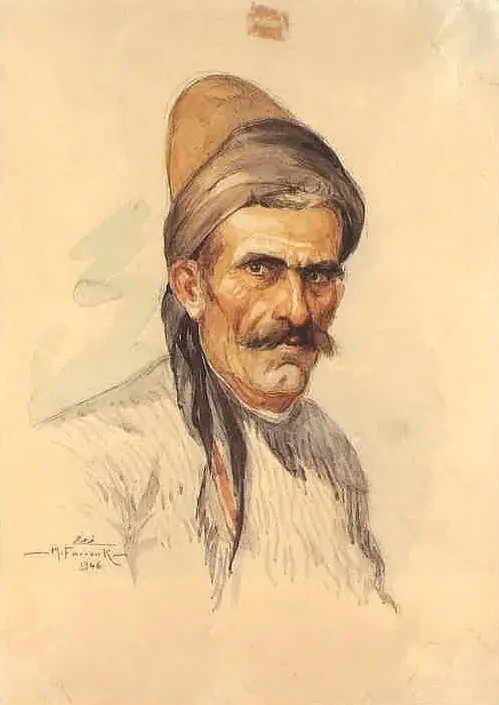
Created circa 1939, this oil painting by Lebanese artist Moustafa Farroukh portrays a Bedouin woman engaged in the role of a fortune teller. The work exemplifies Farroukh’s prolific output, part of a body of more than two thousand paintings produced throughout his career.
Subject & Meaning
The central figure is a woman dressed in a black thawb and a dark turban that conceals her hair, her face and neck marked with traditional tattoos. Her enigmatic expression and steady gaze suggest a depth of insight associated with her divinatory function, inviting contemplation of cultural practices surrounding fortune telling.
Technique & Style
Farroukh employs chiaroscuro to model the figure, using strong contrasts of light and shadow that give the face and hands a three‑dimensional presence. Impasto layers combined with glazing create a textured surface and subtle luminosity, while the muted, earthy background recedes, focusing attention on the subject.
History & Provenance
The painting entered the collection of the Sursock Museum in Beirut, where it remains on display. It reflects Farroukh’s involvement with the Orientalist trend of the early twentieth century, a movement that often depicted Middle Eastern subjects for both local and Western audiences.
Context
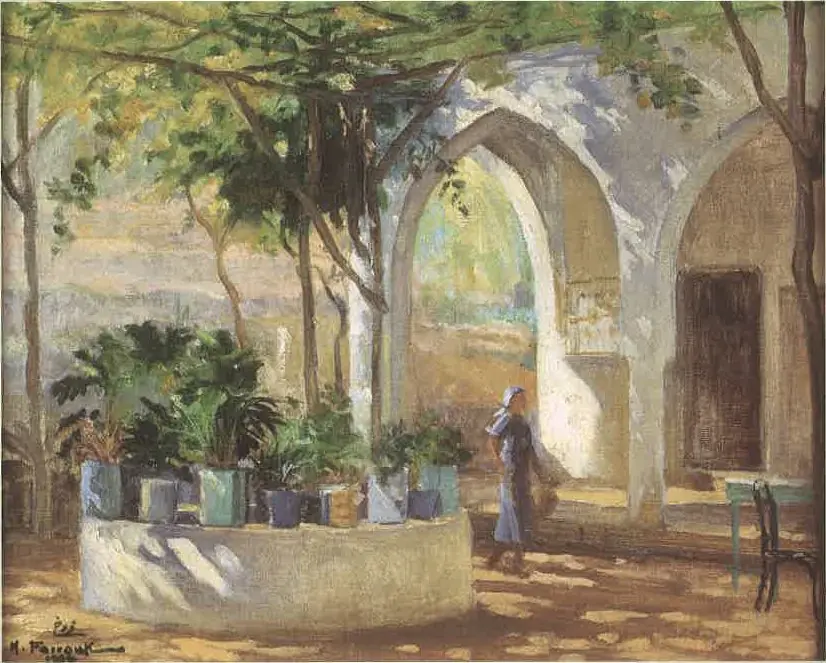
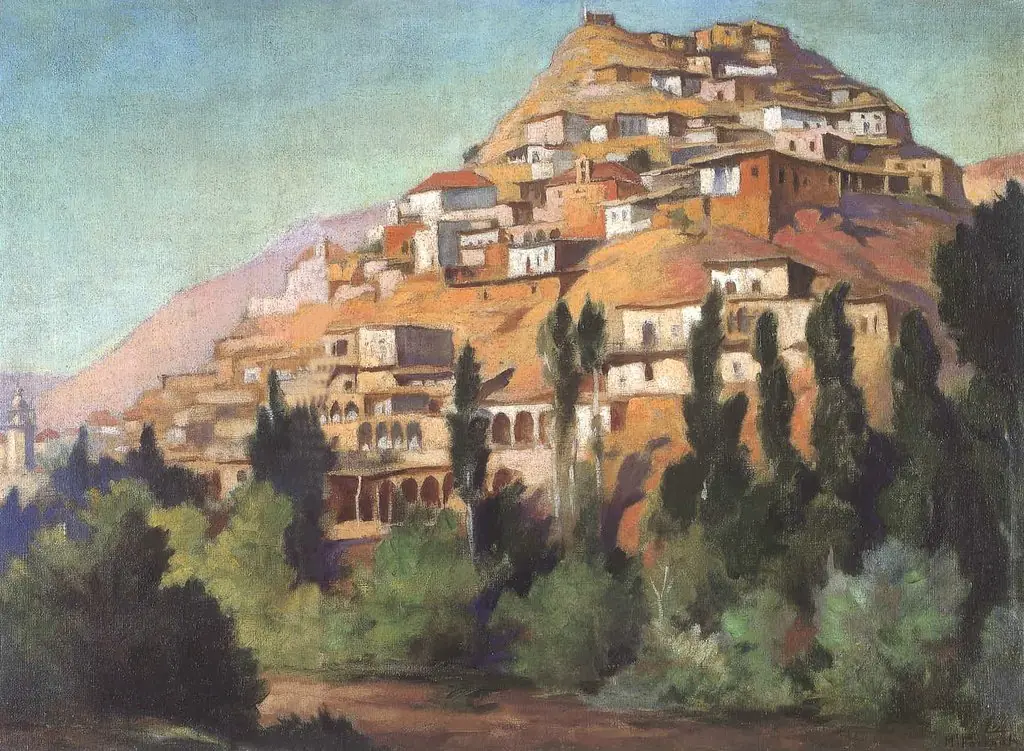
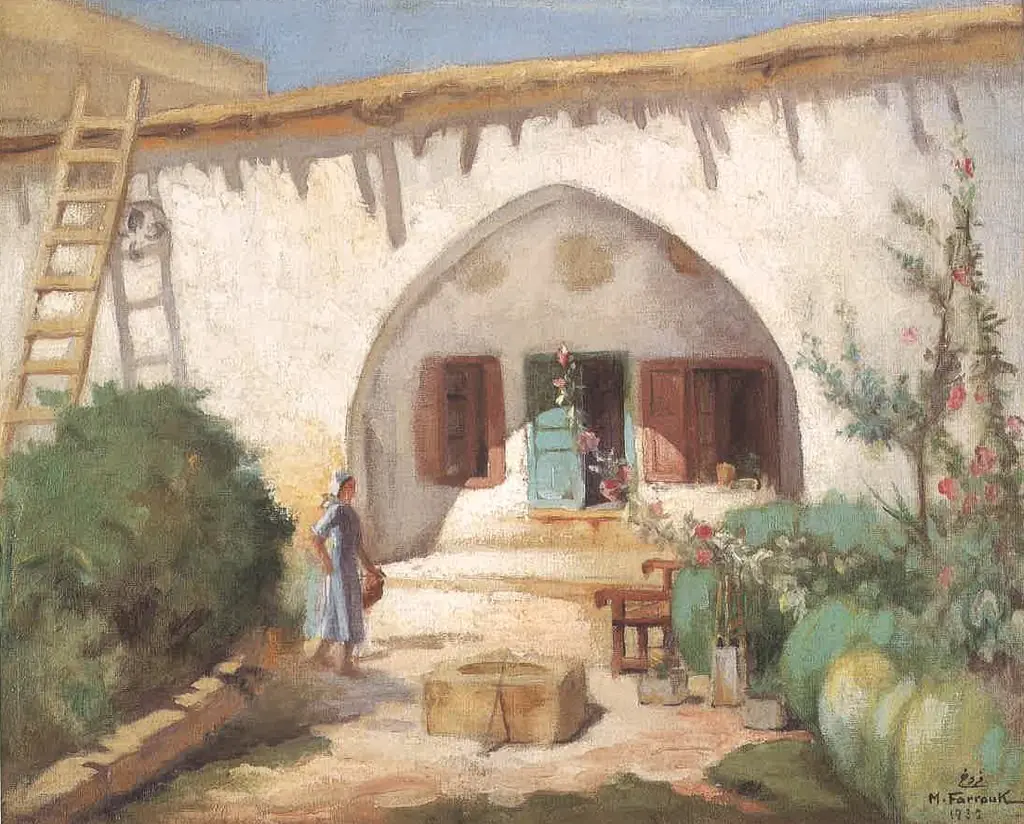
During the late 1930s, Farroukh was establishing himself as a leading figure in Lebanese modern art, balancing European techniques with regional themes. This work illustrates his interest in documenting traditional attire and customs, contributing to a visual record of Bedouin life amid rapid social change.
Artist & collection
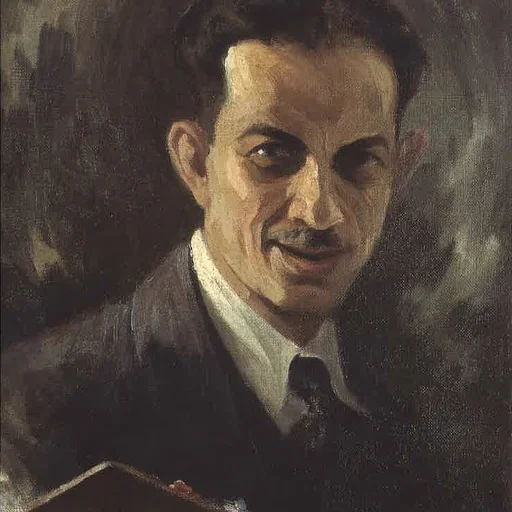
Artist
Moustafa Farroukh (Arabic: مصطفى فروخ; 1901 – 1957) was one of Lebanon's most prominent painters of the 20th century.