Artwork
Portrait of a Lebanese Villager
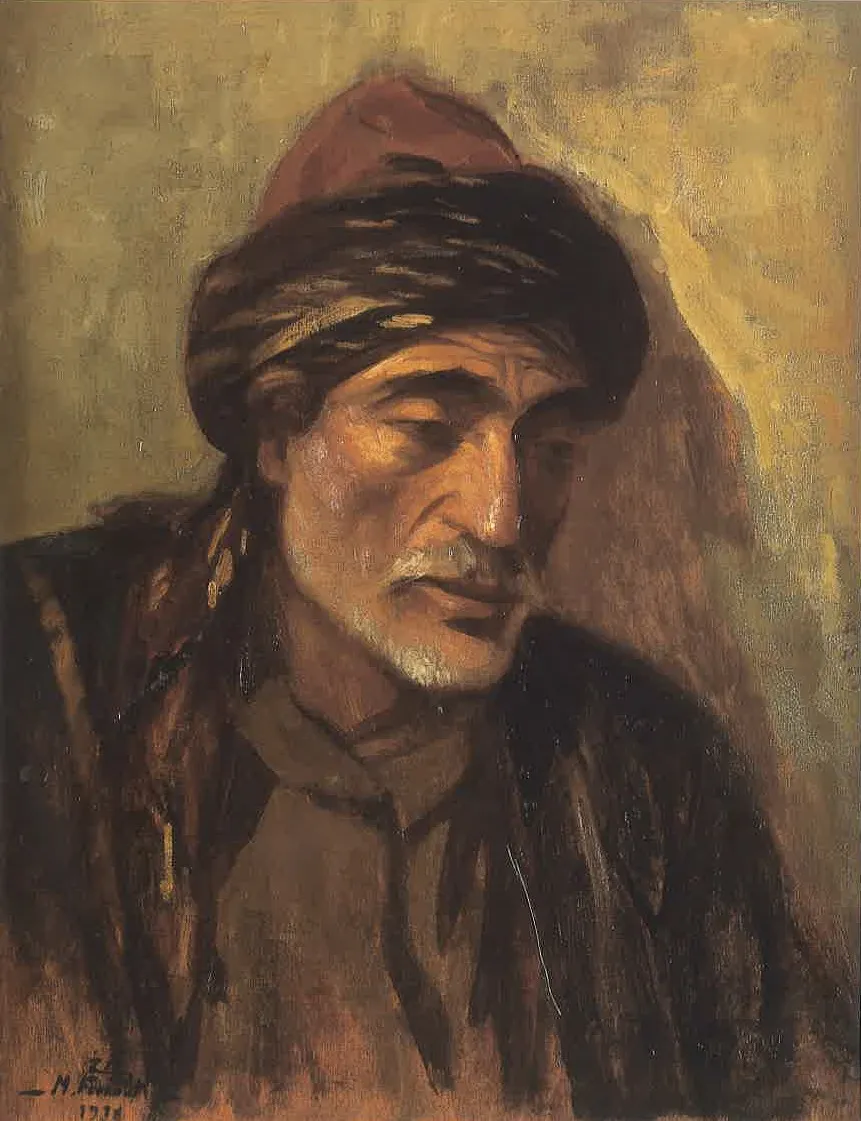
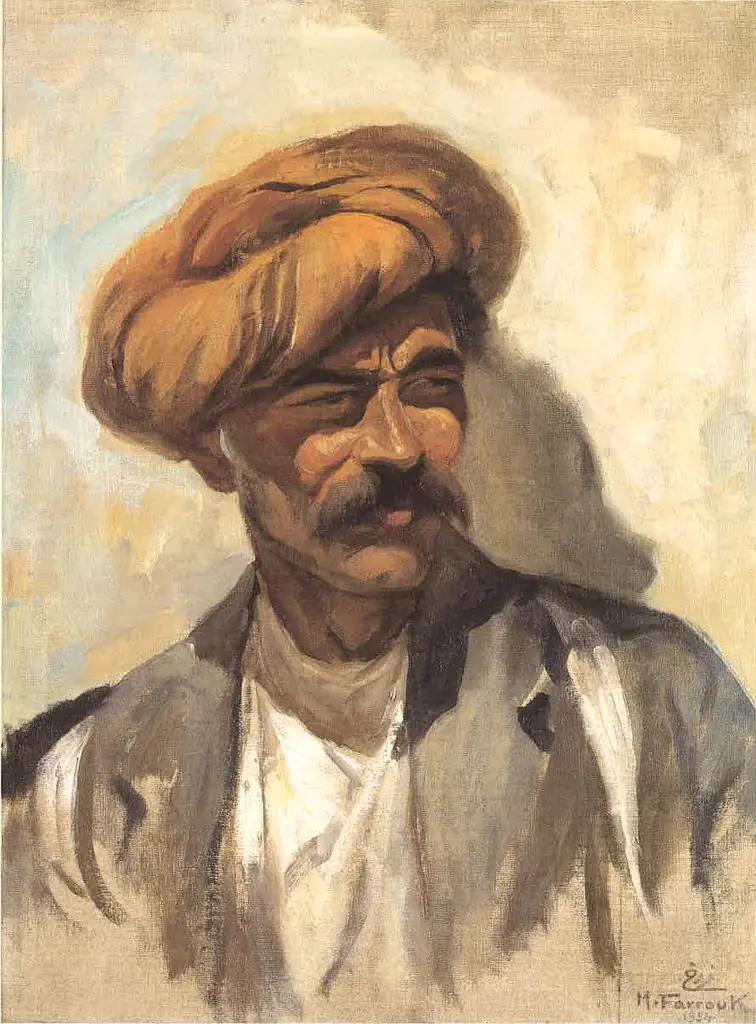
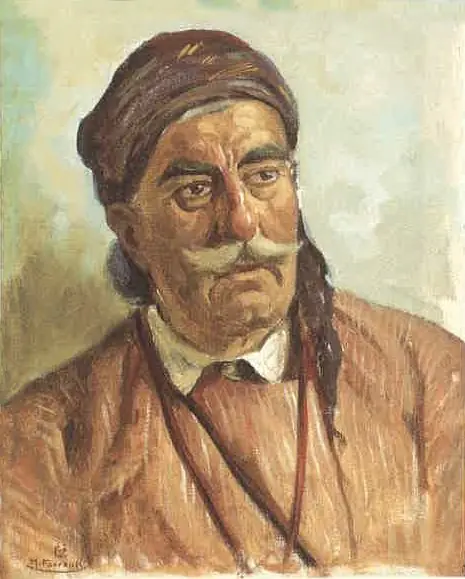
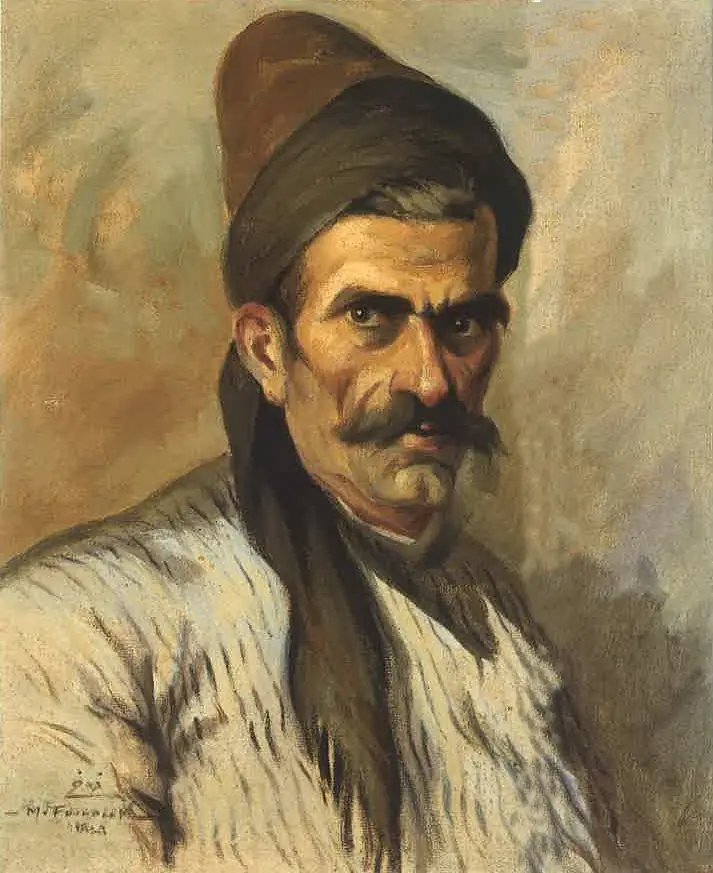
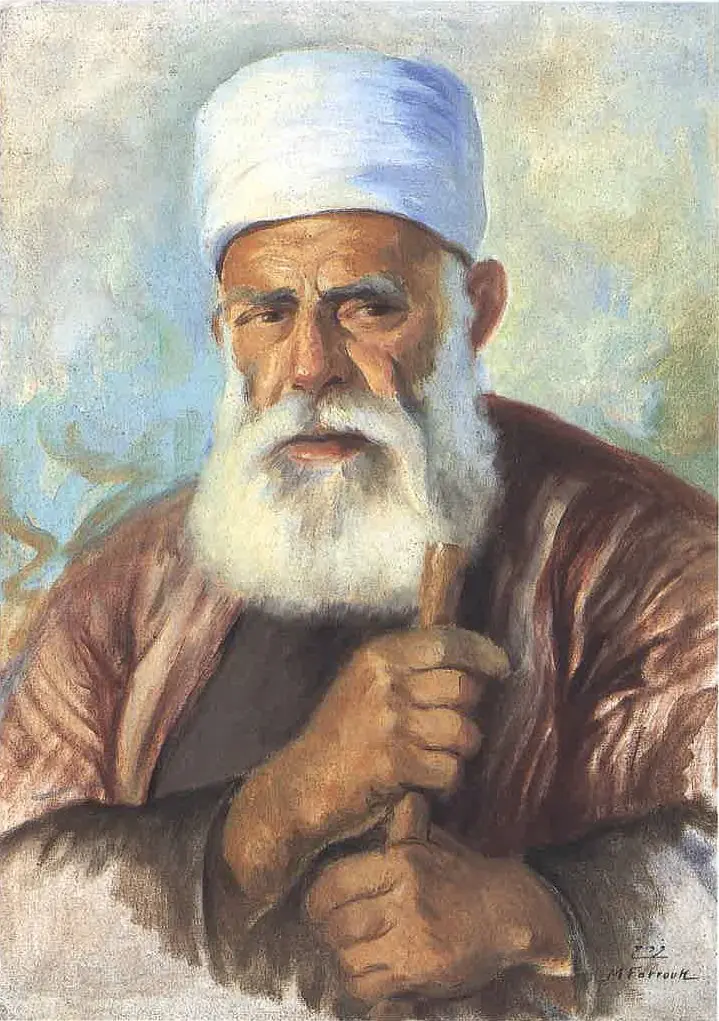
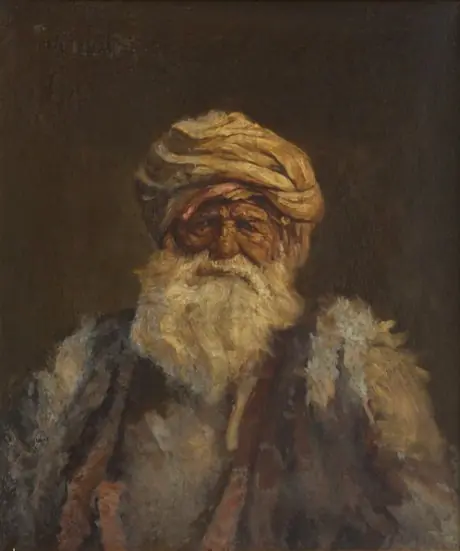
Portrait of a Lebanese Villager is an oil painting by the Orientalist artist Moustafa Farroukh. It dates from 1939 and is held in the collection of the Sursock Museum.
About this work
Overview
The piece presents a solitary male figure, his face rendered with careful attention, set against an unadorned backdrop.
Created in 1939, *Portrait of a Lebanese Villager* is a work on plywood by Lebanese artist Moustafa Farroukh. The piece presents a solitary male figure, his face rendered with careful attention, set against an unadorned backdrop. It exemplifies Farroukh’s prolific output during the mid‑twentieth century, a period when he produced thousands of paintings and authored several books on art and biography.
Subject & Meaning
The composition centers on a bearded man wearing a turban and a simple shirt, his head tilted slightly and his gaze fixed forward. The white, neatly trimmed beard and the dignified manner of the turban suggest a figure of local standing, while the sober expression conveys a sense of quiet resolve, reflecting the artist’s interest in everyday Lebanese identities.
Technique & Style
Farroukh employs chiaroscuro to model the subject’s features, using contrasts of light and shadow to give the face a three‑dimensional presence. The limited palette and restrained background focus attention on the sitter, while the handling of the plywood surface contributes a subtle texture that enhances the overall tonal depth, aligning the work with Orientalist visual conventions of the era.
History & Provenance
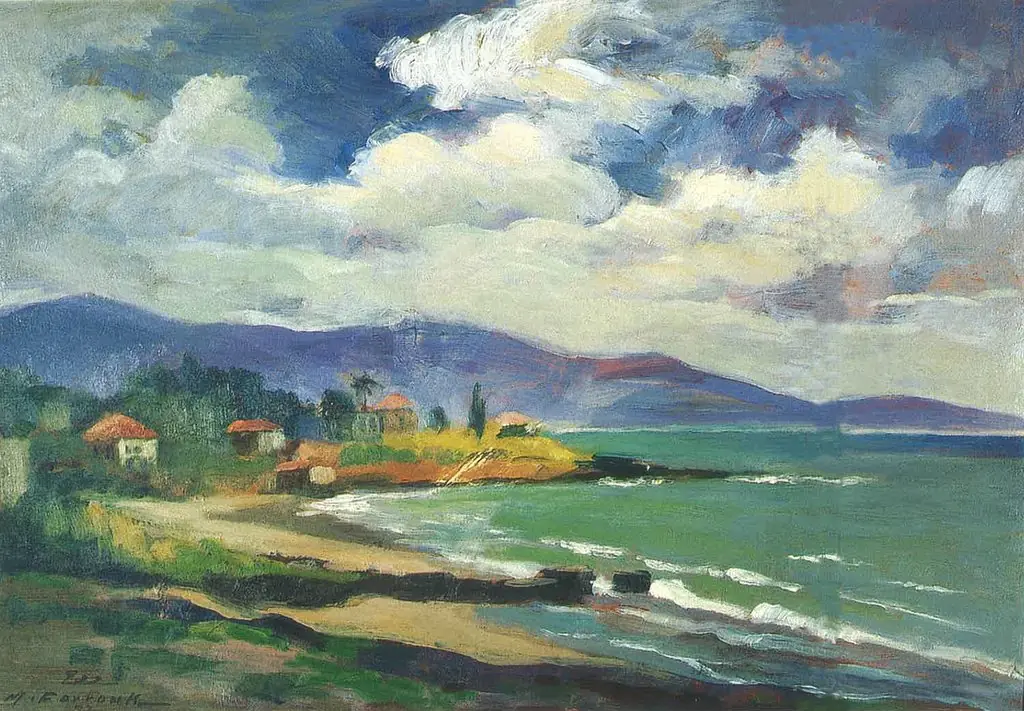
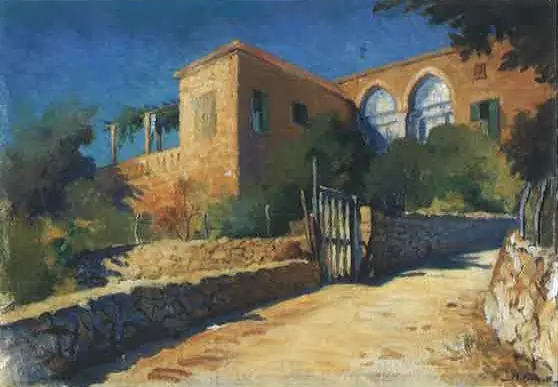
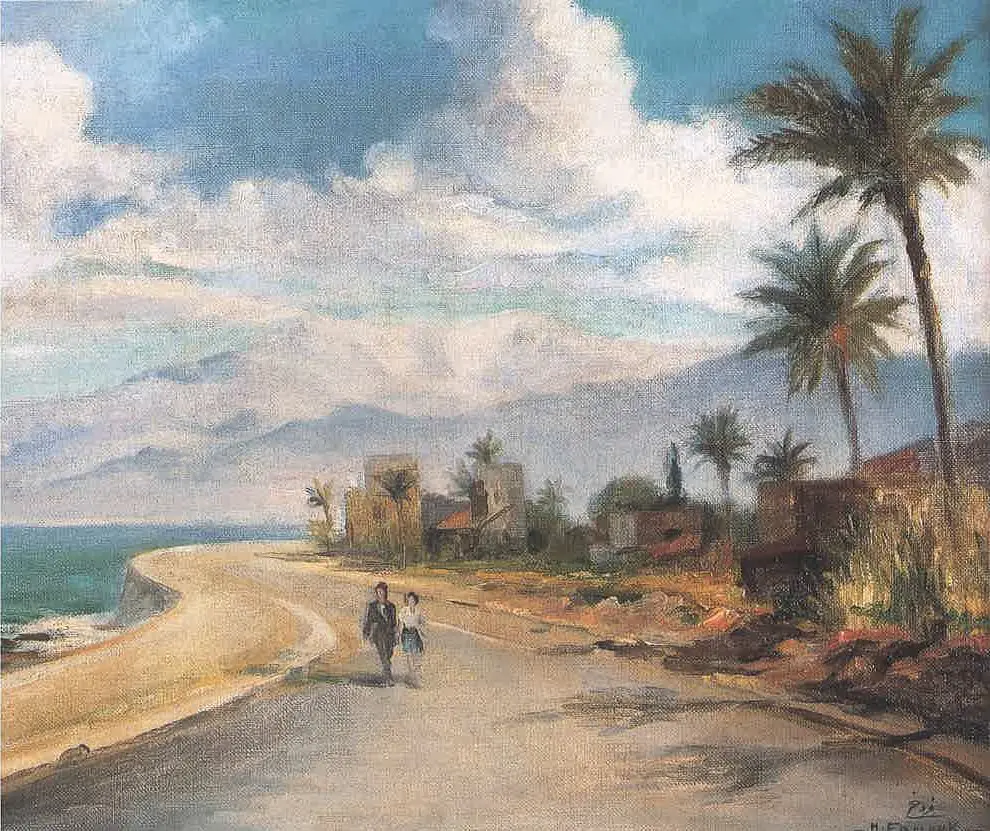
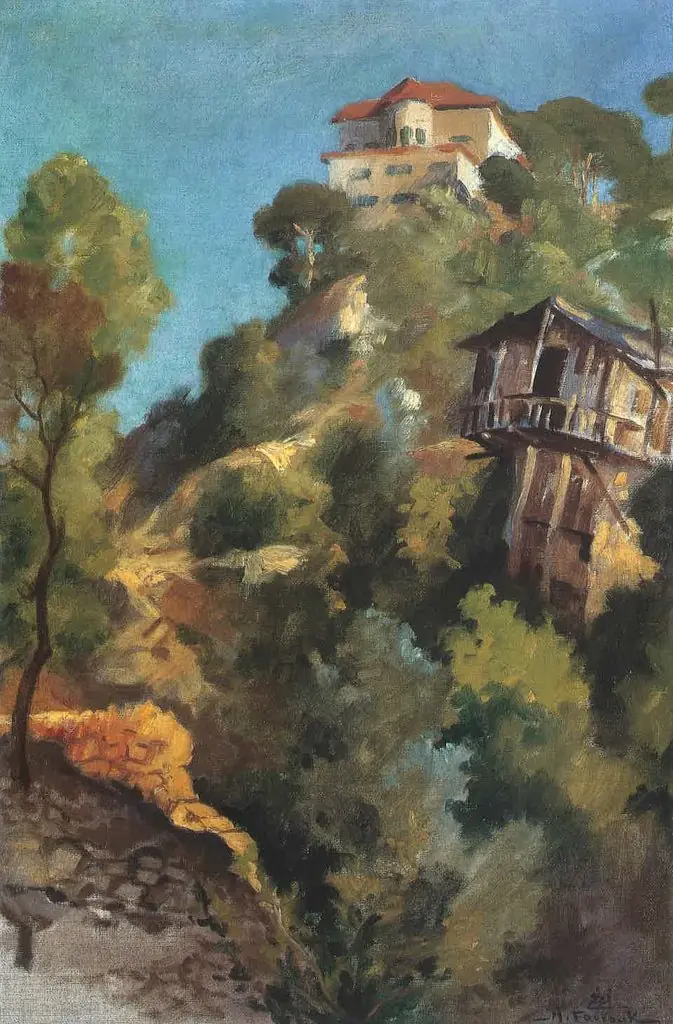
The painting is part of the collection of Beirut’s Sursock Museum, where it represents Farroukh’s contribution to Lebanese modern art. Throughout his career, the artist created over two thousand paintings and published five books, including a biography, establishing his reputation as a leading figure in the region’s artistic development.
Artist & collection
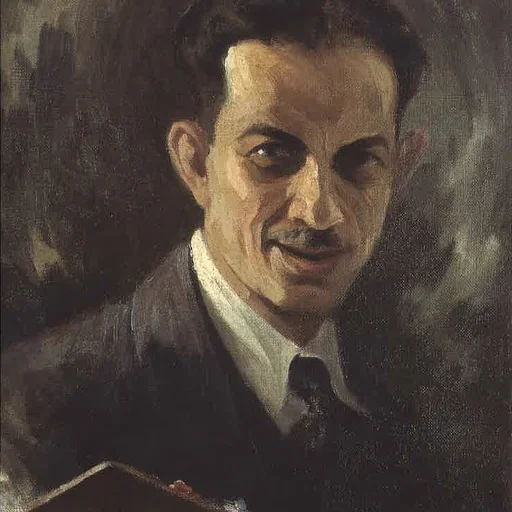
Artist
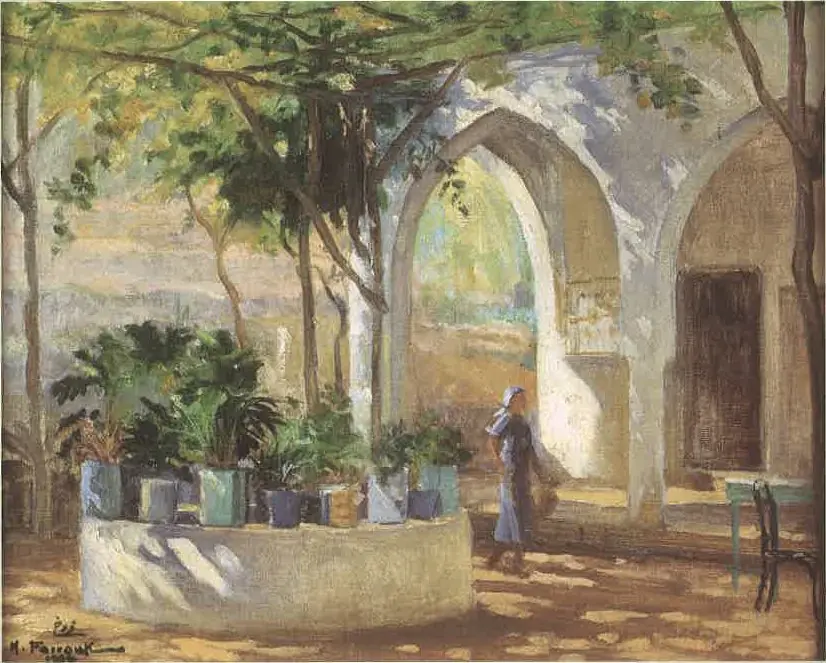
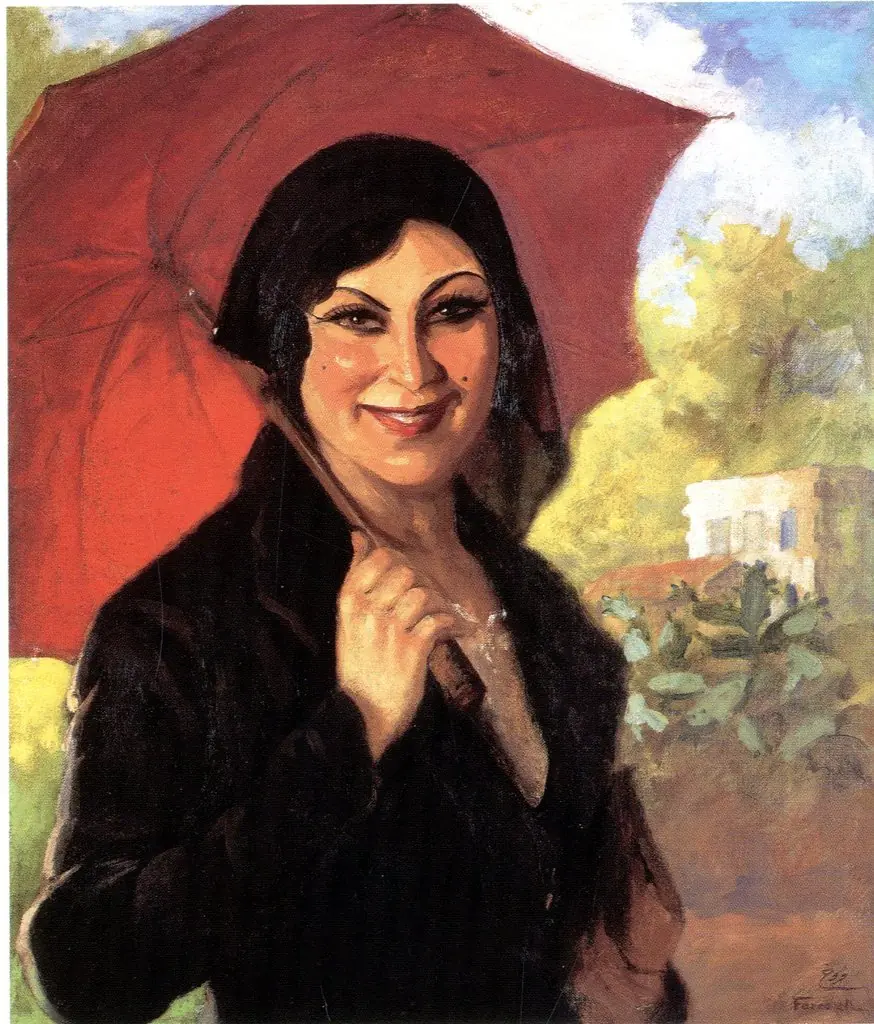
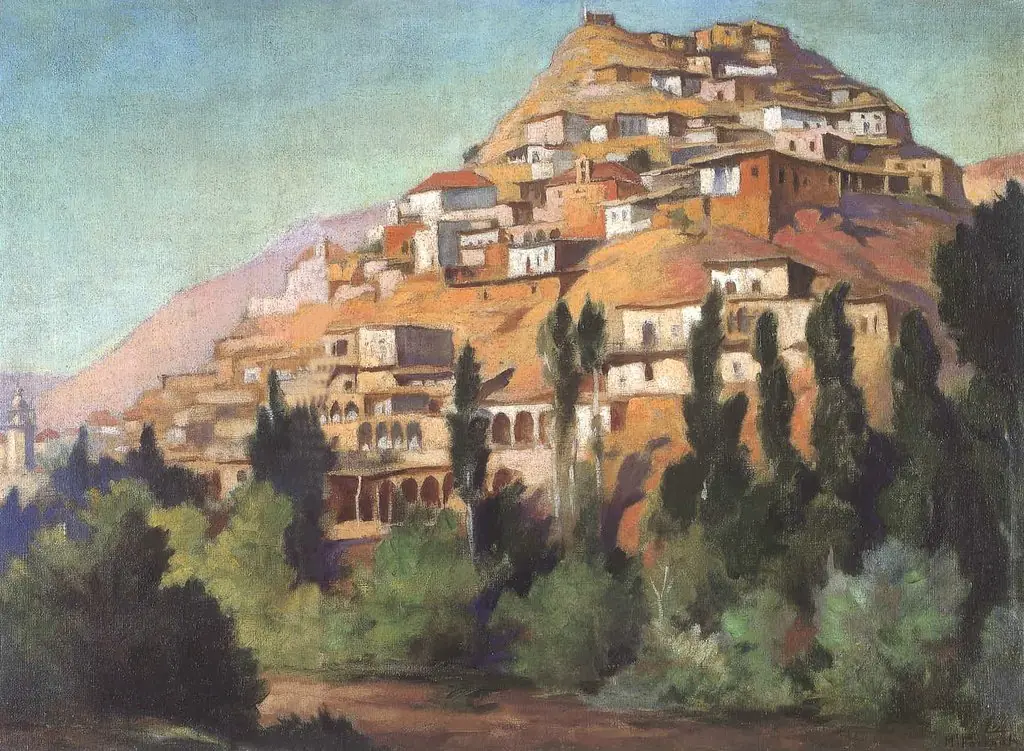
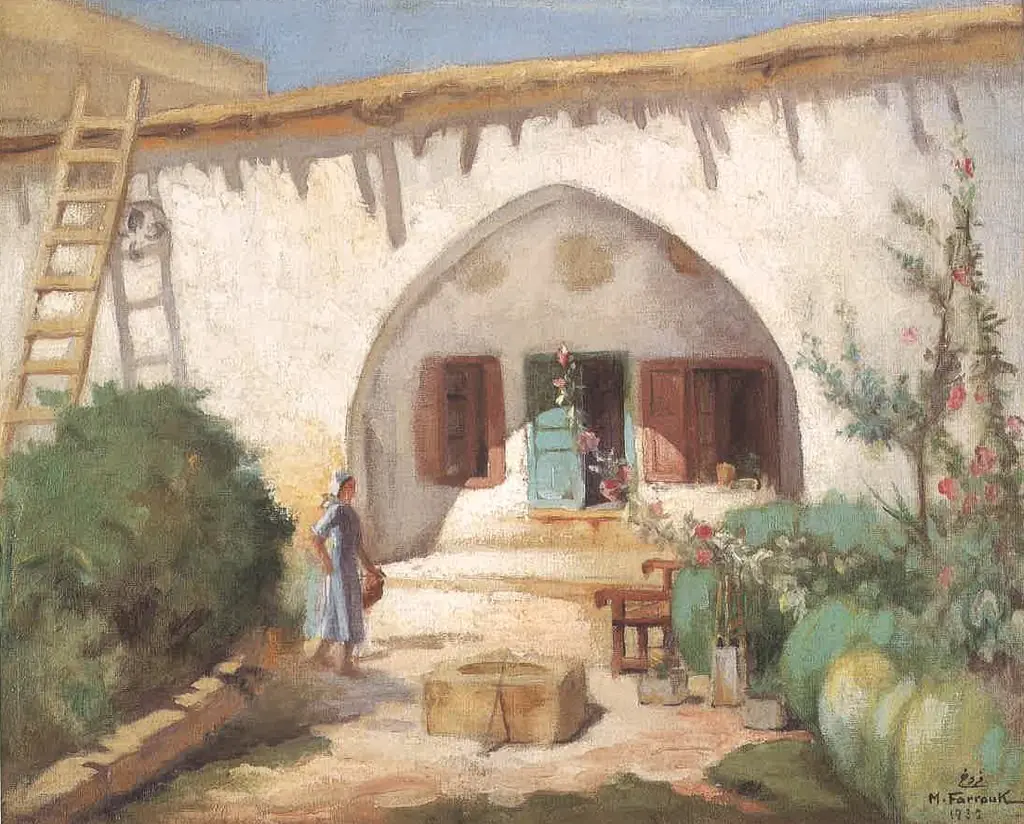
Moustafa Farroukh (Arabic: مصطفى فروخ; 1901 – 1957) was one of Lebanon's most prominent painters of the 20th century.