Artwork
A Druze Sheikh
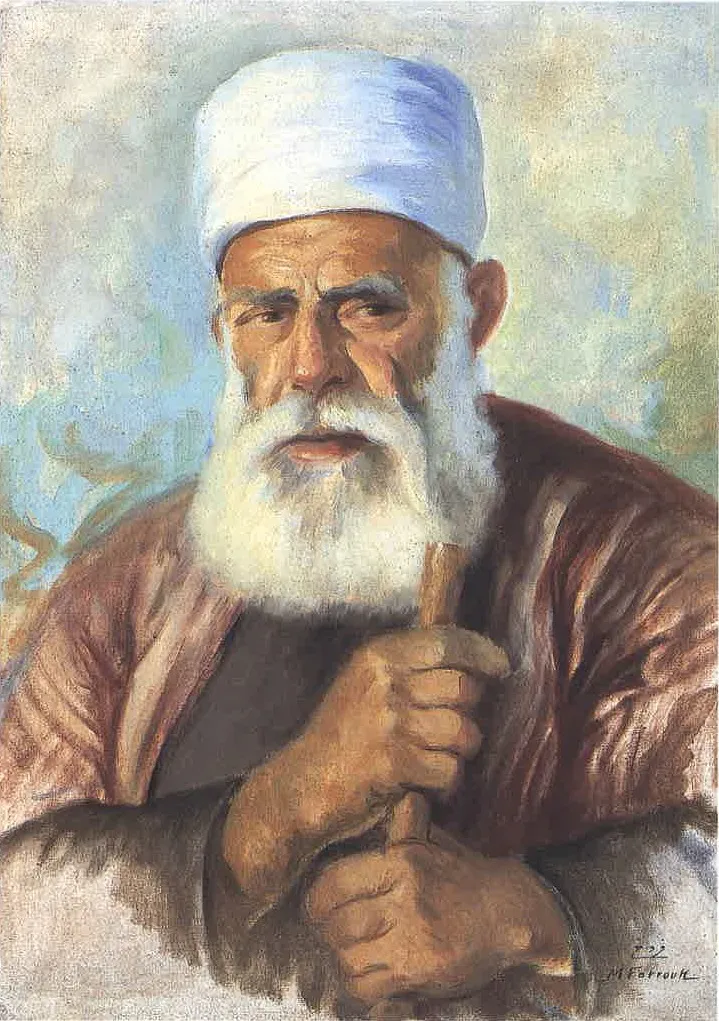
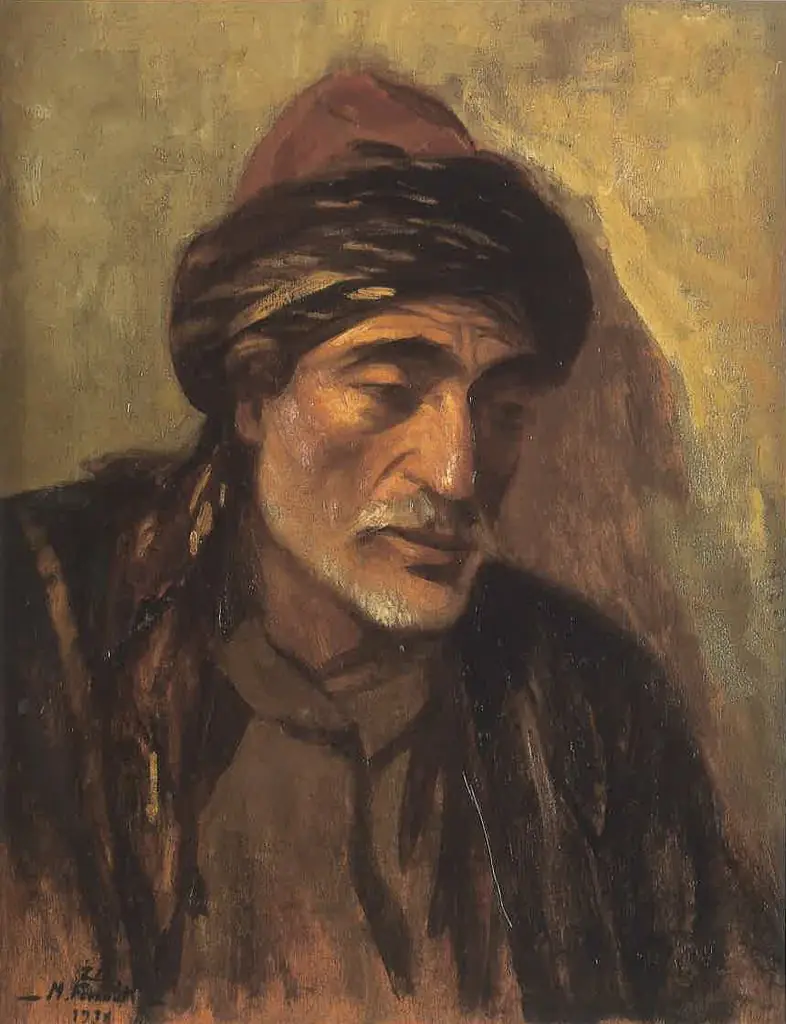
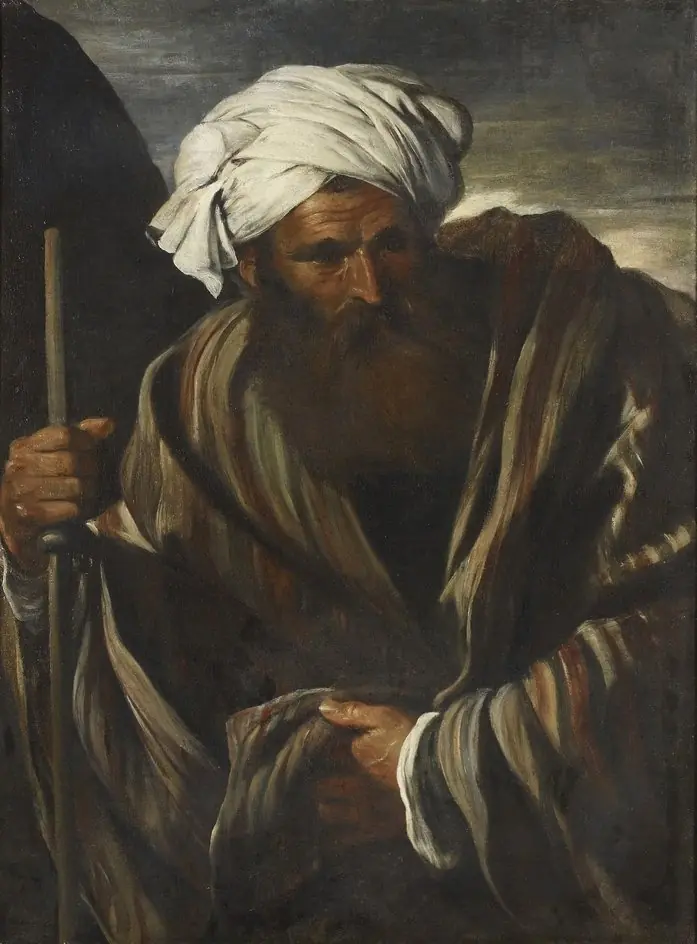
A Druze Sheikh is an oil painting by Moustafa Farroukh. It dates from 1939 and is held in the collection of the Sursock Museum.
About this work
Overview
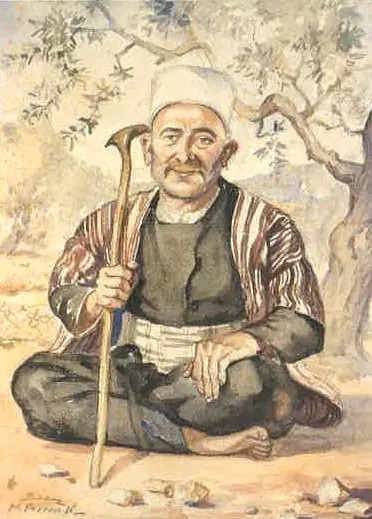
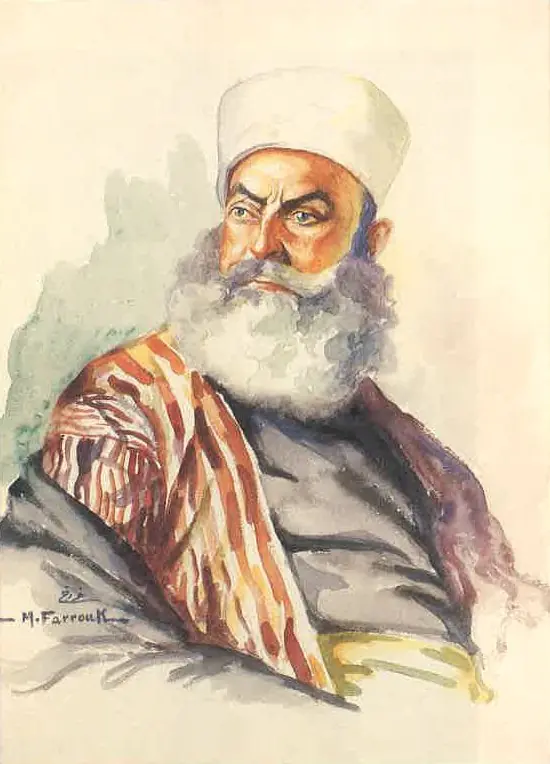
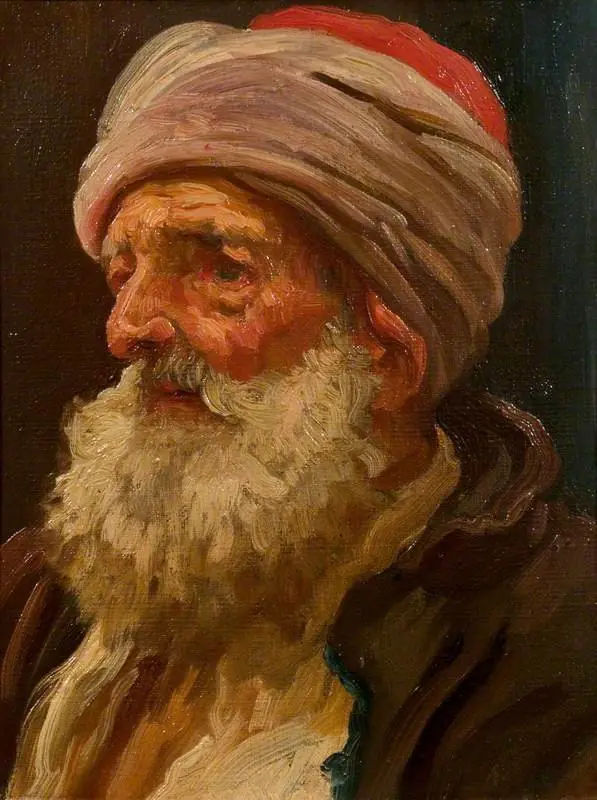
Painted around 1939 by Lebanese artist Moustafa Farroukh, this oil portrait depicts a Druze religious leader in traditional dress. Farroukh, known for his extensive body of work, focused on capturing the dignity and individuality of regional figures. The painting is part of the Sursock Museum’s collection and exemplifies his commitment to documenting cultural identity through portraiture.
Subject & Meaning
The subject is a Druze sheikh, identified by his white beard, tightly wound turban, and formal robe. His downward gaze and firm grip on a wooden crutch suggest age, authority, and perhaps physical frailty. The portrait avoids idealization, presenting the man with quiet solemnity, emphasizing his role as a community elder rather than a symbolic figure.
Technique & Style
Farroukh employs subtle chiaroscuro to model the sheikh’s face, drawing attention to the texture of skin and beard. The brushwork is controlled yet expressive, particularly in the rendering of fabric folds and the grain of the crutch. Background elements are minimized, ensuring the figure remains the sole focus, reinforcing the portrait’s intimate, contemplative tone.
History & Provenance
Created during a period of growing national consciousness in Lebanon, the painting was acquired by the Sursock Museum in Beirut, where it remains today. Farroukh’s works from this era were often collected by local patrons interested in preserving indigenous cultural imagery, positioning this portrait as both personal and ethnographic documentation.
Context
In the late 1930s, Lebanese artists increasingly turned to local subjects amid rising interest in cultural heritage. Farroukh’s depictions of Druze and other regional figures countered dominant colonial narratives by centering indigenous identities. This portrait reflects a broader movement to affirm Lebanon’s pluralistic social fabric through visual art.
Legacy
Farroukh’s portraits, including this one, contributed to a visual archive of Lebanon’s diverse communities. While not widely exhibited internationally, his work remains influential in Lebanese art history for its respectful, unembellished portrayal of everyday authority figures. The painting continues to serve as a reference for studies of regional identity in 20th-century Arab art.
Artist & collection
Artist
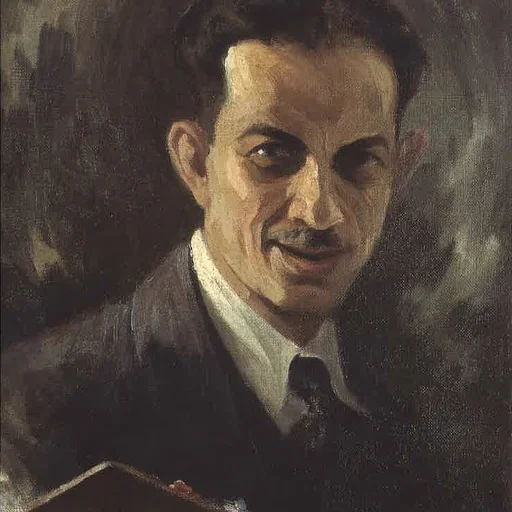
Moustafa Farroukh (Arabic: مصطفى فروخ; 1901 – 1957) was one of Lebanon's most prominent painters of the 20th century.