Artwork
Andalusia, Spain
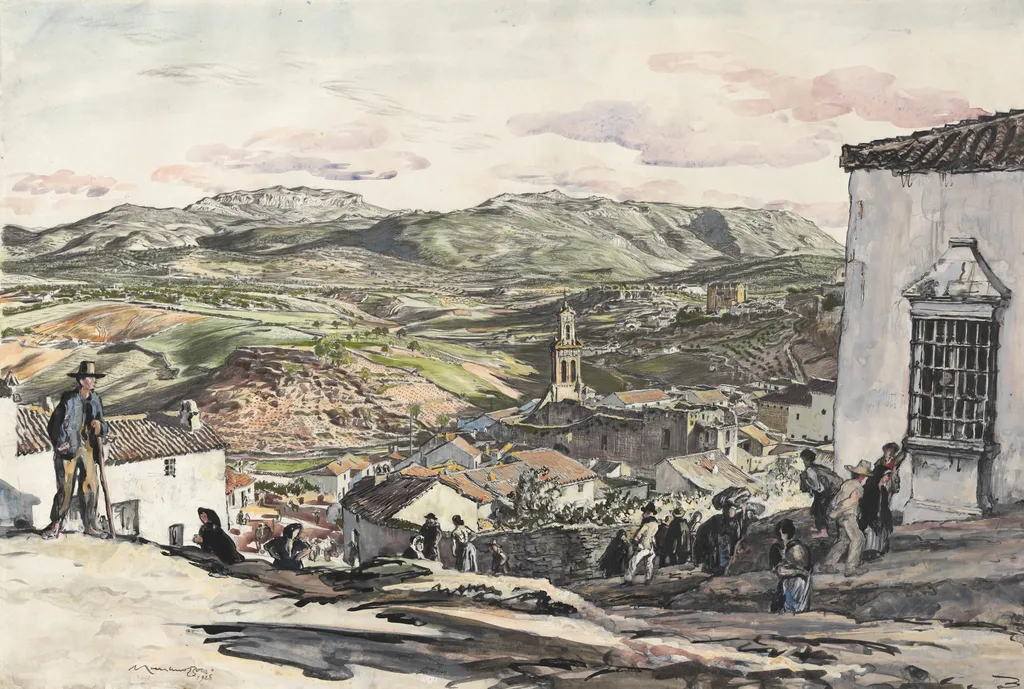
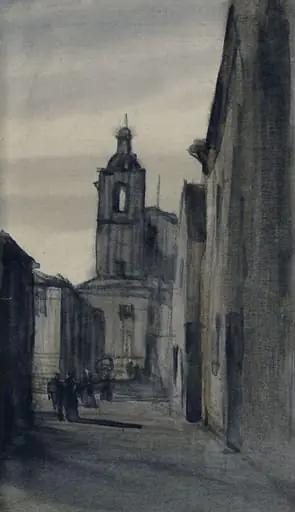
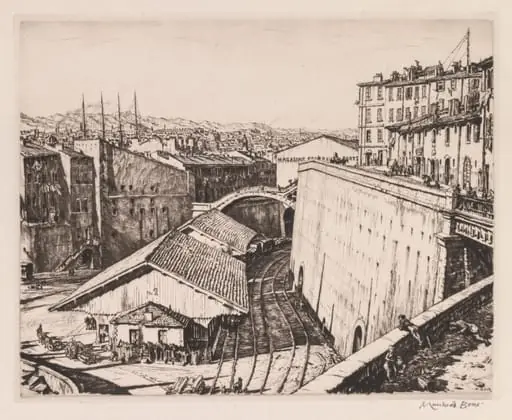
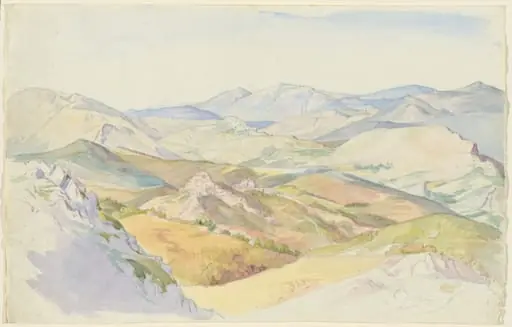
Andalusia, Spain is a drawing by Muirhead Bone. It dates from 1925 and is held in the collection of the Cleveland Museum of Art.
About this work
Overview
Bone, known for his architectural precision and topographical clarity, turned his attention to the Iberian countryside during a period of extensive travel.
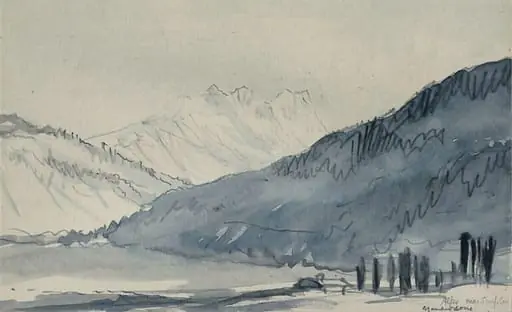
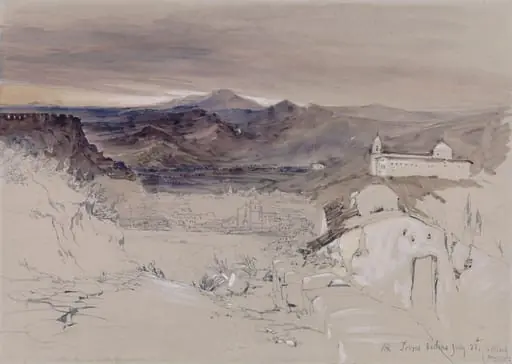
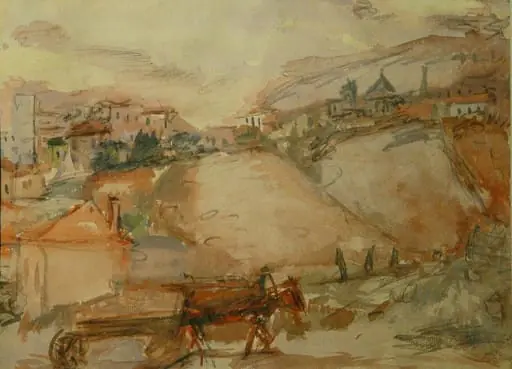
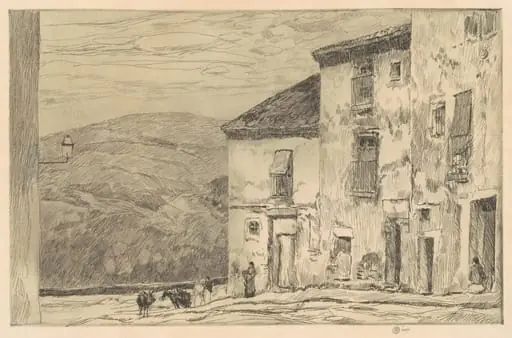
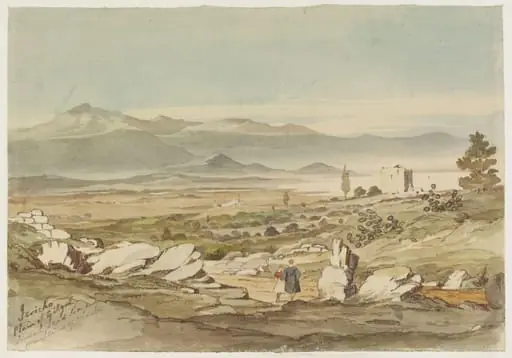
Created in 1925 by Scottish artist Muirhead Bone, *Andalusia, Spain* is a watercolor drawing that captures a rural landscape in southern Spain. Bone, known for his architectural precision and topographical clarity, turned his attention to the Iberian countryside during a period of extensive travel. The work reflects his shift toward more atmospheric, less industrial subjects, executed with a fluid hand and a restrained palette that evokes the region’s light and terrain.
Subject & Meaning
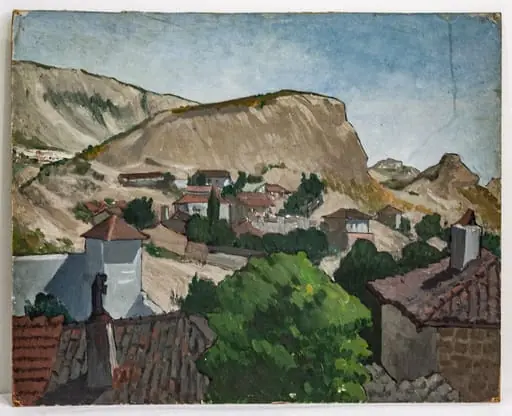
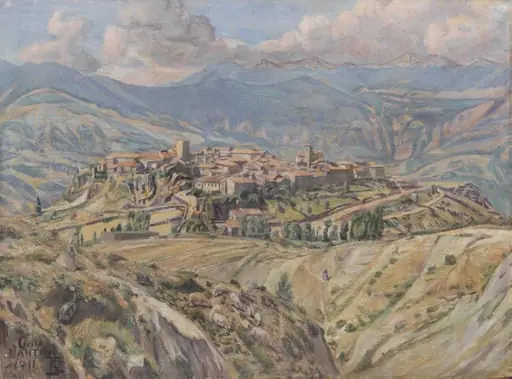
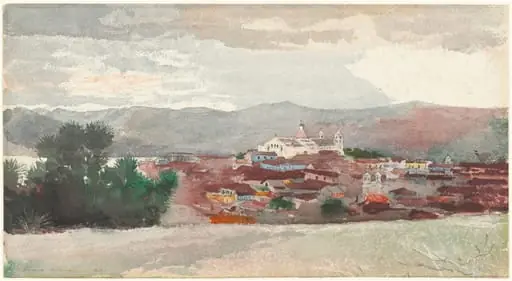
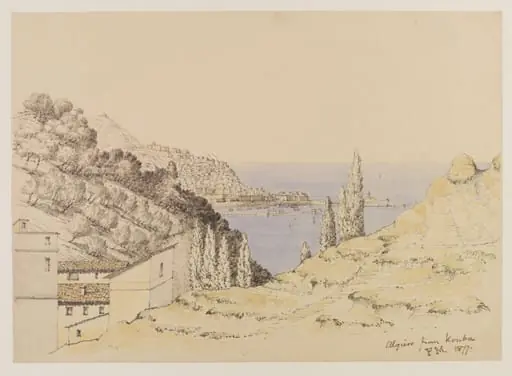
The scene depicts a quiet moment in a Spanish village, with figures scattered near a stone structure and along the slopes of rolling hills. Rather than emphasizing narrative, Bone focuses on the relationship between human presence and the natural environment. The modest architecture and dispersed activity suggest daily life in a remote community, rendered without idealization. The composition invites contemplation of place rather than storytelling.
Technique & Style
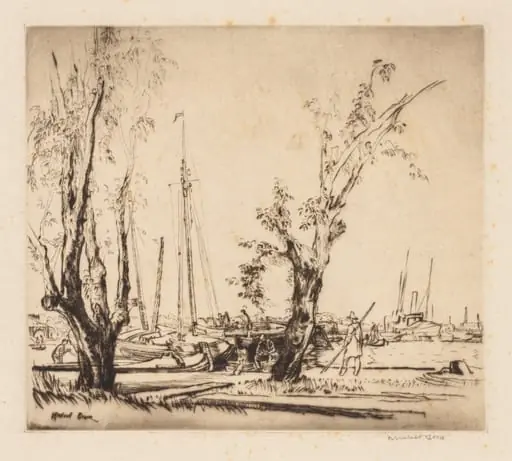
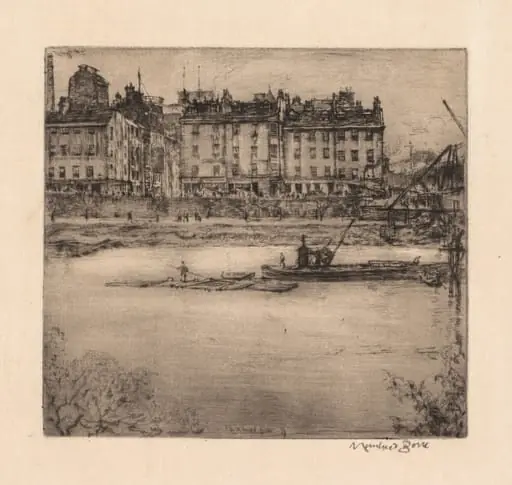
Bone employed loose, expressive brushwork and diluted watercolor to suggest form and light, moving away from the sharp linework of his earlier etchings. He layered transparent washes to build subtle tonal gradations, capturing the warmth of the Andalusian sun without relying on bold contrasts. The absence of heavy outlines and the soft edges between land, sky, and structure create a sense of atmospheric depth, characteristic of his mature watercolor style.
History & Provenance
The drawing entered the collection of The Cleveland Museum of Art in the mid-20th century, likely acquired through a donation or purchase following Bone’s growing reputation in American art circles. It was produced during a phase when Bone was increasingly sought after for his travel sketches, which were exhibited internationally. The work remained in private hands before its institutional acquisition, preserving its condition and original intent.
Context
In the 1920s, European artists increasingly turned to the Mediterranean for inspiration, drawn by its light and ancient landscapes. Bone’s journey to Spain coincided with a broader interest in regional authenticity among British illustrators. His work stood apart from romanticized Orientalist depictions, instead offering a restrained, observational approach aligned with the tradition of topographical drawing, rooted in survey and record.
Legacy
Though less celebrated than his architectural etchings, *Andalusia, Spain* exemplifies Bone’s adaptability and sensitivity to place. It contributes to a body of work that expanded the boundaries of British watercolor beyond the studio, influencing later generations of travel artists who valued direct observation over embellishment. The drawing remains a quiet testament to his commitment to capturing the character of landscapes through careful, unadorned means.
Artist & collection
Artist
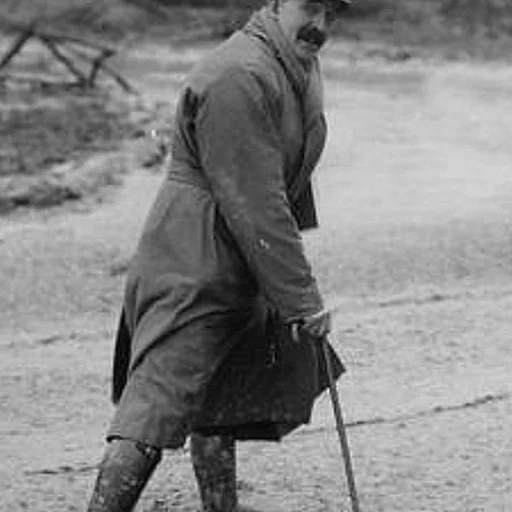
Sir Muirhead Bone (23 March 1876 – 21 October 1953) was a Scottish etcher and watercolourist who became known for his depiction of industrial and architectural subjects and his work as a war artist in both the First and Second World Wars.