Artwork
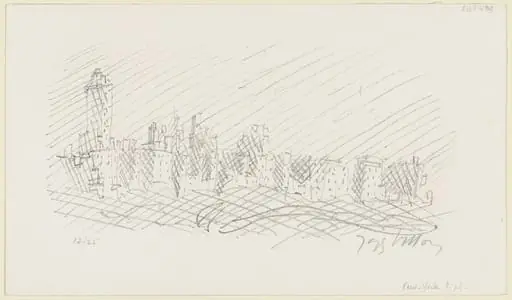
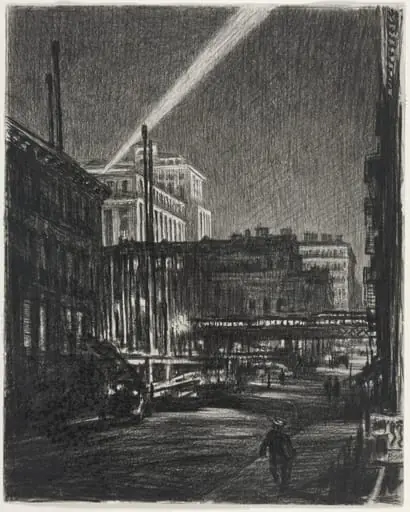
New York Night (recto) Study for New York Night (verso)
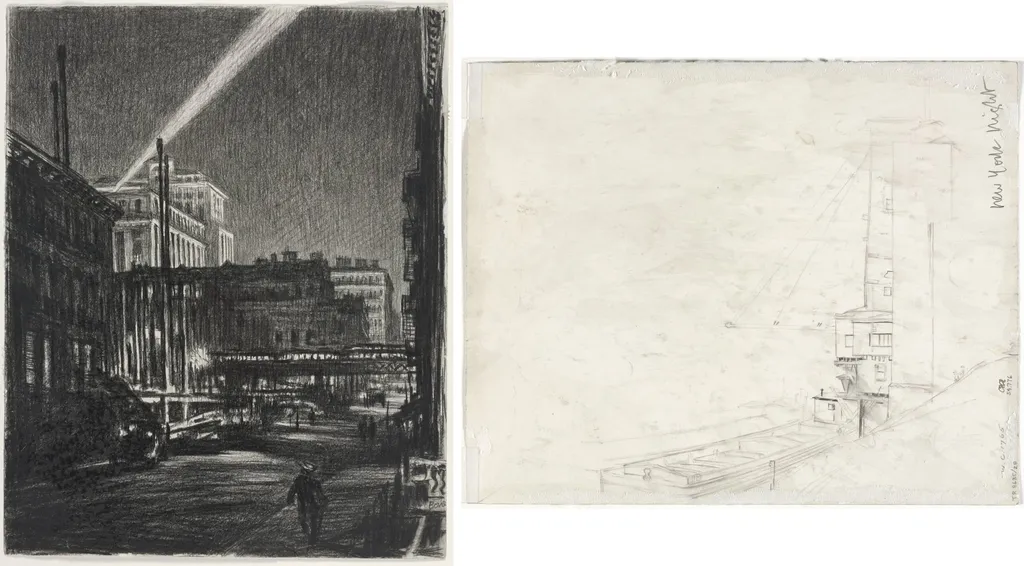
New York Night (recto) Study for New York Night (verso) is a drawing by Muirhead Bone. It dates from 1930 and is held in the collection of the Cleveland Museum of Art.
About this work
Overview
Created around 1930, this double-sided drawing by Scottish artist Muirhead Bone captures a nocturnal urban scene on its front, with a ship study on the reverse.
Created around 1930, this double-sided drawing by Scottish artist Muirhead Bone captures a nocturnal urban scene on its front, with a ship study on the reverse. Bone, known for his precise etchings of architecture and industry, used ink and wash to convey the quiet atmosphere of New York at night. The work exemplifies his practice of reusing paper to explore multiple compositions, a common habit among draftsmen of the era.
Subject & Meaning
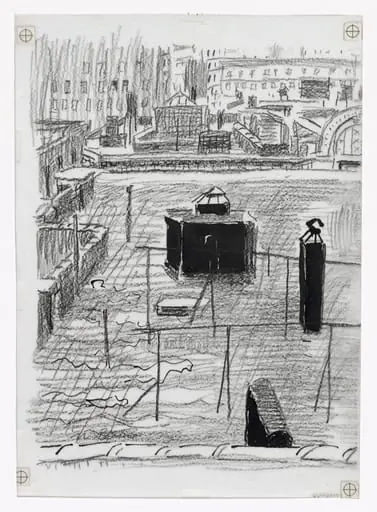
The recto depicts a dimly lit city street at night, with towering buildings and a distant bridge illuminated by sparse windows and faint lights. A solitary figure walks near the water’s edge, suggesting isolation amid urban grandeur. The absence of human activity beyond this single form emphasizes solitude and the scale of the metropolis, reflecting Bone’s interest in the emotional tone of modern environments rather than their bustling energy.
Technique & Style
Bone employed quick, fluid ink lines and subtle washes to suggest depth and shadow without detailed rendering. The loose, economical strokes convey atmosphere over precision, contrasting with his more finished etchings. The verso’s ship study, rendered in similar fashion, reveals his method of sketching multiple ideas on a single sheet—maximizing material and allowing spontaneous transitions between subjects.
History & Provenance
The drawing entered the collection of The Cleveland Museum of Art after being acquired from a private source, though its exact provenance prior to museum ownership remains undocumented. Created during a period when Bone’s market value declined following the 1929 crash, the work reflects his continued artistic output despite shifting economic conditions. It remains a representative example of his post-war sketchbook practice.
Context
Bone was a central figure in the British Etching Revival and later served as an official war artist in both World Wars. His focus on architecture and urban environments stemmed from a broader interest in documenting human-made landscapes under pressure—whether from industrialization or conflict. This drawing, made during the early Depression years, aligns with his habit of observing cities as sites of quiet endurance rather than spectacle.
Legacy
Though less celebrated than his etchings, Bone’s drawings like this one reveal the immediacy of his observational process. The dual composition on a single sheet highlights his efficiency and conceptual flexibility. Today, the work contributes to understanding how artists of the early 20th century used sketching not merely as preparation, but as a sustained mode of engagement with the modern world.
Artist & collection
Artist
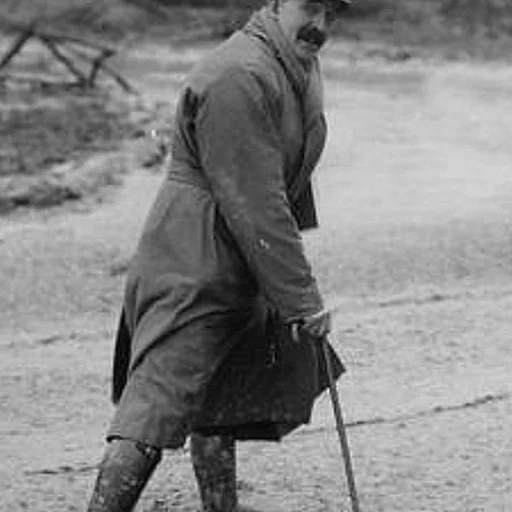
Sir Muirhead Bone (23 March 1876 – 21 October 1953) was a Scottish etcher and watercolourist who became known for his depiction of industrial and architectural subjects and his work as a war artist in both the First and Second World Wars.

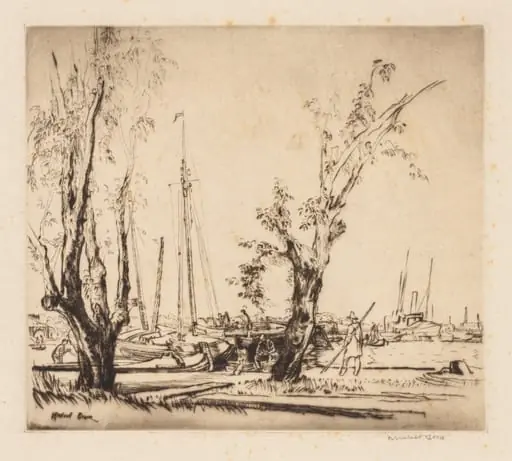
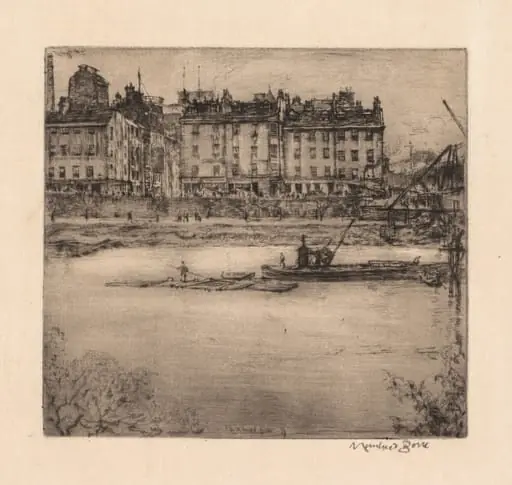
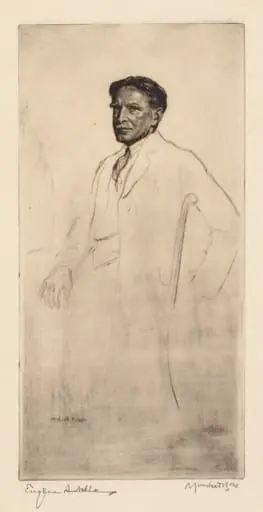
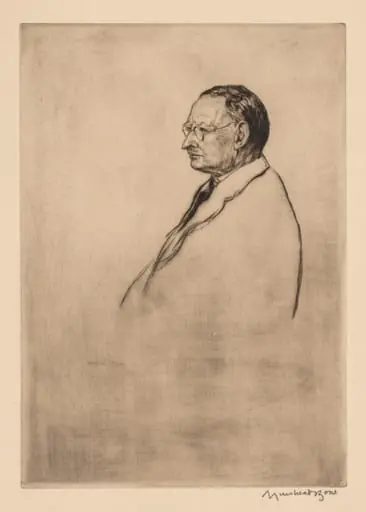
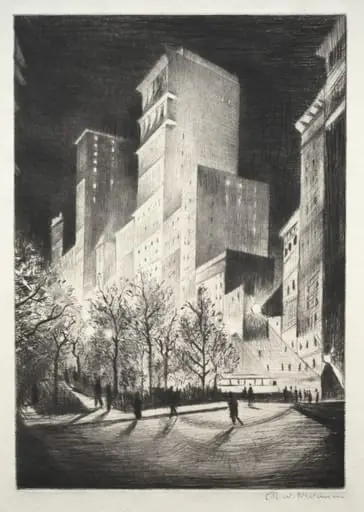 Three AM: A Corner by Madison Avenue (also known as 2 AM New York and Metropolis)
 Untitled
 Downtown, Cleveland
 The Presses
 Woman Entering a Fiacre (recto); Right Profile of Man Wearing Tall Hat (verso)
 Clothes Exchange, No. 1
 Untitled
 Building the Bismarck, Hamburg
 The Perambulator
![Gillingham Pier, London [verso], by Félix-Hilaire Buhot](https://artifactworldgallery.com/img/felix-hilaire-buhot--gillingham-pier-london-verso--641e03dd7de8217b-w320.webp) Gillingham Pier, London [verso]
Gillingham Pier, London [verso] Dieppe, La Rue Notre Dame
 New York Night (recto)