Artwork
Rye, from Camber
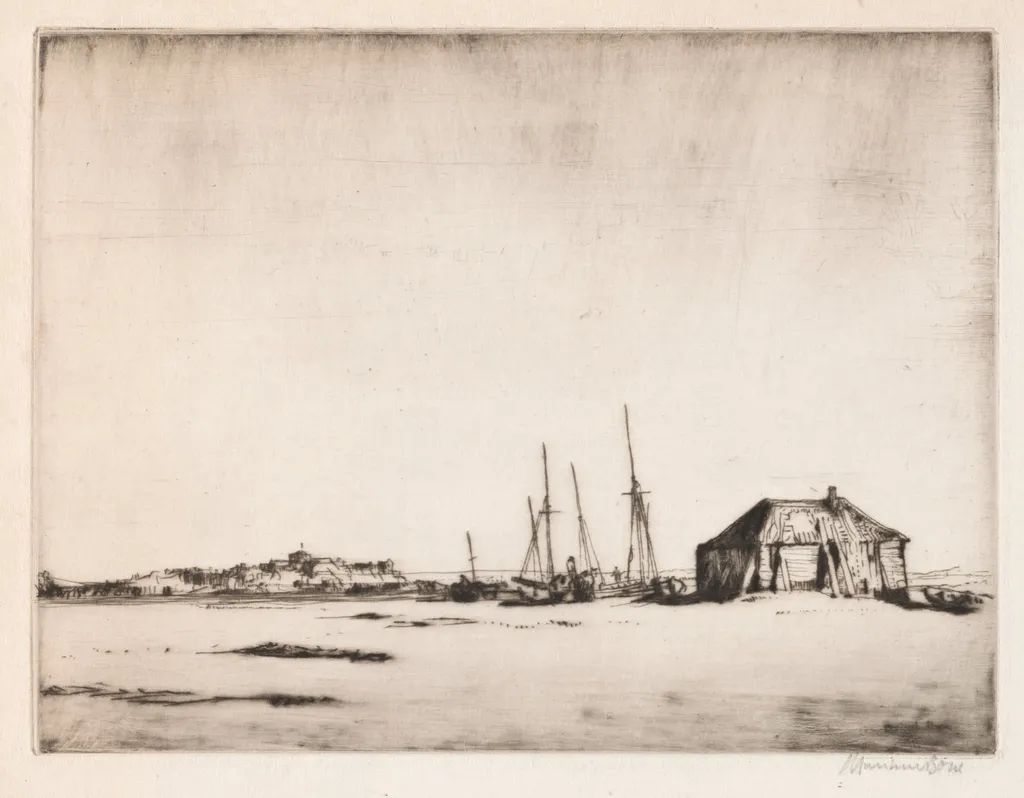
Rye, from Camber is a print by Muirhead Bone. It dates from 1907 and is held in the collection of the Cleveland Museum of Art.
About this work
Overview
Bone, known for his precise renderings of architecture and urban landscapes, used this medium to capture the quiet coastal town of Rye in southeastern England.
Rye, from Camber is a 1907 etching by Scottish artist Muirhead Bone, created during the waning years of the Etching Revival. Bone, known for his precise renderings of architecture and urban landscapes, used this medium to capture the quiet coastal town of Rye in southeastern England. The work exemplifies his technical mastery and interest in documenting built environments with clarity and restraint, distinguishing his approach from more romanticized landscape traditions of the period.
Subject & Meaning
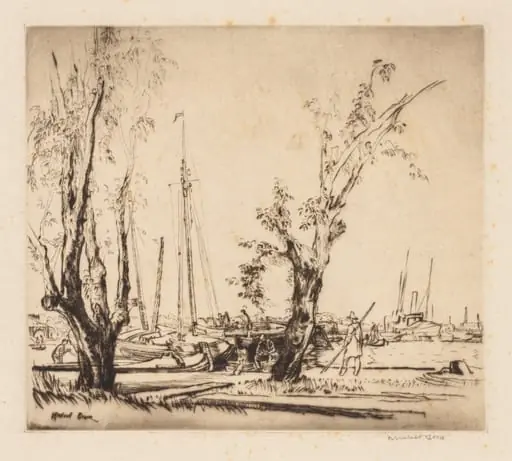
The scene depicts the town of Rye as viewed from the nearby dunes of Camber, with modest buildings, a harbor, and small vessels arranged along the shoreline. Rather than emphasizing grandeur, Bone focuses on the quiet interplay between land, sea, and human settlement. The composition conveys a sense of stillness and temporal continuity, reflecting the enduring character of coastal communities rather than their economic or political significance.
Technique & Style
Bone employed fine-line etching to achieve sharp definition in architectural forms while allowing the sky and water to dissolve into soft, tonal gradations. His use of controlled cross-hatching and delicate line weight creates depth without overt drama. The restrained palette—dominated by muted grays, browns, and ochres—enhances the atmospheric cohesion of the scene, aligning with his preference for observational accuracy over expressive flourish.
History & Provenance
Created in 1907, Rye, from Camber entered the collection of the Cleveland Museum of Art at an early stage, likely acquired during Bone’s peak recognition in the early 20th century. As one of many topographical prints he produced during travels across Britain and Europe, the work reflects his systematic documentation of places undergoing industrial and social change. Its preservation in a major American institution underscores its international reception among collectors of fine prints.
Context
Bone worked at a time when etching was being revived as a serious artistic medium, distinct from mass-produced illustrations. His focus on architectural subjects aligned with broader interests in topographical record-keeping and national identity. Unlike contemporaries who emphasized romanticized ruins or dramatic lighting, Bone favored calm, unembellished views, positioning his work within a tradition of documentary precision rather than emotional expression.
Legacy
Though the market for fine prints declined after 1929, Bone’s body of work remained influential for its disciplined approach to observation. Rye, from Camber exemplifies his contribution to the Etching Revival: a commitment to clarity, structure, and the quiet dignity of everyday landscapes. His prints continue to be studied for their technical rigor and their role in shaping 20th-century British printmaking aesthetics.
Artist & collection
Artist
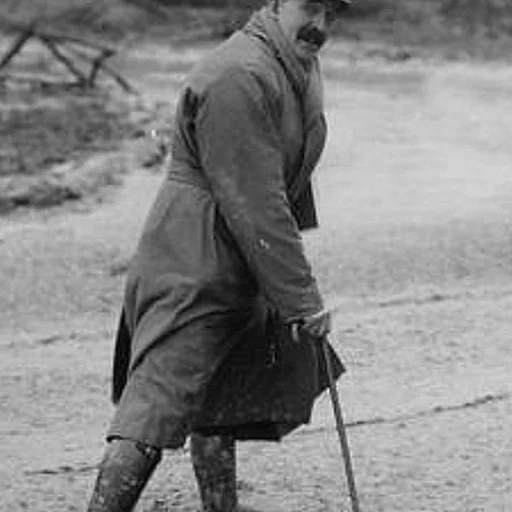
Sir Muirhead Bone (23 March 1876 – 21 October 1953) was a Scottish etcher and watercolourist who became known for his depiction of industrial and architectural subjects and his work as a war artist in both the First and Second World Wars.

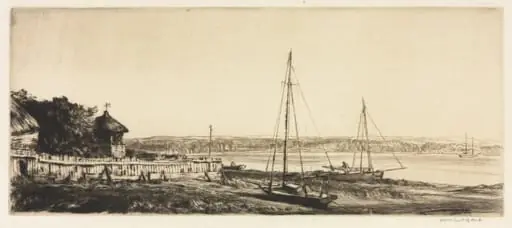 Near Chichester, Sussex
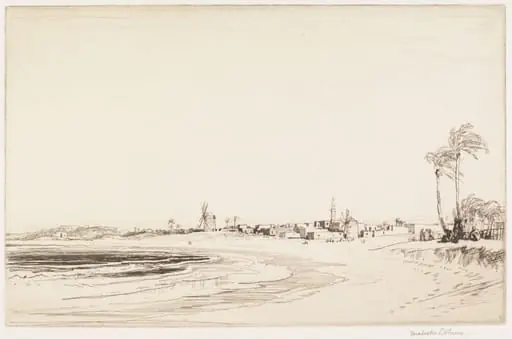 Montaza Bay
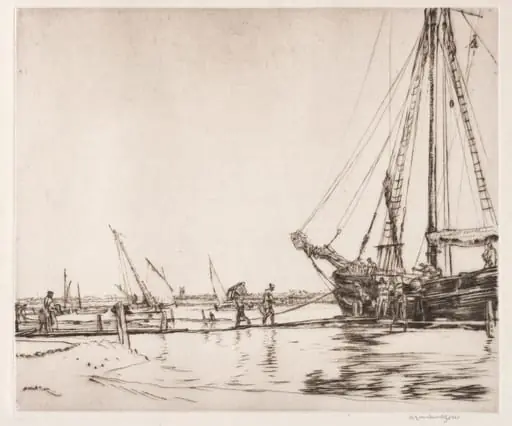 Moy, Ireland
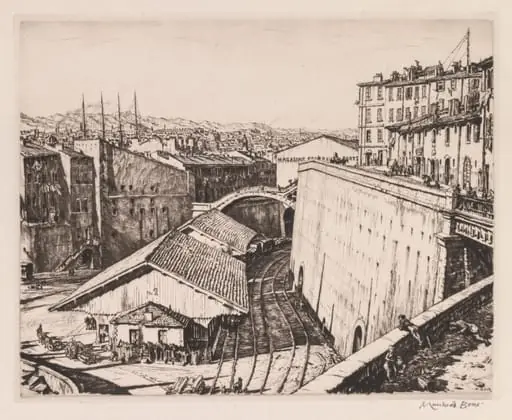
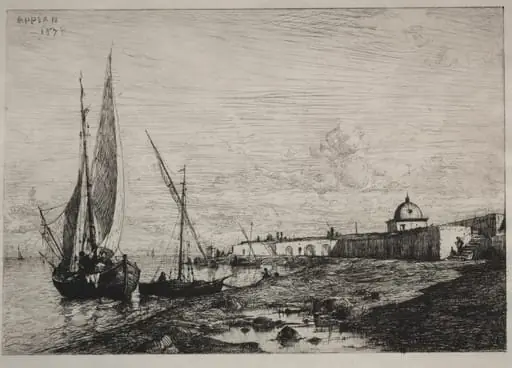 The Port at San Remo
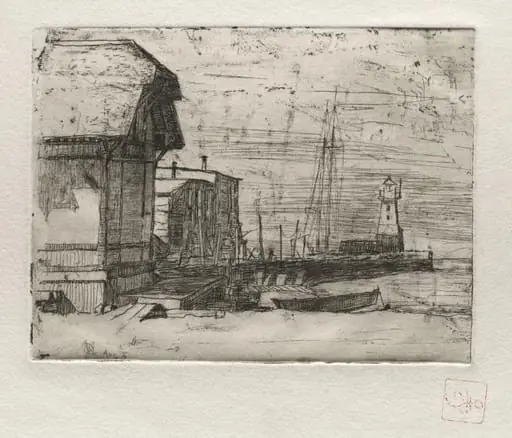 West Pier 1878
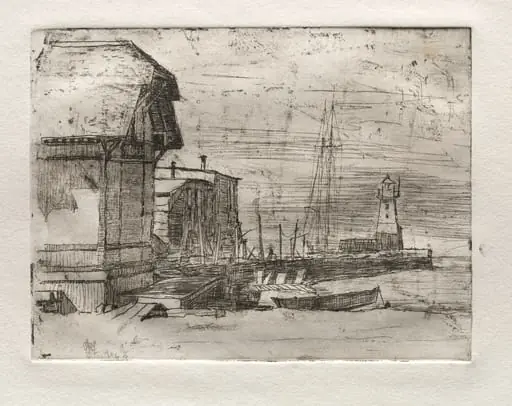 West Pier
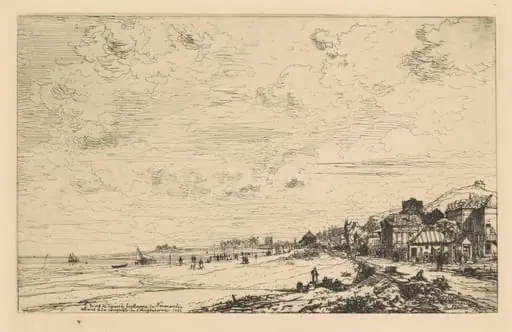 Beuzeval, Embouchure de la Dive (Calvados)
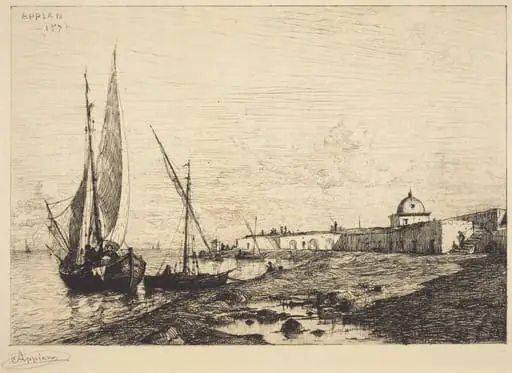 Port of San Remo
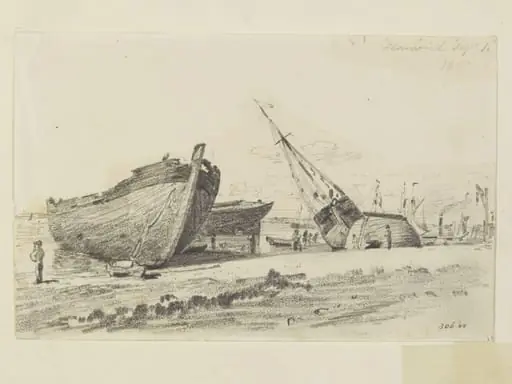 The breakwater at Harwich, with ships on the beach
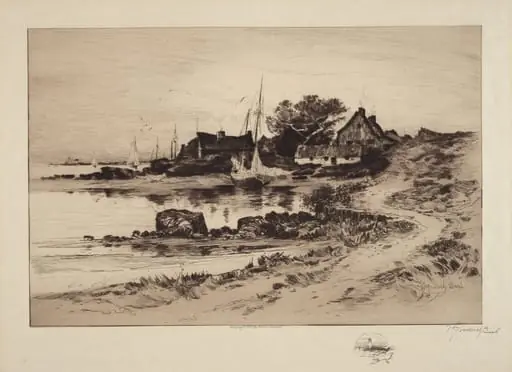 Old Gloucester Shore
 Environs of Carqueronne (Environs de Carqueronne)
 River bank with jetty and buildings