Artwork
"Isea d
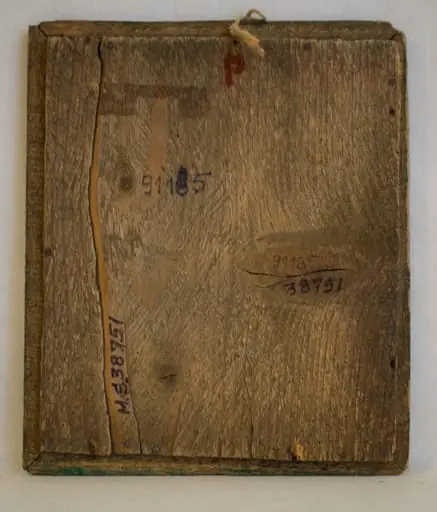
"Isea d is a drawing by Mureșanu Ilarion Ion. It is held in the collection of the "Dimitrie Gusti" National Village Museum. A delicate drawing on aged wood depicts abstract botanical forms, rendered in fine, dark lines.
About this work
Overview
The artist employed cross-hatching, layering parallel strokes to suggest volume and shadow, a method common in early graphic traditions.
A delicate drawing on aged wood depicts abstract botanical forms, rendered in fine, dark lines. The surface shows natural wear—cracks and a coarse grain—enhancing its tactile, weathered appearance. The artist employed cross-hatching, layering parallel strokes to suggest volume and shadow, a method common in early graphic traditions. The work’s modest scale and material suggest a private or functional origin rather than a public display.
Subject & Meaning
The forms resemble leaves or branches, but lack clear botanical precision, hinting at symbolic or decorative intent. The ambiguity invites interpretation: perhaps an emblem of growth, transience, or natural order. Absent figural elements, the focus remains on organic structure, evoking quiet contemplation rather than narrative. The faded state may reflect intentional restraint or the passage of time.
Technique & Style
Cross-hatching dominates the composition, with tightly spaced lines building tonal gradations without pigment or wash. The artist used consistent, controlled strokes to model form on a textured substrate, adapting to the wood’s irregular surface. The thin, dark lines contrast subtly with the pale, worn wood, emphasizing line over mass. This method prioritizes precision and economy of means.
History & Provenance
The work’s material and technique suggest a pre-modern origin, possibly from a craft or devotional context. No documented provenance exists, but similar wood-panel drawings appear in medieval and Renaissance artisanal traditions. Its survival implies careful preservation, though its original purpose—whether instructional, devotional, or decorative—remains uncertain.
Context
In an era when paper was scarce or costly, wood panels served as durable supports for sketches and studies. Cross-hatching was widely used in manuscript illumination and early printmaking. This piece aligns with regional practices where drawing functioned as both preparation and finished work, often outside the realm of fine art institutions.
Legacy
Though unsigned and unattributed, the work exemplifies pre-industrial draftsmanship rooted in material constraint and technical discipline. It contributes to understanding how artists engaged with everyday surfaces, transforming humble media into quiet expressions of observation. Its endurance underscores the resilience of hand-drawn mark-making across centuries.
Artist & collection
Artist
Ilarion Ion Mureșanu painted traditional religious scenes on glass and textiles, working in the style of Nicula icon painting.
Museum
"Dimitrie Gusti" National Village Museum
Continue through works from the same source collection.
 Icoa Co
 Icoana se bazează pe tradițiile picturii niculene, cu o tendință evidentă spre perfecționism. Desenul, deși preia trăsături ale perioadei vechi, este precis, clar, studiat, la fel cromatica și întreaga compoziție. Caracteristice pentru pictura lui Ioan Mureșanu sunt benzile late, dispuse orizontal în partea de sus și cea de jos, cu un motiv în zig zag, dispus pe un fond roșu orange patinat. Verdele intens și patinarea culorilor sunt deasemenea folosite de monah. Între aceste două benzi, este redat Sf Ilie într-un car roșu cu roți aurii, tras de doi cai albi înaripați pe deasupra norilor. Sfântul esre așezat, cu o mână ține hățurile și un bici, cealaltă o are sprijinită de car. Trăsăturile sunt intenționat naive, părul negru, ochii mari, negri, gura roșie. În jurul capului are nimb aurit. Caii au aripi verzi cu roșu, umbrele accentuate, capetele ușor diforme. În partea de jos norii sunt sferici, redați în perspectivă prin numeroase forme minuțios realizate. În partea de sus doar o draperie simplă de nori alingiți ușor. Câmpul este verde intens. Înscripția încadrată în chenar dreptunghiular apare pe porțiune aurită de sub hățuri. Compoziția este echilibrată, studiată, desenul clar, culorile patinate, umbrele accentuate. Paleta cromatică nu foarte variată, dar armonioasă, culorile intense(alb, galben-orange, roșu, verde, negru, gri, auriu), monahul încercând să valorizeze studiul picturii pe sticlă din perioada de înflorire a acesteia. Rama este alcătuită din patru stinghii profilate, tratate cu ulei de nucși ceară dizolvată în petrol, îmbinate oblic la colțuri. Dosul este din placaj băițuit, fixat cu cuișoare metalice.
 Icoaă di
 Icoaenel
 Icoana îl reprezintă pe cuviosul Stelian în ipostaza consacrată: îmbrăcat în haine monahale, de factură athonită, ținînd în brațe, pe mâna dreaptă, un prunc înfășat în scutece, având aureolă(uneori pruncul apare cu însemnele lui Hrisos). Sfântul privește către prunc, mustățile și barba lungi, albe, chipul bine proporționat, ochii mari, expresivi, trăsăturile ușor vălurite, estompate.. Aureolele mari, după restaurare pictate cu galben, chenar roșu. Fond culoare verde crom, chenar îngust. Icoana a fost restaurată.
 Icoari.
 Pasăre
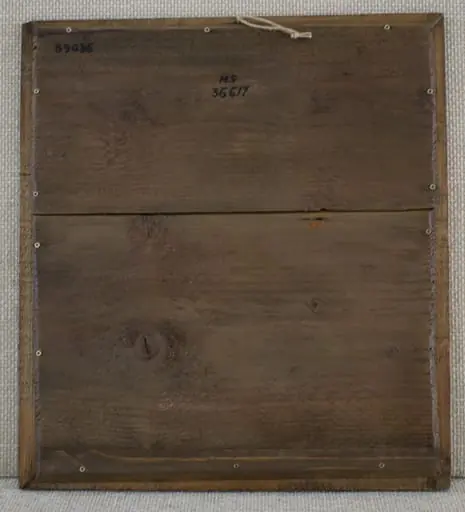 Icoana este pictată "în oglindă", pe suport de sticlă de formă dreptunghiulară în ax vertical. Sfânta Cuvioasă Paraschiva(care se prăznuiește pe 14 octombrie) este redată așezată pe tron, cu coroană împărătească pe cap. Plasată central, cu doi îngeri în spatele tronului, sfânta este înveșmântată cu un maforion roșu cu intadosul albastru și galon galben. Cămașă multicoloră, albastru, verde, roșu, galben, cafeniu, la mijloc cu o cingătoare galbenă) Pe cap poartă o coroană mare, deschisă. În mâna dreaptă ține o cruce, iar cu stânga binecuvintează cu un gest stângaci.Chipul este ușor diform, arcadele ochilor umbrite, nasul mare, bărbia accentuată, ochii înguști, asimetrici. Tronul, de factură barocă, are spătarul în formă de aripă, cu brațele masive, cu un chenar îngust, aurit, cu volute în partea de jos și câte o cruce pe laturile de sus. Sfânta este așezată pe o pernuță lungă. În spatele tronului doi îngeri cu chipuri copilărești, veșminte lungi, nimburi aurite. os este completată cu linii orizontale pe fond bej. Câmpul este albastru(1/2 superior) cu inscripția cu negru, 1/3 inferior - cafeniu deschis, benzi orizontale. Desen încărcat, paleta cromatică petriță, culorile intense. Stratul pictural este exfoliat pe unele locuri. Rama închisă la culoare, este realizată din lemn de brad, profilată pe o porțiune mică la interior, Porțiunea mai lată este decorată cu "pieptenele", transversal. Dosul este realizat din scânduri subțiri de brad, dispuse orizonal și fixate în cuie. Țăranii considerau că sfânta Paraschiva apără de grindină și de dureri de cap.
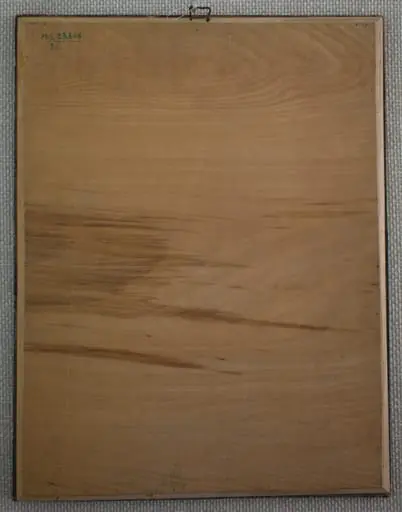 Icoana, întâlnită foarte rar, fiind și o reprezentare a temei "Facerea lumii". Primii oameni, Adam și Eva, în picioare lângă pomul Cunoștinței binelui și răului(care formează axa verticală a compoziției), după ce Adam a căzut la rândul lui în ispită și a mușcat din fructul oprit, devenind conștienți de goliciunea lor trupească. Au mijlocul înconjurat de cununi de frunze verzi. Adam ține o mână ridicată la piept cu cealaltă vrea să-și acopere goliciunea. Eva îi intinde mărul lui Adam, tiparul vrând să redea simultan succesiunea momentelor. Chipurile sunt expresive, redate din ușor semiprofil, privirea lui Adam îndreptată către mâna Evei. Părul lung, negru, lăsat pe umeri, Adam are mustață mică și barbă scurtă, trăsăturile anatomice schițate, chiar și ombilicul. Eva are sânii mari, una dintre pupilele ochilor lipsește. Pomul, cu tulpină conică, plasat ușor asimetric, coroana cu câteva ramuri subțiri cu frunze verzi și fructe roșii. Șarpele de culoare verde, este încolăcit pe tulpină, cu capul întors în dreptul coroanei. dispusă în arcadă, încadrează scena. Câmpul împărțit de o arcadă de flori roșii și verzi, în interior bleu, alb în exterior. Partea de jos- alb, între personaje încercându-se o alternanță cromatică. Rama profilată - patru stinghii îmbinate oblic, pictată cu negru. Dosul este realizat din placaj(a fost probabil înlocuit).
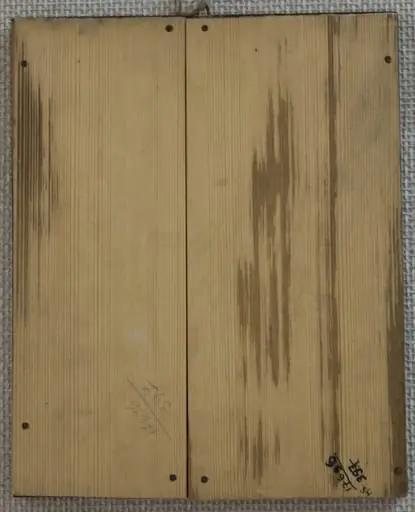 Icoana reprezintă Botezul lui Isus Hristos, care se prăznuiește pe 6 ianuarie("Boboteaza") Iisus Hristos, în picioarele goale, cu un ștergar verde în jurul mijlocului, brațele încrucișate pe piept, primește botezul cu apă de la Sfântul Ioan Botezătorul. care ține în mână o cruce mică. Acesta este înveșmântat cu o mantie roșie și tunică verde. De partea cealaltă a lui Isus,Arhanghelul Gavriil cu un ștergar pe brațe. Veșminte în culori colmplementare, roșu - orange cu verde. Aureolele sunt realizate cu foiță de aur. Deasupra lor, într-un semicerc de nori, Sf Duh. Din rațiuni de cromatică, zugravul i-a pictat aripile porumbelului alb cu verde și cafeniu.În colțurile superioare sunt nori umbriți, cromatica sugerând corespondența planului terestru(apa) cu cel celest. Scena se petrece pe malul Iordanului. Icoana are caracteristicile specifice picturii niculene: stângăcia, simplitatea și primitivismul desenului; compoziția sumară, redusă la extrem, intensitatea culorilor. Rama profilată, culoarea lemnului natur, "dosar"(capac) din lemn.
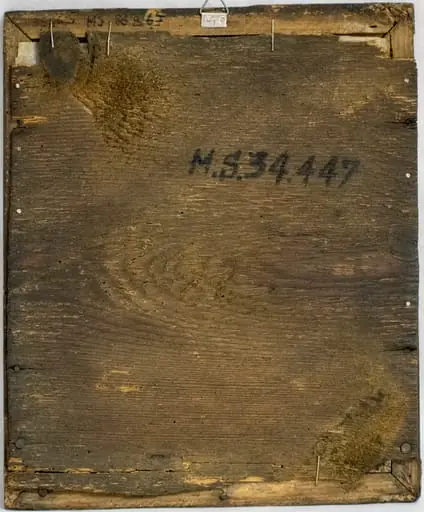 Icoa
Icoa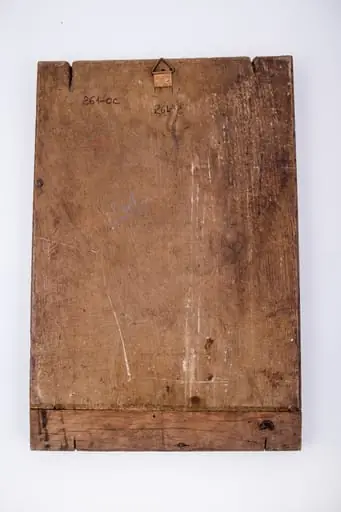 Prăz6.
 "Isu
"Isu